
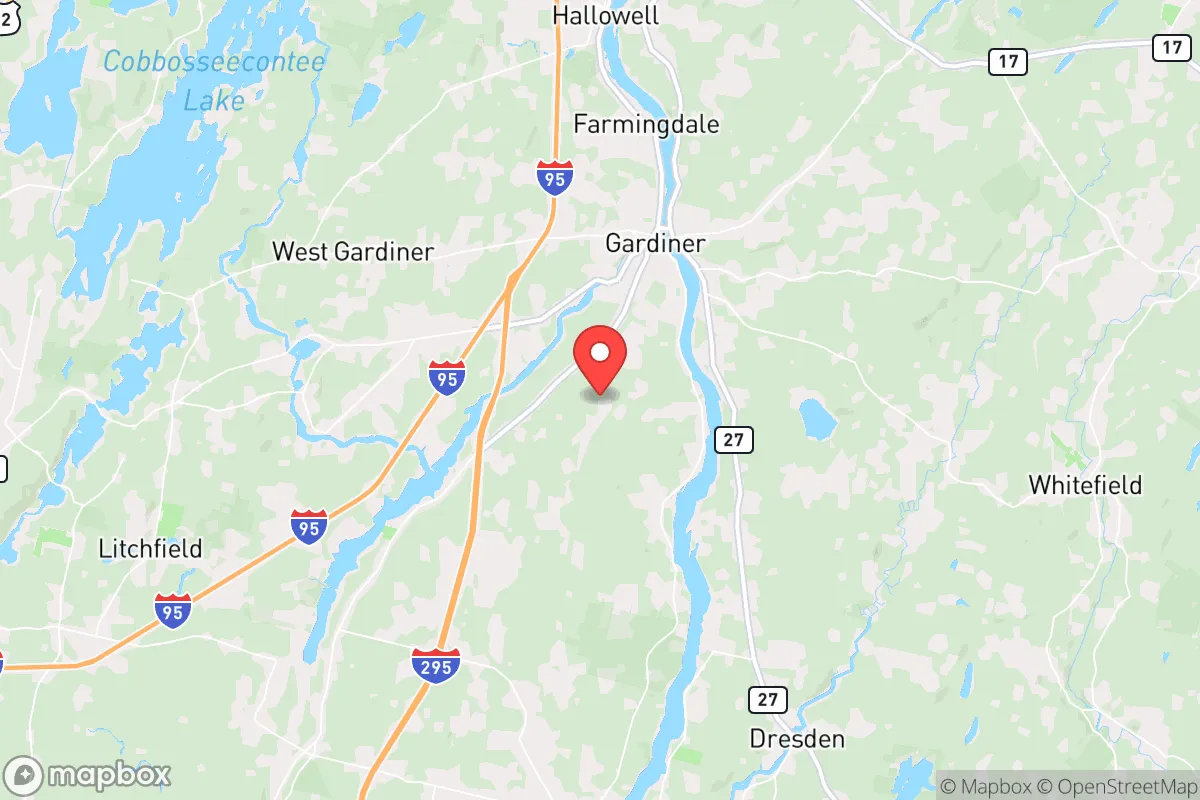
Personal Sovereignty in Gardiner, ME
Viable for self-reliance. Generally workable, though some barriers may limit total independence.
What does Personal Sovereignty tell us?
Personal Sovereignty measures your capacity for self-reliance and independence with minimal government friction. Higher scores mean fewer barriers between you and the way you want to live... but it assumes you have the space you need and good neighbors.
What does this tell us?
Personal Sovereignty measures your capacity for self-reliance and independence with minimal government friction. Higher scores mean fewer barriers between you and the way you want to live... but it assumes you have the space you need and good neighbors.
State Policy
Energy independence: Importer (30% of energy produced in-state)
Personal Liberty
Homesteading

Personal Liberty Analysis
For the individual or family prioritizing personal sovereignty—the ability to live, defend, and provide for oneself without excessive government interference—Gardiner, Maine presents a mixed but promising landscape. Situated in Kennebec County along the Kennebec River, this small city of roughly 6,000 offers a tangible buffer from the regulatory density of southern Maine and New England’s coastal hubs, yet it remains firmly under the thumb of state-level mandates that can frustrate a survivalist or prepper mindset. The key trade-off here is between a relatively permissive local culture of self-reliance and a state government in Augusta that has, in recent years, expanded its reach into areas like vaccine mandates, firearm storage, and energy policy. For those willing to navigate Maine’s specific legal frameworks, Gardiner provides a viable base for a self-determined life, though it is not the libertarian free zone some might hope for.
Tax burden and regulatory posture: How Maine’s state policies affect your wallet and freedom
Maine’s overall tax burden is among the highest in the nation, and Gardiner residents feel this directly. The state imposes a progressive income tax with a top marginal rate of 7.15%, and the state sales tax is 5.5% (with local option surcharges possible). Property taxes in Gardiner are a significant concern: the mill rate hovers around 20.0, meaning a home valued at $250,000 carries an annual tax bill of roughly $5,000. This is a heavy load for a prepper household trying to allocate funds toward land, supplies, and infrastructure rather than government coffers. On the regulatory side, Maine’s state-level building codes, environmental regulations (especially around wetlands and shoreland zoning), and energy efficiency mandates can complicate even modest construction or renovation projects. However, Gardiner’s local government is relatively small and pragmatic; zoning is not as onerous as in Portland or even Augusta. The city does not impose a local income tax, and business licensing is straightforward for home-based enterprises. For the sovereignty-minded, the biggest drag is the state’s aggressive pursuit of tax revenue and its willingness to enforce environmental rules that can limit land use—something to factor into any property purchase.
Self-defense and gun law specifics: What Gardiner residents can and cannot do
Maine is generally considered a gun-friendly state, but recent legislative shifts have introduced restrictions that concern the survivalist community. As of 2026, Maine is a “shall issue” state for concealed carry permits, and Gardiner residents can obtain a permit from the Kennebec County Sheriff’s Office with a straightforward background check. Open carry is legal without a permit for anyone 18 or older who can legally possess a firearm. However, the state enacted a 72-hour waiting period for firearm purchases in 2024, and a “red flag” law (extreme risk protection order) allows law enforcement to temporarily seize firearms from individuals deemed a threat by a judge—without a criminal conviction. This is a point of contention for those who view such orders as a violation of due process. Gardiner itself has no local gun ordinances beyond state law, and there are no restrictions on magazine capacity or specific firearm types (e.g., AR-15s remain legal). For self-defense in the home, Maine law does not impose a duty to retreat if you are in a place you have a legal right to be. Stand-your-ground principles apply, but the burden of proof in a self-defense claim rests on the defendant. For the prepper, this means you can legally maintain a well-stocked armory, but you must be aware that state-level red flag laws create a vulnerability if a neighbor or family member makes a complaint.
Self-reliance and homesteading viability: Lot sizes, zoning, and off-grid feasibility
Gardiner’s position as a small city with rural fringes makes it a mixed bag for serious homesteading. Within the city limits, standard residential lots are typically 0.25 to 0.5 acres, which limits large-scale gardening, livestock, or timber management. However, the surrounding unincorporated areas and towns like Randolph, Pittston, and Chelsea offer parcels of 2 to 10 acres at prices significantly lower than southern Maine—expect $3,000 to $6,000 per acre for raw land. Zoning in Gardiner itself is fairly permissive for backyard chickens and small gardens, but keeping goats, pigs, or larger livestock requires a special permit or moving outside city limits. Off-grid feasibility is a strong point: Maine has no statewide prohibition on solar panels, rainwater collection, or composting toilets, though you must comply with local plumbing and electrical codes. The city’s building department does require permits for structural changes, but enforcement is not aggressive for minor improvements. For a prepper, the ideal strategy is to buy a few acres in an unorganized territory or a lightly regulated township within a 20-minute drive of Gardiner, using the city as a supply hub. The Kennebec River provides a reliable water source, but be aware that shoreline zoning restricts how close you can build to the water—typically 75 feet from the high-water mark. Overall, full self-reliance is achievable but requires careful land selection and a willingness to navigate state-level environmental rules.
Personal liberties: Parental rights, medical autonomy, speech, and property
Maine’s political climate has shifted leftward in recent years, and this affects several areas of personal sovereignty. Parental rights: Maine law generally supports parental authority in education and healthcare decisions, but the state has a universal school vaccination requirement (with medical and philosophical exemptions available, though the philosophical exemption was tightened in 2023). Gardiner’s public schools follow state curriculum standards, which include comprehensive sex education and social-emotional learning—a point of concern for parents who want more control over what their children are taught. Homeschooling is legal and relatively straightforward: you must submit a notice of intent and provide an annual assessment, but there is no state-mandated curriculum. Medical autonomy: Maine does not have a broad medical freedom law; the state imposed COVID-19 vaccine mandates for healthcare workers and certain public employees, and while those mandates have been lifted, the precedent remains. Gardiner has no local health ordinances that restrict medical choice, but the state’s Department of Health and Human Services has broad authority in public health emergencies. Speech and assembly: Maine has no state-level equivalent of a “critical race theory” ban or anti-protest law, and Gardiner’s local government does not restrict political speech. Property rights: Maine’s eminent domain laws are standard, but the state’s shoreland zoning and wetland protection rules can effectively limit what you can do with your land—for example, clearing trees near a stream may require a permit. For the sovereignty-minded individual, Gardiner offers a relatively free environment for speech and property ownership, but state-level mandates on health and education are a persistent concern.
In the broader context of New England and the Northeast, Gardiner stands as a moderate option for personal sovereignty. It is far more permissive than Massachusetts or New York in terms of gun laws and property rights, but it lacks the libertarian lean of states like New Hampshire or the outright deregulation of much of the rural South. For the prepper or survivalist, the calculus is this: Gardiner offers affordable land, a gun-friendly legal framework (with caveats), and a community that values self-reliance, but you must accept a higher tax burden and a state government that is willing to intervene in health and education. If you can navigate Maine’s regulatory landscape and choose your property wisely—preferably outside city limits—Gardiner can serve as a solid base for a self-determined life. It is not a sanctuary, but it is a defensible position in a region that is increasingly hostile to individual autonomy.

* Values derived from national, state, county, city and local statistics and may differ in a specific area. Last updated: 2026-05-04T15:55:55.000Z
Narrative content on this page is AI-generated and may contain mistakes. Verify any details that matter before acting on them.
ReloMaps may earn a commission from affiliate links at no extra cost to you.

