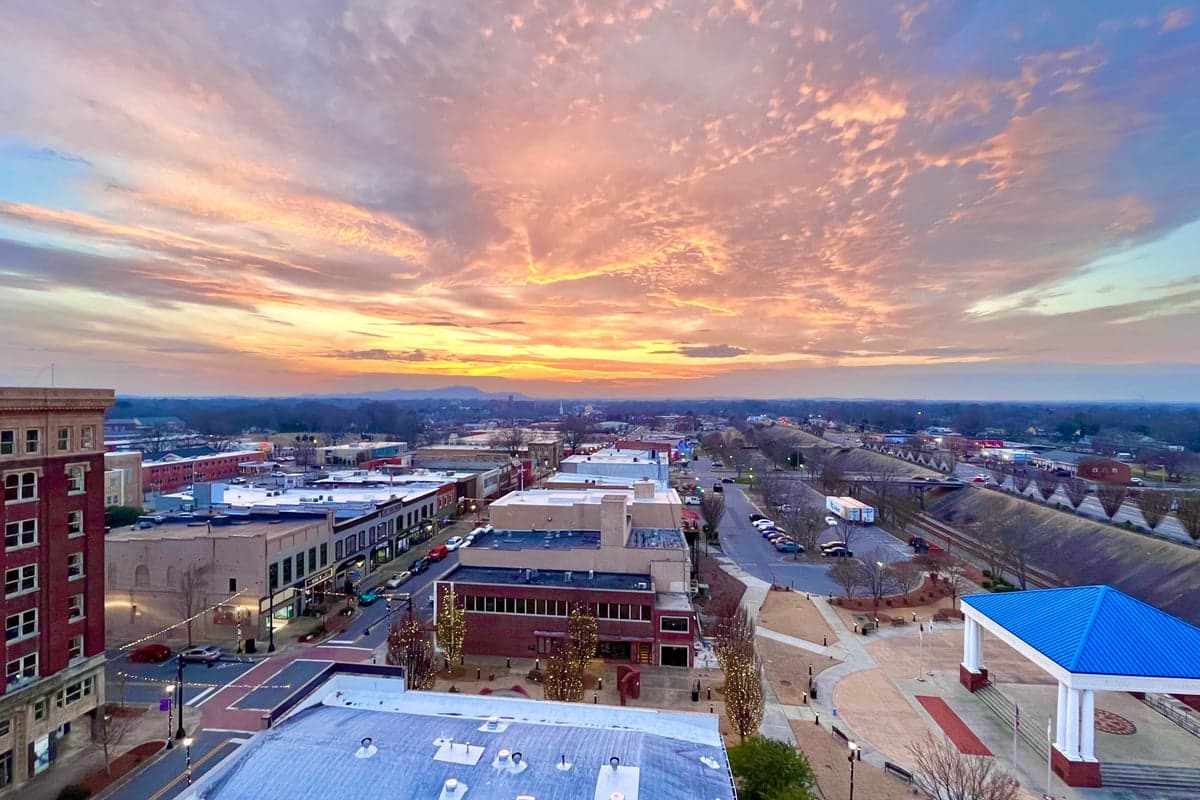
Photo: Wikipedia
Strategic Assessment of Gastonia, NC
Meaningful friction. Expect exposure to either population pressure, blast zones, or natural disaster risk. Consider buying a retreat property.
What does the Strategic Assessment tell us?
Our Strategic Assessment grades tactical survivability of an area. Major population centers, military targets, fallout zones, natural disasters, and border exposure all drive risk — lower exposure means a more defensible position in a crisis.
This is heavily inspired by Joel Skousen's Strategic Relocation book. Highly recommended you checkout the book ($)What does this tell us?
Our Strategic Assessment grades tactical survivability of an area. Major population centers, military targets, fallout zones, natural disasters, and border exposure all drive risk — lower exposure means a more defensible position in a crisis.
This is heavily inspired by Joel Skousen's Strategic Relocation book. Highly recommended you checkout the book ($)Strategic Pillars

Key Distances
Regional Safe Places
Below is our recommended "safe zones" in North Carolina and the surrounding area based on our strategic heuristics. For most people, it's unrealistic to live in a “safe zone” full-time due to work, family or other personal reasons. They tend to be more rural. However, many of these areas are perfect for second homes and retreat properties that double as a vacation home or even a short-term rental.

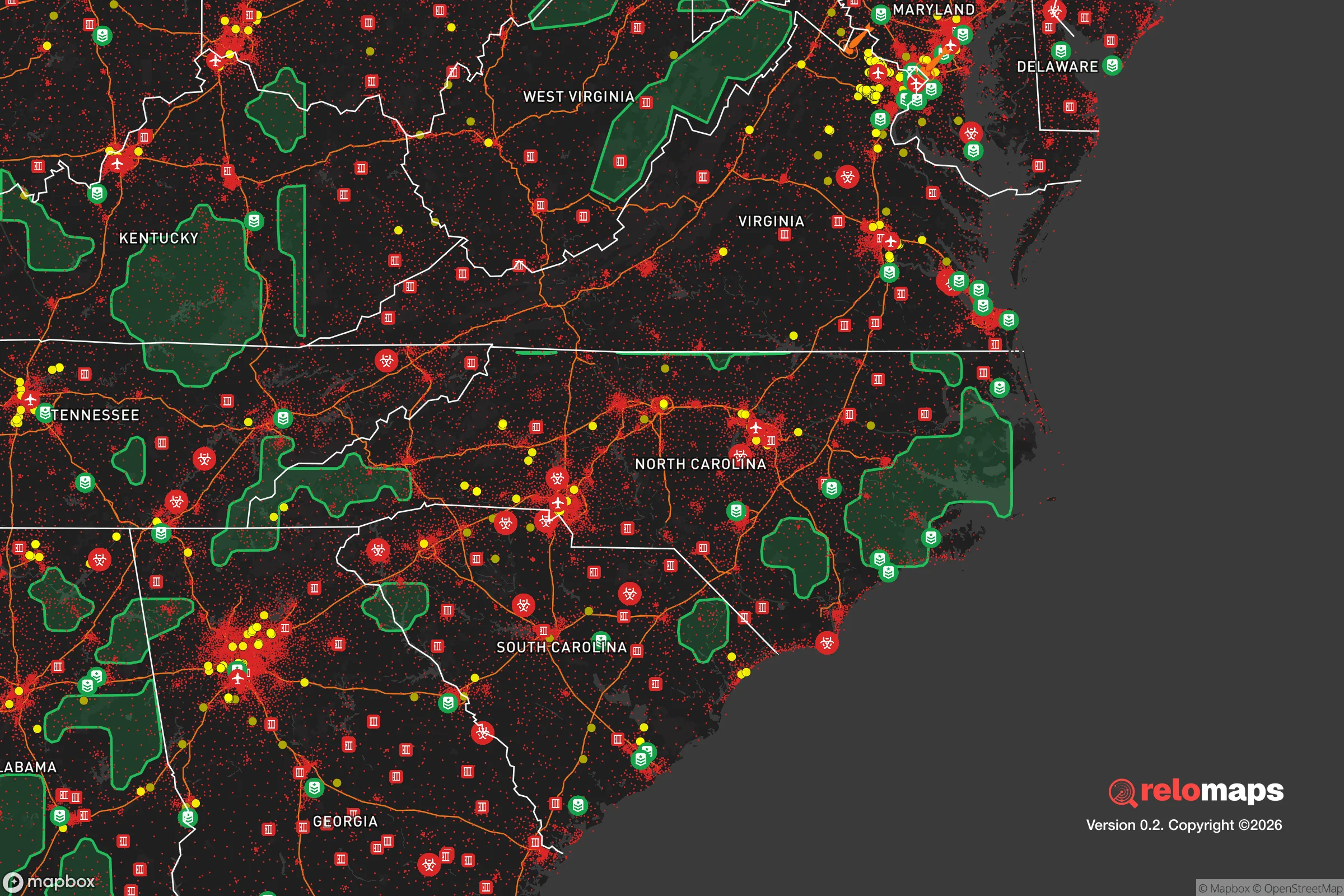


Important Note: For informational purposes only. This does not mean nothing bad ever happens in the green zones. Please use common sense. This is based on public data and modeled with AI. We tried to take a conservative approach but mistakes happen. We update this regularly as new information becomes available.
Solar Generator Recommendations
Backup power matters more here than in safer locations. We've picked three solar generators across budgets and capacity tiers — start with the budget unit if you only need a few essentials, or step up if you want to run a fridge and HVAC for days at a time.

Jackery Portable Power Station Explorer 300
Budget OptionPower on the Go: Weighing only 11 lbs, it's convenient to set up and store with book-sized foldable solar panels

BLUETTI Portable Power Station AC180
Designed for both indoor and outdoor scenarios, AC180 is highly capable as it has a robost capacity and continuous output power.

EF ECOFLOW DELTA Pro Ultra Power Station
Upgraded PickEcoFlow DELTA Pro Ultra is a whole-home energy system designed to grow with your family. Integrated with the Smart Home Panel 2, it scales to meet your evolving energy needs — keeping your home powered, intelligent, and secure through every stage of life.
We earn a commission, at no additional cost to you.
Strategic Assessment Analysis
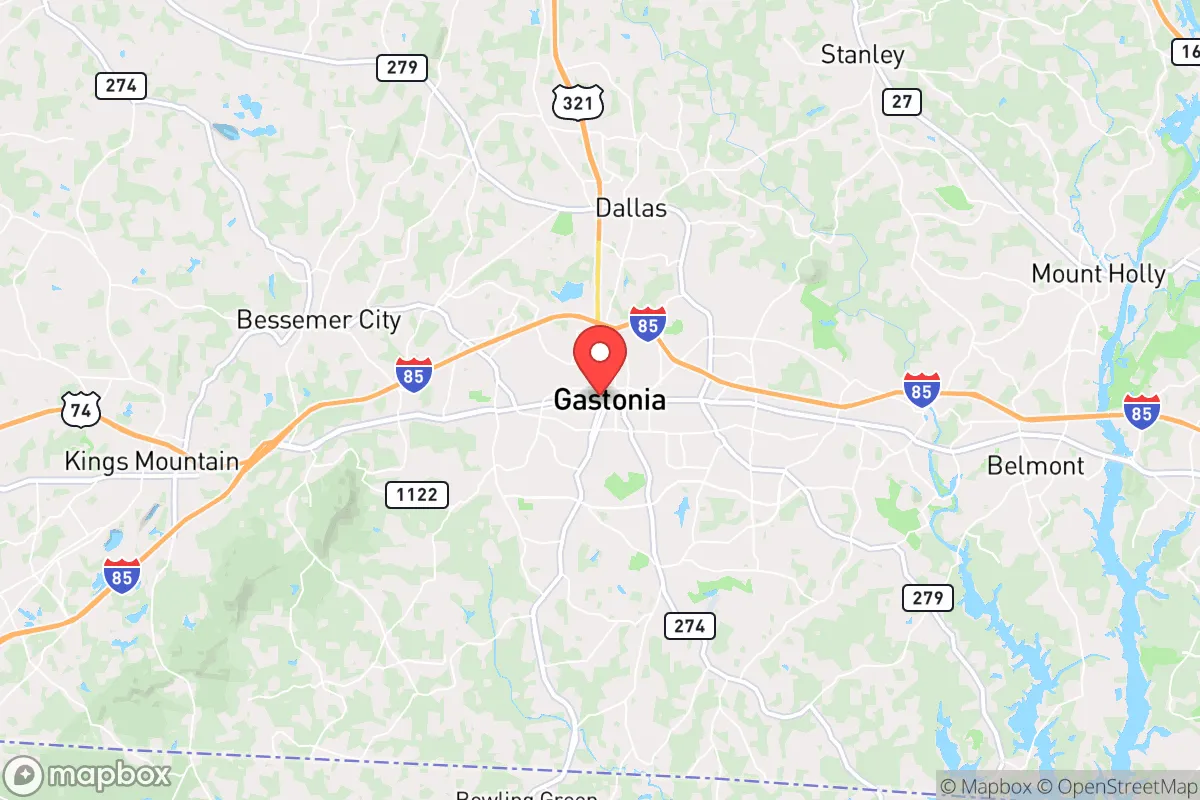
Gastonia, North Carolina, sits in a precarious but potentially advantageous position for those serious about long-term resilience. Located roughly 20 miles west of Charlotte, it offers a buffer from the immediate blast radius of a major metropolitan target while still providing access to the region's economic and logistical infrastructure. The city's location along the I-85 corridor and its proximity to the Catawba River watershed give it a mix of strategic depth and practical vulnerability that demands careful consideration for anyone evaluating it as a relocation destination from a prepper or survivalist perspective.
Geographic position and natural advantages for long-term security
Gastonia's primary strategic asset is its position in the Piedmont region, a zone of rolling hills and mixed hardwood forests that offers more defensible terrain than the flat coastal plain to the east. The area sits at an elevation of roughly 800 feet, which provides some natural drainage and reduces flood risk compared to low-lying areas. The Catawba River, which flows through the western part of Gaston County, is a reliable water source, though access points are limited and heavily developed in places. The surrounding countryside includes the South Mountains and Crowders Mountain State Park to the west, which offer potential retreat areas with higher elevation and more rugged terrain. The region's climate is temperate, with four distinct seasons, meaning you won't face extreme cold or heat that could stress off-grid systems, but you will need to prepare for occasional ice storms and summer thunderstorms. The growing season runs roughly from April to October, which is long enough for serious gardening and small-scale agriculture, though the clay-heavy soil in many parts of the county will require amendment for productive yields.
Risks, exposures, and proximity to fallout-relevant landmarks
The most significant risk for Gastonia is its proximity to Charlotte, a major financial hub and transportation node that would be a high-priority target in any large-scale conflict or terror event. Charlotte Douglas International Airport, the U.S. National Whitewater Center, and the city's concentration of banking infrastructure all represent potential targets. Fallout patterns from a nuclear detonation in Charlotte would depend heavily on wind direction, but Gastonia's position to the west places it in a less favorable zone if prevailing winds blow from the east. More immediately concerning is the presence of the McGuire Nuclear Station, located about 25 miles north of Gastonia on Lake Norman. A catastrophic failure or attack on that facility could render large portions of Gaston County uninhabitable for decades, depending on the scale of the release. The I-85 corridor itself is a double-edged sword: it provides evacuation routes and supply lines, but it also funnels population movement and could become a chokepoint during a crisis. The area's industrial base, including textile plants and chemical facilities along the Catawba River, introduces additional localized hazards from potential industrial accidents or sabotage. For the conservative-minded relocator, the presence of a large urban population within driving distance means that any major disruption in Charlotte would send hundreds of thousands of people streaming outward, potentially overwhelming Gastonia's resources and infrastructure within hours.
Practical resilience for a relocator: food, water, energy, and defensibility
Gastonia's practical resilience is a mixed bag. The city's water supply comes from the Catawba River, treated by the Gastonia Water Treatment Plant, which has a capacity of about 24 million gallons per day. In a grid-down scenario, the river itself remains a viable water source, but you'll need filtration and purification gear, as agricultural runoff and upstream industrial activity mean the water is not safe to drink raw. The area's groundwater is generally accessible via wells, with typical depths of 100 to 300 feet in the surrounding rural areas, though drilling costs in the Piedmont's granite bedrock can be high. For food production, the local growing season is adequate for staple crops like corn, beans, squash, and potatoes, and the region's history of tobacco and cotton farming means the soil can be rehabilitated with proper management. Livestock options include chickens, goats, and pigs, though deer and coyote populations are high enough to require secure fencing. Energy resilience is a weak point: Duke Energy's grid is reliable under normal conditions, but the area is prone to ice storms that can knock out power for days, and the utility's reliance on natural gas and nuclear means that a fuel supply disruption would hit hard. Solar potential is moderate, with the region averaging about 4.5 peak sun hours per day, enough for a modest off-grid system but not for heavy loads. Defensibility is decent for a suburban area: Gastonia's layout includes older neighborhoods with mature tree cover and some rural pockets with good lines of sight. The city's police force is well-funded relative to its size, but in a widespread crisis, law enforcement would be stretched thin. The local population is predominantly conservative and gun-friendly, which cuts both ways—it means a higher baseline of armed citizens, but also a higher likelihood of armed conflict over resources if things go south. The presence of multiple gun shops and ranges in the area, including Hyatt Gun Shop and Gastonia Gun Club, indicates a culture of preparedness that aligns with a survivalist mindset.
The overall strategic picture for Gastonia is one of calculated risk. It offers a buffer from Charlotte's immediate dangers while still providing access to the region's medical, logistical, and economic resources during normal times. The natural advantages of the Piedmont—reliable water, moderate climate, defensible terrain—are real but require active investment in well drilling, soil improvement, and off-grid energy to be fully leveraged. The proximity to nuclear infrastructure and a major urban center introduces vulnerabilities that cannot be fully mitigated, only managed through situational awareness and contingency planning. For the conservative relocator who values community cohesion, gun rights, and a slower pace of life, Gastonia represents a viable option—but only if you go in with eyes open, a solid plan, and the willingness to put in the work to make the area's natural advantages work for you. It's not a bug-out paradise, but it's a realistic base of operations for those who understand that resilience is a process, not a destination.

* Values derived from national, state, county, city and local statistics and may differ in a specific area. Last updated: 2026-05-03T20:26:51.000Z
Narrative content on this page is AI-generated and may contain mistakes. Verify any details that matter before acting on them.
ReloMaps may earn a commission from affiliate links at no extra cost to you.

