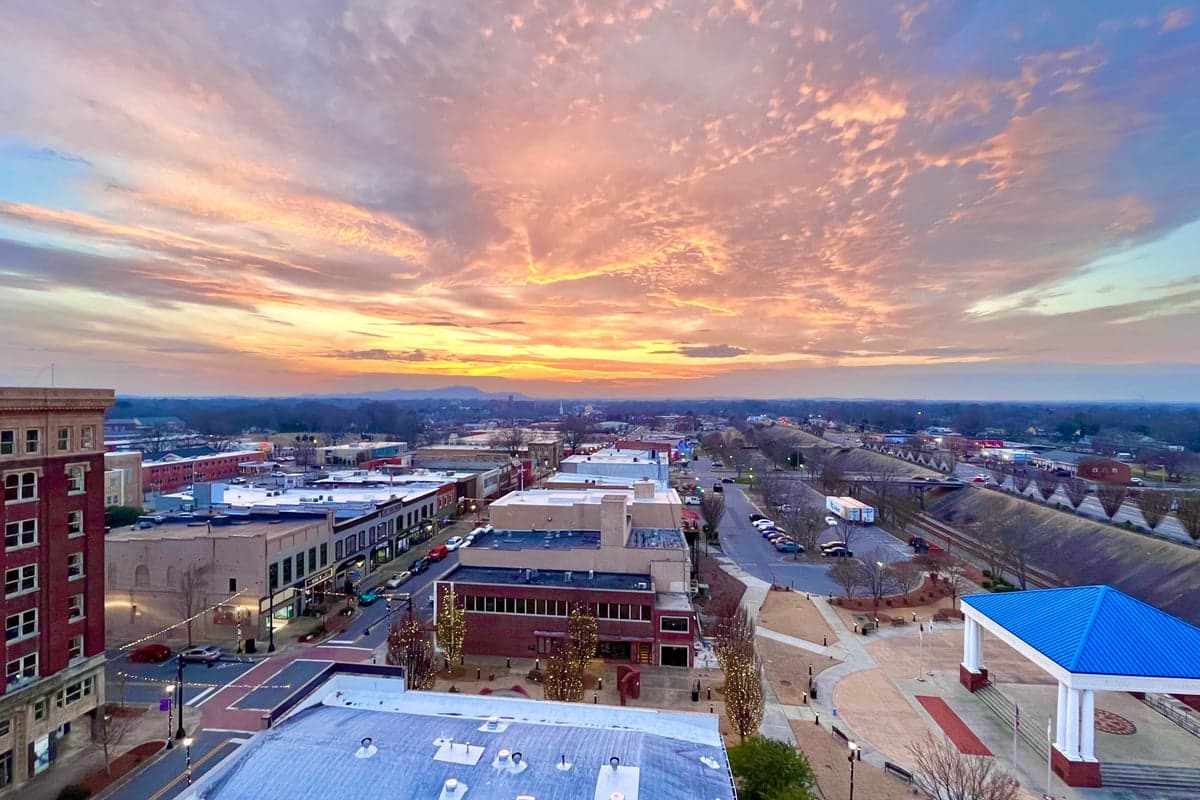
Photo: Wikipedia
Quality of Life in Gastonia, NC
Above-average quality of iife. The area offers a reasonable cost of living, decent mobility, and a mix of neighborhood amenities.
What does Quality of Life tell us?
Quality of Life blends cost of living, nearby amenities, socioeconomic signals, and neighborhood character. City-level scores represent the whole municipality; individual neighborhoods can differ.
What does this tell us?
Quality of Life blends cost of living, nearby amenities, socioeconomic signals, and neighborhood character. City-level scores represent the whole municipality; individual neighborhoods can differ.
Cost of Living
5% below national average
The Real Cost of Living in Gastonia, NC for 2026
| Tier | Individual | Family (4) |
|---|---|---|
| Survival | $18k | $34k |
| Comfortable | $49k | $71k |
| Luxury | $109k+ | $170k+ |
| Elite (Top 5%) | $135k+ | $210k+ |
85%
The Area Signal
A metric tracking the socioeconomic signals of the area.
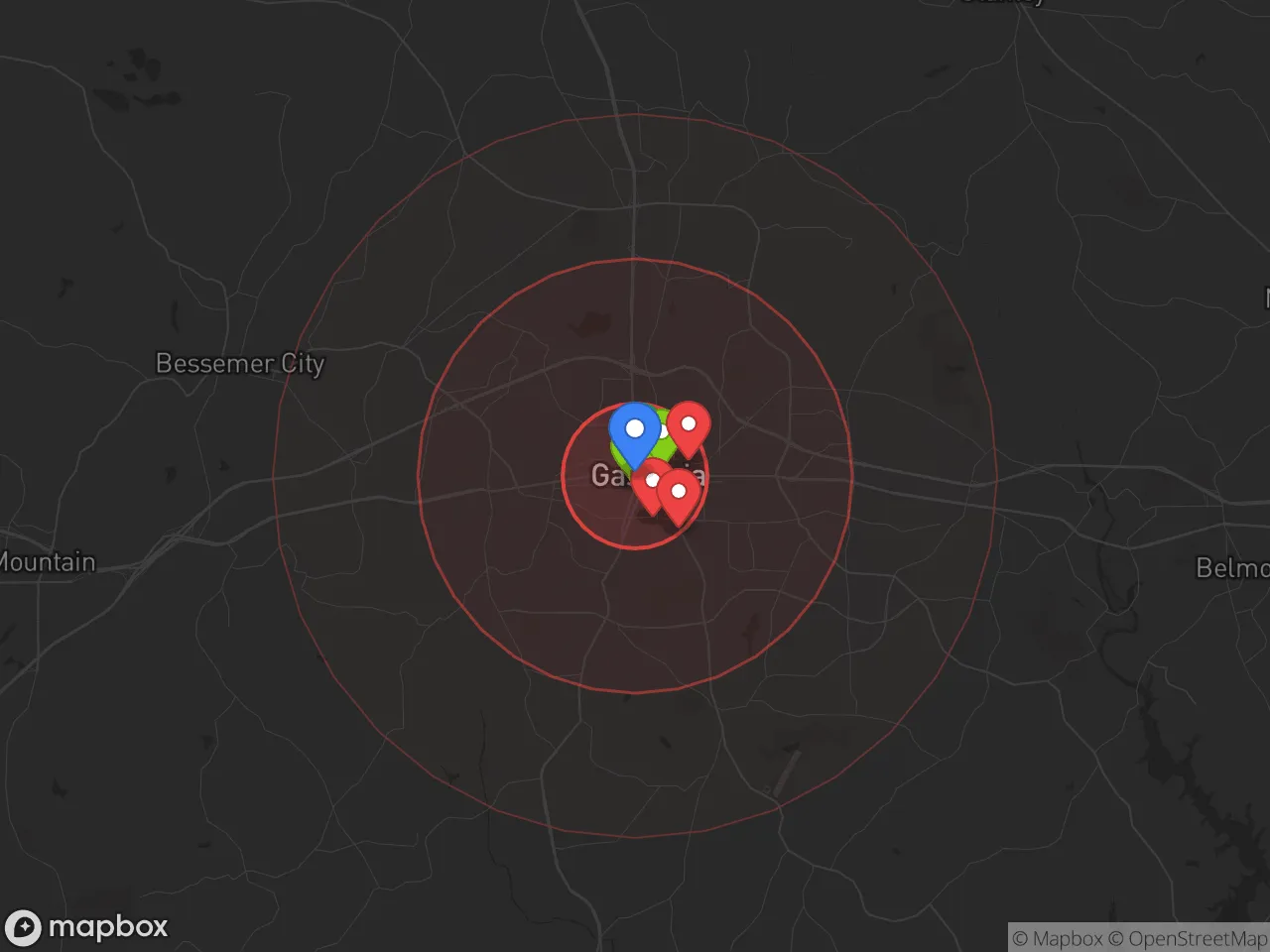
Hobbies
Explore the areaGroceries
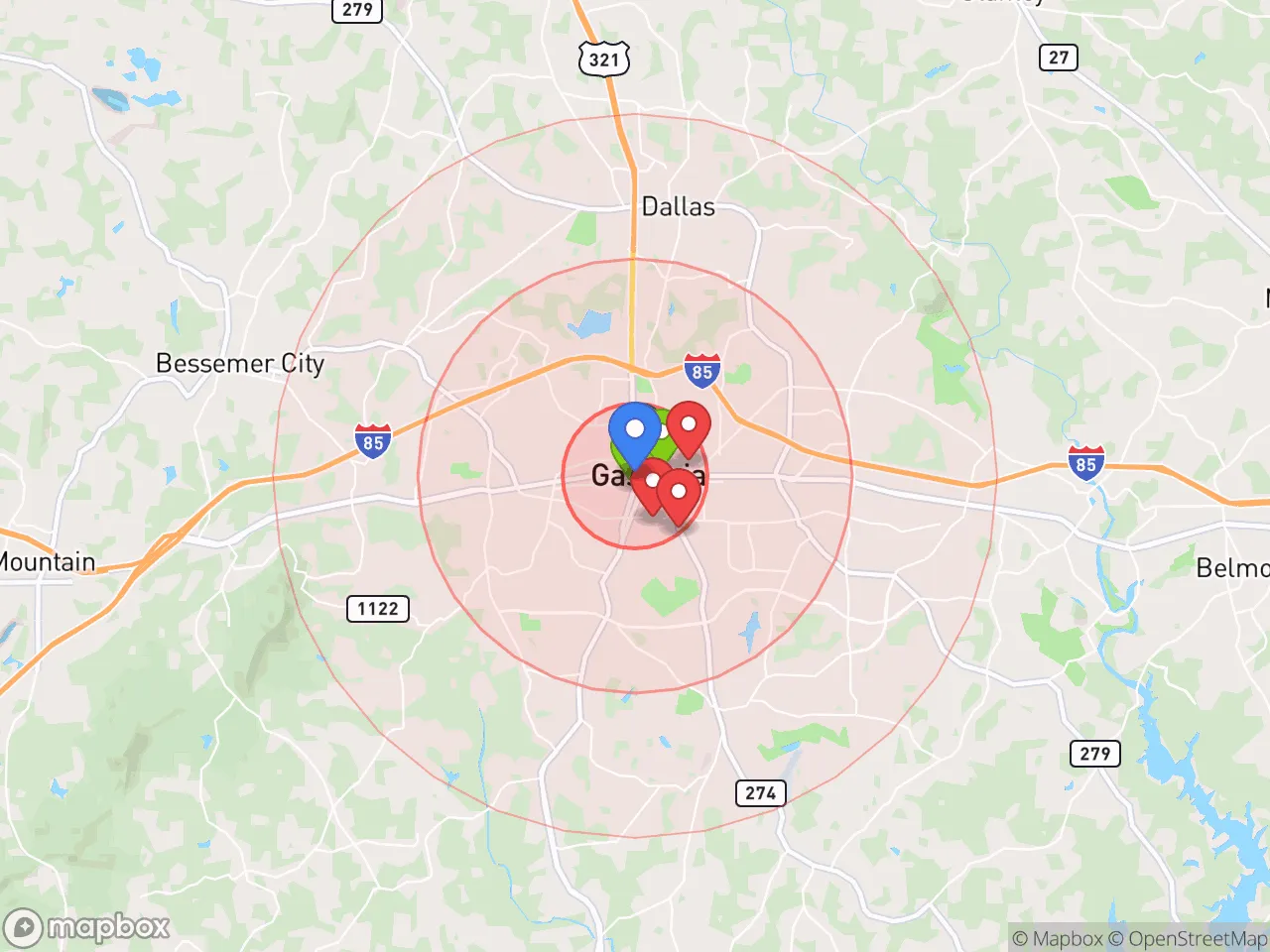
8 within 10 miles
Gas
20 within 10 miles
Hospital
11 within 20 miles
Airport
CLT — Charlotte Douglas International
Post Office
USPS — Gastonia, NC
Critical Amenities
Quality-of-Life Analysis
Gastonia, North Carolina, offers a middle-market quality of life that appeals strongly to families and professionals seeking affordability within commuting distance of Charlotte. With a cost of living index of 95—5% below the national average—the city attracts a mix of long-term residents, young families priced out of Mecklenburg County, and manufacturing workers drawn to the region’s industrial base. Median household incomes hover around $50,000, placing Gastonia in a solidly working-to-middle-class bracket, though pockets of higher affluence exist in newer subdivisions near the Catawba Creek area.
Cost of living, housing affordability, and how Gastonia compares to Charlotte
Gastonia’s housing market is the primary driver of its affordability advantage. The median home value sits at $250,000, roughly half the Charlotte metro median of $400,000+, while the median rent of $1,145 is about 30% lower than comparable rentals in South End or Ballantyne. This price gap means a household earning the area median income can afford a mortgage on a three-bedroom home without being cost-burdened, a scenario increasingly rare in the broader Charlotte region. Property taxes in Gaston County average 0.75% of assessed value, slightly below the state median, keeping monthly carrying costs manageable. However, buyers should note that inventory in the $200,000–$300,000 range moves quickly, with many homes selling within 30 days. For renters, the $1,145 median rent is achievable on a single-earner salary of roughly $45,000, though newer apartment complexes near Franklin Boulevard command $1,400+ for one-bedroom units.
Schools, amenities, and what daily life is like for families
Daily life in Gastonia centers on a mix of local parks, regional retail, and a 25.7-minute average commute that keeps Charlotte’s jobs within reach without the daily grind of I-77 traffic. The city’s school system, Gaston County Schools, serves roughly 30,000 students and includes several magnet and early-college programs; Forestview High School and Ashbrook High School consistently rank among the top 40% of North Carolina high schools by U.S. News. For recreation, the 1,200-acre Crowders Mountain State Park offers hiking and climbing 15 minutes west, while the Schiele Museum of Natural History provides family-oriented STEM exhibits. The downtown area has seen modest revitalization, with the Gastonia Farmers Market operating year-round and the Gaston County Public Library system offering robust programming. Commuters benefit from the 25.7-minute average travel time to work—shorter than Charlotte’s 27-minute average—with most residents driving to jobs in manufacturing, healthcare (CaroMont Health is the largest employer), or logistics along the I-85 corridor. Nightlife is limited compared to Charlotte, but the city hosts seasonal events like the Gastonia Grizzlies collegiate baseball games and the annual Gaston County Fair.
Gastonia is best suited for budget-conscious families, first-time homebuyers, and remote workers who want Charlotte’s job market without its housing costs. The city’s trade-offs are clear: lower crime rates than nearby Monroe or Rock Hill, but higher than suburban Fort Mill; solid schools for the price point, but fewer top-tier magnet options than Charlotte-Mecklenburg. Retirees on fixed incomes will find the cost of living appealing, especially near the Catawba River neighborhoods, while young professionals should weigh the 25-minute commute against the social and career opportunities of living inside Charlotte proper. For anyone prioritizing square footage, yard space, and a slower pace over urban density, Gastonia delivers a stable, affordable base in the Charlotte metro’s western orbit.

Crime in Gastonia, NC
Higher crime rates than 74% of comparable U.S. locations.
Violent CrimeViolent Crime Analysis
Property CrimeProperty Crime Analysis
Crime Analysis
Gastonia, North Carolina, faces a significant public safety challenge, with crime rates that substantially exceed both state and national averages. The city's violent crime rate of 884.5 incidents per 100,000 residents is more than double the national average, while property crime stands at 2,882.8 per 100,000, also well above typical benchmarks. These figures place Gastonia among the higher-crime municipalities in the Charlotte metropolitan area, a region where progressive prosecutorial policies in surrounding counties have been linked to reduced incarceration rates and increased recidivism.
Crime in context
Gastonia's violent crime rate is roughly 2.3 times the national average and significantly higher than the North Carolina state average of approximately 450 per 100,000. Property crime, while less extreme, still runs about 1.5 times the national rate. The city's location within the Charlotte-Concord-Gastonia metro area means it is subject to the same regional criminal justice trends. In recent years, district attorneys in Mecklenburg County and surrounding jurisdictions have adopted progressive policies—including reduced cash bail, diversion programs for repeat offenders, and lenient sentencing guidelines—that critics argue have emboldened criminals and eroded public safety. These policies, while intended to reduce mass incarceration, have been associated with rising property crime and a perception that consequences for theft and assault are minimal.
What residents experience
For Gastonia residents, the high crime rate translates into tangible daily concerns. Property crimes such as burglary, larceny, and motor vehicle theft are the most common offenses, often targeting vehicles parked on streets or in driveways. Violent crime, while less frequent, is concentrated in specific areas and includes aggravated assault, robbery, and occasional homicides. The city's police department has struggled with staffing shortages, and response times can be slow in outlying neighborhoods. Residents frequently report that the progressive judicial philosophy in the region—where judges and prosecutors prioritize rehabilitation over punishment—results in repeat offenders cycling through the system quickly, undermining deterrence. This is particularly concerning for families and retirees who rely on a predictable, safe environment.
Neighborhood-level variation is notable. Areas west of the U.S. 321 corridor and near the Franklin Boulevard commercial strip tend to see higher concentrations of both violent and property crime. In contrast, neighborhoods in the eastern part of the city, such as those near the Catawba Creek Golf Course and the Highland community, generally report lower crime rates. However, even in safer pockets, the spillover effect from high-crime zones and the regional leniency in prosecution means that no area is entirely insulated. Prospective residents should research specific block-level data and consider that the broader metro area's progressive justice policies create a systemic risk that transcends individual neighborhoods.
* Values derived from national, state, county, city and local statistics and may differ in a specific area. Last updated: 2026-05-03T20:26:51.000Z
Narrative content on this page is AI-generated and may contain mistakes. Verify any details that matter before acting on them.
ReloMaps may earn a commission from affiliate links at no extra cost to you.

