Photo: Wikipedia
Political ClimatePolitical Climate in Gastonia, NC
District shown is the primary district for this city’s centroid. Cities may span multiple districts.
Local Political AnalysisPolitical Analysis of Gastonia, NC
Gastonia’s political climate has long been a solidly conservative one, and that hasn’t changed much even as the rest of the country has gotten more divided. The Cook PVI rating of R+8 tells you the real story—this area leans Republican by a comfortable margin, and that’s held true in presidential, state, and local races for as long as I can remember. You don’t see wild swings here; people tend to vote their values, and those values are pretty traditional. If anything, the trajectory has been a slow, steady pull to the right, especially as folks from more liberal areas like Charlotte start to trickle out this way looking for cheaper land and less hassle—only to find out they’re still outnumbered by locals who don’t want the government in their business.
How it compares
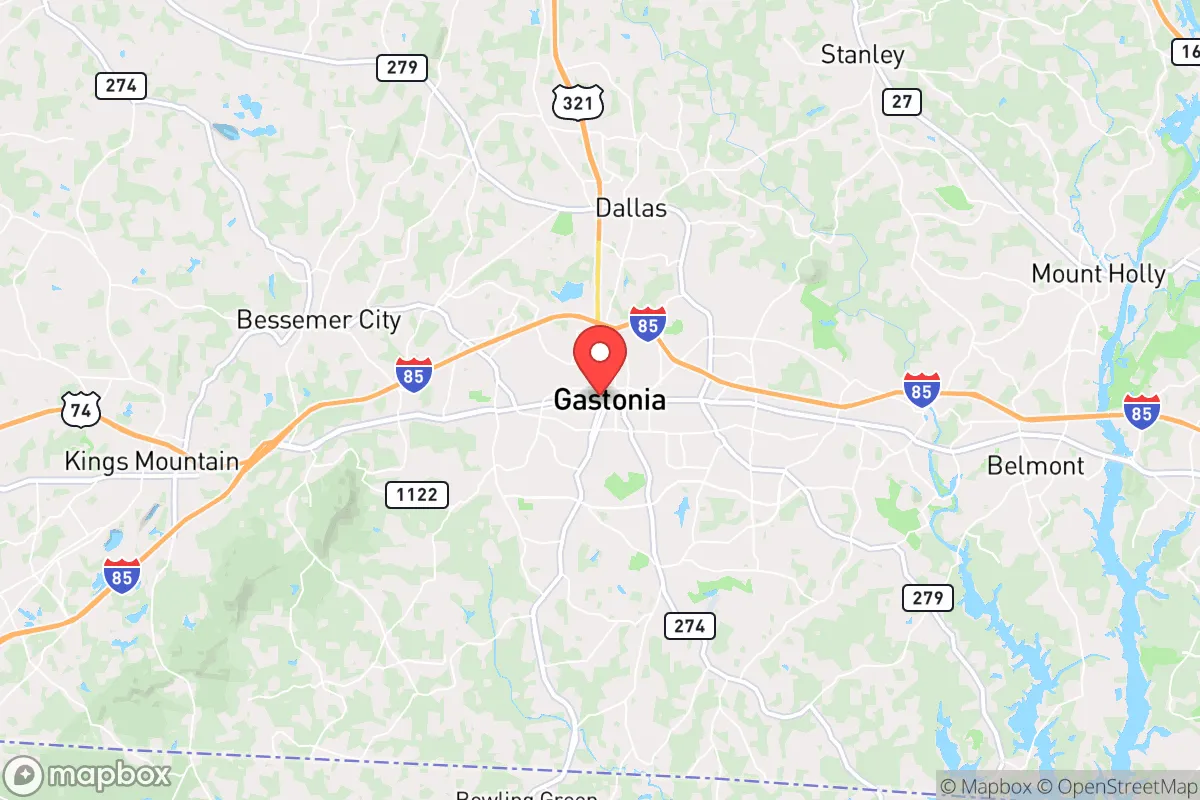
Drive 20 minutes east into Charlotte, and you’re in a whole different world—Mecklenburg County is deep blue, with a Cook PVI of D+18. That’s a 26-point gap between Gaston County and its big-city neighbor. It’s not just Charlotte either; towns like Belmont and Mount Holly, which are closer to the county line, have started to feel a little more purple in recent years as commuters move in. But Gastonia itself? It’s still the anchor of the conservative side of the metro. Compare it to Lincolnton to the north or Shelby to the west, and you’ll find similar values—lower taxes, fewer regulations, and a general distrust of Raleigh telling us how to live. The contrast is sharpest when you look at school board races or zoning fights: Gastonia tends to vote for folks who want to keep things simple, while the cities to the east are pushing for more progressive policies on everything from housing to policing.
What this means for residents
For the people who actually live here, the conservative lean means a lighter touch from local government. You’re not dealing with a lot of overreach—no mask mandates that drag on forever, no heavy-handed business closures, and property taxes that stay reasonable compared to what you’d pay across the county line. The city council and county commission are generally made up of folks who believe in limited government, so you don’t see a lot of new ordinances that mess with your day-to-day life. That said, there’s been a little pressure in recent years from outside groups trying to push diversity, equity, and inclusion initiatives into schools and city hiring. So far, those efforts have mostly been voted down or quietly shelved, but it’s something to keep an eye on. If you’re the kind of person who values personal freedom—like deciding what’s best for your own family without a bureaucrat butting in—Gastonia’s political climate is still a breath of fresh air compared to what you’d find in most of the state’s bigger cities.
Culturally, Gastonia has a few quirks that set it apart. You’ll still see a lot of Confederate flags on trucks and in yards, and the local gun culture is strong—open carry is common, and nobody bats an eye. The city has a long textile mill history, and that working-class independence is baked into the politics. There’s a real resistance to any kind of progressive agenda, whether it’s critical race theory in schools or new environmental regulations on small businesses. The biggest policy fights in recent years have been over things like short-term rental rules and whether to allow alcohol sales on Sundays—not exactly the stuff of culture wars, but it shows how local the politics stay. Looking ahead, the biggest threat to this conservative balance is the continued sprawl from Charlotte. If enough people move in who don’t share the local values, you could see the needle shift. But for now, Gastonia remains a place where the government mostly stays out of your way, and that’s how most folks want it.

State Political ClimatePolitical Climate in North Carolina
State Political AnalysisPolitical Environment in the State
North Carolina has long been considered a classic swing state, but over the past decade, it has settled into a reliably red-leaning posture in federal elections, while state-level politics remain fiercely contested. The state voted for Donald Trump in both 2016 and 2024 (by margins of 3.6% and 1.4% respectively), and while Democrats have won occasional gubernatorial races, the General Assembly has been under solid Republican control since 2011. The overall trajectory is one of slow, steady rightward drift in presidential contests, even as rapid in-migration from blue states injects new uncertainty into local races.
Urban vs. rural divide
The political map of North Carolina is a textbook study in the urban-rural split. The major metros—Charlotte (Mecklenburg County), Raleigh-Durham (Wake and Durham Counties), and Greensboro-Winston-Salem (Guilford and Forsyth Counties)—are deep blue strongholds, driven by large universities, tech and banking sectors, and dense minority populations. In 2024, Mecklenburg County gave Kamala Harris a 62% vote share, while Wake County went 58% for her. But the rest of the state is overwhelmingly red. The rural eastern counties, like Robeson and Cumberland, have been trending redder, while the western mountain counties—Watauga, Buncombe, and Haywood—are mixed, with Asheville (Buncombe) being a notable blue island. The real story is the suburban exurbs: places like Union County (southeast of Charlotte) and Johnston County (southeast of Raleigh) have flipped from purple to deep red as conservative families flee the cities. These counties now vote +25 to +35 points Republican, and they are the engine of the state's current red lean.
Policy environment
North Carolina's policy environment is broadly conservative, with a few notable exceptions. The state has a flat income tax rate of 4.5%, down from 7% in 2014, and the legislature is pushing toward elimination by 2030. There is no state property tax; local rates vary but average around 0.8% of assessed value. The regulatory climate is business-friendly, with right-to-work laws and a low corporate tax rate of 2.5%. On education, the state has a robust school choice program: the Opportunity Scholarship Program now provides vouchers of up to $7,500 per year for private school tuition, and there are no income caps. In 2024, the legislature expanded this to universal eligibility. Healthcare is a mixed bag: the state did expand Medicaid in 2023 under a Republican-led compromise, but the expansion includes work requirements and premiums for those above 100% of poverty. Election laws have been tightened: voter ID is now required (photo ID only), early voting hours are standardized, and same-day registration is allowed only during early voting. The state also banned the counting of absentee ballots received after Election Day, a change that survived court challenges in 2024.
Trajectory & freedom
On the freedom front, North Carolina has been moving in a decidedly positive direction over the past five years, though not without setbacks. The most significant expansion of liberty came in 2023 with the passage of HB 808, which eliminated the requirement for a permit to carry a concealed handgun (constitutional carry). This was a major win for Second Amendment advocates. On parental rights, the state passed the Parents' Bill of Rights (SB 49) in 2023, which requires schools to notify parents of any changes in a child's health or well-being, and prohibits instruction on gender identity and sexual orientation in K-4 classrooms. However, the law is being challenged in court by the ACLU. On medical autonomy, the state banned nearly all abortions after 12 weeks in 2023 (with exceptions for rape, incest, and fetal anomalies), a significant restriction that has held up in court. Property rights remain strong, with no statewide rent control and a relatively streamlined permitting process for new construction. The biggest concern for freedom-minded residents is the growing influence of local governments in blue cities: Charlotte and Raleigh have passed local ordinances that conflict with state law on issues like housing density and short-term rentals, creating a patchwork of regulations that can feel intrusive.
Civil unrest & political movements
North Carolina has seen its share of political flashpoints, but they are largely localized. The most visible was the 2020 protests in Charlotte and Raleigh following the killing of George Floyd, which included property damage and clashes with police. Since then, the activist left has focused on school board meetings and city council hearings, pushing for defunding police and critical race theory curricula—efforts that have largely failed in the General Assembly but have succeeded in some local school districts like Durham Public Schools. On the right, the NC GOP has become more organized, with grassroots groups like the John Locke Foundation and Carolina Journal driving policy debates. Immigration politics are relatively quiet compared to border states, but there is a growing tension in rural counties like Lee and Sampson, where meatpacking plants have attracted a large Hispanic workforce. The state has no sanctuary city policies; in fact, a 2015 law (HB 318) requires sheriffs to honor ICE detainers, though some blue sheriffs (like in Wake County) have resisted. Election integrity remains a hot topic: the 2020 and 2024 elections saw no major fraud scandals, but the state's County Boards of Elections are now evenly split between Republicans and Democrats, a reform passed in 2023 to prevent partisan manipulation. A new resident would notice that political conversations are more heated in the cities and suburbs than in rural areas, where politics is less of a daily obsession.
Projection
Looking ahead 5-10 years, North Carolina is likely to remain a red-leaning state, but the margin will narrow. The key demographic driver is in-migration from the Northeast and California, which has been running at about 100,000 net new residents per year. These newcomers tend to be younger, more educated, and more moderate-to-liberal than the native population. However, they are also often fleeing high taxes and crime in their home states, which means they are receptive to conservative economic policies. The wild card is the suburban exurbs: if they continue to grow and remain red, the state will stay solidly Republican. But if the blue tide from Charlotte and Raleigh spills into places like Cabarrus and Harnett counties, the state could become a true toss-up again by 2032. The legislature is likely to remain Republican due to gerrymandering, but the governor's mansion could flip blue in 2028 if the Democratic nominee is moderate enough. On policy, expect continued tax cuts, further expansion of school choice, and a push for a constitutional amendment to require a supermajority for tax increases. The biggest threat to freedom is the potential for federal overreach on environmental regulations, which could impact the state's energy sector and manufacturing base.
For a conservative-leaning individual or family moving to North Carolina, the bottom line is this: you will find a state that broadly respects your rights, keeps taxes low, and protects your ability to make choices for your children and your home. The blue cities are real, but they are islands in a red sea. If you choose a suburban or rural county—like Union, Johnston, or Brunswick—you will live in a community that shares your values and is growing fast. Just be prepared for the political battles to continue, because the people moving here from New York and California are not going to stop trying to change things. Stay engaged, vote in every primary, and you'll be fine.
* Values derived from national, state, county, city and local statistics and may differ in a specific area. Last updated: 2026-05-03T20:26:51.000Z
Narrative content on this page is AI-generated and may contain mistakes. Verify any details that matter before acting on them.
ReloMaps may earn a commission from affiliate links at no extra cost to you.

