Photo: Wikipedia
Demographics of Georgetown, TX
Affluence Level in Georgetown, TX
An upper-middle-class area. Household wealth, education levels, and homeownership run ahead of national benchmarks.
People of Georgetown, TX
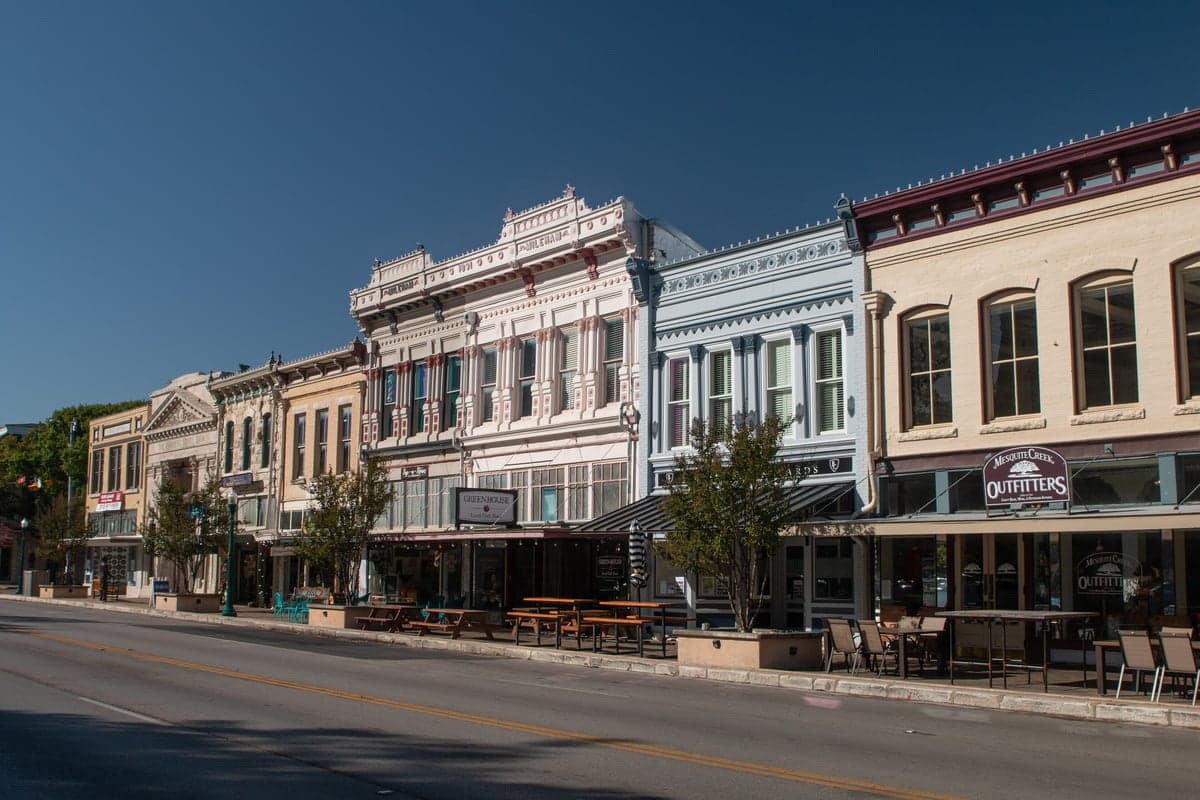
The people of Georgetown, Texas, today number roughly 78,800 and form a predominantly white, college-educated, and politically conservative community that is notably less diverse than the surrounding Austin metro area. With a foreign-born population of just 3.9% and a white share of 66.8%, Georgetown is a majority-white city where Hispanic residents (22.0%) represent the largest minority group, followed by Black (5.8%) and East/Southeast Asian (1.9%) communities. The city’s identity is shaped by its historic downtown square, a strong sense of local tradition, and a rapidly growing population that has more than doubled since 2010, driven largely by domestic migration from other parts of Texas and the United States.
How the city was settled and grew
Georgetown was founded in 1848 as the seat of Williamson County, drawing its earliest settlers primarily from the American South and Midwest. The original population was overwhelmingly white and Anglo-American, attracted by the promise of fertile blackland prairie for cotton farming and the establishment of Southwestern University (chartered 1840, opened 1873), the oldest university in Texas. The city’s historic core, the Old Town neighborhood around the courthouse square, was built by these early settlers and retains many 19th-century homes and commercial buildings. A second wave of growth came with the arrival of the railroad in the 1880s, which spurred a small but lasting African American community in the San Gabriel Village area, where many Black families settled to work as laborers and domestic servants. By 1900, Georgetown’s population was roughly 2,500 and remained overwhelmingly white and native-born through the mid-20th century, with cotton and education as the twin economic anchors.
Modern era (post-1965)
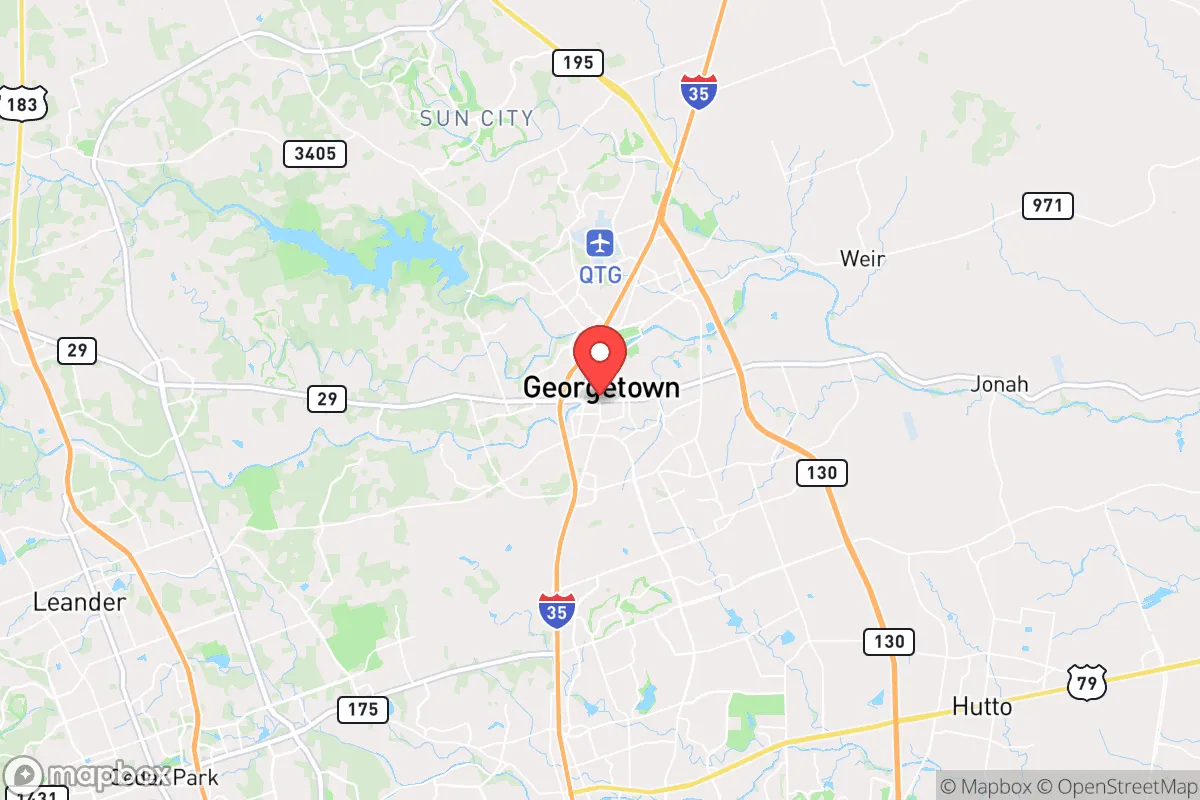
The post-1965 period brought gradual demographic change, though Georgetown remained far more homogeneous than nearby Austin. The Immigration and Nationality Act of 1965 had a muted effect here: the foreign-born share never exceeded 5%, and most new residents were domestic migrants from other parts of Texas and the Sun Belt. The most significant shift was the suburbanization boom beginning in the 1990s, when families and retirees from the Austin area began moving north along the I-35 corridor. This wave settled heavily in master-planned communities like Sun City Texas (opened 1995), an age-restricted retirement community that attracted mostly white, affluent seniors from across the country, and Berry Creek, a family-oriented subdivision that drew younger professionals. The Hispanic population grew steadily during this period, rising from roughly 8% in 1990 to 22% by 2020, concentrated in the Northwest Georgetown area and along the SH 29 corridor, where many families found affordable housing and work in construction, landscaping, and service industries. The Black population, however, remained small (5.8% today), with most Black residents living in the San Gabriel Village area or scattered across newer subdivisions. East/Southeast Asian residents (1.9%) and Indian-subcontinent residents (0.7%) are a recent and very small presence, largely professionals drawn by the tech economy of the broader Austin region, and they tend to settle in newer developments like Rivery Park rather than historic neighborhoods.
The future
Georgetown’s population is projected to continue growing rapidly, potentially exceeding 100,000 by 2035, but the character of that growth is likely to reinforce existing demographic patterns rather than diversify them dramatically. The city is not tribalizing into distinct ethnic enclaves; instead, it is homogenizing around a white, conservative, and relatively affluent core, with Hispanic residents gradually assimilating into the broader community through intermarriage and geographic dispersion. The foreign-born share is unlikely to rise much above 5%, as Georgetown lacks the industrial or agricultural job base that attracts large immigrant populations. The biggest wildcard is the continued expansion of Sun City Texas and similar age-restricted communities, which will keep the median age high (currently 41.5) and the political culture conservative. For East/Southeast Asian and Indian-subcontinent families, the numbers are so small that they will likely remain a thin layer of professionals in newer subdivisions rather than forming distinct ethnic neighborhoods.
For someone moving to Georgetown now, the bottom line is clear: this is a city that is growing fast but staying demographically stable, becoming larger and more suburban without becoming meaningfully more diverse. The population is overwhelmingly domestic, white, and college-educated, with a Hispanic minority that is integrated rather than segregated. Newcomers should expect a community where conservative values, church involvement, and a focus on schools and safety are the norm, and where the small immigrant presence means little cultural friction—but also little exposure to the kind of global diversity found in larger Texas cities.

* Values derived from national, state, county, city and local statistics and may differ in a specific area. Last updated: 2026-04-19T07:25:39.000Z
Narrative content on this page is AI-generated and may contain mistakes. Verify any details that matter before acting on them.
ReloMaps may earn a commission from affiliate links at no extra cost to you.

