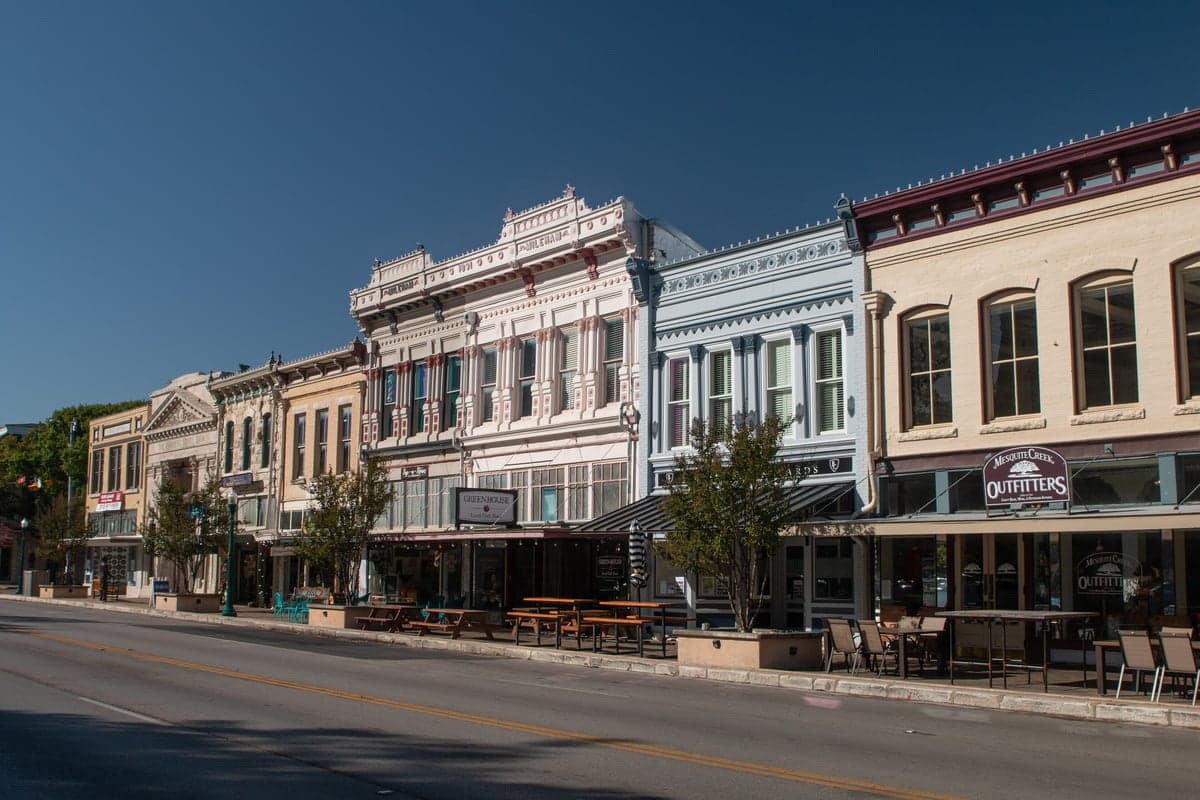
Photo: Wikipedia
Strategic Assessment of Georgetown, TX
Meaningful friction. Expect exposure to either population pressure, blast zones, or natural disaster risk. Consider buying a retreat property.
What does the Strategic Assessment tell us?
Our Strategic Assessment grades tactical survivability of an area. Major population centers, military targets, fallout zones, natural disasters, and border exposure all drive risk — lower exposure means a more defensible position in a crisis.
This is heavily inspired by Joel Skousen's Strategic Relocation book. Highly recommended you checkout the book ($)What does this tell us?
Our Strategic Assessment grades tactical survivability of an area. Major population centers, military targets, fallout zones, natural disasters, and border exposure all drive risk — lower exposure means a more defensible position in a crisis.
This is heavily inspired by Joel Skousen's Strategic Relocation book. Highly recommended you checkout the book ($)Strategic Pillars

Key Distances
Regional Safe Places
Below is our recommended "safe zones" in Texas and the surrounding area based on our strategic heuristics. For most people, it's unrealistic to live in a “safe zone” full-time due to work, family or other personal reasons. They tend to be more rural. However, many of these areas are perfect for second homes and retreat properties that double as a vacation home or even a short-term rental.

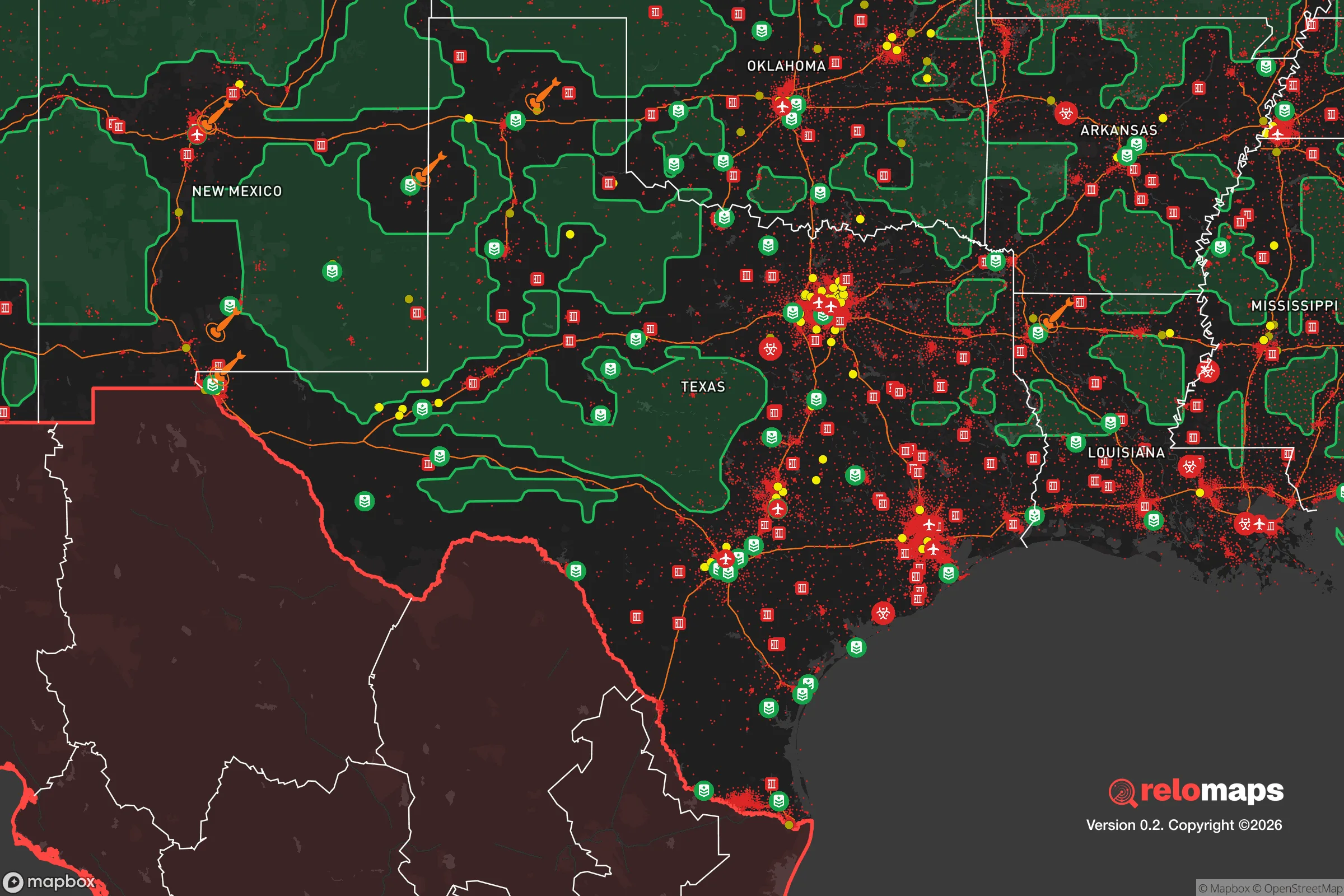


Important Note: For informational purposes only. This does not mean nothing bad ever happens in the green zones. Please use common sense. This is based on public data and modeled with AI. We tried to take a conservative approach but mistakes happen. We update this regularly as new information becomes available.
Solar Generator Recommendations
Backup power matters more here than in safer locations. We've picked three solar generators across budgets and capacity tiers — start with the budget unit if you only need a few essentials, or step up if you want to run a fridge and HVAC for days at a time.

Jackery Portable Power Station Explorer 300
Budget OptionPower on the Go: Weighing only 11 lbs, it's convenient to set up and store with book-sized foldable solar panels

BLUETTI Portable Power Station AC180
Designed for both indoor and outdoor scenarios, AC180 is highly capable as it has a robost capacity and continuous output power.

EF ECOFLOW DELTA Pro Ultra Power Station
Upgraded PickEcoFlow DELTA Pro Ultra is a whole-home energy system designed to grow with your family. Integrated with the Smart Home Panel 2, it scales to meet your evolving energy needs — keeping your home powered, intelligent, and secure through every stage of life.
We earn a commission, at no additional cost to you.
Strategic Assessment Analysis
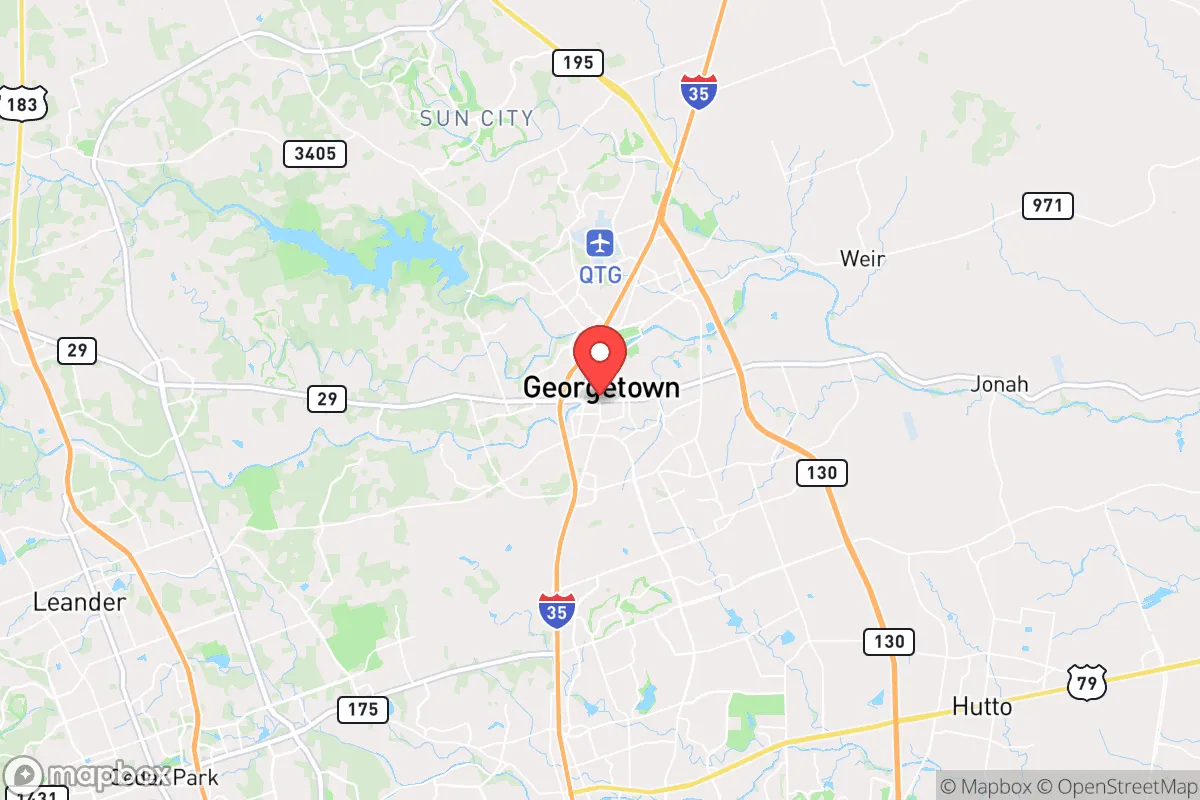
Georgetown, Texas, sits in a sweet spot that few relocation analysts can point to with a straight face: close enough to a major metro to matter, far enough to not be consumed by it. For the prepper or survival-minded conservative looking at the national picture—civil unrest, supply chain fragility, the slow unraveling of urban order—Georgetown offers a rare combination of geographic buffer and institutional stability. It’s not a bunker, but it’s not a target either. The city’s position along the I-35 corridor, roughly 30 miles north of Austin, gives you access to resources without the daily exposure to the chaos that increasingly defines large blue cities. The real question isn’t whether Georgetown is safe—it’s whether it’s resilient enough to weather what’s coming.
Geographic position and natural advantages for long-term security
Georgetown’s location is its first and strongest card. It sits on the edge of the Texas Hill Country, which means elevation, limestone bedrock, and natural water drainage—advantages that flatland suburbs simply don’t have. The area is far enough from the Gulf Coast to avoid the worst of hurricane storm surge, yet close enough to benefit from the region’s agricultural output. The Balcones Fault line runs nearby, but seismic activity in central Texas is negligible; you’re not worrying about earthquakes here. What matters more is the 30-mile buffer from Austin’s urban core. That distance is enough to insulate Georgetown from the immediate fallout of a major civic disruption in the capital—riots, grid shutdowns, or a mass casualty event tied to a protest or festival. At the same time, you’re within a 45-minute drive of Austin-Bergstrom International Airport and major medical centers, which is useful for resupply or emergency evacuation if things go sideways. The city’s position also places it near the Edwards Aquifer recharge zone, a critical water source that gives the area a natural resilience advantage over places reliant on surface reservoirs alone.
Risks, exposures, and proximity to fallout-relevant landmarks
No location is without vulnerabilities, and Georgetown has a few that a serious prepper must account for. The most obvious is proximity to I-35, a major north-south corridor that funnels traffic from the border to the heartland. In a crisis—whether a pandemic, a terrorist attack, or a mass migration event—I-35 becomes a chokepoint and a target. A truck bomb, a bridge collapse, or a coordinated highway blockade could sever Georgetown’s supply lines and trap residents. The city is also within 50 miles of the South Texas Nuclear Generating Station near Bay City. While that plant is over 150 miles away as the crow flies, prevailing winds from the south could carry fallout toward central Texas in a worst-case scenario. More immediately, Georgetown sits near the Camp Swift Army National Guard training site (about 40 miles east), which, while not a primary target, could become a staging area for federal forces during a domestic emergency—bringing unwanted attention. The city’s own growth is a double-edged sword: rapid development means more people, more traffic, and more dependence on fragile just-in-time logistics. If the grid goes down, Georgetown’s 90,000+ residents will compete for the same limited resources.
Practical resilience for a relocator: food, water, energy, and defensibility
For the individual or family looking to hunker down, Georgetown offers a mixed bag. On the plus side, the area is surrounded by active farmland and ranches. Williamson County has a strong agricultural base—cattle, hay, and row crops—which means local food production is a real option, not just a fantasy. The city’s water supply comes from the Georgetown Water Treatment Plant, which draws from Lake Georgetown and the Edwards Aquifer. Lake Georgetown is a Corps of Engineers reservoir with a capacity of about 37,000 acre-feet, and while drought is always a concern in Texas, the aquifer provides a deeper buffer than surface water alone. For energy, Georgetown is notable for being one of the first cities in Texas to achieve 100% renewable energy from wind and solar. That’s a double-edged sword: in a grid collapse, renewables without battery storage won’t keep your lights on. But the city’s municipal utility is stable and well-run, and the local grid is less prone to the rolling blackouts that plague ERCOT’s more stressed regions. Defensibility is where Georgetown shines. The city’s layout—sprawling but with clear choke points at major intersections like I-35 and SH 29—makes it easier to control access than a dense urban neighborhood. The Williamson County Sheriff’s Office is well-funded and professional, and the local gun culture is strong. You won’t be the only one with a rifle in the safe. That said, the city’s rapid growth means new subdivisions are going up faster than road infrastructure can keep pace, creating potential bottlenecks for evacuation or resupply.
The overall strategic picture for Georgetown is cautiously optimistic. It’s not a remote survivalist retreat—you’re still within a day’s drive of Houston, Dallas, and San Antonio, and the I-35 corridor is a liability in any major disruption. But for the conservative relocator who wants to be prepared without living off-grid, Georgetown offers a rare balance: institutional stability, natural water access, agricultural proximity, and a community that largely shares your values. The risks are real—proximity to a major highway, a nuclear plant downwind, and the pressures of rapid growth—but they’re manageable with planning. If you’re looking for a place to ride out the coming storms, Georgetown deserves a serious look. Just don’t expect it to stay quiet forever. The secret is out, and the preppers are already moving in.

* Values derived from national, state, county, city and local statistics and may differ in a specific area. Last updated: 2026-04-19T07:25:39.000Z
Narrative content on this page is AI-generated and may contain mistakes. Verify any details that matter before acting on them.
ReloMaps may earn a commission from affiliate links at no extra cost to you.

