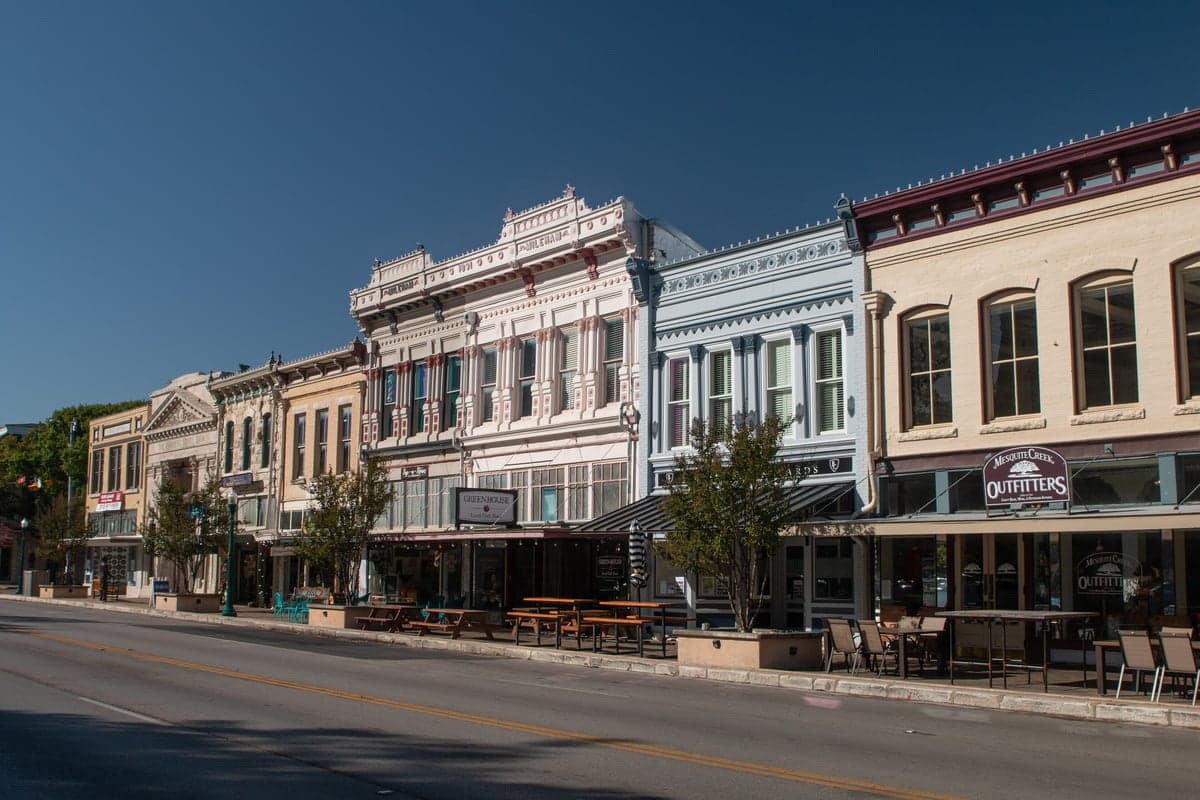
Photo: Wikipedia
Political ClimatePolitical Climate in Georgetown, TX
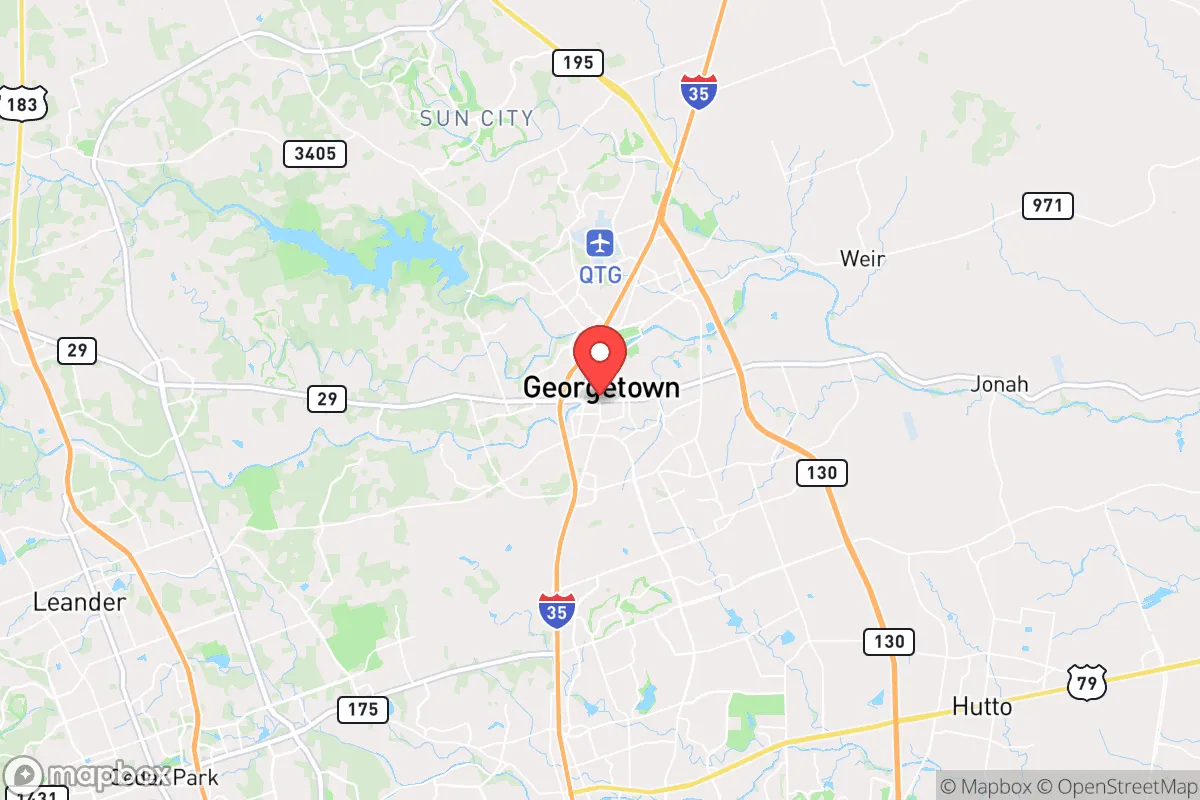
District shown is the primary district for this city’s centroid. Cities may span multiple districts.
Local Political AnalysisPolitical Analysis of Georgetown, TX
Georgetown, Texas, has long been a reliably conservative stronghold, and that hasn't changed much at its core. The Cook Partisan Voting Index (PVI) of R+11 tells you the math: this is a place where Republican candidates routinely win by double digits. But if you've lived here as long as I have, you've seen the subtle shifts. The old guard of ranchers and small-business owners is still here, but we're getting a steady influx of folks from California and the Northeast, and some of them bring a different set of ideas. The political lean is still solidly red, but the trajectory is one of slow, cautious change—and that has a lot of us paying close attention.
How it compares
To really get Georgetown's politics, you have to look at the neighbors. Drive ten miles south to Round Rock, and you'll find a more purple mix, with a growing tech sector and a younger, more transient population that leans a bit more moderate. Austin, of course, is a whole different planet—a deep blue city where the local government seems to think it knows better than you how to run your life, your business, and even what kind of lightbulb you can screw into your own house. That's the kind of overreach we're trying to avoid. Up here in Williamson County, we've historically prided ourselves on a "keep the government out of my backyard" attitude. Places like Liberty Hill and Florence are even more rural and conservative than Georgetown, while Cedar Park has a similar mix of families and retirees who value low taxes and personal freedom. The contrast is real: you can feel the difference in the air the moment you cross the county line from Travis County into Williamson.
What this means for residents
For the folks living here, the political climate means a few very tangible things. First, your property taxes are still a headache—that's Texas for you—but there's no city income tax, and the local leadership generally fights to keep regulations light. You can run a home-based business without a mountain of permits. You can send your kids to schools that, while not perfect, aren't pushing a radical social agenda. The city council and county commissioners are still overwhelmingly conservative, so you don't see the kind of zoning fights or "equity" mandates that plague Austin. But here's the thing I'm watching: as more people move in, there's pressure to "modernize" things—more bike lanes, more density, more "affordable housing" mandates that sound good but often mean more government control. The long-time residents I talk to are wary. We don't want Georgetown to become another Austin-lite, where your personal freedoms get chipped away one ordinance at a time.
One cultural distinction worth noting is the strong presence of Southwestern University, a small liberal arts college right in the heart of downtown. It brings a more progressive-leaning faculty and student body, which creates a bit of a bubble. You'll see the occasional protest or campus event that feels out of step with the rest of the town. But so far, that influence hasn't spilled over into city policy in a major way. The real test will come in the next few election cycles. If we start seeing school board candidates who want to change the curriculum or city council members who push for "sanctuary city" policies or defunding the police, that's when I'll know the tide is turning. For now, Georgetown is still a place where you can live your life without the government breathing down your neck, but you've got to keep your eyes open. The fight to keep it that way is ongoing.

State Political ClimatePolitical Climate in Texas
State Political AnalysisPolitical Environment in the State
Texas has been a reliably Republican state for decades, but the political climate is far from static. The dominant coalition remains conservative, anchored by a strong rural and suburban base, but the margin of victory has narrowed in recent cycles as the state’s explosive population growth brings in voters from both coasts. In 2020, Donald Trump won Texas by about 5.5 points, down from 9 points in 2016 and 16 points in 2012, signaling a slow but real shift. That said, the state’s political infrastructure—from the legislature to the courts—remains firmly in conservative hands, and the policy environment reflects that.
Urban vs. rural divide
The political map of Texas is a study in stark contrasts. The major metropolitan areas—Houston, Dallas-Fort Worth, San Antonio, and especially Austin—have become increasingly Democratic, with Austin’s Travis County delivering a 50-point margin for Biden in 2020. Meanwhile, the vast rural and exurban stretches of West Texas, the Panhandle, and East Texas remain deeply Republican. The real battleground is the suburbs. Places like Collin County (north of Dallas) and Fort Bend County (southwest of Houston) have flipped from solid red to purple or even blue in recent cycles, driven by an influx of college-educated professionals and minority voters. Conversely, smaller cities like Lubbock and Midland are still reliably conservative, with Lubbock County voting +28 R in 2024. The divide isn’t just about geography—it’s about lifestyle and values, with urban centers pushing progressive policies on everything from zoning to policing, while rural areas fight to preserve local control and traditional norms.
Policy environment
Texas’s policy environment is a major draw for conservatives. The state has no personal income tax, a fact that anchors its pro-business reputation. Property taxes are high—averaging about 1.7% of home value—but the overall tax burden is low compared to high-tax states like California or New York. Regulatory posture is light, especially for energy, construction, and tech. On education, the state has expanded school choice through charter schools and the Texas Education Agency’s (TEA) accountability system, though a full voucher program has stalled in the legislature. Healthcare policy is a mixed bag: Texas refused Medicaid expansion under the ACA, keeping the system market-driven, but that leaves about 18% of residents uninsured—the highest rate in the nation. Election laws have tightened, with SB 1 (2021) restricting mail-in voting and early voting hours, and requiring ID for absentee ballots. For a conservative, the policy environment is largely aligned with limited government principles, though the property tax burden and lack of school choice are ongoing frustrations.
Trajectory & freedom
On the freedom front, Texas has moved in two directions simultaneously. On one hand, it has expanded personal liberty in key areas: constitutional carry (HB 1927, 2021) allows permitless carry of handguns, and SB 14 (2023) banned gender transition procedures for minors, a major win for parental rights advocates. The state also passed HB 3979 (2021) and SB 3 (2021), which limit how critical race theory and current events can be taught in public schools, giving parents more say in curriculum. On the other hand, the state has expanded government reach in other areas. SB 8 (2021), the “Heartbeat Act,” effectively banned abortion after six weeks, but it also created a novel enforcement mechanism that empowers private citizens to sue violators—a controversial expansion of legal liability. Property rights have been tested by the Texas Railroad Commission’s regulation of oil and gas, and by local zoning battles in cities like Austin and Dallas. Overall, Texas is becoming more free on cultural and Second Amendment issues, but less free on economic and medical autonomy as the state takes a more active role in regulating private behavior.
Civil unrest & political movements
Texas has seen its share of political flashpoints. The 2020 Black Lives Matter protests in Austin, Houston, and Dallas were large and sometimes violent, leading to property damage and a lasting police reform debate. On the right, the “Texas Nationalist Movement” has gained some traction, pushing for a referendum on secession, though it remains a fringe idea. Immigration politics are a constant source of tension. Governor Greg Abbott’s Operation Lone Star has deployed state troopers and National Guard to the border, and the state has bused thousands of migrants to sanctuary cities like New York and Chicago. This has created a visible, ongoing conflict with the Biden administration over border enforcement. Election integrity remains a hot-button issue: after the 2020 election, Texas passed SB 1 to tighten voting rules, but critics argue it suppresses turnout. A new resident will notice the political polarization in everyday life—yard signs, bumper stickers, and local news coverage are heavily partisan, especially in the suburbs and rural areas.
Projection
Over the next 5-10 years, Texas will likely continue its slow drift toward competitiveness, but it won’t flip blue anytime soon. The key demographic drivers are in-migration from California and the Northeast, which tends to bring more moderate-to-liberal voters, and the rapid growth of the Hispanic population, which is not monolithic but leans Democratic. However, the state’s rural and exurban areas are growing too, and the legislature has been aggressive in gerrymandering and passing laws that entrench conservative power. Expect more battles over school choice, property tax reform, and medical freedom. The biggest wild card is the border: if the federal government doesn’t act, Texas will continue to assert its own authority, potentially leading to constitutional clashes. For someone moving in now, the state will remain a conservative stronghold for at least another decade, but the political culture will become more contentious and polarized, especially in the suburbs and cities.
For a new resident, the bottom line is this: Texas offers a policy environment that is broadly friendly to conservative values—low taxes, gun rights, parental control in education, and a light regulatory touch. But you’ll need to pick your location carefully. The rural and exurban areas are still solidly red, while the urban cores are increasingly blue. If you’re looking for a place where your vote counts and your values are reflected in local governance, stick to counties like Collin, Denton, or Montgomery north of Houston, or Midland out west. The political climate is shifting, but for now, Texas remains one of the best bets for a conservative-leaning family or individual looking to escape the progressive policies of other states.
* Values derived from national, state, county, city and local statistics and may differ in a specific area. Last updated: 2026-04-19T07:25:39.000Z
Narrative content on this page is AI-generated and may contain mistakes. Verify any details that matter before acting on them.
ReloMaps may earn a commission from affiliate links at no extra cost to you.

