
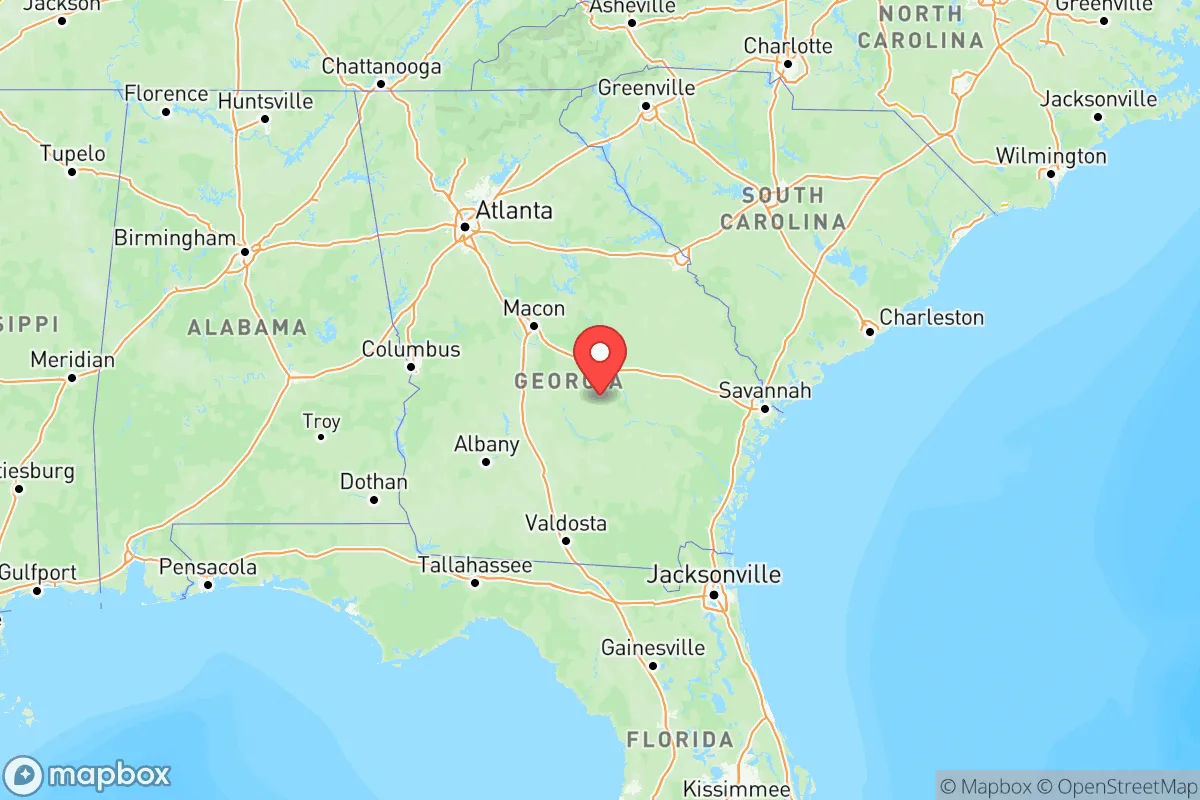
Personal Sovereignty in Georgia
Viable for self-reliance. Generally workable, though some barriers may limit total independence.
What does Personal Sovereignty tell us?
Personal Sovereignty measures your capacity for self-reliance and independence with minimal government friction. Higher scores mean fewer barriers between you and the way you want to live... but it assumes you have the space you need and good neighbors.
What does this tell us?
Personal Sovereignty measures your capacity for self-reliance and independence with minimal government friction. Higher scores mean fewer barriers between you and the way you want to live... but it assumes you have the space you need and good neighbors.
State Policy
Energy independence: Importer (12% of energy produced in-state)
Personal Liberty
Homesteading

Personal Liberty Analysis
Georgia offers one of the strongest personal sovereignty environments in the southeastern United States, balancing a light regulatory touch with robust constitutional protections for self-defense, property rights, and parental authority. The state’s legal framework consistently prioritizes individual autonomy over government oversight, making it a frequent relocation destination for those seeking greater personal freedom. While the metro Atlanta area introduces more density-driven regulations, the vast majority of the state—from the Appalachian foothills to the coastal plain—maintains a distinctly hands-off approach to daily life, property use, and personal choices.
Tax burden and regulatory posture: how Georgia compares to neighboring states
Georgia’s tax structure is among the most favorable for individuals and families seeking financial autonomy. The state levies a flat personal income tax rate of 5.49% as of 2026, down from a graduated system in prior years, with ongoing legislative pressure to reduce it further. Property taxes are notably low, with an effective average rate of 0.87% of assessed home value—well below the national average of 1.11%. Counties like Fannin, Union, and Towns in the north Georgia mountains have some of the lowest millage rates in the state, while Fulton and DeKalb counties (Atlanta core) carry higher rates that approach 1.3%. Sales tax varies by county, typically ranging from 6% to 8%, with rural counties like Rabun and Habersham on the lower end. The regulatory posture is decidedly business-friendly: Georgia is a right-to-work state, has no state-level occupational licensing for many trades, and imposes minimal environmental permitting for small-scale agriculture and residential construction outside of designated wetlands or protected watersheds. Compared to neighboring states, Georgia’s combined tax and regulatory burden is lighter than North Carolina’s and significantly lighter than Florida’s property insurance and HOA-heavy environment, though slightly heavier than Tennessee’s lack of income tax.
Self-defense and gun law specifics: constitutional carry and castle doctrine
Georgia is a constitutional carry state as of 2022, meaning any legal resident 21 or older may carry a concealed firearm without a permit. This places Georgia among the most permissive states for self-defense rights. The state also maintains a strong castle doctrine with no duty to retreat in any location where the individual is lawfully present, including vehicles and public spaces. Stand-your-ground protections are codified in Georgia Code § 16-3-23.1, and courts have interpreted these provisions broadly in favor of the defender. Permitless carry applies statewide, but local governments in Atlanta, Savannah, and Augusta have attempted to restrict firearms in government buildings and public parks—though state preemption laws generally override these efforts. For those seeking the most gun-friendly environment, rural counties like Gilmer, Pickens, and Murray have sheriffs who publicly affirm Second Amendment protections and issue permits quickly for those who still want reciprocity with states requiring a permit. Georgia also prohibits red flag laws, meaning no court can temporarily seize firearms based on behavioral risk assessments without a criminal conviction or involuntary commitment.
Self-reliance and homesteading viability: lot sizes, zoning, and off-grid feasibility
Georgia is one of the most homestead-friendly states in the South, particularly outside of metro Atlanta’s suburban sprawl. Minimum lot sizes in unincorporated areas of counties like White, Lumpkin, and Stephens are typically 1 to 3 acres for residential use, with agricultural zoning allowing parcels as small as 5 acres for livestock and crop production. Off-grid living is legally feasible in most rural counties: there is no state law requiring connection to municipal water or sewer, and private wells and septic systems are permitted with standard health department approvals. Solar panels, rainwater collection, and composting toilets are generally unregulated at the county level, though some counties like Forsyth and Hall (north of Atlanta) have adopted subdivision covenants that restrict external solar arrays or livestock. For those seeking maximum autonomy, Appling, Bacon, and Jeff Davis counties in southeast Georgia have minimal zoning ordinances, no building codes outside of structural safety inspections, and active agricultural extension offices that support small-scale farming. Georgia’s homestead exemption protects up to $21,500 of a home’s assessed value from property taxes for most homeowners, with additional exemptions for seniors and disabled veterans. The state also recognizes a broad right to farm, protecting agricultural operations from nuisance lawsuits if they predate nearby residential development.
Personal liberties: parental rights, medical autonomy, speech, and property
Georgia has enacted some of the strongest parental rights protections in the country. The Parental Bill of Rights (HB 1178, 2022) affirms that parents have the fundamental right to direct the upbringing, education, health care, and religious training of their children, and requires schools to obtain parental consent before administering any mental health or medical survey. Medical autonomy is similarly robust: Georgia does not mandate COVID-19 or childhood vaccination for school attendance (religious and medical exemptions are honored), and the state has banned vaccine passports and mask mandates in public schools. Free speech protections are reinforced by state law that prohibits public universities from restricting speech based on viewpoint, and Georgia has no hate speech laws that criminalize expression. Property rights are secured by a strong eminent domain framework that requires just compensation at fair market value plus relocation costs, and the state’s right-to-farm act (O.C.G.A. § 41-1-7) prevents local governments from declaring agricultural operations a nuisance if they have been operating for one year or more. However, property owners in Atlanta, Decatur, and Savannah face more restrictive historic preservation ordinances and tree protection ordinances that can limit what owners can do with their land. Outside those urban pockets, property use is largely unfettered.
Overall, Georgia ranks among the top tier of U.S. states for personal sovereignty, particularly for those who choose to live outside the Atlanta metropolitan area. The combination of constitutional carry, low taxes, minimal zoning in rural counties, strong parental rights, and off-grid feasibility creates an environment where individuals and families can exercise a high degree of self-determination. For relocation readers weighing freedom against access to urban amenities, Georgia offers a rare balance: the legal infrastructure of a liberty-minded state with the economic opportunities of a growing Sunbelt economy. The key variable is location—choosing a county like Gilmer, Appling, or Stephens over Fulton or DeKalb can mean the difference between near-total autonomy and a more regulated suburban experience.

Top Cities for Personal Sovereignty in Georgia










* Values derived from national, state, county, city and local statistics and may differ in a specific area. Last updated: 2026-10-15T16:37:11.000Z
Narrative content on this page is AI-generated and may contain mistakes. Verify any details that matter before acting on them.
ReloMaps may earn a commission from affiliate links at no extra cost to you.

