
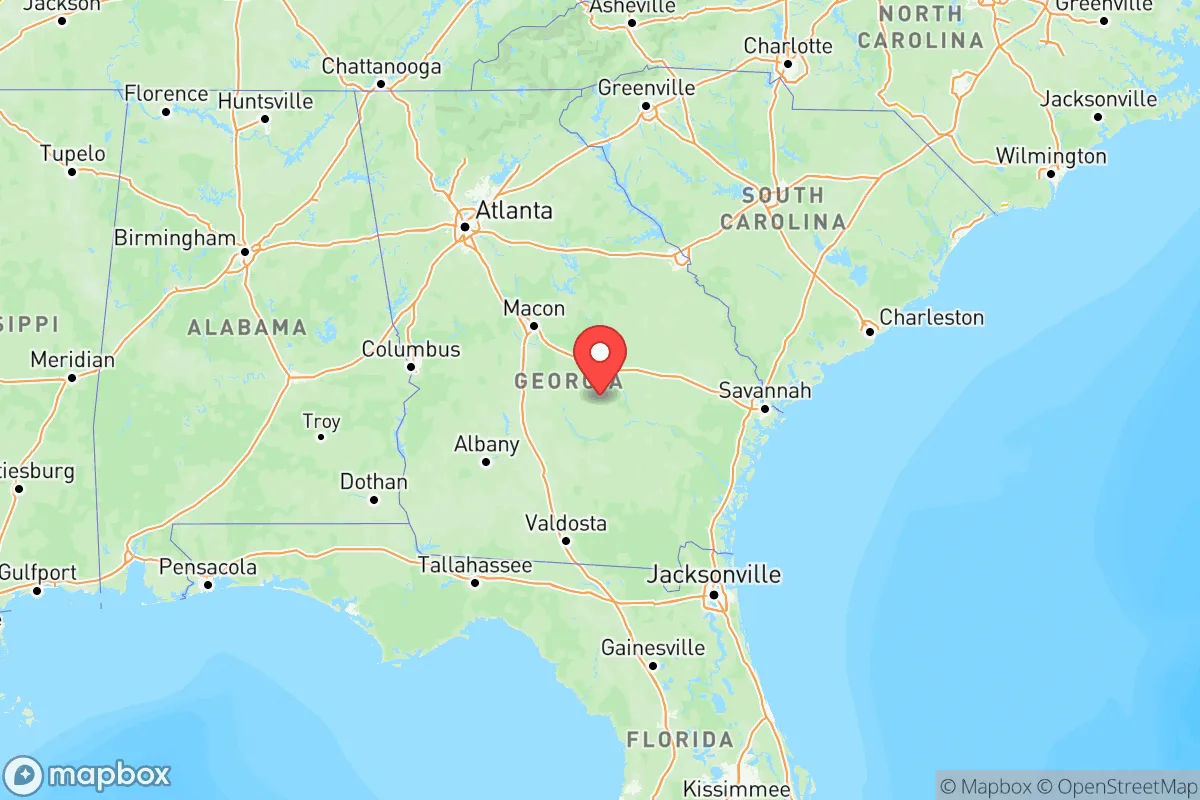
Demographics of Georgia
Affluence Level in Georgia
An upper-middle-class area. Household wealth, education levels, and homeownership run ahead of national benchmarks.
People of Georgia
Georgia’s 10.8 million residents form a state where a Black plurality (31.0%) and a shrinking White majority (49.8%) coexist alongside growing Hispanic (10.7%), East/Southeast Asian (2.5%), and Indian-subcontinent (1.8%) communities. The state’s population is increasingly urban and suburban, anchored by the Atlanta metropolitan area, which holds over 60% of all Georgians, while rural counties in the south and southwest continue to lose residents. Distinctive identity markers include a deep-rooted sense of place among families who have lived here for generations, a rapidly diversifying suburban landscape, and a cultural identity that blends Southern tradition with the economic dynamism of a Sun Belt powerhouse.
Settlement & growth (pre-1960)
Long before European contact, Georgia was home to the Mississippian culture, whose most famous site is the Etowah Indian Mounds near present-day Cartersville. By the time of European exploration, the Cherokee controlled the northern mountains and the Creek Confederacy held most of the Piedmont and coastal plain. Spanish explorers visited the coast in the 1500s, but permanent European settlement began with the British founding of Savannah in 1733 under James Oglethorpe. The colony was designed as a buffer against Spanish Florida and as a fresh start for England’s “worthy poor,” though it also quickly adopted the plantation agriculture that would define its economy.
The forced removal of the Cherokee and Creek nations in the 1830s—most infamously the Trail of Tears from the Cherokee capital of New Echota (near present-day Calhoun)—opened millions of acres for White settlement. Cotton cultivation spread across the Black Belt, a crescent of fertile soil stretching from Columbus through Macon to Augusta. Enslaved Africans were brought in vast numbers to work the plantations, and by 1860, nearly 44% of Georgia’s population was enslaved. After the Civil War and Reconstruction, many freed people remained in the same rural counties as sharecroppers and tenant farmers, establishing communities like those in Dougherty County (Albany) and Hancock County (Sparta), which remain majority-Black today.
From the 1880s through the 1920s, Georgia attracted small but significant numbers of European immigrants. Italian immigrants settled in the coal-mining town of Dante in the southwest and in the marble-quarrying community of Tate in the north. Jewish immigrants, primarily from Eastern Europe, built a notable community in Atlanta, centered on the Sweet Auburn neighborhood, and in Savannah, where the oldest Jewish congregation in the South, Mickve Israel, dates to 1733. Greek immigrants established themselves in Atlanta and Augusta, often in the restaurant and food-service industries. However, compared to Northern industrial states, Georgia’s foreign-born population remained very small through the early 20th century.
The Great Migration (roughly 1910–1970) saw millions of Black Southerners leave the region for Northern and Western cities, but Georgia also experienced internal movement from rural areas to its growing cities. Atlanta’s Black population swelled, creating neighborhoods like the Auburn Avenue corridor, which became a center of Black commerce and culture. Meanwhile, the boll weevil infestation and agricultural mechanization pushed poor White farmers off the land; many moved to mill towns like Dalton, Gainesville, and Columbus, where the textile and carpet industries offered factory work. The 1950s brought the first wave of Sun Belt migration, as defense spending and the growth of companies like Delta Air Lines and Coca-Cola drew White middle-class families to Atlanta’s new suburbs, such as Sandy Springs and Decatur.
Modern era (post-1965)
The 1965 Hart-Cellar Act fundamentally reshaped Georgia’s demographics, though the effects were slower to arrive than in coastal gateway states. The first major post-1965 immigrant group was Vietnamese refugees, who began arriving after the fall of Saigon in 1975. Many were resettled by churches and nonprofit organizations in Atlanta, with a significant cluster forming along Buford Highway in DeKalb County. That corridor, stretching through Chamblee and Doraville, became the state’s first major immigrant enclave, later diversifying to include Korean, Chinese, Mexican, and Central American communities. Today, Buford Highway is one of the most ethnically diverse areas in the Southeast.
Hispanic immigration accelerated in the 1990s and 2000s, driven by demand for labor in construction, poultry processing, and agriculture. Mexican immigrants concentrated in the poultry-processing towns of Gainesville (Hall County) and Dalton (Whitfield County), as well as in the agricultural belt around Tifton and Moultrie. A smaller but significant Cuban community developed in the Atlanta suburbs of Cobb and Gwinnett counties. By 2020, Georgia’s Hispanic population had grown to over 10%, with the highest concentrations in the Atlanta suburbs and the northern poultry corridor.
East/Southeast Asian communities expanded rapidly after 1990, particularly in Gwinnett County. The county’s city of Duluth is home to a large Korean American population, while Johns Creek and Suwanee have attracted Chinese and Taiwanese professionals. A substantial Vietnamese community remains in the Buford Highway corridor, with a newer concentration in Norcross. Indian-subcontinent immigration, primarily from India and Pakistan, surged after 2000, driven by the technology and healthcare sectors. The Indian community is heavily concentrated in the northern Atlanta suburbs of Alpharetta, Cumming, and Johns Creek, where high-tech employers like Microsoft, NCR, and ADP have major offices.
Domestic migration has been equally transformative. Since the 1990s, Georgia has been a top destination for Black Americans returning to the South in a reverse Great Migration, particularly from New York, Chicago, and Detroit. Atlanta’s Black middle class has grown substantially, with neighborhoods like Cascade Heights, Stonecrest, and South Fulton becoming majority-Black, affluent suburbs. White domestic migrants from the Rust Belt and California have also poured into the state, drawn by lower housing costs and business-friendly policies. This influx has fueled explosive growth in exurban counties like Forsyth, Cherokee, and Paulding, which were predominantly White and rural in 1990 but are now increasingly diverse.
The future
Georgia is projected to become a majority-minority state by the early 2030s, driven by the continued growth of Hispanic, East/Southeast Asian, and Indian-subcontinent populations, combined with the aging and lower birth rates of the White population. The Atlanta region will absorb most of this growth, with Gwinnett, Cobb, and Forsyth counties expected to see the largest numeric increases. Rural Georgia, particularly the Black Belt counties in the southwest, will continue to lose population as young people move to urban areas and the agricultural economy consolidates. The state’s cultural identity is evolving from a binary Black-White framework to a multiethnic mosaic, though racial segregation remains pronounced: many Atlanta suburbs are effectively divided along ethnic lines, with White, Black, Hispanic, and Asian communities often living in distinct neighborhoods and attending different schools.
The next 10-20 years will likely see further dispersion of immigrant communities beyond the Atlanta core. Hispanic populations are already spreading into smaller cities like Athens, Augusta, and Savannah, while East/Southeast Asian and Indian communities are establishing secondary clusters in college towns and technology hubs. Political power is shifting accordingly: Georgia’s congressional delegation and state legislature are becoming more diverse, though the pace of change lags behind the demographic reality. For a newcomer, Georgia offers a state where the old and new South coexist uneasily but productively, with economic opportunity concentrated in the Atlanta orbit and a slower, more traditional pace of life in the smaller cities and rural areas.
Georgia is becoming a more diverse, more suburban, and more economically stratified state, where the Atlanta metro area increasingly resembles a national melting pot while the rest of the state holds onto its Southern identity. For someone moving in now, the key decision is whether to join the fast-growing, multicultural suburbs of the north or the quieter, more homogeneous communities of the south and coast—each offers a different version of what Georgia is becoming.

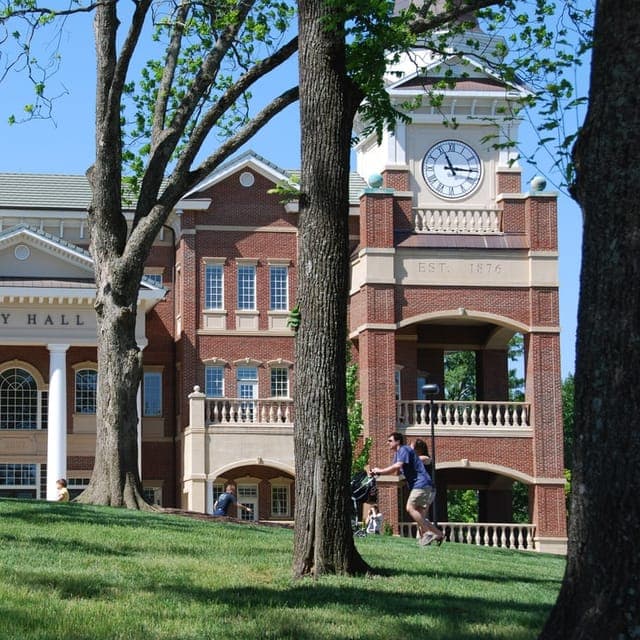
Most Diverse Cities in Georgia
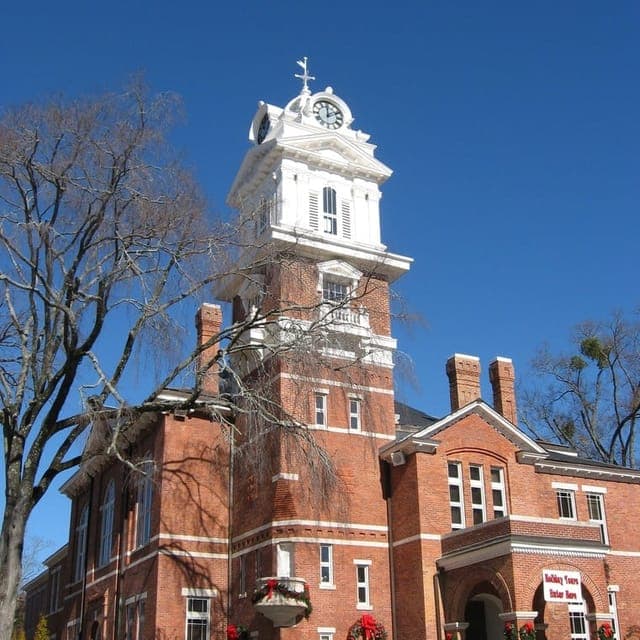
Most Homogenous Cities in Georgia



* Values derived from national, state, county, city and local statistics and may differ in a specific area. Last updated: 2026-10-15T16:37:11.000Z
Narrative content on this page is AI-generated and may contain mistakes. Verify any details that matter before acting on them.
ReloMaps may earn a commission from affiliate links at no extra cost to you.

