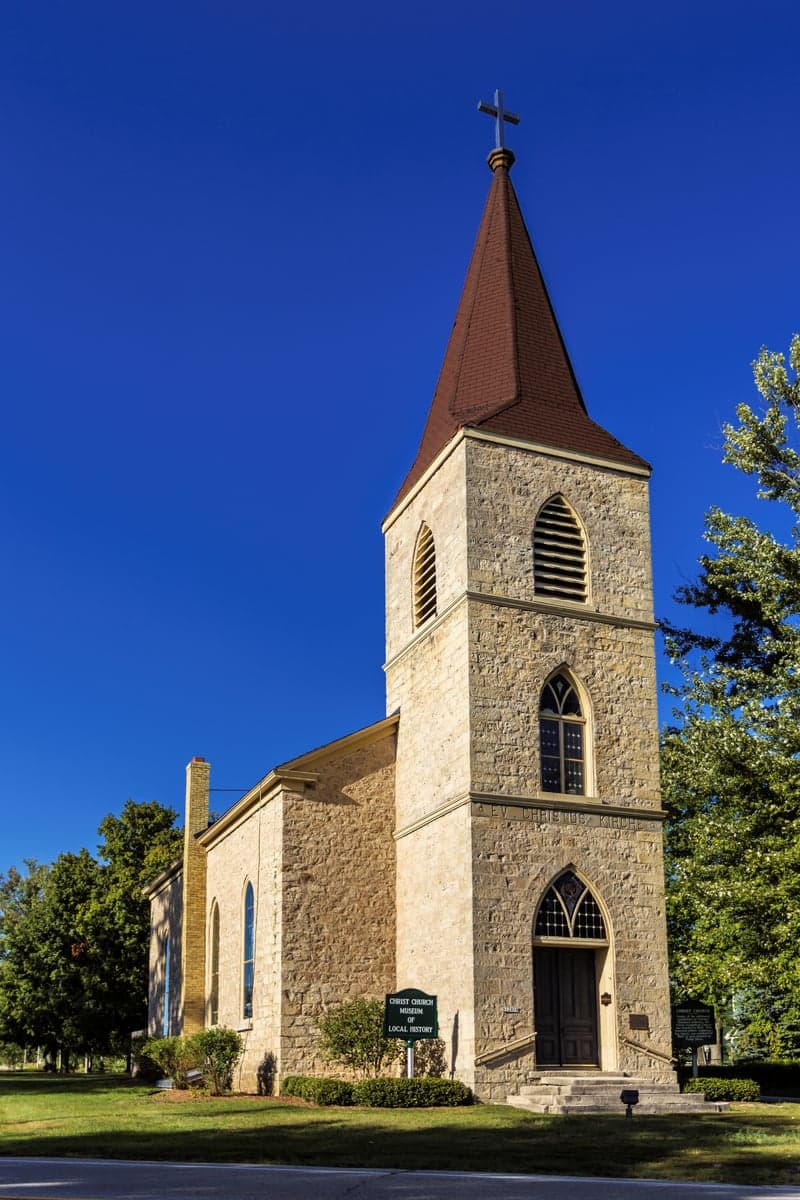
Photo: Wikipedia
Demographics of Germantown, WI
Affluence Level in Germantown, WI
An upper-middle-class area. Household wealth, education levels, and homeownership run ahead of national benchmarks.
People of Germantown, WI
The people of Germantown, Wisconsin, today number 20,940 and form a predominantly white, college-educated, and family-oriented community. With 82.4% of residents identifying as white, the city is less diverse than the Milwaukee metro area as a whole, yet it hosts small but distinct clusters of East/Southeast Asian (3.3%), Indian subcontinent (3.0%), Black (4.3%), and Hispanic (3.8%) populations. The city’s character is shaped by its post-1960s suburban expansion, a strong local school system, and a population density of roughly 1,200 people per square mile—moderate for a Milwaukee exurb. Residents often describe Germantown as a place where “everyone knows your name,” but the data reveals a community quietly diversifying along specific neighborhood lines.
How the city was settled and grew
Germantown’s human history begins not with German immigrants, but with the Potawatomi and Menominee peoples who used the area for hunting and seasonal camps. European-American settlement began in the 1840s, when German-speaking immigrants from the Rhineland and Prussia purchased federal land grants along the Milwaukee River and its tributaries. These early settlers built farms and small hamlets, with the Germantown Village core (around what is now Main Street and Fond du Lac Avenue) emerging as a trading post and church center. The original German Lutheran and Catholic families—names like Schmitz, Koehler, and Zell—established the Historic Germantown District, a cluster of late-19th-century homes and the original St. Boniface Church (1852). A second wave of German-speaking immigrants arrived in the 1880s, drawn by dairy farming and the railroad’s extension to the area. These later settlers filled the Rockfield neighborhood (southwest of the village center), where many farmsteads still stand. By 1900, Germantown was a rural crossroads of roughly 800 people, almost entirely German-American and Catholic or Lutheran. The city remained a sleepy farming community through the 1950s, with no significant non-white or non-German population.
Modern era (post-1965)
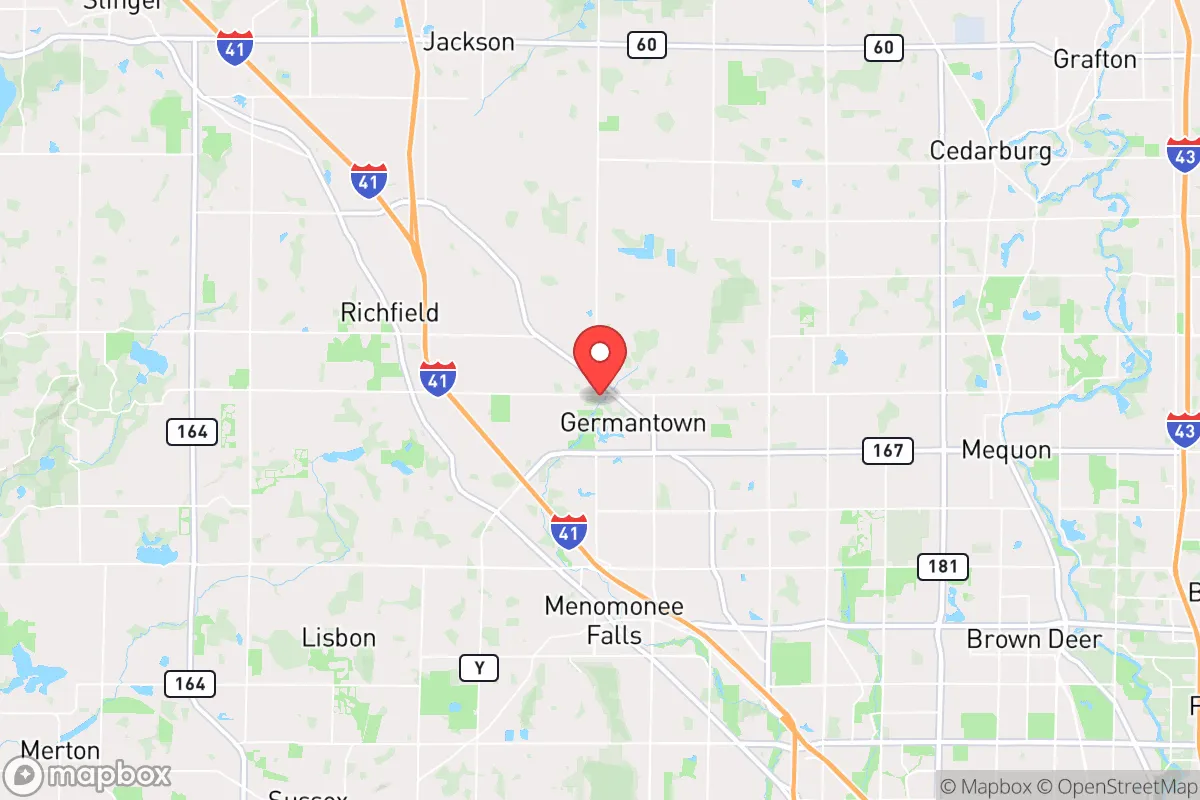
The 1965 Hart-Cellar Immigration Act had little immediate effect on Germantown, but the city’s transformation began in earnest after 1970, when Milwaukee’s suburbanization pushed middle-class families northward along Interstate 41. The Meadowbrook subdivision (built 1972–1985) absorbed the first wave of domestic in-migrants—white families from Milwaukee’s northwest side seeking larger lots and better schools. This period also saw the arrival of a small number of East/Southeast Asian families, mostly of Chinese and Korean descent, who settled in the Woodland Hills neighborhood (east of Highway 145) and worked in Milwaukee’s medical and engineering sectors. By 1990, Germantown’s population had grown to 8,000, and the city incorporated in 1994 to manage this growth. The 2000s brought a second domestic wave: families from the Chicago suburbs and other Midwestern states, drawn by the Germantown School District’s reputation and relatively affordable housing (median home value ~$350,000 in 2025). These newcomers—still overwhelmingly white—filled the Stonegate and Prairie View subdivisions (built 2000–2015). The Indian subcontinent community, numbering roughly 630 residents today, began forming in the 2010s, concentrated in the Riverbend area near the Milwaukee River, where many work in IT and healthcare in Milwaukee or Menomonee Falls. The Black population (4.3%) is more dispersed, with no single neighborhood majority, while the Hispanic community (3.8%) is centered in the older Historic Germantown District, where some families have converted former German Lutheran storefronts into Mexican bakeries and taquerias.
The future
Germantown’s population is slowly diversifying, but the pace is modest. The white share has declined from 92% in 2000 to 82.4% today, driven primarily by the growth of Indian and East/Southeast Asian communities. The foreign-born share (3.9%) is low compared to the Milwaukee metro average (8.5%), suggesting that most diversity comes from second-generation families moving from other U.S. cities rather than direct immigration. The city is not tribalizing into distinct ethnic enclaves; rather, the Indian and Asian populations are integrating into the same subdivisions as white families, particularly in Riverbend and Woodland Hills. The Hispanic population is plateauing, with no new major migration streams. Over the next 10–20 years, Germantown will likely remain a predominantly white, college-educated suburb, but the Indian and East/Southeast Asian shares could each reach 5–6% as families age in place and new professional households arrive. The city’s biggest demographic challenge is not diversity but aging: the median age is 42, and the school-age population has declined 8% since 2010, a trend that may slow new home construction.
For someone moving in now, Germantown is a stable, low-diversity suburb where the population is slowly becoming more varied but remains anchored by its German-American roots and school-focused culture. The city offers a predictable, safe environment with a growing but still small professional-class diversity—a place where a new resident can expect to find neighbors who look like them, but also a few who do not, concentrated in specific subdivisions built after 2000. The bottom line: Germantown is becoming slightly more cosmopolitan, but it remains fundamentally a white, middle-class, family-oriented community with a long memory of its German founding.

* Values derived from national, state, county, city and local statistics and may differ in a specific area. Last updated: 2026-04-21T10:35:32.000Z
Narrative content on this page is AI-generated and may contain mistakes. Verify any details that matter before acting on them.
ReloMaps may earn a commission from affiliate links at no extra cost to you.

