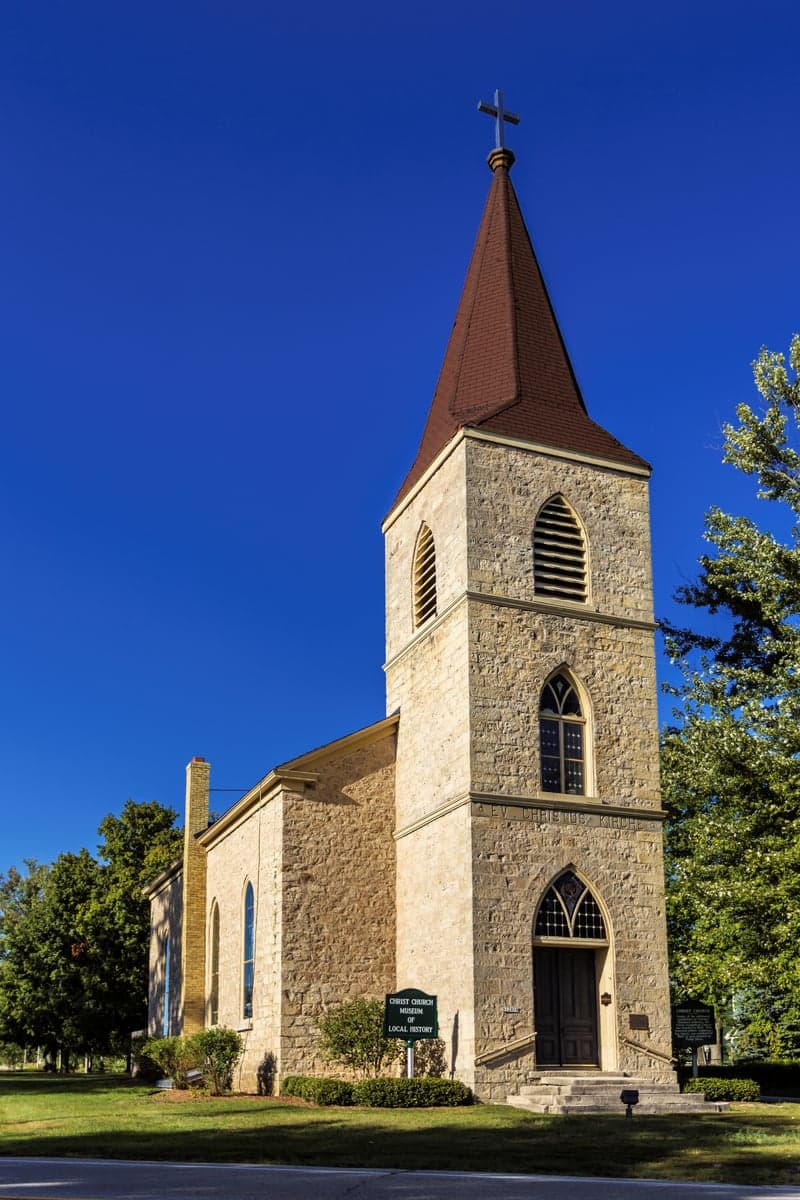
Photo: Wikipedia
Political ClimatePolitical Climate in Germantown, WI
District shown is the primary district for this city’s centroid. Cities may span multiple districts.
Local Political AnalysisPolitical Analysis of Germantown, WI
Germantown, Wisconsin, has long been a solidly conservative community, and that hasn't changed much. The Cook PVI of R+11 tells you the story right off the bat—this isn't a swing town. It's a place where folks tend to vote their values, and those values lean heavily toward limited government, personal responsibility, and keeping taxes in check. If you're looking for a place where the political winds haven't shifted dramatically toward the progressive side, Germantown is still holding the line, though you can feel the pressure from the bigger cities nearby.
How it compares
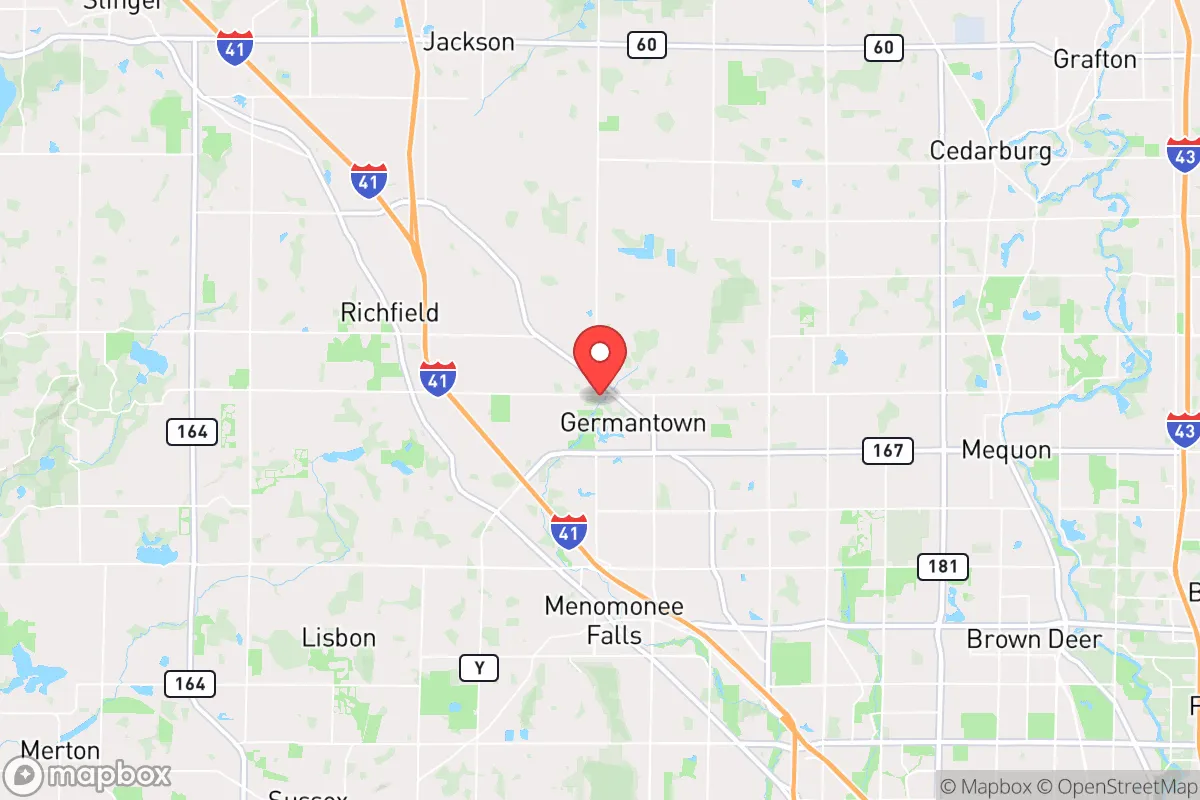
Drive 20 minutes south to Milwaukee, and you're in a completely different world—politically, culturally, and in terms of how much government you're willing to put up with. Milwaukee County has been trending blue for years, and you see it in everything from local ordinances to school board decisions. Germantown, by contrast, sits in Washington County, which is one of the most reliably Republican counties in the state. Neighboring towns like Menomonee Falls and Sussex share a similar conservative bent, but you can feel the creep of progressive ideas from the metro area. It's not that Germantown is changing overnight, but the cultural pull from the city is real. You see it in school curriculum debates, in zoning fights, and in the occasional local election where a more moderate candidate tries to make inroads. So far, the town has held firm, but it takes vigilance.
What this means for residents
For the people who live here, the political climate means a few concrete things. First, your tax dollars aren't being funneled into the kind of social programs you see in Milwaukee. The local government tends to keep its hands off your business—lower property taxes, fewer regulations on small businesses, and a general attitude of "live and let live" as long as you're not hurting anyone. Second, the schools here still emphasize traditional values and academic rigor, without the kind of ideological overreach you hear about in other districts. Parents have a real voice, and the school board isn't pushing agendas that make you cringe at the dinner table. Third, you can expect your neighbors to share your concerns about government overreach, whether it's mask mandates, gun control, or property rights. It's a community where people still wave at each other and look out for one another, but they're also ready to show up at a town hall meeting if something feels off.
The biggest cultural distinction in Germantown is the quiet, stubborn independence that runs through the place. You don't see the kind of performative activism or virtue signaling you get in the suburbs closer to Milwaukee. People here are more likely to solve their own problems than demand the government step in. That said, the long-term trend is something to keep an eye on. As the metro area expands and younger families move in from the city, there's always a risk that the political balance could tip. For now, Germantown remains a stronghold for those who value freedom over convenience and tradition over trends. If you're looking for a place where your voice still matters and the government stays out of your way, this is still one of the best spots in southeastern Wisconsin.

State Political ClimatePolitical Climate in Wisconsin
State Political AnalysisPolitical Environment in the State
Wisconsin has long been a classic purple state, but over the past decade it has shifted into a deeply polarized battleground where the conservative-leaning rural and exurban areas are increasingly pitted against the growing progressive strongholds in its two major metros. The state’s overall partisan lean is a razor-thin split, with Republicans holding the legislature and most statewide offices, but Democrats winning the governorship and presidential contests by narrow margins. Over the last 10-20 years, the trajectory has been one of hardening divisions: the rural-urban gap has widened dramatically, and the state’s political identity is now defined by a tug-of-war between traditional Midwestern conservatism and a rising progressive activism centered in Madison and Milwaukee.
Urban vs. rural divide
The political map of Wisconsin is a textbook example of the urban-rural chasm. The Democratic base is concentrated in Milwaukee and Madison, which together account for roughly 30% of the state’s vote. Milwaukee County has trended heavily blue, delivering margins of 60-70% for Democratic candidates, while Dane County (Madison) is even more lopsided, often exceeding 75% Democratic. These two metros are the engine of the state’s progressive movement, driving policies on climate, social justice, and public-sector union power. In contrast, the rest of the state is overwhelmingly Republican. The WOW counties (Waukesha, Ozaukee, Washington) surrounding Milwaukee are among the most reliably conservative suburbs in the Midwest, often voting 60-65% Republican. Further north, the rural Northwoods region—places like Rhinelander and Minocqua—is deeply red, as are the western and central farming communities. The Fox Valley (Appleton, Green Bay, Oshkosh) is a key swing region, but it has been trending rightward as union influence wanes and cultural issues take precedence. The 2020 election saw Brown County (Green Bay) flip from Obama to Trump, a microcosm of the broader rural shift.
Policy environment
Wisconsin’s policy environment is a mixed bag for conservatives. On the plus side, the state has a flat income tax of 4.4% (down from 7.75% in 2011), and property taxes are relatively moderate compared to neighboring Illinois and Minnesota. The state is a right-to-work state (since 2015), and Act 10 (2011) effectively ended collective bargaining for most public employees, a major win for fiscal conservatives. However, the state’s regulatory posture is uneven. The Department of Natural Resources (DNR) has been a flashpoint, with Republican-led efforts to streamline permitting for businesses and agriculture clashing with environmental groups. On education, Wisconsin has a robust school choice program (the oldest in the nation, dating to 1990), which allows families in Milwaukee and Racine to use vouchers for private schools. But the state’s public school system remains heavily unionized and progressive-leaning, especially in Madison. Healthcare is a sore spot: the state expanded Medicaid under the Affordable Care Act, and the Office of the Commissioner of Insurance has kept premiums relatively stable, but many conservatives view the expansion as a step toward government-run healthcare. Election laws are a bright spot: Wisconsin has voter ID (since 2011), and the legislature has resisted efforts to expand mail-in voting, though the 2020 election saw a temporary surge in absentee ballots due to the pandemic.
Trajectory & freedom
The trajectory of freedom in Wisconsin is a tale of two trends. On one hand, the state has seen significant expansions of personal liberty in recent years. Constitutional carry (permitless carry of concealed firearms) became law in 2023, a major win for Second Amendment advocates. The state also passed a parental rights bill in 2023 that requires schools to notify parents about curriculum changes and health services, a direct response to progressive overreach in districts like Madison and Milwaukee. On the other hand, the state’s freedom is under assault from the progressive strongholds. Madison and Milwaukee have enacted local ordinances that restrict speech (e.g., “hate speech” codes) and impose vaccine mandates for city employees. The Wisconsin Supreme Court flipped to a 4-3 liberal majority in 2023 after the election of Janet Protasiewicz, who campaigned on abortion rights and redistricting reform. This has already led to the court striking down the state’s 1849 abortion ban (which had been dormant for decades) and is now considering a challenge to the current legislative maps, which heavily favor Republicans. If the maps are redrawn, it could shift the legislature toward Democratic control, opening the door to higher taxes, expanded government healthcare, and more restrictive gun laws. The 2023 Act 12 (the “shared revenue” bill) also gave Milwaukee and Madison more local control, which many conservatives see as a backdoor to progressive policies.
Civil unrest & political movements
Wisconsin has been a flashpoint for civil unrest, most notably the 2020 Kenosha riots following the shooting of Jacob Blake. The unrest saw widespread property destruction, arson, and the tragic killing of two protesters by Kyle Rittenhouse, who was later acquitted on self-defense grounds. The event polarized the state and galvanized both the Black Lives Matter movement and the Blue Lives Matter counter-movement. In Madison, the 2020-2021 protests over the death of George Floyd led to the toppling of a statue of a Union soldier and the renaming of several streets, sparking a backlash that helped fuel Republican gains in the suburbs. Immigration politics are less intense here than in border states, but the 2023 influx of migrants to Chicago has spilled over into Milwaukee, where the city declared itself a “sanctuary city” in 2020. This has led to tensions with the state government, which has passed laws prohibiting sanctuary policies. Election integrity remains a hot-button issue: the 2020 election saw widespread use of “Zuckerbucks” (private funding for election administration) in Milwaukee and Madison, and the state’s bipartisan Elections Commission has been criticized by both sides. The 2022 election saw a surge in Republican turnout in rural areas, driven by concerns over election integrity and parental rights.
Projection
Looking ahead 5-10 years, Wisconsin is likely to become more polarized, but the direction of the state’s political tilt depends on demographic shifts. The in-migration of remote workers from Illinois and Minnesota is accelerating, particularly to the Lake Geneva area and the Door County peninsula. Many of these newcomers are fiscally conservative but socially moderate, which could soften the state’s rightward drift. However, the Milwaukee suburbs (Waukesha, Ozaukee) are growing and becoming even more conservative, while the Madison metro is expanding its progressive footprint. The 2024 election will be a key test: if Trump wins the state again, it will embolden the legislature to push for further election reforms and tax cuts. If Democrats win, expect a push for expanded Medicaid, gun control, and a redrawn map. The Wisconsin Supreme Court will be the decisive battleground: if the liberal majority holds, the state could see a dramatic shift toward progressive policies, including a state-level “Green New Deal” and a ban on private school vouchers. For conservatives, the key is to hold the line on the legislature and the governor’s mansion, while fighting to keep the court from becoming a rubber stamp for progressive activism.
For a new resident, the bottom line is this: Wisconsin offers a relatively low-tax, high-freedom environment in its rural and suburban areas, but the state’s political future is uncertain. If you’re moving to Waukesha or Rhinelander, you’ll find a community that shares your values on guns, taxes, and parental rights. If you’re moving to Madison or Milwaukee, be prepared for a progressive urban machine that will push back on those values. The state’s trajectory is a microcosm of the national divide: two different visions of freedom, competing for the same ground. Choose your county wisely.
* Values derived from national, state, county, city and local statistics and may differ in a specific area. Last updated: 2026-04-21T10:35:32.000Z
Narrative content on this page is AI-generated and may contain mistakes. Verify any details that matter before acting on them.
ReloMaps may earn a commission from affiliate links at no extra cost to you.

