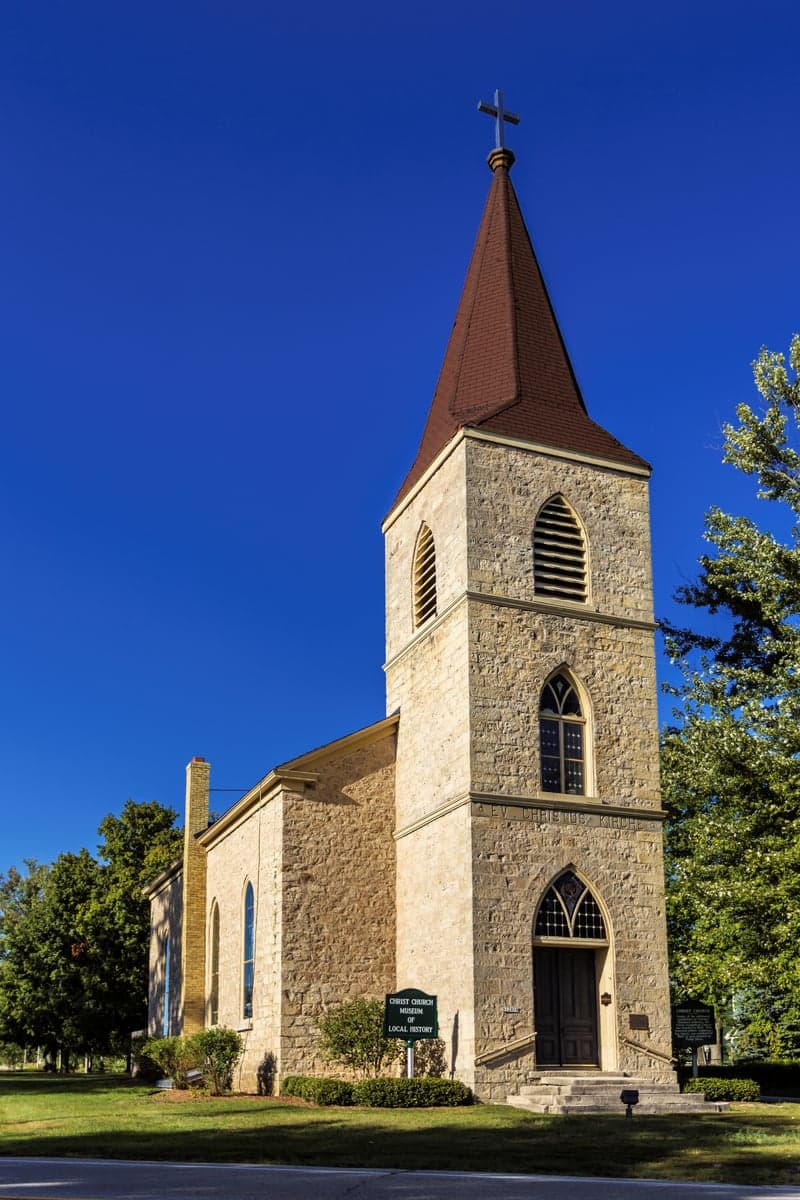
Photo: Wikipedia
Strategic Assessment of Germantown, WI
Meaningful friction. Expect exposure to either population pressure, blast zones, or natural disaster risk. Consider buying a retreat property.
What does the Strategic Assessment tell us?
Our Strategic Assessment grades tactical survivability of an area. Major population centers, military targets, fallout zones, natural disasters, and border exposure all drive risk — lower exposure means a more defensible position in a crisis.
This is heavily inspired by Joel Skousen's Strategic Relocation book. Highly recommended you checkout the book ($)What does this tell us?
Our Strategic Assessment grades tactical survivability of an area. Major population centers, military targets, fallout zones, natural disasters, and border exposure all drive risk — lower exposure means a more defensible position in a crisis.
This is heavily inspired by Joel Skousen's Strategic Relocation book. Highly recommended you checkout the book ($)Strategic Pillars

Key Distances
Regional Safe Places
Below is our recommended "safe zones" in Wisconsin and the surrounding area based on our strategic heuristics. For most people, it's unrealistic to live in a “safe zone” full-time due to work, family or other personal reasons. They tend to be more rural. However, many of these areas are perfect for second homes and retreat properties that double as a vacation home or even a short-term rental.
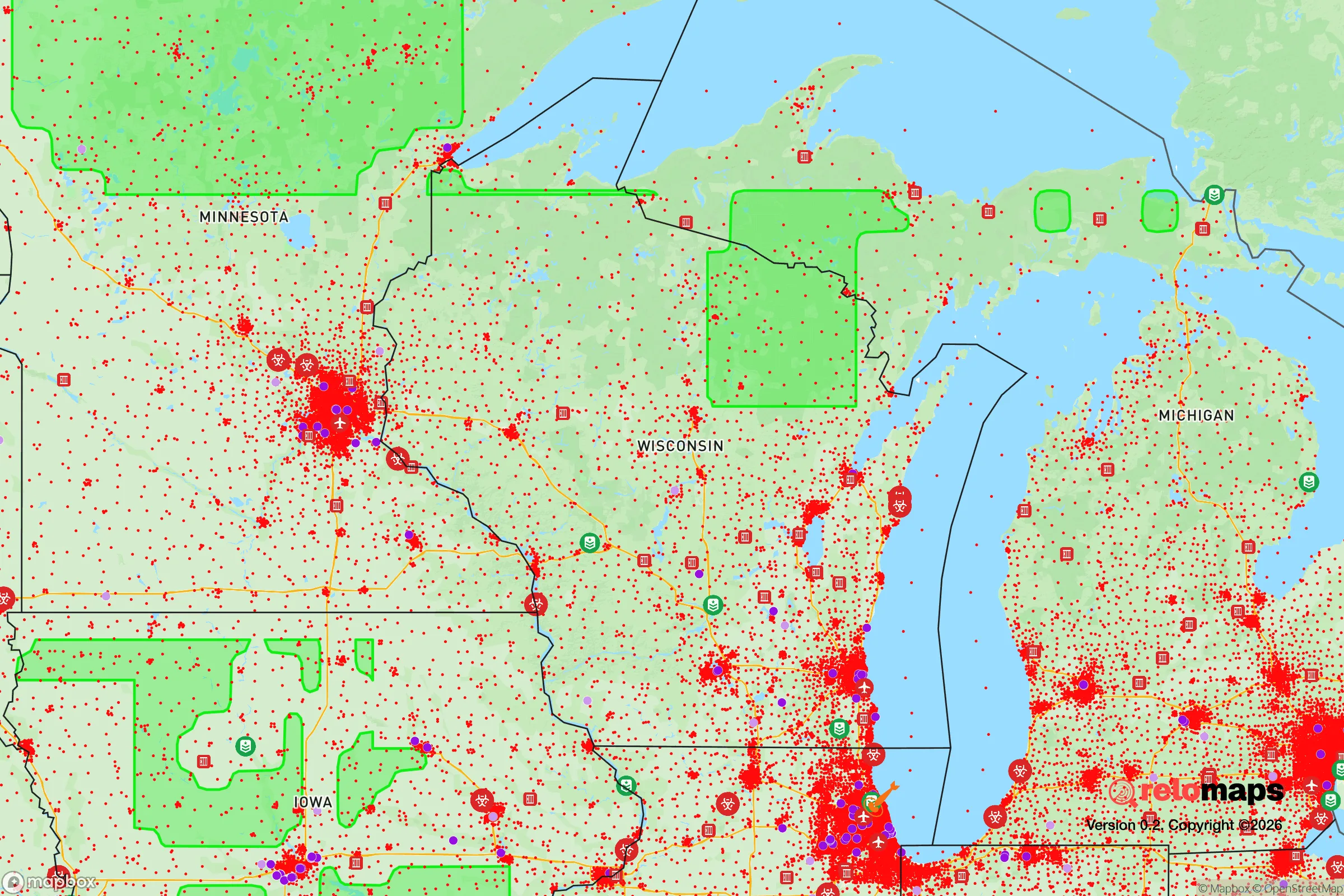
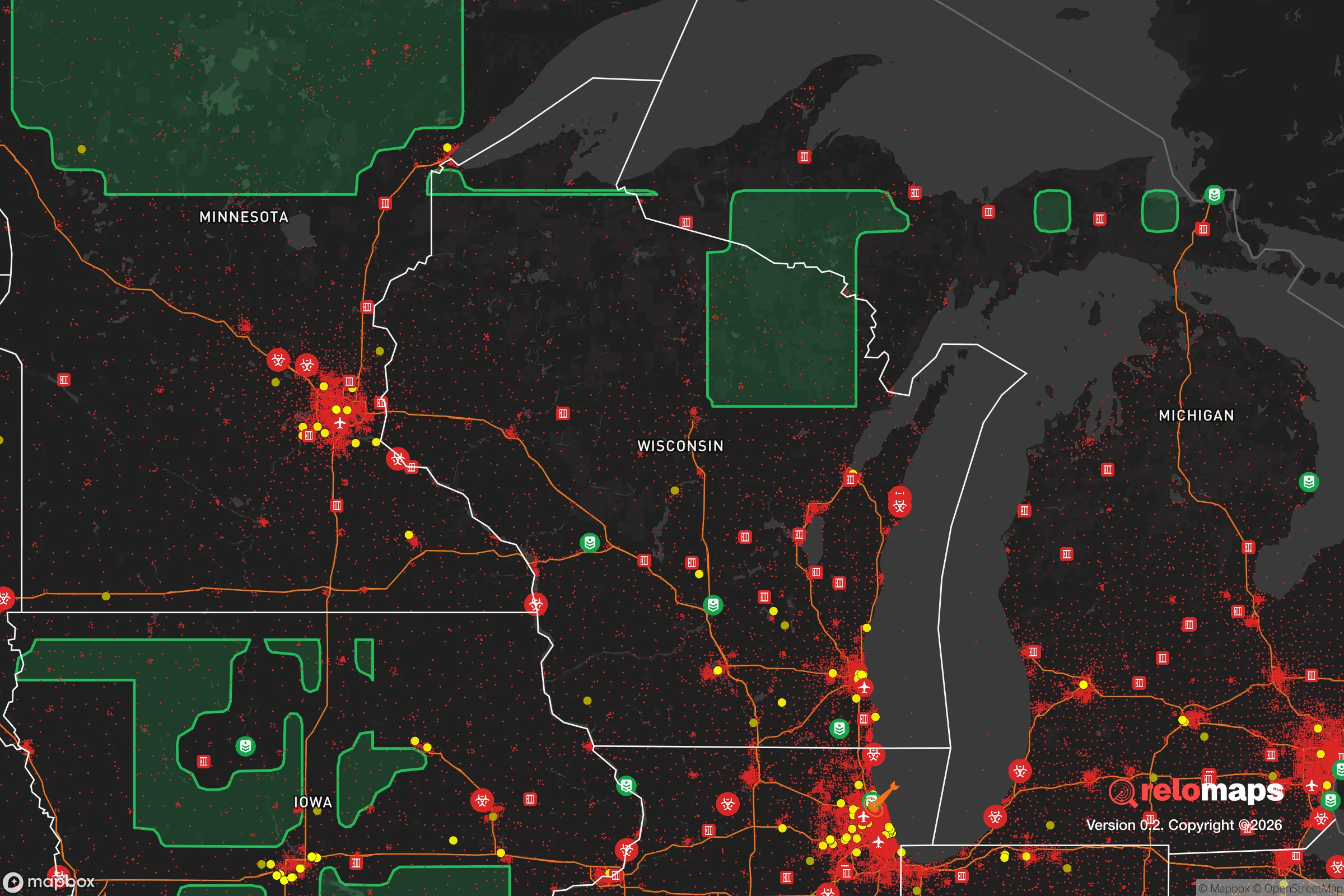


Important Note: For informational purposes only. This does not mean nothing bad ever happens in the green zones. Please use common sense. This is based on public data and modeled with AI. We tried to take a conservative approach but mistakes happen. We update this regularly as new information becomes available.
Solar Generator Recommendations
Backup power matters more here than in safer locations. We've picked three solar generators across budgets and capacity tiers — start with the budget unit if you only need a few essentials, or step up if you want to run a fridge and HVAC for days at a time.

Jackery Portable Power Station Explorer 300
Budget OptionPower on the Go: Weighing only 11 lbs, it's convenient to set up and store with book-sized foldable solar panels

BLUETTI Portable Power Station AC180
Designed for both indoor and outdoor scenarios, AC180 is highly capable as it has a robost capacity and continuous output power.

EF ECOFLOW DELTA Pro Ultra Power Station
Upgraded PickEcoFlow DELTA Pro Ultra is a whole-home energy system designed to grow with your family. Integrated with the Smart Home Panel 2, it scales to meet your evolving energy needs — keeping your home powered, intelligent, and secure through every stage of life.
We earn a commission, at no additional cost to you.
Strategic Assessment Analysis
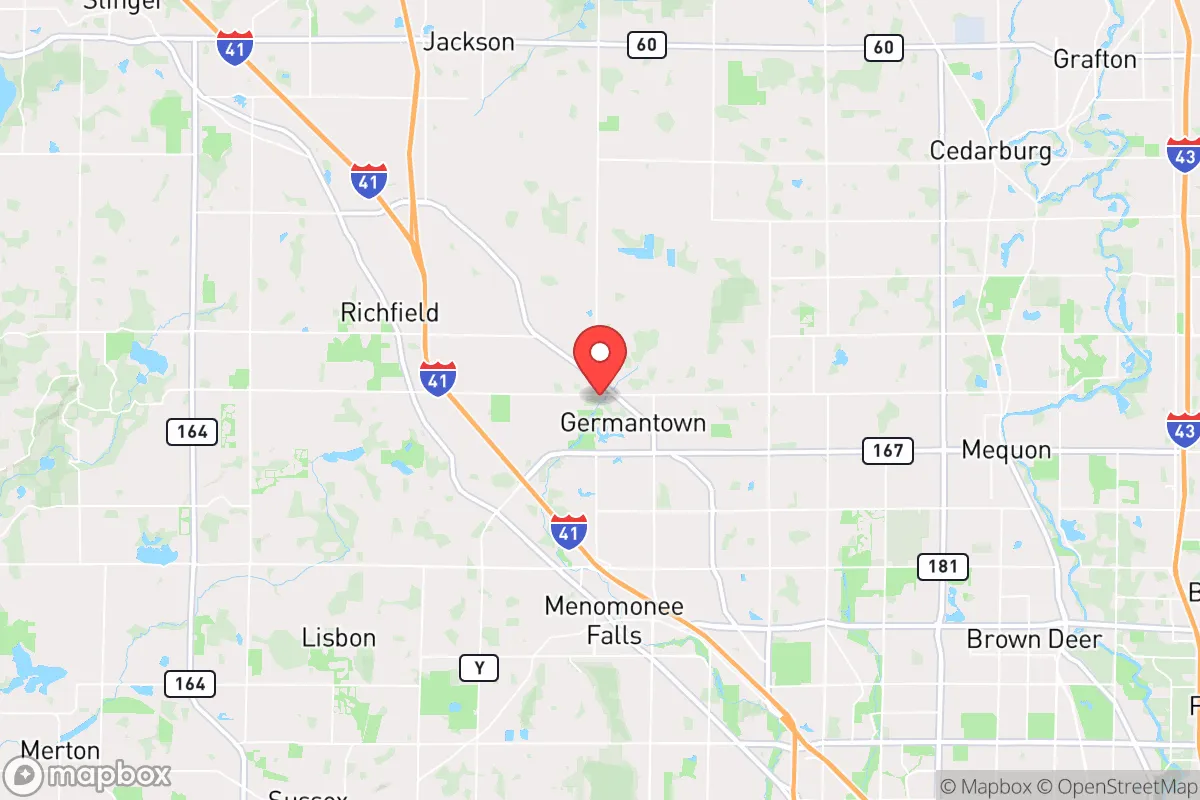
Germantown, Wisconsin, offers a compelling strategic position for those prioritizing resilience and preparedness, sitting roughly 20 miles northwest of Milwaukee in a corridor that balances rural access with suburban infrastructure. Its location along U.S. Route 45 and proximity to Interstate 41 provide solid evacuation and supply routes, while the area’s distance from the immediate blast zones of major urban centers—Milwaukee’s downtown is about 25 miles southeast—reduces direct exposure to initial fallout and civil unrest cascades. For a relocator with a survivalist mindset, Germantown’s mix of established community, agricultural land, and water resources makes it a defensible base, though its proximity to regional vulnerabilities demands careful assessment.
Geographic position and natural advantages for long-term survival
Germantown sits within the Kettle Moraine region, a glacially sculpted landscape of rolling hills, hardwood forests, and numerous small lakes and streams. This topography offers natural cover and defensible terrain—elevation changes and wooded areas can obscure movement and provide concealment, while the abundance of surface water (including the Menomonee River and several kettle lakes) reduces dependence on municipal systems. The area’s deep, fertile loam soils support small-scale agriculture, a critical asset for food security if supply chains fracture. The village itself is surrounded by active farmland, with corn and soybean fields within a mile of the village center, meaning a relocator could feasibly establish a garden or barter with local producers. The region’s four-season climate also works in a prepper’s favor: cold winters slow disease vectors and discourage transient populations, while the growing season (roughly 150 days) allows for meaningful food production. Germantown’s elevation—around 900 feet above sea level—keeps it above the floodplains of the Milwaukee River system, reducing flash-flood risks common in lower-lying areas.
Risks, exposures, and proximity to fallout-relevant landmarks
The primary strategic liability is Germantown’s location within the Milwaukee metropolitan statistical area, which includes over 1.5 million people. A mass casualty event or civil unrest in Milwaukee could send waves of refugees north along Highway 145 and I-41, potentially overwhelming local resources. The village itself has a population of about 20,000, but it sits within a suburban corridor that extends continuously to Milwaukee’s northern suburbs—meaning there is no significant buffer zone. More critically, Germantown lies approximately 30 miles from the Point Beach Nuclear Plant (Two Rivers, WI) and about 45 miles from the Byron Nuclear Station in Illinois. While prevailing winds in this region are from the west-northwest, a release event could still deposit fallout across the area within hours. The village is also within 10 miles of the Milwaukee County Mitchell International Airport, a potential target for coordinated attacks, and within 15 miles of the Fort McCoy military installation (though that’s 120 miles northwest, its supply routes pass through the region). On the positive side, Germantown has no major chemical plants, refineries, or rail yards within its borders, and the nearest interstate interchange (I-41/Highway 145) is a chokepoint that could be monitored or blocked if needed.
Practical resilience for a relocator: food, water, energy, and defensibility
For a relocator establishing a homestead, Germantown’s practical resilience is mixed but workable. Water access is strong: the village draws from a deep sandstone aquifer via municipal wells, and most residential lots have private wells available—a critical redundancy. The Menomonee River and nearby lakes (like Friess Lake and Little Cedar Lake) provide surface water for filtration, though treatment would be necessary. Food production is feasible on standard suburban lots of 0.5–2 acres, with many properties already having garden space; the Washington County Farmers Market (in nearby West Bend) and local CSAs offer immediate barter networks. Energy resilience is a weak point: the grid is standard suburban, with no community microgrids or known off-grid infrastructure. However, solar potential is moderate (4.5–5 peak sun hours per day), and the area’s tree cover means wood heat is a viable backup—most homes have fireplaces, and firewood is readily available from local woodlots. Defensibility is moderate: Germantown’s layout is a typical suburban grid with cul-de-sacs, which creates natural chokepoints but also limited fields of fire. The village has a well-funded police department (about 30 officers) and a volunteer fire department, but in a prolonged crisis, these resources would be stretched. The best defensive strategy is to locate on the village’s rural fringe—areas along County Line Road or near the Kettle Moraine State Forest offer more seclusion and natural barriers.
Overall, Germantown presents a balanced strategic picture for the conservative prepper: it avoids the worst fallout zones of Milwaukee and Chicago while retaining access to their economic and medical resources during stable times. The area’s water abundance, agricultural potential, and defensible terrain make it a viable long-term retreat, but the suburban density and proximity to major population centers mean a relocator must invest in perimeter security, food storage, and community-building with like-minded neighbors. For those willing to trade absolute isolation for logistical convenience and a ready-made community of fellow conservatives (Washington County voted +18 R in 2024), Germantown is a solid choice—provided you plan for the 30-mile refugee corridor and maintain a low profile. The village’s real strength lies in its ability to function as a staging ground: close enough to Milwaukee to gather intelligence and supplies, far enough to avoid the initial chaos, and surrounded by enough natural resources to sustain a disciplined group through a multi-year disruption.

* Values derived from national, state, county, city and local statistics and may differ in a specific area. Last updated: 2026-04-21T10:35:32.000Z
Narrative content on this page is AI-generated and may contain mistakes. Verify any details that matter before acting on them.
ReloMaps may earn a commission from affiliate links at no extra cost to you.

