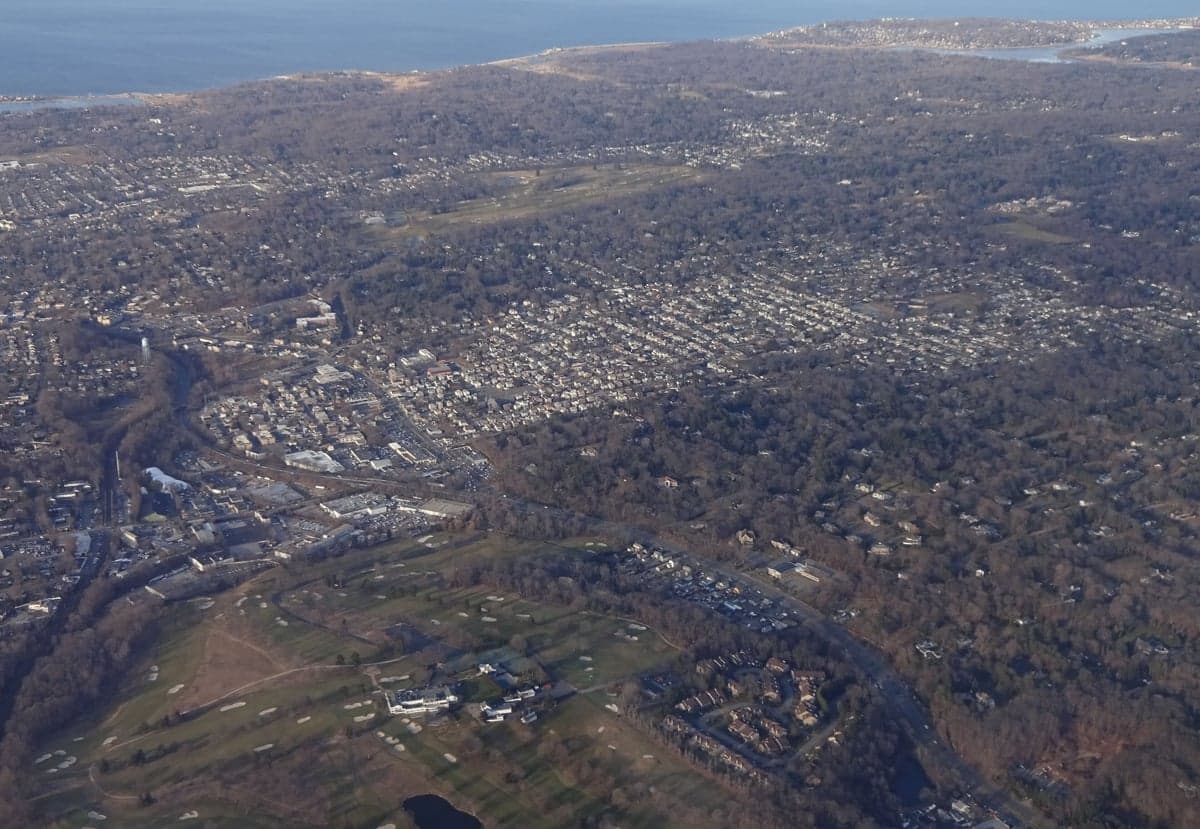
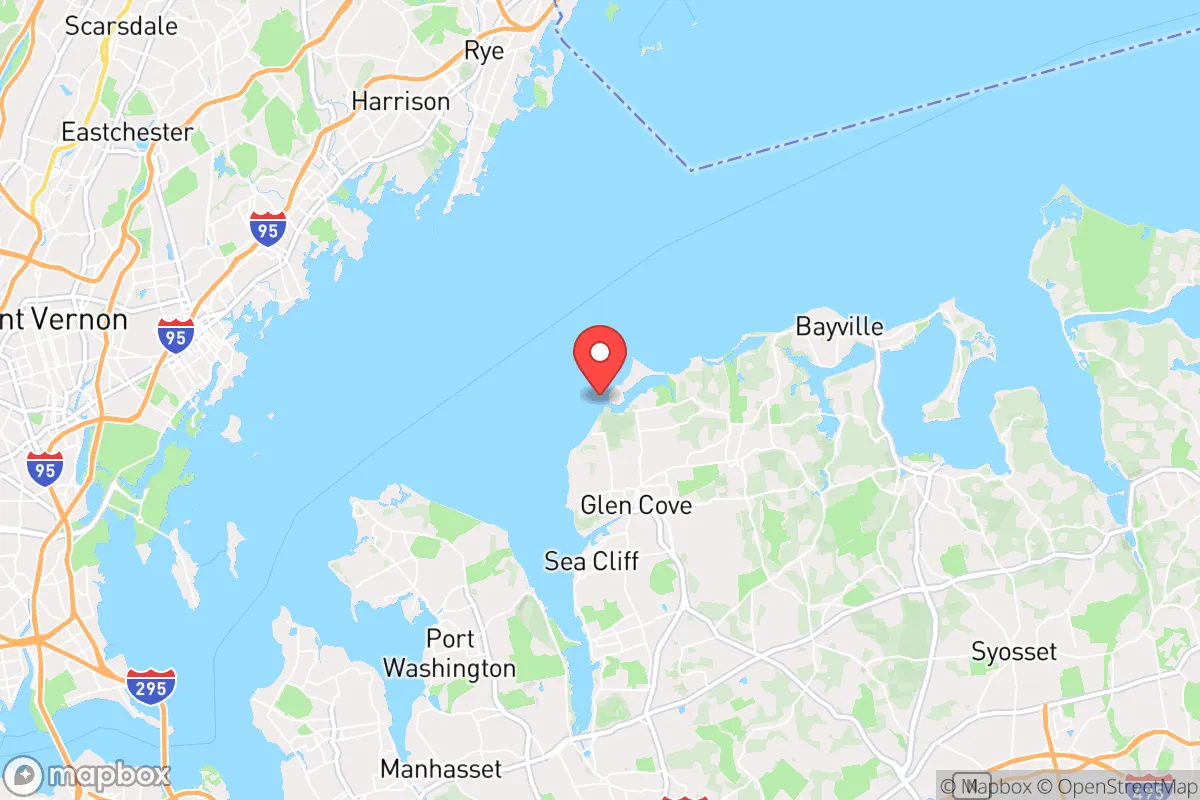
Photo: Wikipedia
Demographics of Glen Cove, NY
Affluence Level in Glen Cove, NY
A middle-class area roughly in line with national averages across income, home values, education, and employment.
People of Glen Cove, NY
Glen Cove, New York, is a city of 28,101 residents with a distinctive dual identity: a historic North Shore enclave of old-money estates and a working-to-middle-class immigrant gateway. The population is 55.1% White, 33.7% Hispanic, 3.8% Black, 2.8% East/Southeast Asian, and 2.0% Indian (subcontinent), with 14.5% foreign-born and 40.0% college-educated. This demographic mix reflects successive waves of settlement—from English colonists and European industrial workers to modern Latin American and Asian arrivals—each leaving a distinct footprint in the city’s neighborhoods.
How the city was settled and grew
Glen Cove’s human history begins with the Matinecock people, who occupied the coast before English settlers purchased the land in 1668 as part of the “Oyster Bay” patent. The city’s first permanent European residents were English and Dutch farmers who established small hamlets. The real transformation came in the mid-19th century, when wealthy New York City industrialists—the Pratts, Morgans, and Rockefellers—built sprawling Gold Coast estates along the waterfront, employing Irish, German, and later Italian laborers as domestic staff and groundskeepers. These workers settled in what became known as “The Village” (the downtown core around School Street) and “Cedar Swamp Road” area, creating tight-knit ethnic enclaves. By 1900, Glen Cove had a substantial Irish and Italian working class, alongside a smaller German and Polish presence. The opening of the Long Island Rail Road’s Glen Cove branch in 1867 accelerated growth, and the city incorporated in 1917. The post-World War II era brought a wave of Jewish families moving from Brooklyn and Queens, particularly into “Glen Cove Landing” and the “Sea Cliff” border neighborhoods, reshaping the city’s religious and cultural landscape.
Modern era (post-1965)
The 1965 Hart-Cellar Immigration Act fundamentally altered Glen Cove’s demographics. The first major post-1965 arrivals were Puerto Ricans and Dominicans, drawn by service jobs in the remaining estates and the growing healthcare sector at Glen Cove Hospital. They concentrated in “The Hill” (the area around Highland Road) and the “Glen Cove Gardens” apartment complexes, where rents were affordable. By 1990, the Hispanic share had risen to roughly 15%, and it has since climbed to 33.7% as of 2024. The 1980s and 1990s also saw an influx of Central American immigrants, particularly Salvadorans and Guatemalans, who joined the existing Hispanic community. Meanwhile, the East/Southeast Asian population (2.8%) grew more slowly, with Chinese and Korean families settling in the “Glen Cove Estates” section near the Nassau County border, attracted by the school system. The Indian subcontinent population (2.0%) is a more recent arrival, largely post-2000, with professionals working in technology and finance choosing “Glen Cove Manor” and the newer developments off Brewster Street. The White population, which was over 85% in 1980, has declined to 55.1%, with many long-established families moving to less diverse suburbs in Suffolk County. The Black population (3.8%) has remained relatively stable, concentrated in the “Glen Cove Housing Authority” area and parts of “The Hill.”
The future
Glen Cove’s population is trending toward a Hispanic-majority future, likely within the next 10–15 years. The Hispanic share (33.7%) is growing through both immigration and higher birth rates, while the White share continues to decline through out-migration and an aging demographic. The East/Southeast Asian and Indian communities are small but growing, primarily through professional in-migration, and are likely to remain concentrated in the city’s newer, higher-priced housing stock. The city is not homogenizing; rather, it is tribalizing into distinct enclaves: “The Hill” and “Glen Cove Gardens” are overwhelmingly Hispanic, “Glen Cove Estates” and “Glen Cove Manor” are mixed White and Asian, and the “Sea Cliff” border area remains predominantly White and Jewish. The city’s 40.0% college-educated rate is high for a working-class suburb, reflecting the professionalization of the newer immigrant cohorts. The major wildcard is redevelopment: the former Glen Cove Hospital site and the waterfront “Glen Cove Ferry Terminal” area are slated for mixed-use housing, which could attract younger White and Asian professionals and slow the Hispanicization trend.
For someone moving in now, Glen Cove is a city in demographic transition—increasingly Hispanic and working-class in its core neighborhoods, but with pockets of professional and ethnic diversity. The school district is under pressure from the growing English-language-learner population, but the city’s location on the Gold Coast and its commuter rail access to Manhattan continue to attract a mix of families and singles. The next decade will likely see continued Hispanic growth, modest Asian and Indian expansion, and a shrinking but still significant White presence, making Glen Cove a genuinely multiethnic suburb rather than a homogenized enclave.

* Values derived from national, state, county, city and local statistics and may differ in a specific area. Last updated: 2026-04-24T15:54:47.000Z
Narrative content on this page is AI-generated and may contain mistakes. Verify any details that matter before acting on them.
ReloMaps may earn a commission from affiliate links at no extra cost to you.

