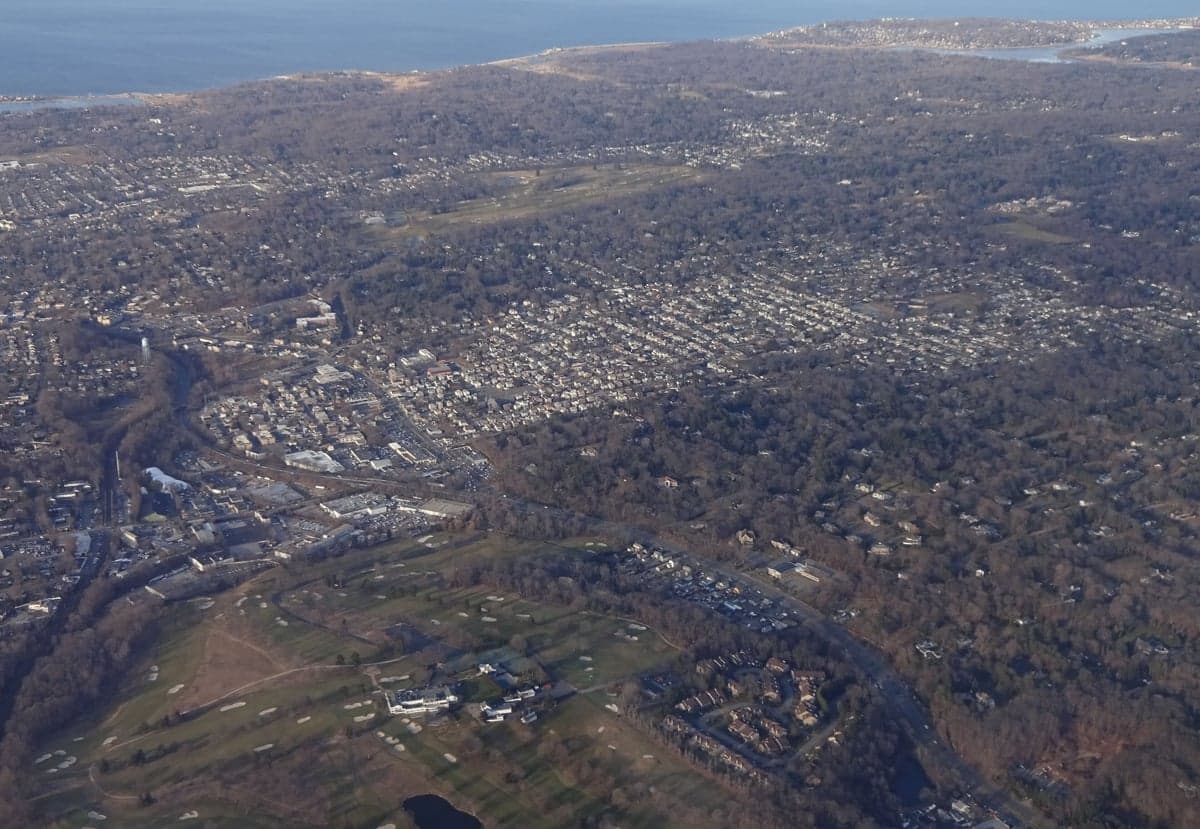
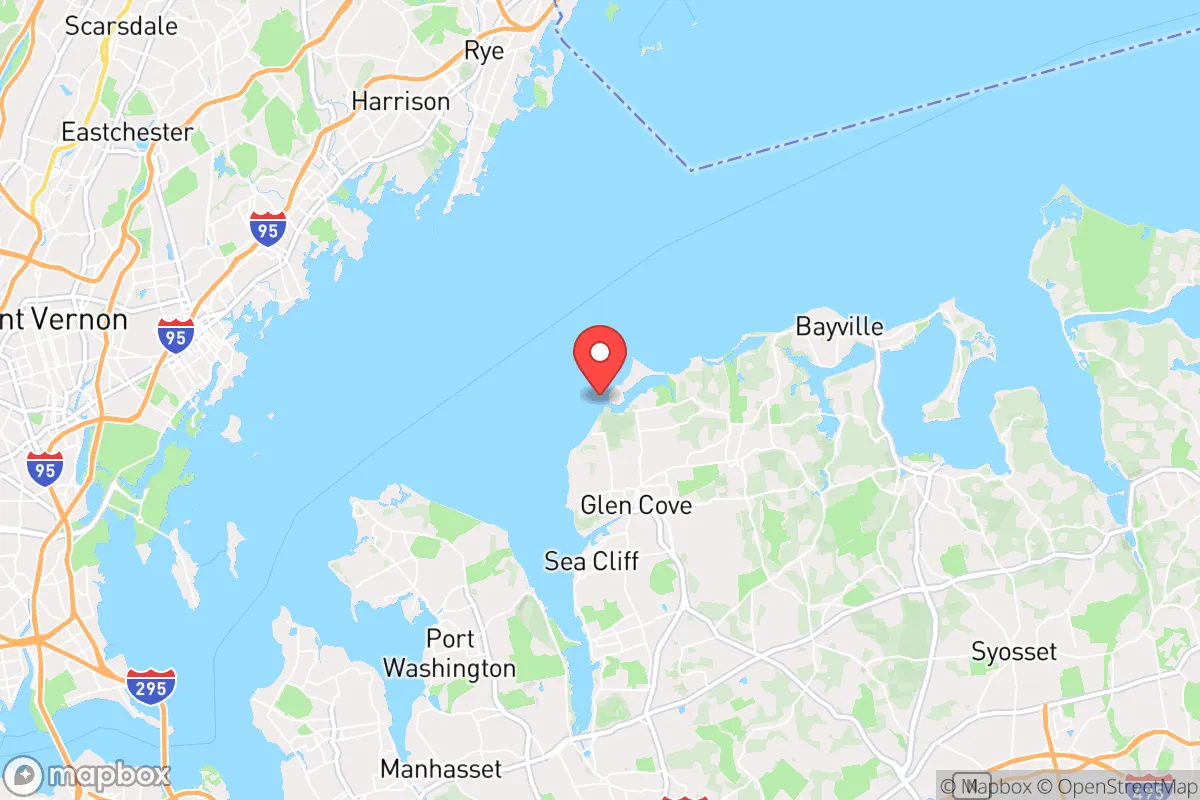
Photo: Wikipedia
Political ClimatePolitical Climate in Glen Cove, NY
District shown is the primary district for this city’s centroid. Cities may span multiple districts.
Local Political AnalysisPolitical Analysis of Glen Cove, NY
Glen Cove is one of those places that used to be a rock-solid conservative stronghold on Long Island, but like a lot of the North Shore, it’s been drifting. The Cook PVI rating of EVEN tells you everything you need to know—this city is a true toss-up now, which would have been unthinkable thirty years ago. You’ll still find plenty of folks who remember when the local GOP ran the show, but the last few election cycles have seen the city council and the mayor’s office flip back and forth. The trajectory is concerning if you value limited government and personal freedoms, because the progressive wing has been gaining ground, especially in the more densely packed neighborhoods near the water.
How it compares
To really understand Glen Cove’s shift, you have to look at the towns around it. Head east into Oyster Bay or north into Locust Valley, and you’re still in reliably red territory—those areas vote Republican by comfortable margins and tend to push back hard on new taxes and zoning overreach. But Glen Cove itself is sandwiched between that and the more liberal-leaning areas like Hempstead and Roslyn, which have gone solidly blue. What happened here is that a lot of younger families and transplants from the city moved in, drawn by the waterfront and the train line, and they brought their big-government ideas with them. The old guard—the guys who ran the local hardware store and coached Little League—are being replaced by people who think the city should have a say in everything from your property taxes to what kind of lightbulbs you can use.
What this means for residents
For anyone who values keeping government out of their wallet and their life, the trend in Glen Cove is a red flag. The local progressives have been pushing for more affordable housing mandates, which sounds nice until you realize it means higher density and more government control over private property. They’ve also been floating ideas like a local energy tax and stricter building codes that go way beyond what the state requires. If you’re a homeowner, you’ve probably noticed your tax bill creeping up faster than in neighboring villages that still have conservative leadership. The school board has also become a battleground, with activists trying to push curriculum changes that focus more on social agendas than on reading, writing, and arithmetic. It’s not a full-blown crisis yet, but if you’re not paying attention, you could wake up to a city that looks a lot more like a mini-version of New York City than the quiet, family-oriented suburb it used to be.
One thing that still sets Glen Cove apart is its stubborn streak of independence. The city has its own police department, its own water authority, and a history of fighting off annexation attempts from larger neighbors. That local control is a double-edged sword—it means you can still have a real say in how things are run, but it also means the progressive activists can focus their energy on a smaller target. The cultural divide here is real: you’ve got the old-timers who remember when the downtown had a five-and-dime and a barber who’d give you a straight-razor shave, and the newcomers who want bike lanes and farmers’ markets every weekend. If you’re a conservative, the long-term outlook depends on whether the old-timers can hold the line or whether the newcomers keep stacking the deck. My gut says it’s going to be a fight for the next decade, and the outcome will decide whether Glen Cove stays a place where you can live your life without the government breathing down your neck.

State Political ClimatePolitical Climate in New York
State Political AnalysisPolitical Environment in the State
New York State has shifted dramatically over the past two decades, moving from a competitive purple state to a solidly blue one, driven overwhelmingly by New York City and its inner suburbs. The state’s overall partisan lean is now roughly D+15 in presidential elections, a stark contrast to the 2000s when it was closer to D+10 and still had competitive statewide races. The dominant coalition is a fusion of downstate urban progressives, public-sector unions, and affluent suburban liberals, while upstate and rural areas have become increasingly Republican strongholds. For a conservative-leaning individual or family, the key takeaway is that New York’s political center of gravity is firmly in Manhattan and Brooklyn, and that influence shapes nearly every policy lever in Albany.
Urban vs. rural divide
The political map of New York is a tale of two states. New York City’s five boroughs—Manhattan, Brooklyn, Queens, the Bronx, and Staten Island—cast about 40% of the state’s vote, and they vote overwhelmingly Democratic. Manhattan and Brooklyn routinely deliver 80-85% of their ballots to Democratic candidates. The immediate suburbs—Nassau and Westchester counties—have also trended blue, with Westchester now reliably Democratic after being a swing county in the 1990s. Upstate, the picture flips dramatically. The Buffalo-Niagara region, while anchored by a Democratic-leaning city, is surrounded by deep-red rural counties like Wyoming, Genesee, and Orleans. The Southern Tier, from Chautauqua County east to Broome County, is solidly Republican, with places like Allegany and Steuben counties voting 65-70% for Donald Trump in 2020. The Capital Region around Albany is a mixed bag—Albany County itself is heavily Democratic, but surrounding Rensselaer and Saratoga counties lean Republican. The North Country, including the Adirondacks and the St. Lawrence Valley, is reliably red, with Jefferson and St. Lawrence counties voting for Trump by double digits. The divide isn’t just about geography—it’s about culture and economics. Upstate residents often feel ignored by Albany, which is dominated by downstate interests, and this resentment fuels a growing rural-urban polarization.
Policy environment
New York’s policy environment is among the most progressive in the nation, and for a conservative, it can feel like a regulatory straightjacket. The state has the highest combined state and local tax burden in the country, with income tax rates topping out at 10.9% for high earners and property taxes that are among the nation’s highest—especially in places like Westchester, Nassau, and Erie counties. The state’s regulatory posture is aggressive: the Climate Leadership and Community Protection Act mandates a 70% renewable energy grid by 2030 and net-zero emissions by 2050, driving up energy costs. Education policy is dominated by the teachers’ unions, with per-pupil spending among the highest in the nation but mixed results—only about 40% of students are proficient in reading and math. Healthcare is heavily regulated, with the state expanding Medicaid under the Affordable Care Act and implementing a public option for health insurance. Election laws have been loosened significantly: no-excuse absentee voting, early voting, and automatic voter registration are now law. The state also passed the John R. Lewis Voting Rights Act in 2022, which requires federal preclearance for any local voting changes in jurisdictions with a history of discrimination. For a conservative, the policy environment feels like a one-party state where the legislature and governor are aligned with progressive advocacy groups, leaving little room for dissent.
Trajectory & freedom
New York is becoming less free by almost any measure of personal liberty, especially for conservatives. The state has aggressively expanded gun control: the SAFE Act of 2013 banned assault weapons and high-capacity magazines, and the 2022 Concealed Carry Improvement Act (CCIA) effectively ended public carry by requiring a “proper cause” standard and banning guns in a long list of “sensitive places.” The state’s parental rights landscape has shifted dramatically: the 2019 Reproductive Health Act codified abortion up to birth, and the 2022 “Gender Expression Non-Discrimination Act” (GENDA) and subsequent executive orders have allowed minors to access gender-affirming care without parental consent in some cases. Medical autonomy took a hit during COVID, when New York had some of the strictest and longest-lasting mandates in the country, including vaccine mandates for healthcare workers and school employees that remain in effect. Property rights are constrained by rent control laws in New York City and its suburbs, which cap rent increases and make it difficult for landlords to evict tenants. The state’s tax burden is a major freedom issue: the property tax cap, while intended to limit increases, has been circumvented by local governments through override votes. The trajectory is clear: each legislative session brings new restrictions on gun rights, new mandates on employers, and new expansions of the welfare state. For a conservative, the state feels like it’s moving further away from individual liberty every year.
Civil unrest & political movements
New York has been a flashpoint for political activism on both sides. The 2020 Black Lives Matter protests in New York City were among the largest in the country, with widespread property damage and a subsequent push to defund the police that led to a $1 billion cut to the NYPD budget—though much of that was later restored. The state’s sanctuary policies are a major point of contention: New York is a “sanctuary state” under the 2017 “Green Light Law,” which prohibits state and local law enforcement from cooperating with federal immigration authorities and allows undocumented immigrants to obtain driver’s licenses. This has led to a significant influx of migrants, with New York City alone receiving over 100,000 asylum seekers since 2022, straining shelters and schools. On the right, the “Second Amendment Sanctuary” movement has gained traction in upstate counties like Allegany, Wyoming, and Livingston, where local sheriffs have pledged not to enforce the CCIA. There have been scattered secession murmurs—the “Break Up New York” movement, which proposes splitting the state into two or three separate entities, has gained some traction in rural areas, though it remains a fringe idea. Election integrity is a live issue: the 2020 election saw widespread use of mail-in ballots, and the state’s voter rolls have been criticized for including deceased and non-citizen registrants. A conservative moving to New York will notice the visible presence of political activism in cities like Albany and Buffalo, where protests and counter-protests are common.
Projection
Over the next 5-10 years, New York is likely to become even more progressive, driven by demographic trends. The state’s population is declining overall—it lost nearly 300,000 residents between 2020 and 2023—but the losses are concentrated in upstate and rural areas, while New York City and its inner suburbs are growing or stable. This means the political power of downstate will only increase. The state’s tax base is eroding as high earners flee to Florida, Texas, and Tennessee, but the legislature is unlikely to cut taxes—instead, they may raise them further on the wealthy. The gun control regime will likely tighten, with potential bans on additional firearm types and further restrictions on carry. The education system will continue to be a battleground, with the state likely to expand “critical race theory” and “social-emotional learning” mandates in schools. The migrant crisis will persist, and the state may push for even more expansive sanctuary policies. For a conservative moving in now, the expectation should be that the political environment will become more hostile to their values over time, with fewer opportunities for local resistance as the state preempts local laws on everything from housing to guns to energy.
For a conservative individual or family considering a move to New York, the bottom line is this: you will be living in a state where your political views are in the minority, where your tax dollars fund policies you likely oppose, and where your personal freedoms—especially regarding guns, education, and medical choices—are increasingly restricted. If you’re looking for a place where your vote matters and your values are respected, the upstate rural counties offer some refuge, but the state-level trajectory is clear. You’ll need to be prepared for a high cost of living, a heavy regulatory burden, and a political culture that is actively hostile to conservative principles. If you can afford it and you’re willing to fight for your rights at the local level, places like Saratoga Springs or the Finger Lakes region offer a decent quality of life—but don’t expect the state to change direction anytime soon.
* Values derived from national, state, county, city and local statistics and may differ in a specific area. Last updated: 2026-04-24T15:54:47.000Z
Narrative content on this page is AI-generated and may contain mistakes. Verify any details that matter before acting on them.
ReloMaps may earn a commission from affiliate links at no extra cost to you.

