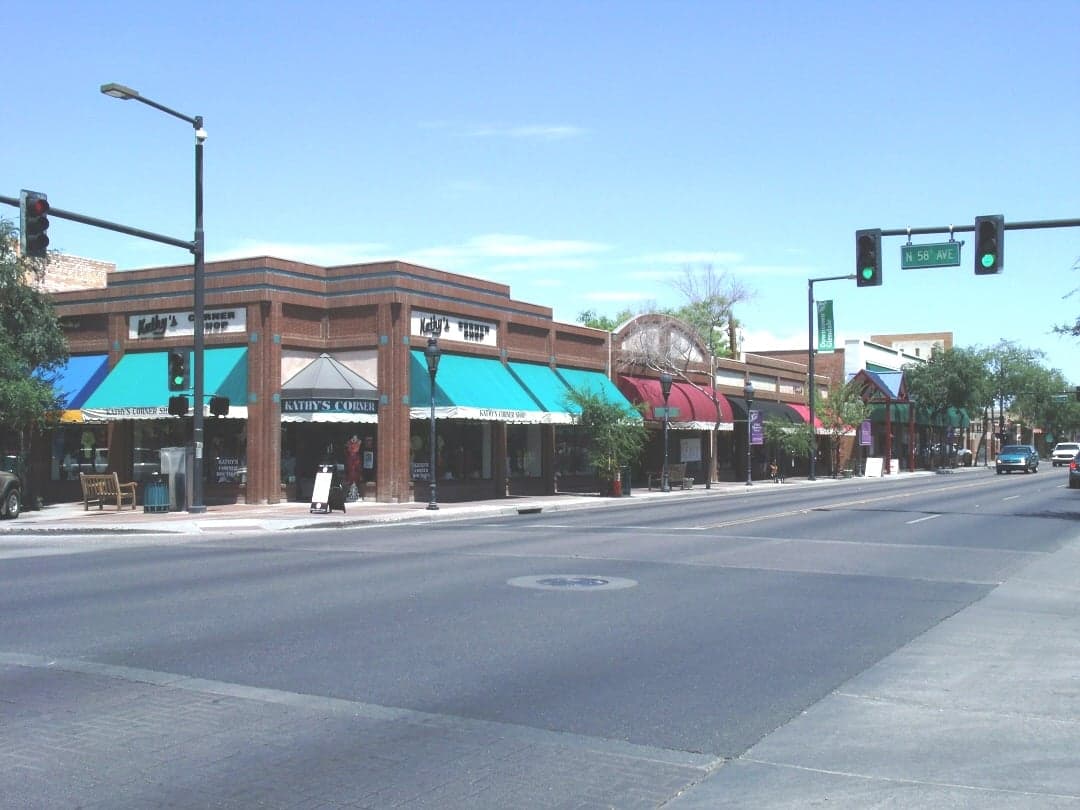
Photo: Wikipedia
Strategic Assessment of Glendale, AZ
Multiple tactical vulnerabilities. Population density, target proximity, or disaster risk are likely compounding. A retreat property and exit planning is required.
What does the Strategic Assessment tell us?
Our Strategic Assessment grades tactical survivability of an area. Major population centers, military targets, fallout zones, natural disasters, and border exposure all drive risk — lower exposure means a more defensible position in a crisis.
This is heavily inspired by Joel Skousen's Strategic Relocation book. Highly recommended you checkout the book ($)What does this tell us?
Our Strategic Assessment grades tactical survivability of an area. Major population centers, military targets, fallout zones, natural disasters, and border exposure all drive risk — lower exposure means a more defensible position in a crisis.
This is heavily inspired by Joel Skousen's Strategic Relocation book. Highly recommended you checkout the book ($)Strategic Pillars

Key Distances
Regional Safe Places
Below is our recommended "safe zones" in Arizona and the surrounding area based on our strategic heuristics. For most people, it's unrealistic to live in a “safe zone” full-time due to work, family or other personal reasons. They tend to be more rural. However, many of these areas are perfect for second homes and retreat properties that double as a vacation home or even a short-term rental.
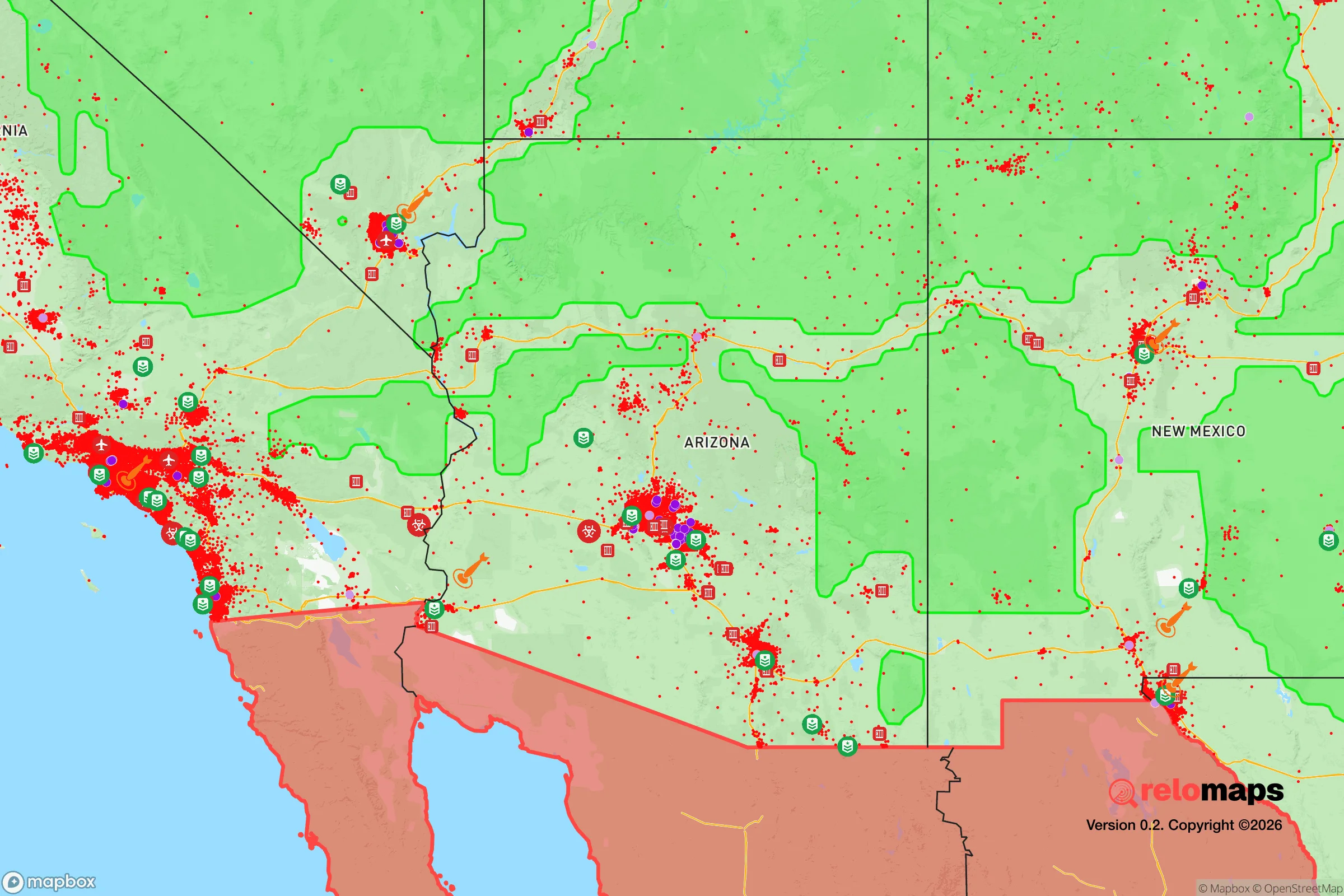
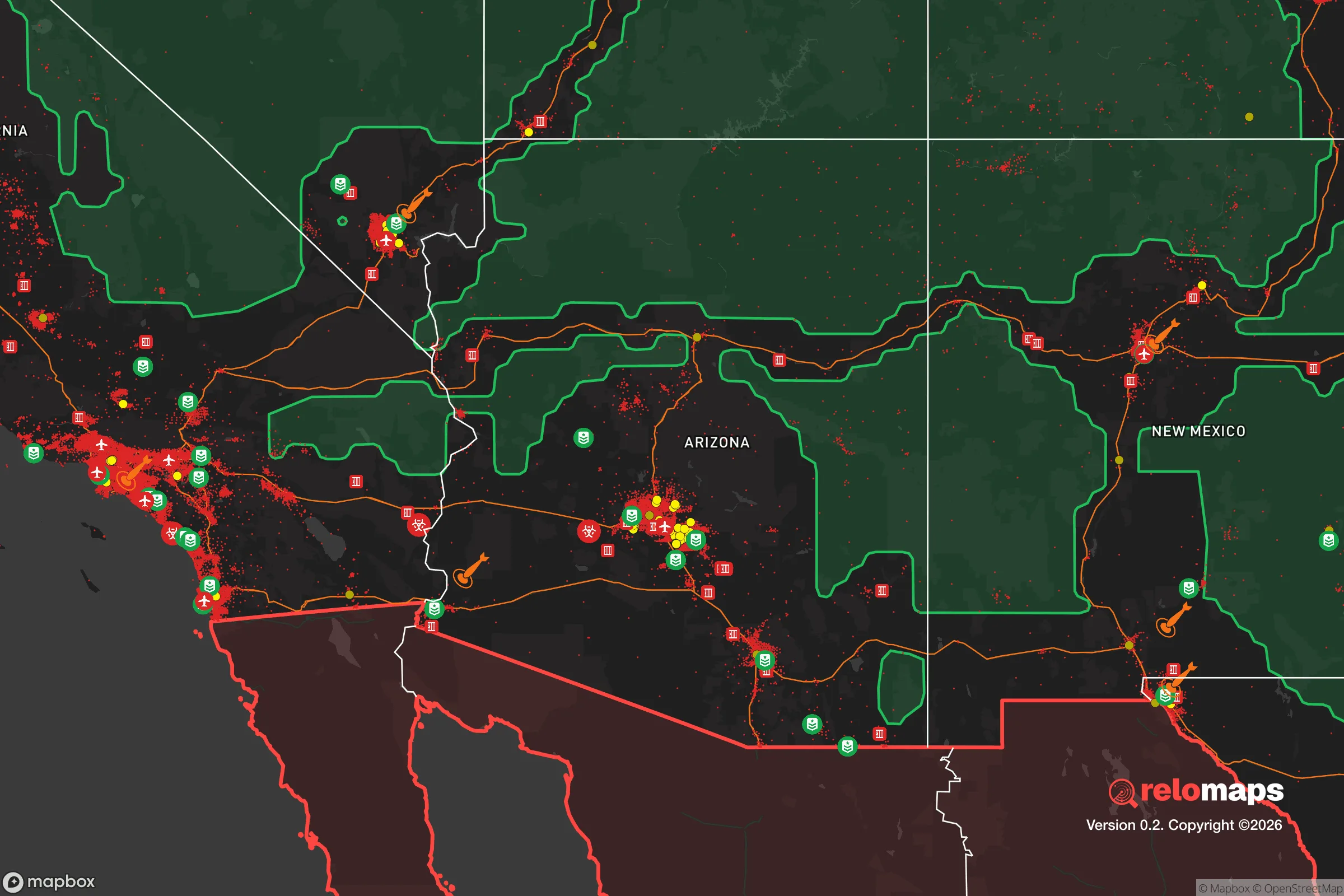


Important Note: For informational purposes only. This does not mean nothing bad ever happens in the green zones. Please use common sense. This is based on public data and modeled with AI. We tried to take a conservative approach but mistakes happen. We update this regularly as new information becomes available.
Solar Generator Recommendations
Backup power matters more here than in safer locations. We've picked three solar generators across budgets and capacity tiers — start with the budget unit if you only need a few essentials, or step up if you want to run a fridge and HVAC for days at a time.

Jackery Portable Power Station Explorer 300
Budget OptionPower on the Go: Weighing only 11 lbs, it's convenient to set up and store with book-sized foldable solar panels

BLUETTI Portable Power Station AC180
Designed for both indoor and outdoor scenarios, AC180 is highly capable as it has a robost capacity and continuous output power.

EF ECOFLOW DELTA Pro Ultra Power Station
Upgraded PickEcoFlow DELTA Pro Ultra is a whole-home energy system designed to grow with your family. Integrated with the Smart Home Panel 2, it scales to meet your evolving energy needs — keeping your home powered, intelligent, and secure through every stage of life.
We earn a commission, at no additional cost to you.
Strategic Assessment Analysis
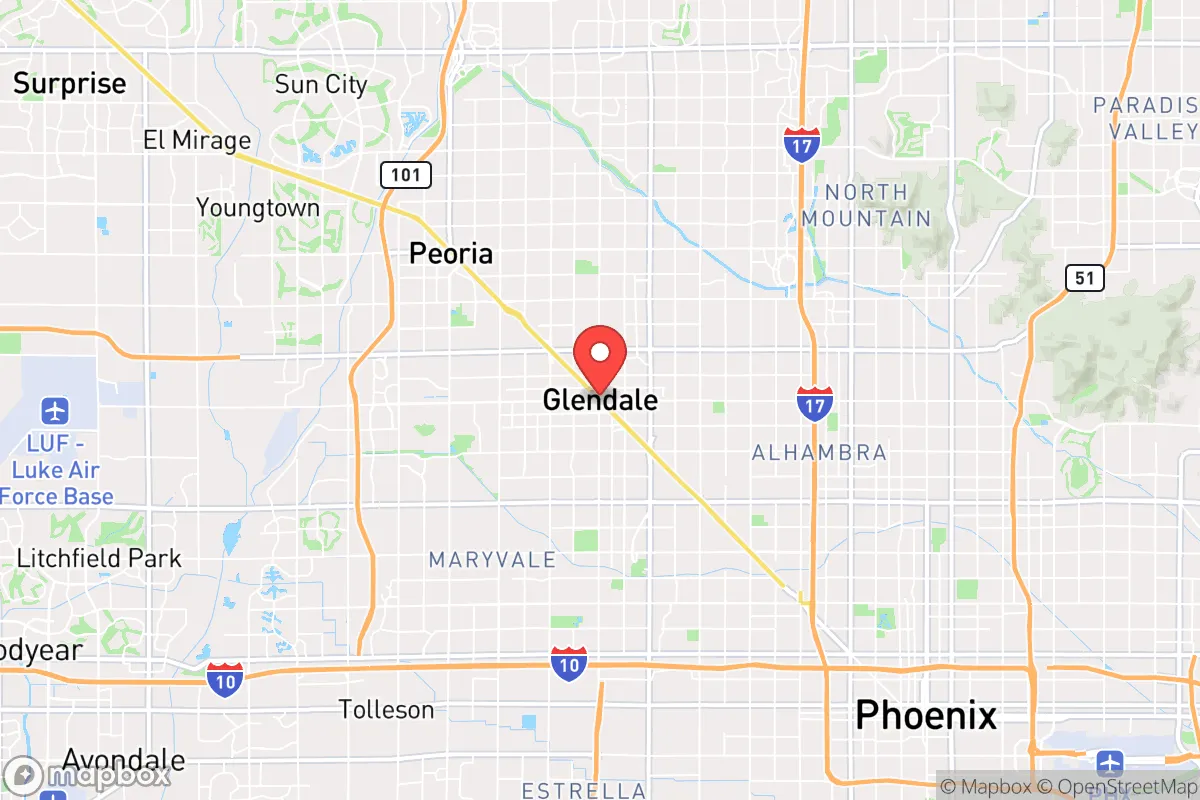
Glendale, Arizona, sits in a precarious but potentially advantageous position for those prioritizing resilience and strategic relocation. Its location within the rapidly growing Phoenix metro area offers access to resources, but its proximity to a major population center, Luke Air Force Base, and critical infrastructure introduces significant risks that a prepper must weigh carefully. For a conservative-leaning individual or family seeking a balance between urban convenience and the ability to hunker down, Glendale presents a mixed bag—one that demands a clear-eyed assessment of its geographic strengths and its exposure to fallout from both natural and man-made disasters.
Geographic position and natural advantages for long-term survival
Glendale’s primary strategic advantage is its location in the Sonoran Desert, which provides a natural buffer against many of the threats plaguing coastal and densely forested regions. The area is far from active fault lines, meaning earthquakes are not a major concern, and it sits outside the hurricane and tornado belts that regularly devastate the Gulf Coast and Midwest. The arid climate also reduces the risk of widespread mold, waterborne diseases, and the logistical nightmares of flooding—though flash floods in washes remain a localized hazard. The surrounding desert offers vast, sparsely populated expanses to the west and north, including the Barry M. Goldwater Range and the Tonto National Forest, which could serve as retreat or resupply zones if the metro area becomes untenable. The region’s high elevation (around 1,100 feet) and low humidity also mean that summer heat, while extreme, is a dry heat that can be managed with proper preparation—unlike the humid, energy-sapping conditions of the Southeast. For a relocator, the ability to store water and power solar panels efficiently in this environment is a tangible advantage over many other parts of the country.
Risks, exposures, and proximity to fallout-relevant landmarks
The most glaring vulnerability for Glendale is its proximity to Luke Air Force Base, located just west of the city. Luke is a major training hub for F-35 and F-16 fighter jets, making it a high-value target in any conflict scenario involving state actors or asymmetric threats. A conventional strike or even a sabotage event at the base could generate significant fallout—both literal and figurative—including debris, chemical fires, and potential radiation if munitions storage is compromised. Additionally, Glendale lies within the broader Phoenix metro area, home to over 1.6 million people. In a collapse scenario—whether from economic turmoil, civil unrest, or a pandemic—this population density becomes a liability. The city is crisscrossed by major highways (I-10, US 60, Loop 101) that could become chokepoints or escape corridors, but also vectors for looting and refugee flows. The nearby Palo Verde Nuclear Generating Station, about 50 miles west, is the largest nuclear plant in the country by output. While its desert location reduces some risks, a catastrophic failure or attack could render large swaths of the region uninhabitable for years. For the prepper, these are not abstract concerns—they are concrete threats that demand a plan for evacuation or deep sheltering.
Practical resilience for a relocator: food, water, energy, and defensibility
Water is the single most critical resource in the desert, and Glendale’s situation is complex. The city draws from the Salt River Project and the Central Arizona Project, which are dependent on the Colorado River and snowpack in the Rocky Mountains. With the Colorado River in a decades-long drought and allocations being cut, long-term water security is a legitimate concern. A prepper relocating here must invest in rainwater harvesting (though annual rainfall is only about 8 inches), deep well access if on the outskirts, and substantial storage—think 55-gallon drums or larger cisterns. Food resilience is more promising: the region has a growing network of local farms, farmers’ markets, and community gardens, particularly in the West Valley. The soil is alkaline but workable with amendments, and the long growing season allows for multiple harvests of heat-tolerant crops like peppers, beans, and squash. Energy is a bright spot—Glendale averages over 300 sunny days per year, making solar panels a no-brainer for off-grid capability. Battery storage and a backup generator (propane or natural gas) are essential for nights and grid failures. Defensibility is mixed. The city’s suburban layout with cul-de-sacs and walled communities offers some natural perimeter control, but the flat terrain and lack of natural cover make it hard to secure a large property. A relocator should prioritize a home on the western or northern fringe, away from major arterial roads, with a clear line of sight and minimal neighbors. The local gun culture is strong, and Arizona is a constitutional carry state, which aligns with a conservative prepper’s preference for self-reliance and self-defense.
The overall strategic picture for Glendale is one of calculated risk. It is not a remote survivalist paradise—it is a suburban city with real exposure to military targets, population density, and water scarcity. However, for a relocator who is willing to invest in infrastructure—solar, water storage, food production, and a solid security plan—it offers a foothold in a region that is politically aligned with conservative values, has a low risk of natural disasters, and provides access to a growing economy. The key is to treat Glendale as a base of operations, not a final redoubt. Have a bug-out vehicle prepped for a move to the high desert or mountains of northern Arizona if things go sideways. In the meantime, the city’s amenities, job market, and relatively low cost of living make it a viable choice for those who want to be prepared without living off-grid full-time. The desert is unforgiving, but for those who respect its limits and plan accordingly, it can be a strategic asset in an uncertain world.

* Values derived from national, state, county, city and local statistics and may differ in a specific area. Last updated: 2026-04-19T09:12:17.000Z
Narrative content on this page is AI-generated and may contain mistakes. Verify any details that matter before acting on them.
ReloMaps may earn a commission from affiliate links at no extra cost to you.

