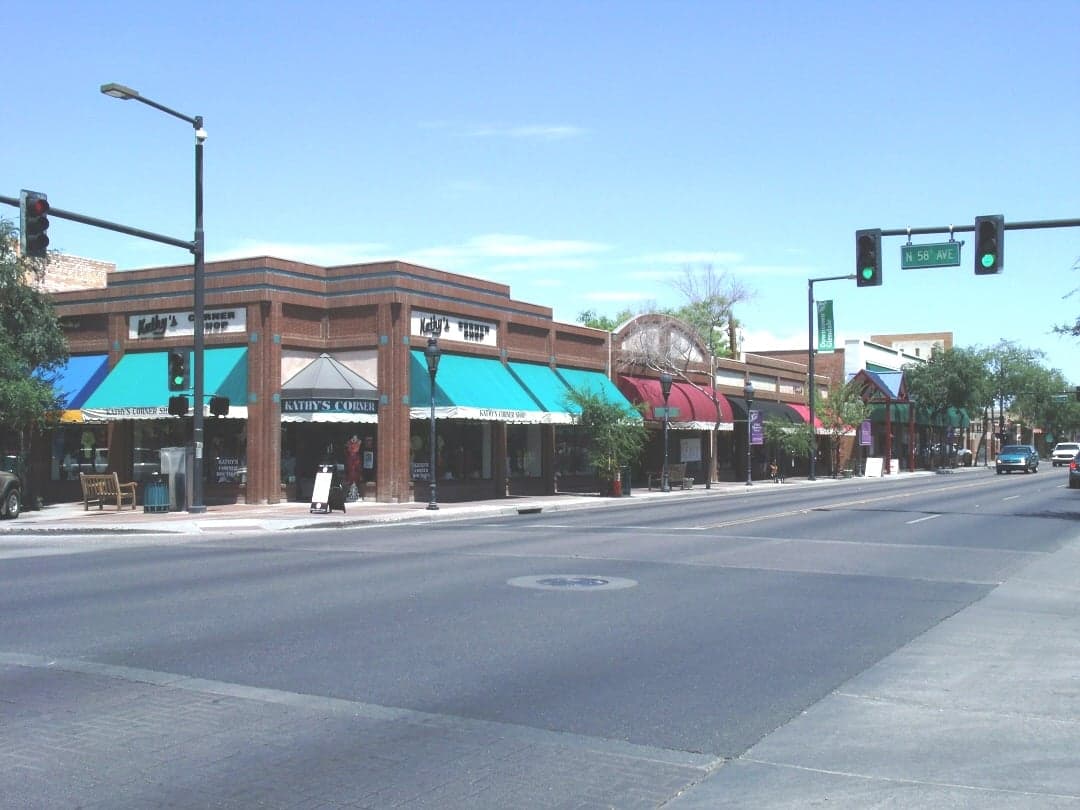
Photo: Wikipedia
Quality of Life in Glendale, AZ
A high quality of life with strong walkability, manageable living costs, healthy neighborhood signals, and solid amenity access.
What does Quality of Life tell us?
Quality of Life blends cost of living, nearby amenities, socioeconomic signals, and neighborhood character. City-level scores represent the whole municipality; individual neighborhoods can differ.
What does this tell us?
Quality of Life blends cost of living, nearby amenities, socioeconomic signals, and neighborhood character. City-level scores represent the whole municipality; individual neighborhoods can differ.
Cost of Living
21% above national average
The Real Cost of Living in Glendale, AZ for 2026
| Tier | Individual | Family (4) |
|---|---|---|
| Survival | $22k | $42k |
| Comfortable | $67k | $99k |
| Luxury | $115k+ | $179k+ |
| Elite (Top 5%) | $136k+ | $210k+ |
71%
The Area Signal
A metric tracking the socioeconomic signals of the area.


Hobbies
Explore the areaGroceries
1 within 10 miles
Gas
0 within 10 miles
Hospital
3 within 20 miles
Airport
PHX — Phoenix Sky Harbor International
Post Office
USPS — Scottsdale, AZ
Critical Amenities
Quality-of-Life Analysis
Glendale, Arizona, presents a quality of life defined by solidly middle-class comfort, with a cost of living index of 121 (21% above the U.S. average) that reflects its position as a more affordable alternative to neighboring Phoenix and Scottsdale. The city attracts a mix of families, long-term residents, and professionals who work in the broader Phoenix metro area, drawn by its established neighborhoods, strong school system, and access to major league sports and entertainment venues. While not as affluent as Paradise Valley or Scottsdale, Glendale offers a practical, family-oriented lifestyle with a lower price tag than many other parts of Maricopa County.
Cost of living, housing affordability, and how Glendale compares to Phoenix and Scottsdale
Glendale's housing market remains a key draw for buyers seeking value in the metro area. The median home value sits at $347,000, significantly below the Phoenix metro median of roughly $450,000 and far less than Scottsdale's median above $700,000. For renters, the median rent of $1,397 is about $200 less per month than the Phoenix average, making it one of the more budget-friendly options in the West Valley. The average commute of 28 minutes is slightly longer than the national average of 26 minutes, reflecting the reality that many residents drive east to jobs in Phoenix, Tempe, or Scottsdale. Property taxes in Glendale are moderate for Arizona, typically around 0.6% to 0.8% of assessed value, which helps keep monthly housing costs manageable compared to states like Texas or Illinois. However, the overall cost of living index of 121 means groceries, utilities, and healthcare are all above the national baseline, so the savings are primarily in housing.
Amenities, schools, and what daily life is like for families in Glendale
Daily life in Glendale revolves around its strong sense of community and access to major attractions. The city is home to State Farm Stadium (home of the Arizona Cardinals) and Desert Diamond Arena, which host NFL games, concerts, and events that draw visitors from across the valley. For families, the Glendale Elementary School District and Deer Valley Unified School District include several highly rated schools, such as Copper Creek Elementary and Mountain Ridge High School, both of which consistently earn A ratings from the Arizona Department of Education. The city's extensive park system, including the 200-acre Thunderbird Conservation Park with hiking trails, provides outdoor recreation without leaving city limits. Retail and dining are concentrated along Bell Road and 59th Avenue, with big-box stores, chain restaurants, and local Mexican food spots like Carolinas Mexican Food serving the community. The rhythm of life is car-dependent but less congested than central Phoenix, with most errands requiring a 10-15 minute drive.
Glendale is best suited for families and professionals who want a suburban lifestyle with easy access to big-city amenities, without paying Scottsdale or Phoenix prices. The city's affordability, solid schools, and proximity to major employers like Honeywell and Luke Air Force Base make it a practical choice for those who prioritize space and community over urban nightlife. Retirees on fixed incomes may find the cost of living index of 121 a stretch, but for working families and first-time homebuyers, Glendale offers one of the best value propositions in the Phoenix metro area.

Crime in Glendale, AZ
Higher crime rates than 57% of comparable U.S. locations.
Violent CrimeViolent Crime Analysis
Property CrimeProperty Crime Analysis
Crime Analysis
Glendale, Arizona, presents a mixed safety profile for potential residents, with crime rates that significantly exceed both state and national averages. The city's violent crime rate stands at 436.9 incidents per 100,000 residents, while property crime occurs at a rate of 2,334.4 per 100,000. These figures place Glendale in a higher-risk category compared to many other Phoenix metro suburbs, a situation compounded by the progressive prosecutorial policies common in Maricopa County's larger urban centers.
Crime in context
Glendale's violent crime rate is roughly 25% higher than the national average and approximately 15% higher than the Arizona state average. The property crime rate is even more elevated, sitting about 60% above the national benchmark. These numbers reflect a broader trend seen across the Phoenix metropolitan area, where rapid population growth has strained law enforcement resources. However, Glendale's rates are notably higher than those in neighboring communities like Peoria or Surprise, which benefit from smaller populations and more conservative local governance. The presence of progressive district attorneys in Maricopa County, who often prioritize diversion programs and reduced sentencing over strict enforcement, is a contributing factor that keeps recidivism rates elevated and property crime cycles active.
What residents experience
For those living in Glendale, the most tangible safety concerns revolve around property crime. Vehicle break-ins, package thefts, and residential burglaries are common complaints, particularly in areas near major commercial corridors like West Bell Road and the Loop 101 freeway. Violent crime, while less frequent, is concentrated in specific neighborhoods and often tied to domestic disputes or gang-related activity. Residents report that police response times can vary widely, with longer waits in the city's more densely populated southern sections. The overall atmosphere is one of vigilance rather than alarm, but newcomers from lower-crime regions often find the adjustment jarring. The city's reliance on a reactive policing model, rather than proactive community engagement, further limits the sense of everyday security.
Neighborhood-level variation
Safety in Glendale is not uniform. The northern half of the city, particularly areas north of Olive Avenue and west of the Agua Fria River, generally sees lower crime rates and more active neighborhood watch programs. In contrast, the southern and central districts—especially around the historic downtown and near the Glendale Community College campus—experience higher concentrations of both property and violent offenses. Residents considering a move should prioritize properties in the northern sections or in the newer developments near the Westgate Entertainment District, where private security patrols supplement public policing. Checking the most recent crime maps for specific block-level data is strongly recommended before signing a lease or purchase agreement.
* Values derived from national, state, county, city and local statistics and may differ in a specific area. Last updated: 2026-04-19T09:12:17.000Z
Narrative content on this page is AI-generated and may contain mistakes. Verify any details that matter before acting on them.
ReloMaps may earn a commission from affiliate links at no extra cost to you.

