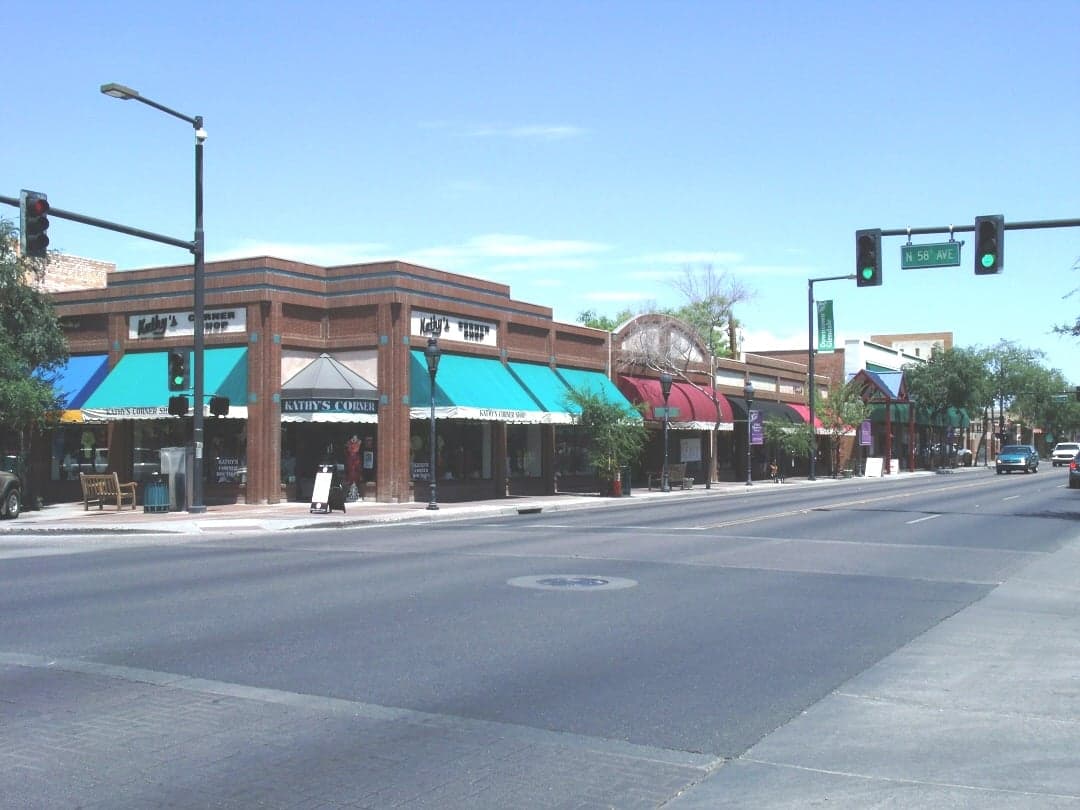
Photo: Wikipedia
Political ClimatePolitical Climate in Glendale, AZ
District shown is the primary district for this city’s centroid. Cities may span multiple districts.
Local Political AnalysisPolitical Analysis of Glendale, AZ
Glendale, Arizona, has long been a solidly conservative community, and the numbers back that up with a Cook PVI of R+8, meaning the district leans about 8 points more Republican than the national average. But if you’ve lived here as long as I have, you know that’s not just a statistic—it’s the character of the place. For decades, this was a city where folks valued personal responsibility, limited government, and the freedom to live your life without a bunch of red tape or nanny-state rules. Lately, though, you can feel the ground shifting under your feet. The influx of new residents from California and other blue states has brought a wave of progressive ideas that are starting to chip away at that traditional foundation, and it’s something we’re all watching closely.
How it compares
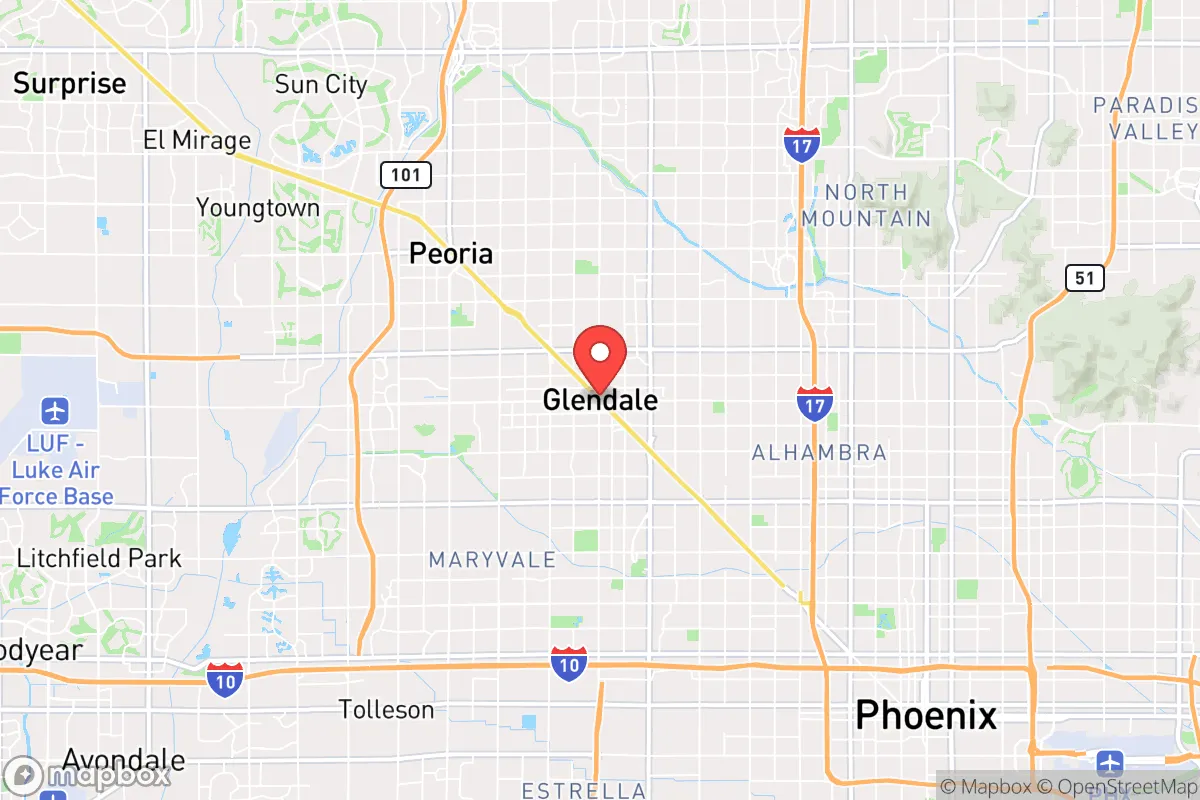
Glendale sits in a bit of a political sandwich. Head north to Peoria or Surprise, and you’ll find communities that are even more reliably conservative—places where the local city council still pushes back hard on state mandates and keeps taxes low. But drive south or east into Phoenix or Tempe, and you’re in a different world entirely, with progressive city councils pushing things like sanctuary city policies and higher density zoning that trample on property rights. Glendale used to be the buffer zone, the place where common sense reigned. Now, you’ll see more yard signs for progressive candidates in certain neighborhoods, and the city council has had some close votes on issues like mask mandates and business closures that would have been unthinkable a decade ago. The contrast with nearby Litchfield Park or Buckeye is stark—those towns are holding the line, while Glendale is starting to wobble.
What this means for residents
For folks who moved here to escape government overreach, the warning signs are real. The biggest concern is the slow creep of progressive policies that eat away at personal freedoms. We’ve already seen debates over short-term rental regulations that treat your own property like a public utility, and there’s constant pressure from activist groups to raise local sales taxes to fund pet projects that sound good on paper but just grow the bureaucracy. If you value the right to make your own choices—whether it’s about your business, your kids’ education, or your healthcare—you need to stay engaged. The school board elections are getting more contentious, with candidates pushing critical race theory and gender ideology into classrooms, which is a direct threat to parental rights. The long-term trajectory depends on whether the new arrivals assimilate into our culture or try to remake it in the image of the places they fled.
On the cultural front, Glendale still has a strong sense of community that pushes back against the tide. The Westgate Entertainment District and the Gila River Arena draw crowds that are overwhelmingly patriotic and family-oriented. You’ll still see more American flags than rainbow flags, and the local churches are packed on Sundays. But the policy battles are real. The city’s recent flirtation with “equity” initiatives and diversity training for city employees raised eyebrows among longtime residents who see it as a waste of taxpayer money and a step toward government-mandated groupthink. The bottom line: Glendale is at a crossroads. If you’re looking for a place where your voice still matters and where conservative values aren’t just tolerated but celebrated, this is still a good bet—but you’ve got to show up to the polls and the council meetings to keep it that way.

State Political ClimatePolitical Climate in Arizona
State Political AnalysisPolitical Environment in the State
Arizona has transformed from a reliably red state into a competitive battleground, with its partisan lean now a razor-thin margin after decades of Republican dominance. The state’s overall tilt is roughly even, but the coalition driving it has shifted dramatically: Maricopa County, once a GOP stronghold, now decides elections by suburban swing voters, while rural counties like Mohave and Yavapai remain deeply conservative. Over the last 20 years, Arizona has moved from a +10 Republican lean to a toss-up, driven by explosive growth in the Phoenix metro and an influx of voters from California and the Midwest.
Urban vs. rural divide
The political map of Arizona is a story of two worlds. Maricopa County, home to Phoenix, Scottsdale, and Mesa, holds about 60% of the state’s population and has become the epicenter of the fight. In 2020, Maricopa flipped blue for the first time since 1948, powered by suburban women in places like Paradise Valley and Chandler who broke for Biden over Trump. Meanwhile, Pima County (Tucson) has been reliably blue for a generation, anchored by the university and a growing Latino electorate. The rest of the state is deeply red: Mohave County (Kingman, Lake Havasu City) votes +40 Republican, and Yavapai County (Prescott, Sedona) is similarly conservative. The rural-urban split is stark—Flagstaff in Coconino County is a liberal island surrounded by vast conservative ranching country. The key battleground is the suburban “collar counties” around Phoenix, where growth is fastest and where the GOP has lost ground with college-educated voters.
Policy environment
Arizona’s policy posture is a mixed bag for conservatives. The state has a flat income tax rate of 2.5% (down from 4.5% in 2021), thanks to a 2022 tax cut package that was a win for limited government. Property taxes are low, and there is no estate tax. However, the regulatory environment is uneven: the state has a right-to-work law and is a “Dillon’s Rule” state, meaning local governments have only powers granted by the legislature—which has kept cities from enacting their own rent control or minimum wage hikes. On education, Arizona was a pioneer in school choice with the 2022 expansion of Empowerment Scholarship Accounts (ESAs) to all students, a huge win for parental rights. But the state also has a universal kindergarten mandate and a growing push for “comprehensive sex ed” in public schools. Election laws have been a flashpoint: the 2021 “Secure the Vote” law tightened voter ID requirements and banned ballot harvesting, but a 2024 court ruling struck down parts of it. The state also has a “dark money” disclosure law that conservatives argue chills free speech. Overall, the policy environment is center-right on taxes and school choice, but increasingly contested on election integrity and education content.
Trajectory & freedom
Arizona’s trajectory on personal freedom is a tug-of-war. On the positive side, the 2022 ESA expansion was a landmark for educational freedom—parents can now use tax dollars for private school, homeschooling, or microschools. Gun rights are strong: Arizona is a constitutional carry state (no permit needed for concealed carry since 2010), and there is no red flag law. The state also passed a 2023 law banning “vaccine passports” and COVID-19 mandates for state employees. On the concerning side, the 2024 “Abortion Access Act” ballot measure enshrined abortion up to viability in the state constitution, overriding a 2021 law that banned most abortions after 15 weeks. This was a major loss for pro-life advocates. Additionally, the state’s “Clean Elections” system (public financing for campaigns) has been used to push progressive candidates. Property rights are generally respected, but the state has seen a rise in “land use” battles in Maricopa County, where zoning fights over density and affordable housing mandates are becoming common. The bottom line: Arizona is expanding freedom in education and guns, but contracting it on abortion and election transparency.
Civil unrest & political movements
Arizona has been a hotbed of political activism on both sides. The 2020 election integrity controversy was centered here, with the “Arizona Audit” of Maricopa County ballots becoming a national flashpoint. That audit, led by the state Senate, found no evidence of widespread fraud but fueled ongoing distrust. On the left, the “Red for Ed” teacher strikes in 2018 shut down schools across the state and led to a permanent increase in education funding—and a more activist teacher union. Immigration politics are ever-present: the 2010 SB 1070 law (the “show me your papers” law) was largely gutted by courts, but the state still has a “sanctuary city” ban. In 2024, the legislature passed a bill allowing local police to enforce federal immigration law, which was signed by Governor Katie Hobbs (D) under pressure. The border crisis in Yuma and Cochise counties has fueled a strong “border security” movement, with groups like the “Arizona Border Recon” patrolling the desert. Visible flashpoints include the “Trump 2024” rallies in Prescott and the “Stop the Steal” protests at the state capitol. A new resident will notice the heavy presence of political signage, especially in rural areas, and the constant debate over water rights and growth.
Projection
Over the next 5-10 years, Arizona is likely to become more purple, with a slight lean toward the left in statewide races. The demographic trends are clear: the state is growing fastest among Latino and college-educated voters, both of whom lean Democratic. Maricopa County will continue to decide elections, and its suburbs (Gilbert, Queen Creek) are becoming more competitive. However, the rural vote is not going away—Mohave and Yavapai counties are actually growing faster than some urban areas. The wild card is the “California exodus” of conservatives moving to places like Prescott Valley and Lake Havasu City, which could offset some blue gains. On policy, expect continued fights over school choice (the ESA program is under legal challenge), water rights (the Colorado River compact is up for renegotiation), and election laws. A new resident moving in now should expect a state that is politically volatile, with close elections every cycle and a legislature that is narrowly divided. The freedom trajectory is uncertain: if the GOP can hold the legislature and win back the governor’s office, Arizona could become a model for conservative governance. If the left consolidates power, expect higher taxes, more regulation, and a rollback of school choice.
For a conservative relocating to Arizona, the bottom line is this: you’ll find a state that still respects gun rights, school choice, and low taxes, but you’ll also be living in a battleground where every election matters. The rural areas are safe havens for traditional values, but the suburbs are shifting. If you’re moving to Prescott or Kingman, you’ll feel at home politically. If you’re moving to Scottsdale or Chandler, you’ll need to get involved in local politics to protect your freedoms. Arizona is not Texas—it’s a swing state, and the fight is real. Come prepared to vote, to advocate, and to watch the state’s direction change with every election cycle.
* Values derived from national, state, county, city and local statistics and may differ in a specific area. Last updated: 2026-04-19T09:12:17.000Z
Narrative content on this page is AI-generated and may contain mistakes. Verify any details that matter before acting on them.
ReloMaps may earn a commission from affiliate links at no extra cost to you.

