Photo: Wikipedia
Demographics of Glendale, CA
Affluence Level in Glendale, CA
An upper-middle-class area. Household wealth, education levels, and homeownership run ahead of national benchmarks.
People of Glendale, CA
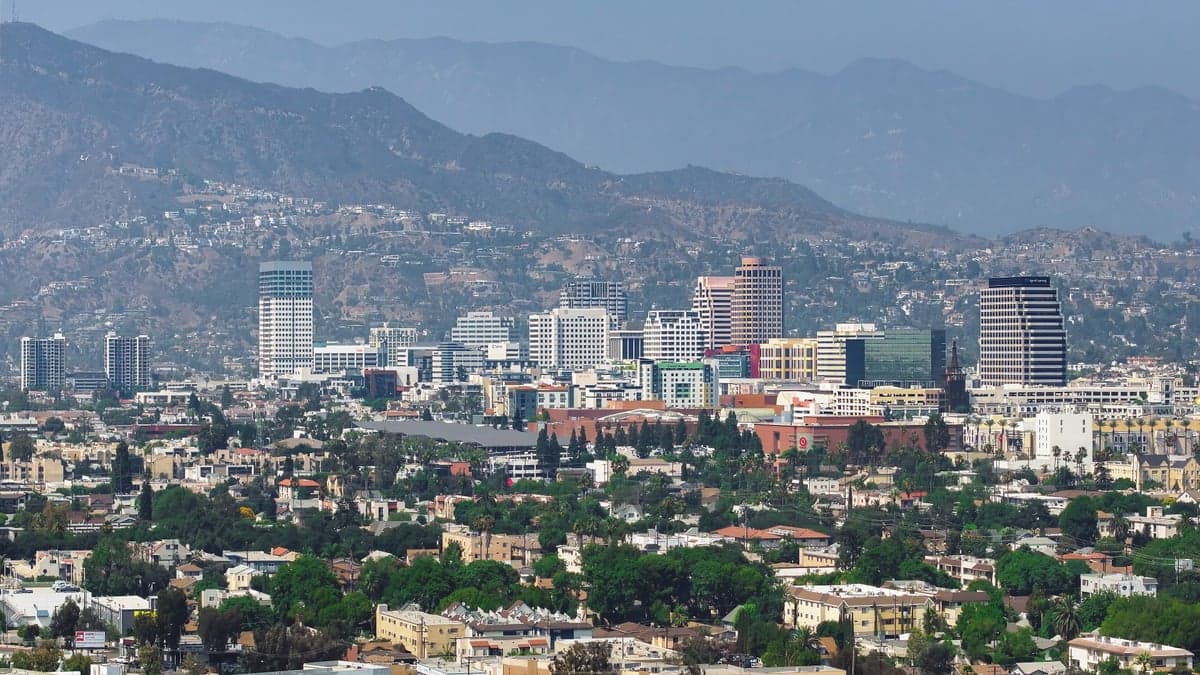
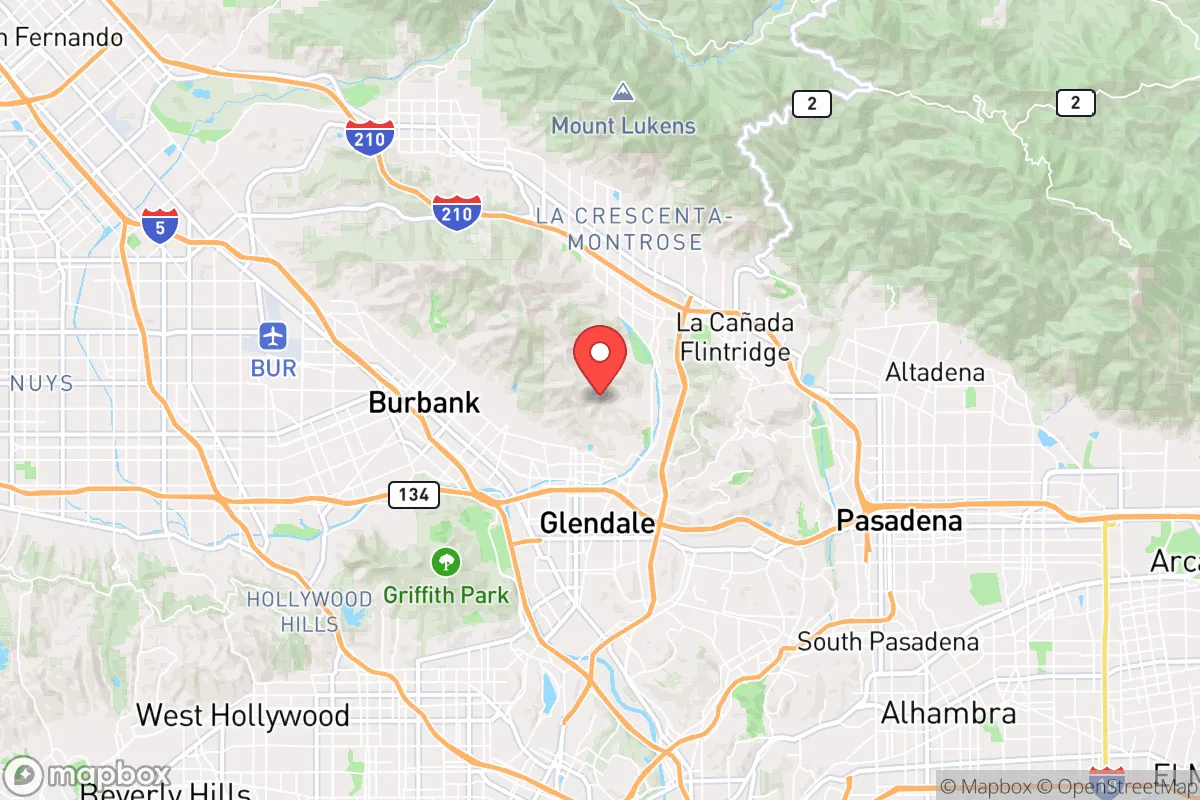
Glendale, California, is a dense, majority-White city of 192,270 residents where nearly half of adults hold a college degree, yet it remains a landing pad for distinct immigrant waves that have shaped its neighborhoods. The city’s identity is a blend of historic Armenian and East/Southeast Asian enclaves, a significant Hispanic minority, and a small but growing Indian subcontinent community. With a foreign-born population of 16.2%, Glendale is less immigrant-heavy than many Los Angeles County suburbs, but its ethnic clusters remain sharply defined by geography and generation.
How the city was settled and grew
Glendale’s modern population history begins not with Spanish missions but with the 1880s land boom. The city was incorporated in 1906 as a planned streetcar suburb for Los Angeles, drawing white Protestant Midwesterners and Canadians seeking affordable homes and temperate weather. The original settlement clustered around Brand Boulevard and Adams Square, where early merchants and railroad workers built wood-frame houses. By the 1920s, Glendale’s population had surged past 30,000, fueled by the discovery of oil in the nearby San Fernando Valley and the opening of the Glendale-Hyperion Bridge. The Rossmoyne neighborhood, with its Craftsman bungalows, became a haven for middle-class white families employed at the new Lockheed aircraft plant in Burbank. Through the 1940s and 1950s, Glendale remained overwhelmingly white and Protestant, with restrictive covenants effectively barring Black and Hispanic families from most housing tracts.
Modern era (post-1965)
The 1965 Immigration and Nationality Act transformed Glendale’s human fabric. The most dramatic shift came from Armenian immigrants fleeing civil war and economic collapse in Lebanon, Iran, and later the Soviet Union. By the 1980s, Little Armenia—centered on East Broadway and Kenilworth Avenue—had become the city’s most visible ethnic district, with Armenian-language storefronts, churches, and political clubs. Today, Armenians are the largest single ethnic group in Glendale, though they are counted within the White category in official data. Simultaneously, East/Southeast Asian communities—primarily Chinese, Korean, and Filipino—began settling in the Montrose and Verdugo Woodlands neighborhoods, drawn by good schools and relative affordability. The Hispanic population, which now stands at 18.5%, grew steadily through the 1990s and 2000s, concentrated in the Pacific Edison and Grandview areas near the 134 freeway. The Black population remains very small at 1.5%, reflecting historic exclusion and ongoing housing costs. The Indian subcontinent community, at 1.0%, is a recent arrival, clustering in the Glenoaks area near the Burbank border, often drawn by tech and healthcare jobs.
The future
Glendale’s population is slowly homogenizing in some ways while tribalizing in others. The White share (62.3%) is declining as older non-Hispanic white residents age out and are replaced by younger, more diverse households. The Armenian community, while still dominant, is seeing second- and third-generation members move to suburbs like La Crescenta and Burbank, softening the ethnic concentration in Little Armenia. East/Southeast Asian growth is plateauing, with many families choosing newer suburbs in the San Gabriel Valley. The Hispanic population is stable but not surging, constrained by high housing costs. The Indian subcontinent community, though tiny, is the fastest-growing segment, likely to double within a decade as tech workers seek Glendale’s good schools and shorter commutes to Pasadena and downtown Los Angeles. The city is not becoming a melting pot; rather, it is evolving into a patchwork of distinct enclaves where each group maintains its own institutions. For a newcomer, Glendale offers a stable, educated, and politically moderate environment—but one where fitting in often means choosing a neighborhood that matches your background.

* Values derived from national, state, county, city and local statistics and may differ in a specific area. Last updated: 2026-04-24T19:34:03.000Z
Narrative content on this page is AI-generated and may contain mistakes. Verify any details that matter before acting on them.
ReloMaps may earn a commission from affiliate links at no extra cost to you.

