Photo: Wikipedia
Political ClimatePolitical Climate in Glendale, CA
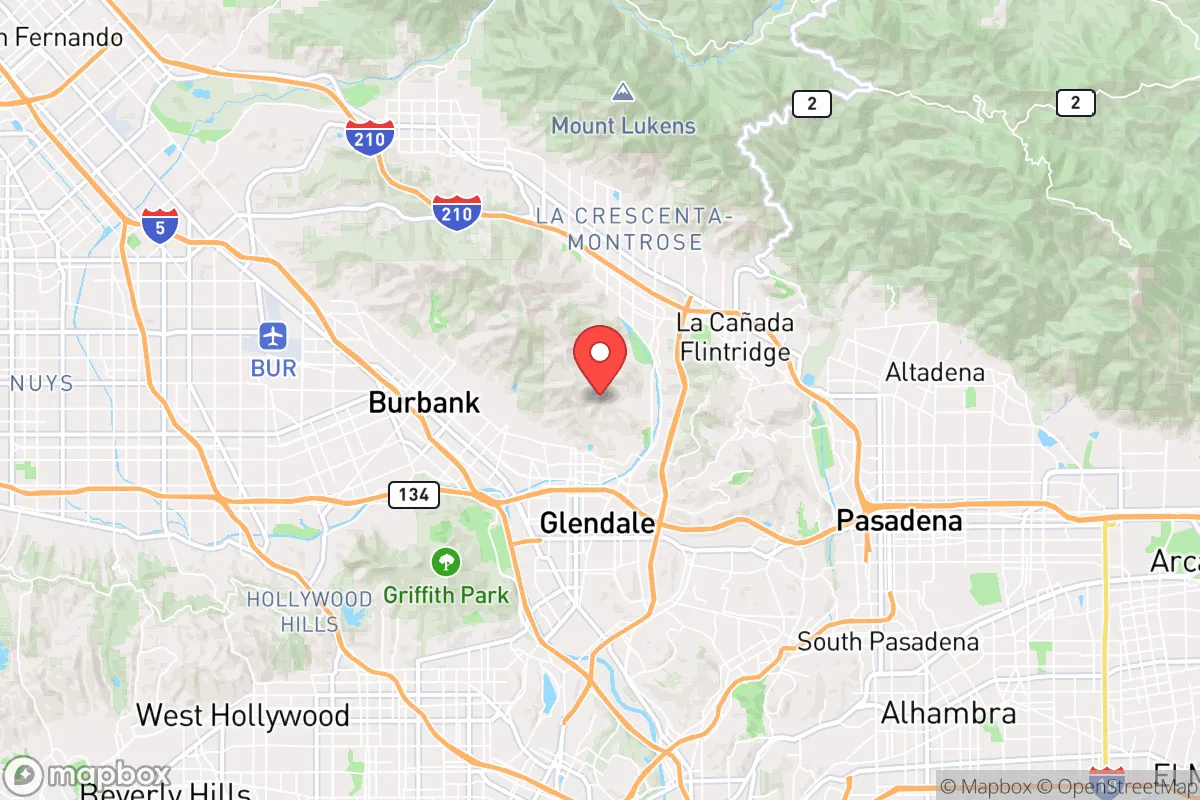
District shown is the primary district for this city’s centroid. Cities may span multiple districts.
Local Political AnalysisPolitical Analysis of Glendale, CA
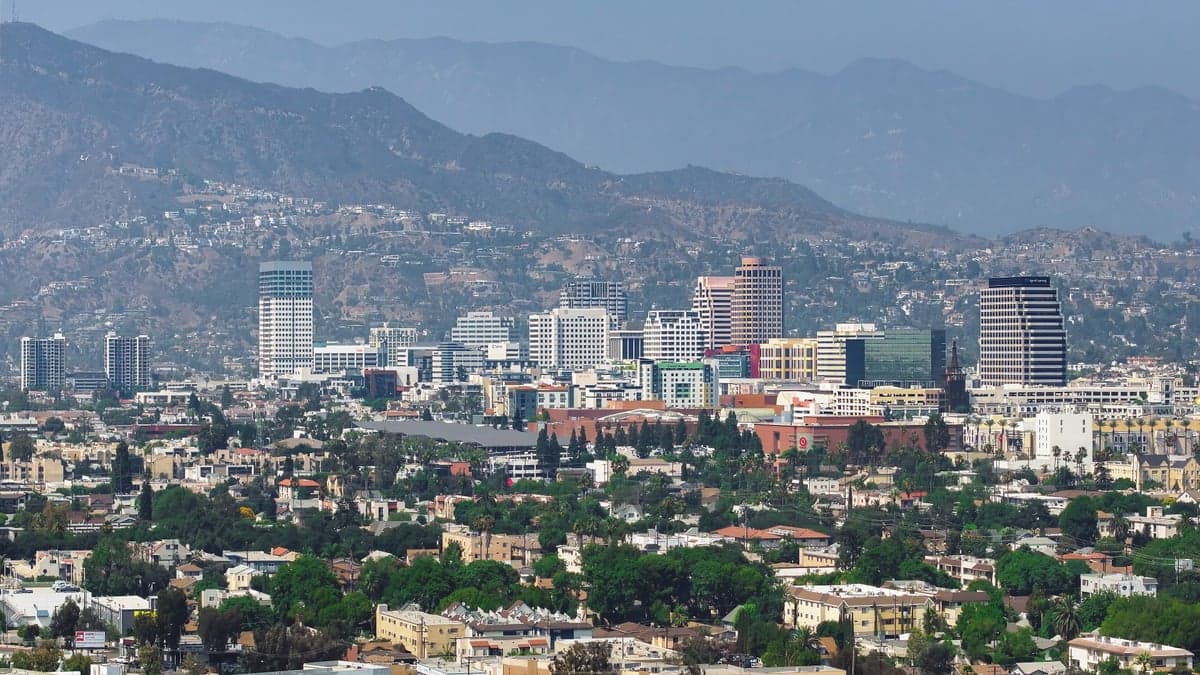
Glendale, California, is a place where the political landscape has shifted dramatically over the past couple of decades. With a Cook Partisan Voting Index (PVI) of D+22, the city is now a deep blue stronghold, meaning Democratic candidates routinely win by massive margins. For those of us who remember when Glendale was a more moderate, family-oriented community, this shift feels less like natural evolution and more like a steady march toward one-party rule, where local governance often prioritizes progressive social agendas over the practical concerns of everyday residents.
How it compares
To understand Glendale’s current climate, you have to look at its neighbors. Just a few miles north, La Cañada Flintridge and parts of the Crescenta Valley still lean more conservative, with a stronger emphasis on property rights and fiscal restraint. Drive east to Burbank, and you’ll find a similar blue tilt, though it’s not quite as lopsided as Glendale’s. The real contrast is with places like Simi Valley or Santa Clarita, where voters still push back against tax hikes and overreaching regulations. In Glendale, the city council and school board have become increasingly aligned with Sacramento’s progressive playbook—higher taxes, more housing mandates, and policies that often feel disconnected from the people who actually show up to city hall meetings. The D+22 rating isn’t just a number; it reflects a political machine that rarely faces serious opposition, which means dissenting voices are often drowned out.
What this means for residents
For the average Glendale resident, this political reality translates into a few concrete headaches. First, expect higher taxes and fees—the city has been aggressive with utility taxes and development impact fees, all in the name of funding programs that many locals never asked for. Second, there’s a growing sense that personal freedoms, especially around property use and business operations, are being squeezed. Zoning changes and rent control measures have made it harder for small landlords and mom-and-pop shops to survive. Third, the school district has embraced progressive curriculum changes that don’t always align with what parents want for their kids. If you value local control and the ability to live your life without constant government interference, Glendale’s trajectory is concerning. The long-term trend points toward even more centralized decision-making, less tolerance for conservative viewpoints, and a culture that rewards political conformity over common sense.
One cultural distinction worth noting is Glendale’s large Armenian-American community, which historically leaned more conservative on issues like family values and small business. But even that bloc has been pulled leftward in recent years, partly due to national party alignment and local outreach. The result is a city where the old-school, live-and-let-live vibe has been replaced by a more activist government that sees itself as the solution to every problem. If you’re considering a move here, just know that the political climate is not neutral—it’s actively progressive, and that shapes everything from your tax bill to your kids’ education. For those who prefer a lighter touch from government, this might not be the place for you.

State Political ClimatePolitical Climate in California
State Political AnalysisPolitical Environment in the State
California is a one-party Democratic state where registered Democrats outnumber Republicans nearly 2-to-1, and the state has voted for the Democratic presidential candidate by double-digit margins in every election since 1992. The dominant coalition is a mix of coastal urban progressives, Latino voters, and a growing bloc of Asian-American professionals, while the GOP has been reduced to a rump party in most statewide races. Over the past 20 years, the state has lurched sharply left, with the 2018 election of Gavin Newsom as governor cementing a supermajority Democratic legislature that has passed some of the nation’s most progressive laws on taxes, immigration, and criminal justice.
Urban vs. rural divide
The political map of California is a tale of two states. The coastal metros—Los Angeles, San Francisco, San Diego, and San Jose—drive the Democratic vote, with San Francisco County delivering 85% of its vote to Joe Biden in 2020. The Central Valley and inland regions, by contrast, are deeply conservative: Bakersfield, Fresno, and Redding are Republican strongholds, with Kern County (Bakersfield) voting +16 for Trump in 2020. The divide is starkest in the Bay Area, where San Francisco and Oakland are progressive fortresses, while Modesto and Stockton in the Central Valley lean red. Suburbs like Orange County—once a GOP bastion—have flipped blue in recent cycles, with the county voting for Biden by 9 points in 2020 after supporting Romney in 2012. The rural north, including Shasta County (Redding), remains deeply conservative, but its population is too small to offset the coastal vote.
Policy environment
California’s policy environment is among the most interventionist in the nation. The state has the highest top marginal income tax rate (13.3%) and the highest state sales tax (7.25%, with local add-ons pushing it over 10% in some cities). Property taxes are capped at 1% of assessed value under Proposition 13, but reassessments upon sale can still sting. The regulatory posture is aggressive: California has its own environmental standards (CARB), strict labor laws (AB 5 reclassifying gig workers as employees), and a $16 minimum wage that rises with inflation. Education policy is dominated by the teachers’ union, with per-pupil spending above $15,000 but middling outcomes. Healthcare is heavily regulated, with the state running its own insurance exchange (Covered California) and expanding Medi-Cal to all low-income adults regardless of immigration status. Election laws are among the most liberal: universal mail-in voting, same-day registration, and no voter ID requirement. The state also has a “sanctuary” law (SB 54) that limits local law enforcement cooperation with federal immigration authorities.
Trajectory & freedom
California is becoming less free by nearly every measure, especially for conservatives. The state has passed a series of laws that expand government control over personal choices. On gun rights, California has some of the strictest laws in the nation: a 10-day waiting period, an assault weapons ban, a “may issue” concealed carry regime (though a 2024 federal ruling may loosen this), and a ban on high-capacity magazines. On parental rights, the state passed AB 1955 in 2024, which prohibits school districts from requiring parental notification when a child changes gender identity—a direct blow to family autonomy. On speech, the state has cracked down on “hate speech” in public spaces and on college campuses, with some critics arguing it chills political dissent. On medical autonomy, California mandated COVID-19 vaccines for schoolchildren (though the mandate was paused) and has a strict vaccine schedule for K-12 entry. Property rights are constrained by rent control (AB 1482 caps annual rent increases at 5% plus inflation) and by the California Environmental Quality Act (CEQA), which can be weaponized to block new housing. The tax burden is the highest in the nation, with a state gas tax that is the second-highest in the country.
Civil unrest & political movements
California has been a flashpoint for civil unrest and political movements. The 2020 George Floyd protests in Los Angeles and Oakland saw widespread looting and property damage, with some businesses never reopening. The state’s sanctuary policies have made it a magnet for immigration activism, with San Francisco declaring itself a “sanctuary city” in 1989 and the state following suit in 2017. The “Recall Newsom” movement in 2021 gathered 1.7 million signatures but failed to unseat the governor, though it revealed deep dissatisfaction in rural and suburban areas. Secession rhetoric is alive on both sides: the “Calexit” movement (pushing for California to leave the U.S.) has fizzled, but the “State of Jefferson” movement in the rural north—which wants to form a new state from conservative counties—still holds annual meetings. Election integrity controversies have been muted compared to swing states, but the 2020 election saw some rural counties (like Shasta) pass resolutions questioning the results. Visible flashpoints include the homeless encampments in Los Angeles’ Skid Row and San Francisco’s Tenderloin, which have become symbols of failed progressive governance.
Projection
Over the next 5-10 years, California will likely become even more progressive as demographic trends favor the left. The state’s population has declined for three consecutive years (2020-2023), with net out-migration of over 700,000 people, mostly to Texas, Arizona, and Nevada. Those leaving tend to be middle-class families and conservatives, while those arriving are often foreign immigrants and young professionals who lean left. The Latino vote, once considered a swing bloc, has shifted decisively toward Democrats, and Asian-American voters are trending the same way. The state’s housing crisis will continue to drive out moderates, while the legislature will likely pass even stricter gun laws, higher taxes (including a wealth tax proposal), and more expansive rent control. The GOP will remain irrelevant in statewide races, though local elections in the Central Valley and inland areas may see some Republican gains. A new resident moving in now should expect to live in a state where the government controls more of their daily life—from what car they can drive (gas car ban by 2035) to what they can say in public—and where their tax dollars fund policies they may strongly disagree with.
Bottom line for a new resident: If you value low taxes, gun rights, parental control over education, and limited government, California is likely a poor fit. The state’s political trajectory is firmly leftward, and the cost of living—both financial and in terms of personal freedom—is high. You’ll find like-minded communities in the Central Valley and rural north, but you’ll be fighting a losing battle at the state level. If you’re moving here for a job or family, be prepared to pay a premium for everything and to have your political voice drowned out by the coastal majority.
* Values derived from national, state, county, city and local statistics and may differ in a specific area. Last updated: 2026-04-24T19:34:03.000Z
Narrative content on this page is AI-generated and may contain mistakes. Verify any details that matter before acting on them.
ReloMaps may earn a commission from affiliate links at no extra cost to you.

