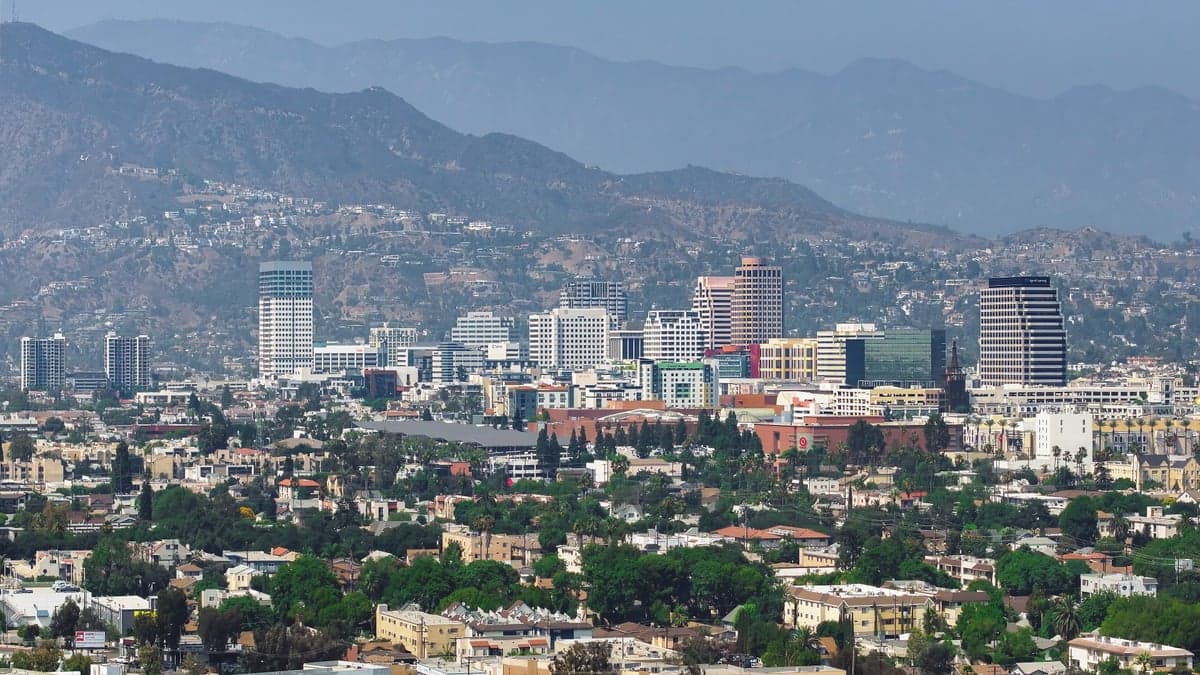
Photo: Wikipedia
Personal Sovereignty in Glendale, CA
Viable for self-reliance. Generally workable, though some barriers may limit total independence.
What does Personal Sovereignty tell us?
Personal Sovereignty measures your capacity for self-reliance and independence with minimal government friction. Higher scores mean fewer barriers between you and the way you want to live... but it assumes you have the space you need and good neighbors.
What does this tell us?
Personal Sovereignty measures your capacity for self-reliance and independence with minimal government friction. Higher scores mean fewer barriers between you and the way you want to live... but it assumes you have the space you need and good neighbors.
State Policy
Energy independence: Importer (33% of energy produced in-state)
Personal Liberty
Homesteading

Personal Liberty Analysis
Glendale, California presents a challenging environment for personal sovereignty, where the state’s aggressive regulatory apparatus and high tax burden significantly constrain individual autonomy. For a conservative-leaning individual or family prioritizing self-reliance, prepping, and minimal government overreach, this city sits firmly in the “high-control” category. While the local climate and geography offer some strategic advantages for resilience, the legal and fiscal framework—dominated by Sacramento’s progressive policies—creates a landscape where personal freedoms are heavily circumscribed, particularly in the realms of self-defense, property use, and medical choice.
Tax burden and regulatory posture in Glendale
California’s tax and regulatory environment is among the most restrictive in the nation, and Glendale is no exception. The state’s top marginal income tax rate of 13.3%—the highest in the country—applies to earnings over $1 million, but even middle-income earners face a combined state and local tax burden that can exceed 10% of income. Sales tax in Glendale is 10.25%, among the highest in Los Angeles County, adding a significant cost to everyday purchases. Property taxes, while capped at 1% of assessed value under Proposition 13, are supplemented by Mello-Roos community facility districts and parcel taxes that can push effective rates higher, especially in newer developments. The regulatory posture is equally burdensome: California’s California Environmental Quality Act (CEQA) can delay or kill any construction project, and Glendale’s own municipal code imposes strict permitting requirements for home modifications, water use, and even tree removal. For a prepper, this means that building a backyard bunker, installing a rainwater catchment system, or adding a generator shed will likely require multiple permits and inspections, with the city retaining the power to deny or revoke them. The state’s California Air Resources Board (CARB) also targets gas-powered generators and vehicles, pushing residents toward electric alternatives that are less reliable in a grid-down scenario. In short, the tax and regulatory climate in Glendale actively discourages the kind of self-sufficient infrastructure that a survivalist mindset demands.
Self-defense and gun law specifics in Glendale
California’s gun laws are among the most restrictive in the United States, and Glendale residents must navigate a dense web of state and local regulations. The state’s Roster of Handguns Certified for Sale limits the models available for purchase, effectively banning many modern firearms. Magazine capacity is capped at 10 rounds, and the state’s “assault weapon” ban prohibits common features like pistol grips and flash hiders on rifles. The California Firearm Safety Certificate (FSC) is required for all purchases, and a 10-day waiting period applies to every transaction. For concealed carry, Glendale is in Los Angeles County, which is a “may-issue” jurisdiction—meaning the sheriff has discretion to deny permits. In practice, obtaining a CCW in LA County is extremely difficult, with applicants needing to demonstrate “good cause” beyond self-defense, and the process can take months or years. The state’s Safe Storage Law mandates that firearms be locked in a container or equipped with a trigger lock when not in use, which can hinder rapid access for home defense. Ammunition purchases are also tracked through a state database, and ammo sales require a background check and a $1 fee per transaction. For a prepper, these laws create significant barriers to building a robust self-defense capability. The only silver lining is that Glendale’s crime rate—while not negligible—is lower than nearby Los Angeles, but the legal environment means that any defensive use of a firearm carries a high risk of legal scrutiny. If personal sovereignty in self-defense is a priority, Glendale is a poor choice compared to states like Texas or Arizona.
Self-reliance and homesteading viability in Glendale
Glendale’s urban density and zoning laws make traditional homesteading nearly impossible. The typical single-family lot in Glendale is 6,000 to 8,000 square feet, with many homes on smaller parcels. The city’s zoning code strictly limits accessory dwelling units (ADUs) to a maximum of 1,200 square feet, and any structure must meet setback requirements that leave little room for workshops, greenhouses, or animal enclosures. Chickens are allowed in residential zones, but only with a permit and a limit of four hens—no roosters. Goats, pigs, and other livestock are prohibited. Water use is heavily regulated: the city enforces mandatory watering schedules and restricts the installation of new lawns, and rainwater catchment systems must be registered with the Los Angeles County Department of Public Health. Off-grid living is effectively illegal, as all homes must be connected to the municipal water and sewer systems. Solar panels are permitted but must comply with the California Solar Mandate for new construction, and battery storage is encouraged but expensive. For a prepper, the lack of land, restrictive animal ordinances, and water-use controls mean that self-reliance is limited to urban gardening, food storage, and small-scale energy backup. The San Gabriel Mountains to the north offer some wilderness access, but it’s a 30-minute drive to trailheads, and the area is heavily patrolled by the U.S. Forest Service. In a collapse scenario, Glendale’s dense population—over 190,000 residents—would create intense competition for resources, making it a poor location for long-term survival.
Personal liberties in Glendale: parental rights, medical autonomy, speech, and property
California’s progressive policies significantly erode personal liberties in several key areas. Parental rights are limited by state laws that allow minors to consent to certain medical treatments—including mental health care and reproductive services—without parental notification. The state’s California Healthy Youth Act mandates comprehensive sex education in public schools, and parents cannot opt their children out of all content. Medical autonomy is constrained by vaccine mandates for school attendance and healthcare workers, and the state’s California Department of Public Health retains broad emergency powers to impose lockdowns and mask mandates. Free speech is protected under the First Amendment, but California’s hate speech laws and workplace harassment regulations can chill political expression, particularly on controversial topics like immigration or gender ideology. Property rights are heavily circumscribed: the California Coastal Commission and local planning boards have broad authority to restrict land use, and the state’s rent control laws (AB 1482) cap annual rent increases at 5% plus inflation, limiting a landlord’s ability to manage their property. For a conservative individual, these policies represent a systematic erosion of personal sovereignty, where the state prioritizes collective outcomes over individual choice. The only area where Glendale offers some relief is its relatively low crime rate compared to Los Angeles, which reduces the immediate threat to property and person, but this is a small comfort in a state that actively undermines self-determination.
Overall, Glendale ranks poorly for personal sovereignty relative to other areas in the United States. The combination of high taxes, restrictive gun laws, limited homesteading potential, and eroded personal liberties places it in the bottom tier for a survivalist or prepper mindset. For comparison, states like Idaho, Montana, or New Hampshire offer far greater autonomy, with lower taxes, constitutional carry, and more permissive zoning. Even within California, rural counties like Modoc or Siskiyou provide more freedom, though they come with their own challenges. Glendale is a place where the state’s reach is long and its grip tight—a location to consider only if career or family ties make relocation impossible, and even then, a strategic exit plan should be a priority.

* Values derived from national, state, county, city and local statistics and may differ in a specific area. Last updated: 2026-04-24T19:34:03.000Z
Narrative content on this page is AI-generated and may contain mistakes. Verify any details that matter before acting on them.
ReloMaps may earn a commission from affiliate links at no extra cost to you.

