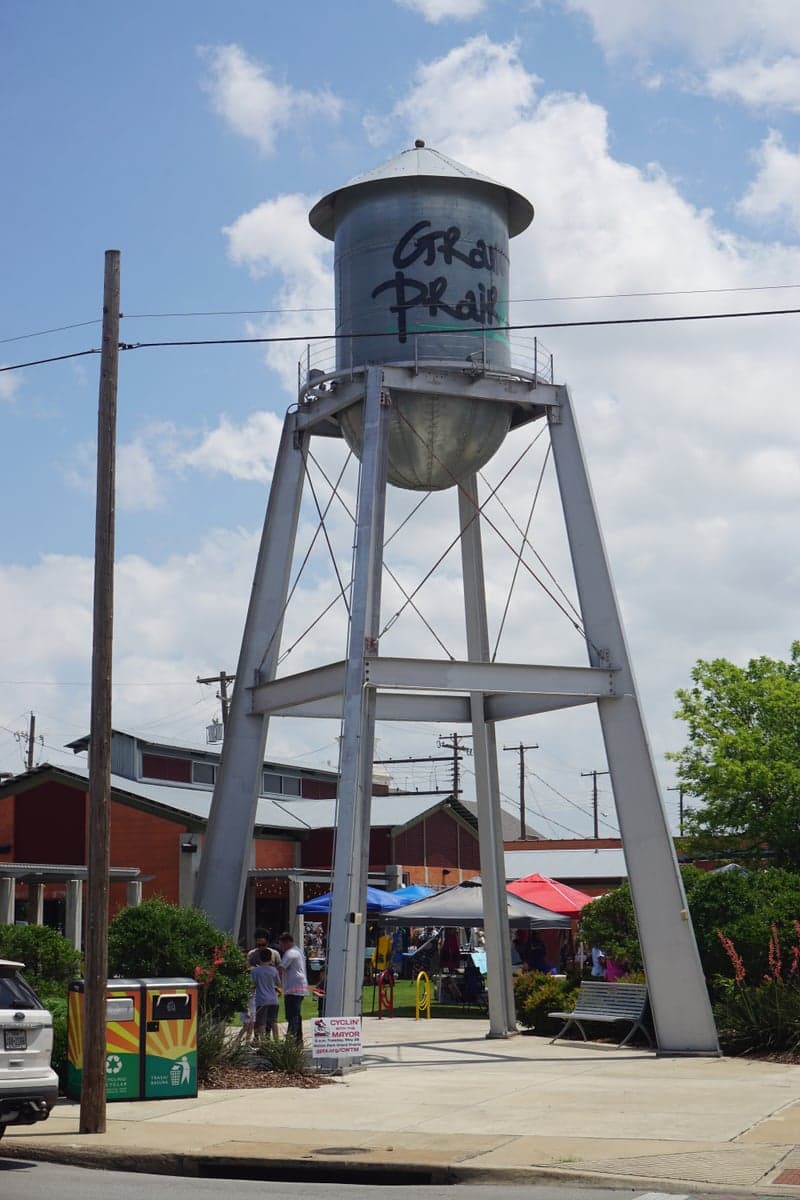
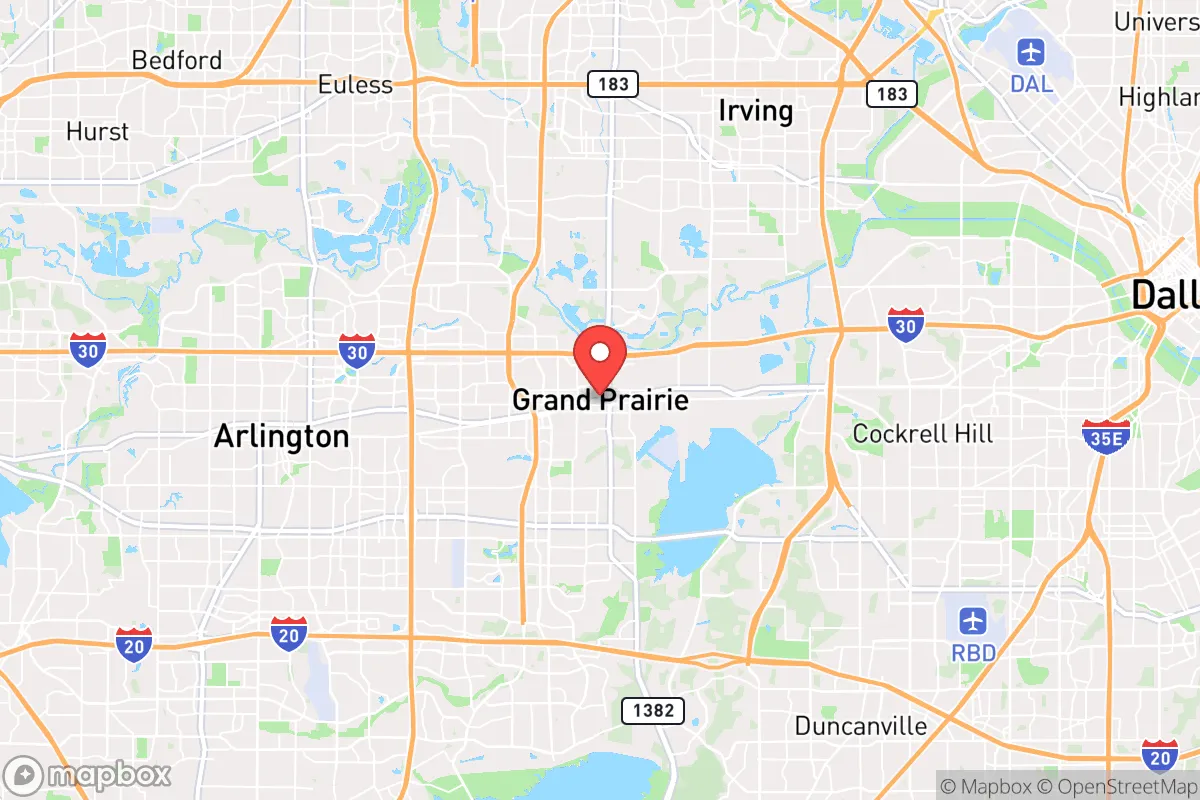
Photo: Wikipedia
Demographics of Grand Prairie, TX
Affluence Level in Grand Prairie, TX
A middle-class area roughly in line with national averages across income, home values, education, and employment.
People of Grand Prairie, TX
Grand Prairie, Texas, is a majority-minority city of 198,564 residents where no single ethnic group holds a numerical majority, creating a distinctive blend of Hispanic (47.2%), Black (23.9%), White (20.1%), and East/Southeast Asian (5.2%) communities. The city’s population is notably younger and more family-oriented than the national average, with a median age of 33.5 and a high proportion of married-couple households. Its identity is shaped by a working-to-middle-class ethos rooted in manufacturing, logistics, and aerospace employment, with a growing professional class drawn by proximity to Dallas-Fort Worth International Airport. Grand Prairie is neither a wealthy enclave nor a distressed inner-ring suburb — it is a pragmatic, diverse, and increasingly suburban city where affordability and access to the DFW job market drive continued in-migration.
How the city was settled and grew
Grand Prairie was originally settled in the 1840s by Anglo-American farmers attracted to the Blackland Prairie’s fertile soil, but the city remained a sparsely populated agricultural crossroads until the arrival of the Texas and Pacific Railway in the 1870s. The railroad spurred the first real population wave: German and Czech immigrant farmers, who established small homesteads in what is now the Dalworth Park and Mountain Creek areas, drawn by cheap land and the ability to ship cotton and grain to market. A second wave came during the Great Depression and Dust Bowl, when displaced White tenant farmers from Oklahoma and East Texas moved into the Southwest Grand Prairie neighborhoods, working in the new factories that began appearing along the rail corridor. The city incorporated in 1909 with fewer than 1,000 residents, and by 1950 the population had only reached 14,594 — a slow, steady growth of rural Whites and a small Black community concentrated near the Turner Park area, where segregated housing patterns persisted through the mid-20th century.
Modern era (post-1965)
The post-1965 immigration reforms and the construction of the Dallas-Fort Worth International Airport in 1974 transformed Grand Prairie from a sleepy farm town into a rapidly diversifying suburb. The airport’s opening drew aerospace and defense employers — notably L-3 Communications and Lockheed Martin — which attracted a wave of White and Black middle-class professionals to subdivisions like Pioneer Point and Lake Ridge in the 1970s and 1980s. Hispanic migration accelerated sharply after 1990, driven by construction and service-sector jobs in the booming DFW metroplex; by 2000, the Hispanic share had risen to 32%, and today it stands at 47.2%. These families concentrated in the West Grand Prairie neighborhoods near Highway 360 and the Dalworth Park corridor, where older postwar housing stock offered affordable entry points. The Black population grew from 12% in 1990 to 23.9% today, with many families moving from southern Dallas into Mountain Creek and South Grand Prairie, drawn by newer schools and lower crime rates. East/Southeast Asian communities — primarily Vietnamese and Filipino — arrived in the 1990s and 2000s, clustering around the Lake Ridge and Pioneer Point areas, where they now operate a visible strip of Vietnamese restaurants and grocery stores along Camp Wisdom Road. The Indian-subcontinent population remains small at 1.2%, with no single concentrated enclave, instead dispersing across newer subdivisions near the airport.
The future
Grand Prairie’s population is projected to reach roughly 220,000 by 2035, driven by continued domestic in-migration from California and the Northeast, plus natural increase among its young Hispanic and Black families. The city is not homogenizing — rather, it is tribalizing into distinct enclaves: West Grand Prairie and Dalworth Park are becoming more heavily Hispanic, Mountain Creek and South Grand Prairie are solidifying as Black-majority areas, and Pioneer Point and Lake Ridge are trending toward a White-Asian mixed demographic. The foreign-born share of 13.9% is below the DFW average of 18%, and immigration from Latin America appears to be plateauing, while East/Southeast Asian immigration is growing modestly. The college-educated share of 29.1% is low by DFW standards, but rising as new master-planned communities like Grand Peninsula attract white-collar commuters. The key trend for the next decade is a slow upward shift in income and education levels, but without the rapid gentrification seen in Dallas proper — Grand Prairie remains a place where working-class families can still buy a home under $300,000.
For a conservative-leaning mover — whether a single professional or a parent — Grand Prairie offers a stable, family-oriented environment with good schools in the Grand Prairie ISD and Arlington ISD portions, low property crime relative to Dallas, and a tax burden that is moderate for Texas. The city is becoming more educated and more suburban, but it retains a blue-collar backbone and a strong sense of local identity. It is not a place of rapid change or elite amenities, but rather a solid, affordable, and increasingly diverse community where the population is growing steadily and the schools are improving. The bottom line: Grand Prairie is a pragmatic choice for someone who wants DFW access without Dallas prices, and who values demographic stability over trendy urbanism.

* Values derived from national, state, county, city and local statistics and may differ in a specific area. Last updated: 2026-04-19T09:52:22.000Z
Narrative content on this page is AI-generated and may contain mistakes. Verify any details that matter before acting on them.
ReloMaps may earn a commission from affiliate links at no extra cost to you.

