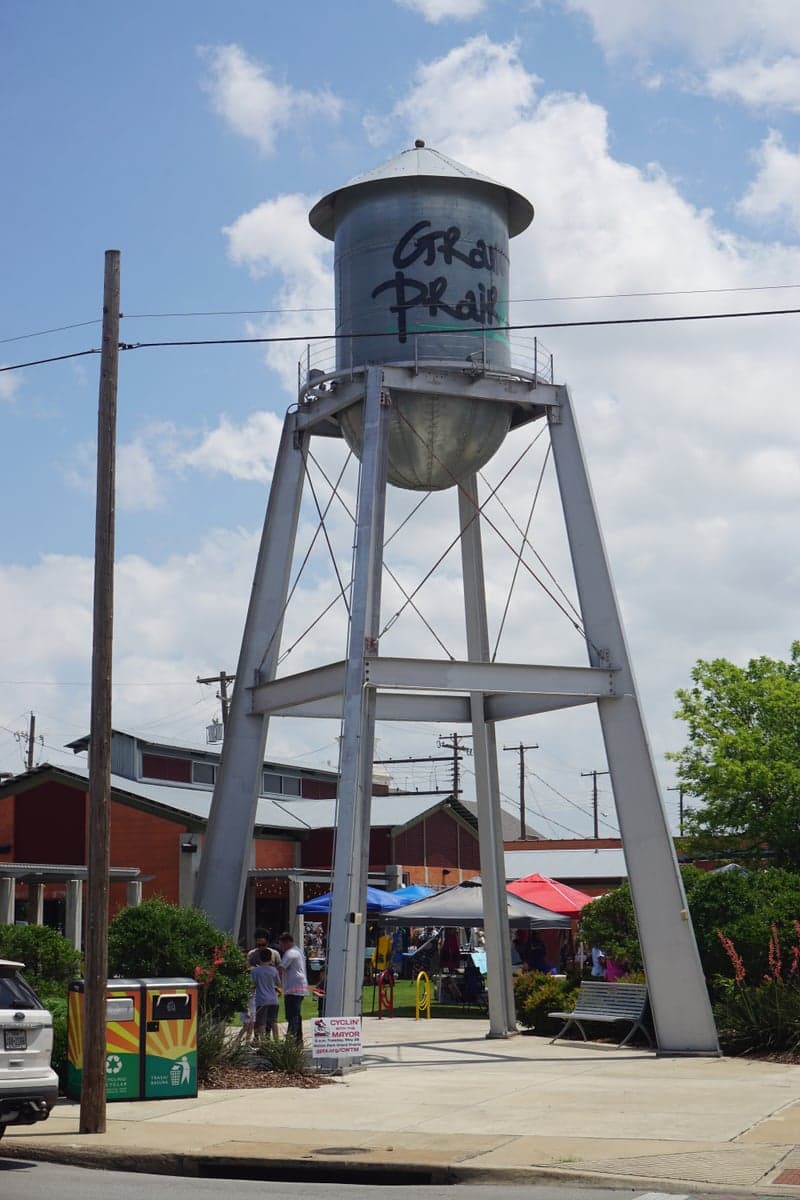
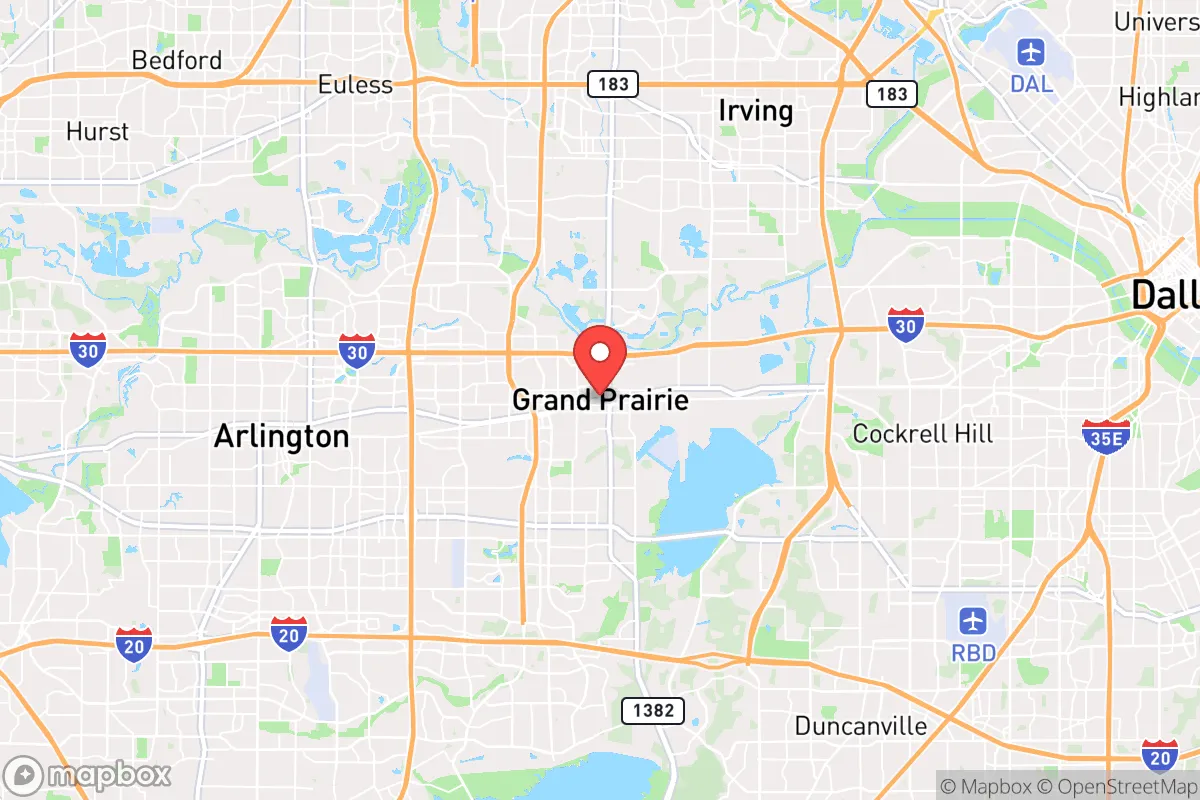
Photo: Wikipedia
Personal Sovereignty in Grand Prairie, TX
Strong independent fundamentals that actively favor personal liberty and low regulation.
What does Personal Sovereignty tell us?
Personal Sovereignty measures your capacity for self-reliance and independence with minimal government friction. Higher scores mean fewer barriers between you and the way you want to live... but it assumes you have the space you need and good neighbors.
What does this tell us?
Personal Sovereignty measures your capacity for self-reliance and independence with minimal government friction. Higher scores mean fewer barriers between you and the way you want to live... but it assumes you have the space you need and good neighbors.
State Policy
Energy independence: Net exporter (220% of energy produced in-state)
Personal Liberty
Homesteading

Personal Liberty Analysis
Grand Prairie, Texas, offers a notably high degree of personal sovereignty for those prioritizing autonomy, self-reliance, and minimal government overreach. Situated in the heart of the Dallas-Fort Worth metroplex, the city operates under the broad umbrella of Texas state law, which provides a strong foundation for individual rights, particularly in areas of self-defense, property use, and tax burden. For the survivalist or prepper-minded individual, Grand Prairie represents a strategic balance: proximity to urban resources and infrastructure without the suffocating regulatory environment found in cities like Austin or Portland. The local political climate leans conservative, with city council and county leadership generally favoring limited intervention in personal affairs, though residents must remain vigilant against creeping municipal ordinances that can erode freedoms over time.
Tax burden and regulatory posture: How Grand Prairie compares to surrounding cities
Texas’s lack of a state income tax is the single most powerful tool for preserving personal sovereignty, and Grand Prairie residents benefit directly from this. The city’s property tax rate, while not the lowest in the metroplex, remains competitive: the combined city, county, school district, and special district rate hovers around 2.5% to 2.7% of assessed value, depending on the specific taxing entities (Grand Prairie ISD, Dallas County, and Tarrant County all play a role). This is higher than some rural counties but lower than many inner-ring suburbs like Highland Park or University Park. The regulatory posture in Grand Prairie is generally business-friendly, with no city-level rent control, no plastic bag bans, and relatively streamlined permitting for home improvements. However, the city does enforce standard building codes and zoning ordinances, which can be a point of friction for those wanting to erect large workshops, barns, or unconventional structures. Compared to Arlington or Fort Worth, Grand Prairie’s regulatory touch is moderate—not as lax as unincorporated areas, but far less intrusive than Dallas proper. For the prepper, the key takeaway is that property taxes, while not trivial, are predictable and do not fund expansive social programs that might signal future tax hikes.
Self-defense and gun law specifics: What the Second Sanctuary status means for residents
Texas is a constitutional carry state, and Grand Prairie fully embraces that framework. As of 2026, no permit is required to carry a handgun openly or concealed for anyone 21 or older who is not prohibited by state or federal law. Grand Prairie is also a Second Amendment Sanctuary City, having passed a resolution in 2021 affirming that local resources will not be used to enforce federal gun laws deemed unconstitutional. This means no local police cooperation with ATF overreach, no red flag orders enforced by city officials, and no local ordinances banning magazine capacities or specific firearm types. The city does have a few restrictions—discharging a firearm within city limits is generally prohibited except on approved ranges or in self-defense—but these are standard for any urban area. For the survivalist, this is a critical advantage: you can keep a rifle in your truck, carry a sidearm to the grocery store, and store ammunition without fear of local confiscation. The nearest public shooting range is at Elm Fork Shooting Sports in Dallas, about 20 minutes away, and there are several private clubs in the surrounding counties. Stand-your-ground laws apply statewide, meaning no duty to retreat in any place you have a legal right to be. This legal environment is a major reason why Grand Prairie remains attractive for those who view self-defense as a non-negotiable personal right.
Self-reliance and homesteading viability: Lot sizes, zoning, and off-grid feasibility
Grand Prairie’s zoning is a mixed bag for the serious homesteader. The city is largely suburban, with most residential lots ranging from 6,000 to 10,000 square feet in older neighborhoods, and newer subdivisions offering even smaller parcels. This limits the scale of food production and livestock keeping. The city allows backyard chickens (hens only, no roosters) on lots of sufficient size, but goats, pigs, and larger livestock are generally prohibited within city limits. For those seeking true self-reliance, the unincorporated areas of Ellis County or Johnson County, a 30- to 45-minute drive south, offer far more flexibility with acreage and fewer zoning restrictions. Off-grid feasibility within Grand Prairie is low: the city requires connection to municipal water and sewer, and solar panel installations must comply with building codes and HOA rules if applicable. Rainwater harvesting is permitted but regulated, and composting toilets are not allowed as a primary sanitation method. The practical advice for the prepper is this: Grand Prairie works well as a base for urban survival—stockpiling supplies, maintaining a large garden, and having a bug-out vehicle ready—but it is not a place to build a self-sufficient homestead. The real value is in its strategic location: close to major highways (I-20, I-30, and 360) for rapid evacuation, and within an hour of rural land where you can establish a secondary retreat.
Personal liberties: Parental rights, medical autonomy, speech, and property rights
Texas law provides strong protections for parental rights, and Grand Prairie schools generally defer to parents on medical decisions, curriculum objections, and disciplinary matters. The state’s Parental Bill of Rights (Texas Family Code Chapter 151) ensures that parents have the final say in their child’s education, healthcare, and religious upbringing. This means no forced vaccine mandates for school attendance (beyond standard state requirements), no secret gender-transition counseling without parental consent, and the ability to opt out of objectionable instructional materials. Medical autonomy for adults is similarly robust: Texas has banned vaccine passports, prohibits mask mandates by local governments, and protects the right to refuse any medical treatment. The city of Grand Prairie has not attempted to override these state protections, unlike some progressive cities that have tried to impose local health orders. Free speech is protected under the Texas Religious Freedom Restoration Act, and the city has no hate speech ordinances or permit requirements for public demonstrations beyond standard time-place-manner restrictions. Property rights are strong, with Texas’s homestead exemption protecting up to 100 acres of rural land (or a home in town) from forced sale to satisfy most creditors. Eminent domain abuse is a concern near major infrastructure projects (like the expansion of Highway 360), but Grand Prairie has not been a hotspot for aggressive takings. Overall, these protections create an environment where a family can live largely unbothered by government intrusion into daily life.
In the broader context of the Dallas-Fort Worth metroplex, Grand Prairie offers a solid, if not exceptional, level of personal sovereignty. It lacks the extreme regulatory freedom of rural Texas counties but avoids the authoritarian overreach seen in cities like Austin or San Antonio. For the survivalist or conservative individual, the calculus is clear: Grand Prairie provides a defensible urban position with strong gun rights, low taxes, and robust parental and medical autonomy, but it is not a place for off-grid living or large-scale homesteading. The city’s greatest strength is its legal alignment with Texas state law, which acts as a firewall against federal overreach and local progressive activism. If you are looking for a base where you can live freely, prepare for disruptions, and maintain a low profile while staying connected to urban infrastructure, Grand Prairie is a viable option. Just keep your bug-out bag packed and your eye on the county line—true sovereignty is still a short drive away.

* Values derived from national, state, county, city and local statistics and may differ in a specific area. Last updated: 2026-04-19T09:52:22.000Z
Narrative content on this page is AI-generated and may contain mistakes. Verify any details that matter before acting on them.
ReloMaps may earn a commission from affiliate links at no extra cost to you.

