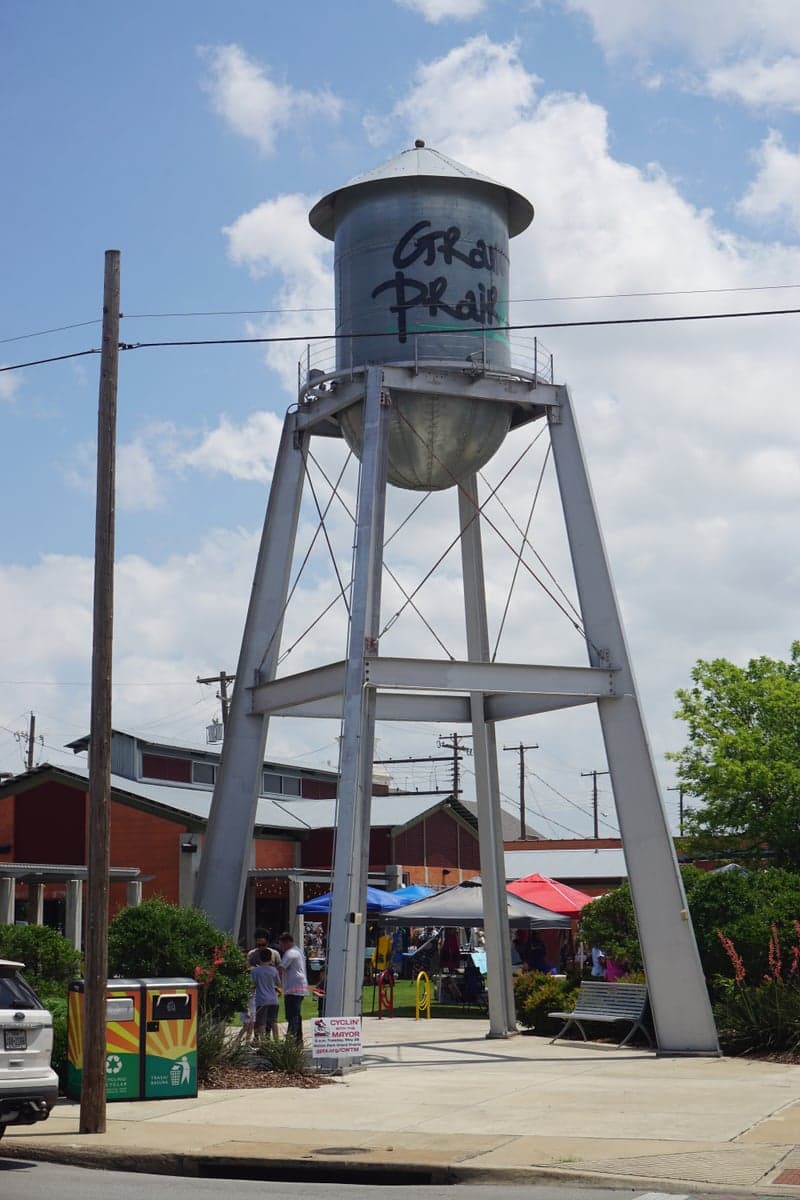
Photo: Wikipedia
Strategic Assessment of Grand Prairie, TX
Multiple tactical vulnerabilities. Population density, target proximity, or disaster risk are likely compounding. A retreat property and exit planning is required.
What does the Strategic Assessment tell us?
Our Strategic Assessment grades tactical survivability of an area. Major population centers, military targets, fallout zones, natural disasters, and border exposure all drive risk — lower exposure means a more defensible position in a crisis.
This is heavily inspired by Joel Skousen's Strategic Relocation book. Highly recommended you checkout the book ($)What does this tell us?
Our Strategic Assessment grades tactical survivability of an area. Major population centers, military targets, fallout zones, natural disasters, and border exposure all drive risk — lower exposure means a more defensible position in a crisis.
This is heavily inspired by Joel Skousen's Strategic Relocation book. Highly recommended you checkout the book ($)Strategic Pillars

Key Distances
Regional Safe Places
Below is our recommended "safe zones" in Texas and the surrounding area based on our strategic heuristics. For most people, it's unrealistic to live in a “safe zone” full-time due to work, family or other personal reasons. They tend to be more rural. However, many of these areas are perfect for second homes and retreat properties that double as a vacation home or even a short-term rental.

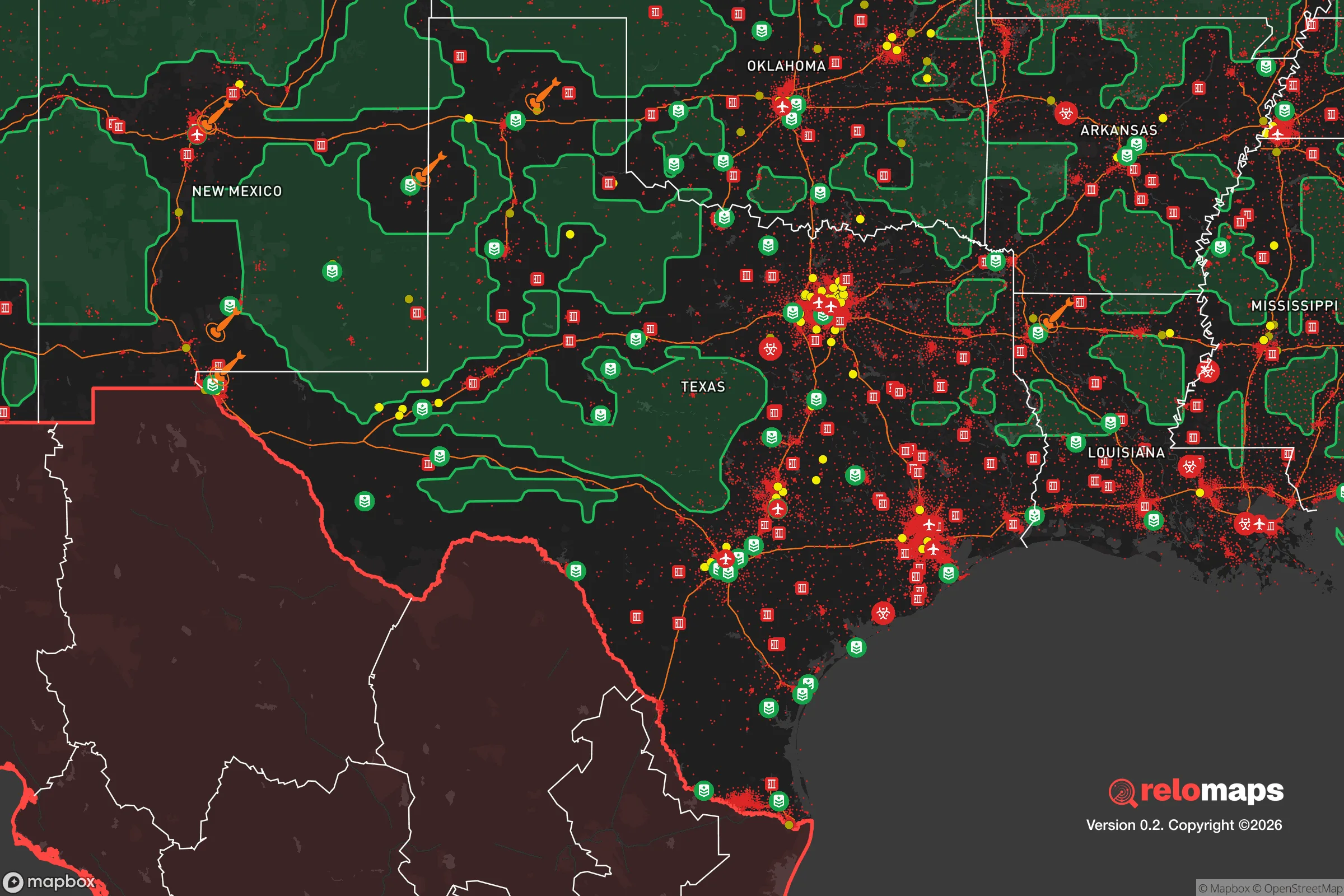


Important Note: For informational purposes only. This does not mean nothing bad ever happens in the green zones. Please use common sense. This is based on public data and modeled with AI. We tried to take a conservative approach but mistakes happen. We update this regularly as new information becomes available.
Solar Generator Recommendations
Backup power matters more here than in safer locations. We've picked three solar generators across budgets and capacity tiers — start with the budget unit if you only need a few essentials, or step up if you want to run a fridge and HVAC for days at a time.

Jackery Portable Power Station Explorer 300
Budget OptionPower on the Go: Weighing only 11 lbs, it's convenient to set up and store with book-sized foldable solar panels

BLUETTI Portable Power Station AC180
Designed for both indoor and outdoor scenarios, AC180 is highly capable as it has a robost capacity and continuous output power.

EF ECOFLOW DELTA Pro Ultra Power Station
Upgraded PickEcoFlow DELTA Pro Ultra is a whole-home energy system designed to grow with your family. Integrated with the Smart Home Panel 2, it scales to meet your evolving energy needs — keeping your home powered, intelligent, and secure through every stage of life.
We earn a commission, at no additional cost to you.
Strategic Assessment Analysis
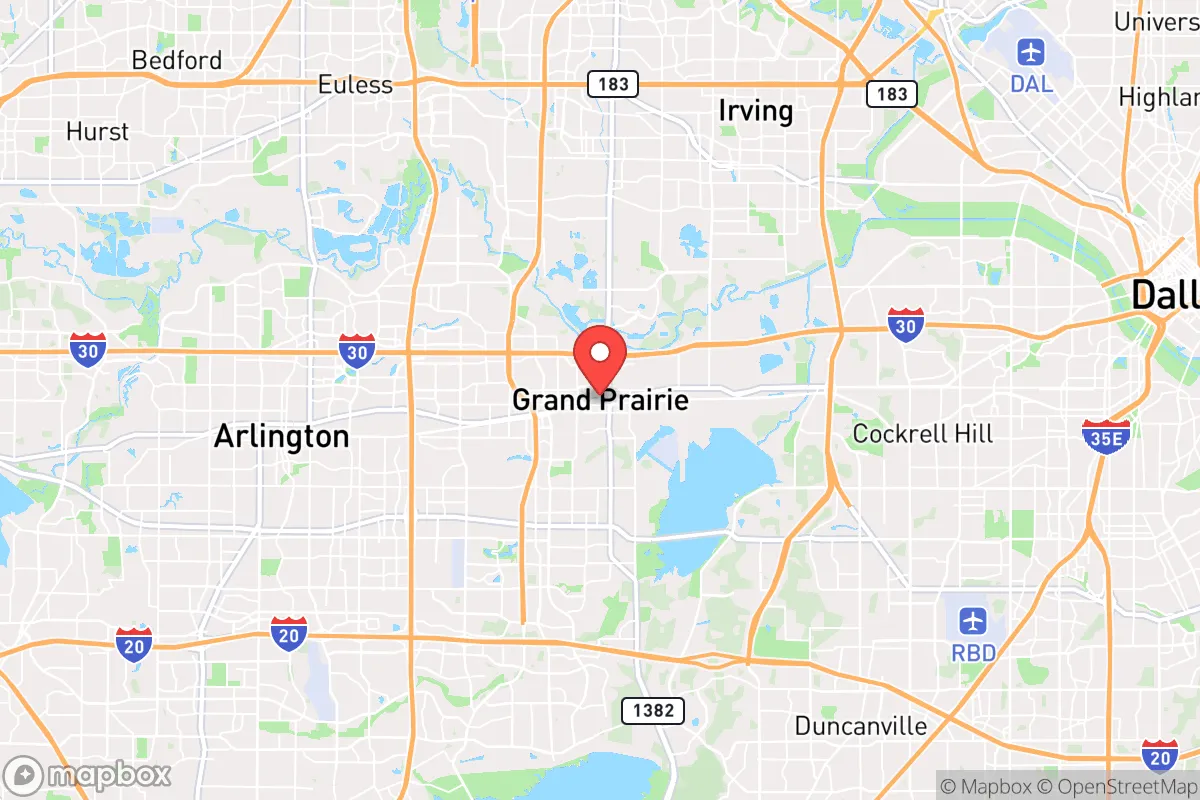
Grand Prairie, Texas, occupies a strategic but precarious position in the North Texas region, offering a mix of logistical advantages and significant vulnerabilities for those prioritizing long-term resilience. Its location at the intersection of Interstates 20 and 30, along with proximity to DFW International Airport, makes it a transportation hub, but this same connectivity exposes it to the risks associated with a major metropolitan area. For a relocator with a survivalist mindset, Grand Prairie presents a trade-off: it is not a remote retreat, but it can function as a staging ground or a temporary holding area if you understand its specific geographic and infrastructural strengths and weaknesses.
Geographic position and natural advantages for a prepared relocator
Grand Prairie sits on the eastern edge of the Balcones Escarpment, a geological feature that provides slightly higher elevation than the surrounding floodplains of the Trinity River. This elevation offers modest natural drainage advantages and reduces the risk of catastrophic flooding compared to cities like Dallas or Fort Worth proper. The area is underlain by the Woodbine and Trinity aquifers, which, while not as prolific as the Ogallala to the north, can provide groundwater access for those with the means to drill a private well. The local climate is semi-arid, with hot summers and mild winters, meaning that freeze-related infrastructure failures are less common than in northern states. However, the region is prone to severe thunderstorms, hail, and occasional tornadoes, so any property should have a reinforced safe room or basement. The presence of Joe Pool Lake and Mountain Creek Lake provides surface water sources, though these are heavily managed by the U.S. Army Corps of Engineers and subject to drought restrictions. For a prepper, the key natural advantage is the relatively stable geology and the ability to harvest rainwater—Texas law permits it, and the average annual rainfall of about 36 inches makes it viable for supplemental use.
Risks, exposures, and proximity to fallout-relevant landmarks
The most significant risk for Grand Prairie is its proximity to high-value targets and population centers. The city lies within 10 miles of the Dallas-Fort Worth metroplex core, which includes the Federal Reserve Bank of Dallas, multiple military installations (Naval Air Station Joint Reserve Base Fort Worth, though primarily a reserve base), and major transportation nodes like DFW Airport and Union Pacific's intermodal yards. In a scenario involving civil unrest or a mass casualty event, these locations would be primary targets for disruption or attack. The city itself is home to Lockheed Martin's Missiles and Fire Control division, a major defense contractor that manufactures precision munitions—a facility that could be a secondary target in a conflict scenario. Additionally, the nearby Barnett Shale natural gas fields have numerous wellheads and pipelines, which, while providing energy, also represent a risk of industrial accidents or sabotage. The city's population density (roughly 200,000 people in 100 square miles) means that any evacuation route would be choked quickly, especially along I-30 and I-20. For a relocator, the practical takeaway is that Grand Prairie is not a bug-out location; it is a location from which you would need to bug out quickly if things go sideways. The presence of the DFW airport also means that in a pandemic or biological event, the city would be an early exposure point due to international travel connections.
Practical resilience for a relocator: food, water, energy, and defensibility
For those committed to staying in Grand Prairie, practical resilience requires a layered approach. Food security is moderate: the city is surrounded by agricultural land in Ellis and Johnson counties to the south, but local grocery supply chains are heavily dependent on just-in-time delivery from regional distribution centers. A prepper should establish a minimum six-month food storage and consider joining a local community garden or CSA (community-supported agriculture) program. Water security is the bigger challenge. Municipal water comes from the Trinity River and area reservoirs, which are vulnerable to contamination from upstream industrial sites or a coordinated attack on the water treatment plants. A well is not feasible in most residential areas due to lot sizes and city regulations, so a robust rainwater catchment system with first-flush diverters and a Berkey or similar filter is essential. Energy resilience is more promising: Texas has its own power grid (ERCOT), which is notoriously fragile during winter storms, but Grand Prairie benefits from proximity to natural gas plants and the Comanche Peak nuclear plant (about 60 miles southwest). Solar panels with battery storage are legal and practical, and the city has no HOA restrictions that outright ban them in most areas. Defensibility is the weakest point. Grand Prairie is a sprawling suburban grid with few natural chokepoints. The best option is a property on a cul-de-sac or near the edge of town, ideally with a rural buffer to the south or west. The city's police force is well-funded but would be overwhelmed in a widespread event. A neighborhood watch group or a mutual assistance pact with like-minded neighbors is not paranoid—it is a practical necessity in this environment.
The overall strategic picture for Grand Prairie is one of calculated risk. It is not a survivalist's paradise, but it is a functional location for someone who needs to stay connected to employment or family obligations in the DFW area while maintaining a reasonable level of preparedness. The city's infrastructure is robust enough for daily life but brittle enough to fail under stress. The key is to treat Grand Prairie as a base of operations, not a final redoubt. Have a pre-planned evacuation route to the Hill Country or East Texas, maintain a fully stocked vehicle with a go-bag, and keep your communications gear (ham radio, GMRS) ready. The conservative perspective here is not about politics—it is about recognizing that the systems we rely on are fragile, and that personal responsibility, community ties, and practical skills are the only real insurance. Grand Prairie can work, but only if you treat it as a temporary holding area, not a permanent sanctuary.

* Values derived from national, state, county, city and local statistics and may differ in a specific area. Last updated: 2026-04-19T09:52:22.000Z
Narrative content on this page is AI-generated and may contain mistakes. Verify any details that matter before acting on them.
ReloMaps may earn a commission from affiliate links at no extra cost to you.

