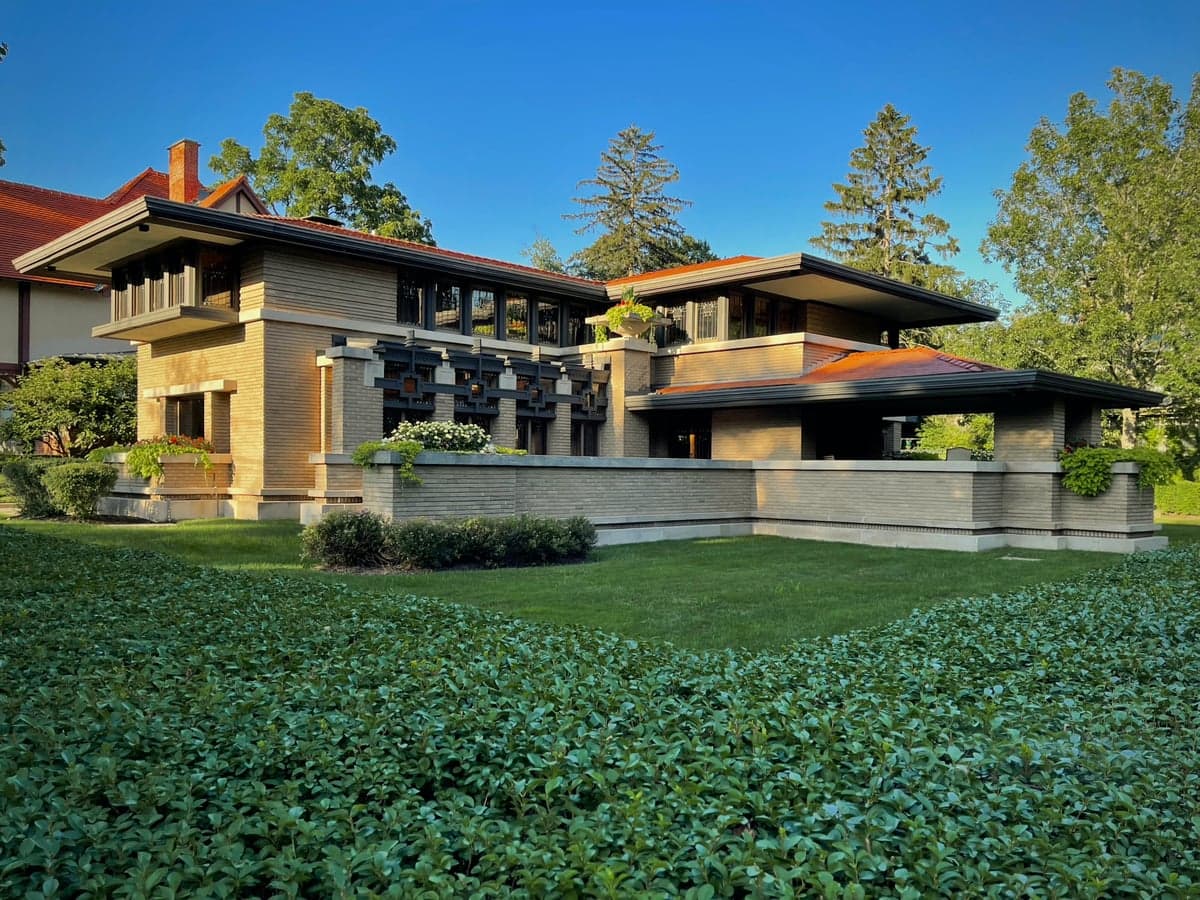
Photo: Wikipedia
Demographics of Grand Rapids, MI
Affluence Level in Grand Rapids, MI
A middle-class area roughly in line with national averages across income, home values, education, and employment.
People of Grand Rapids, MI
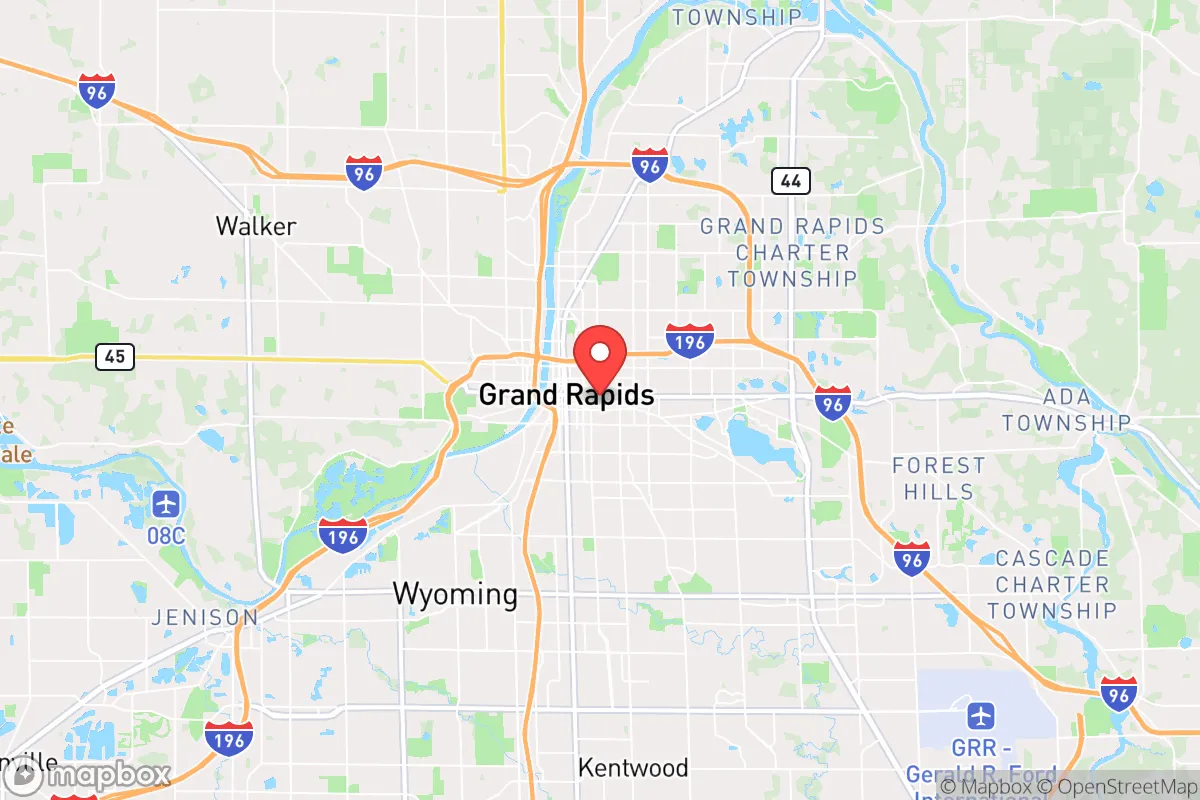
Grand Rapids, Michigan, is home to 197,768 residents, making it the second-most populous city in the state. The city’s population is characterized by a white majority (57.5%), a significant Black community (17.4%), and a growing Hispanic population (16.1%), with smaller but notable East/Southeast Asian (2.3%) and Indian subcontinent (0.6%) communities. A relatively high 40.1% of adults hold a college degree, reflecting the city’s shift from a manufacturing hub to a healthcare, education, and design-driven economy. The city’s identity is rooted in its Dutch Calvinist founding, but modern Grand Rapids is increasingly diverse, with distinct ethnic enclaves and a politically moderate-to-conservative tilt that appeals to families and professionals seeking a stable, midwestern environment.
How the city was settled and grew
Grand Rapids was originally inhabited by the Ottawa and Ojibwe peoples before European settlement began in the 1820s. The city’s founding is tied to the Grand River’s water power, which attracted Yankee settlers from New York and New England who established sawmills and gristmills. The key population wave came after 1847, when Dutch Calvinist immigrants, fleeing religious persecution and economic hardship in the Netherlands, settled in the West Side neighborhood, building the Christian Reformed Church and founding furniture factories. By the 1870s, Grand Rapids was known as “Furniture City,” drawing skilled German and Polish craftsmen to the Belknap Lookout and Heritage Hill areas, where their Victorian homes still stand. A smaller wave of Italian immigrants arrived around 1900, settling in the Fulton Heights district. The city’s population peaked at 197,000 in the 1950s, driven by wartime manufacturing and the furniture industry’s expansion.
Modern era (post-1965)
The 1965 Immigration and Nationality Act reshaped Grand Rapids’ demographics. The most significant post-1965 influx has been Hispanic, primarily Mexican and Puerto Rican, who began arriving in the 1970s for agricultural and light industrial jobs. Today, the Burton Heights and South Division Avenue corridors are the heart of the Hispanic community, with a 16.1% citywide share that is still growing. The Black population (17.4%) largely descends from the Great Migration (1940s–1960s), with families settling in the Madison Square and Southeast End neighborhoods. Since 2000, East/Southeast Asian communities (2.3%)—primarily Vietnamese and Korean—have clustered in the Eastown and East Hills areas, often drawn by refugee resettlement programs and the region’s manufacturing base. The Indian subcontinent population (0.6%) is smaller and more dispersed, concentrated among professionals in the medical and tech sectors near the Medical Mile district. Suburbanization since the 1970s has pulled many white families to outlying towns like Grandville and Kentwood, but the city core has seen a revival since 2010, with young professionals and empty-nesters moving into downtown lofts and the Cherry Hill neighborhood.
The future
Grand Rapids’ population is slowly diversifying but remains more homogeneous than the national average. The Hispanic share is projected to rise to 20–22% by 2040, driven by both immigration and higher birth rates, while the white share will continue to decline. The Black population is stable, with some out-migration to suburbs but new arrivals from Chicago and Detroit. East/Southeast Asian and Indian communities are growing modestly, primarily through professional migration tied to Spectrum Health and Grand Valley State University. The city is not tribalizing into isolated enclaves; rather, neighborhoods like Eastown and Heritage Hill are becoming more mixed, while Burton Heights remains predominantly Hispanic. The biggest demographic shift is age-related: the city is getting younger, with a median age of 31.5, as families with children move to suburbs and young singles and couples fill downtown apartments. The foreign-born share (7.5%) is below the national average (13.7%) but rising slowly, with refugee resettlement (especially from Myanmar and the Democratic Republic of Congo) adding new diversity to the South Side.
For a conservative-leaning mover, Grand Rapids offers a stable, family-oriented environment with a strong religious tradition (especially Dutch Reformed and Catholic), low crime relative to similar-sized cities, and a growing economy anchored by healthcare and manufacturing. The city is becoming more diverse and urban, but at a measured pace that preserves its midwestern character. New arrivals will find a place where neighborhoods still have distinct identities, schools are generally good, and the cost of living remains below the national average—a practical choice for those seeking community without the volatility of larger metros.

* Values derived from national, state, county, city and local statistics and may differ in a specific area. Last updated: 2026-04-30T04:22:01.000Z
Narrative content on this page is AI-generated and may contain mistakes. Verify any details that matter before acting on them.
ReloMaps may earn a commission from affiliate links at no extra cost to you.

