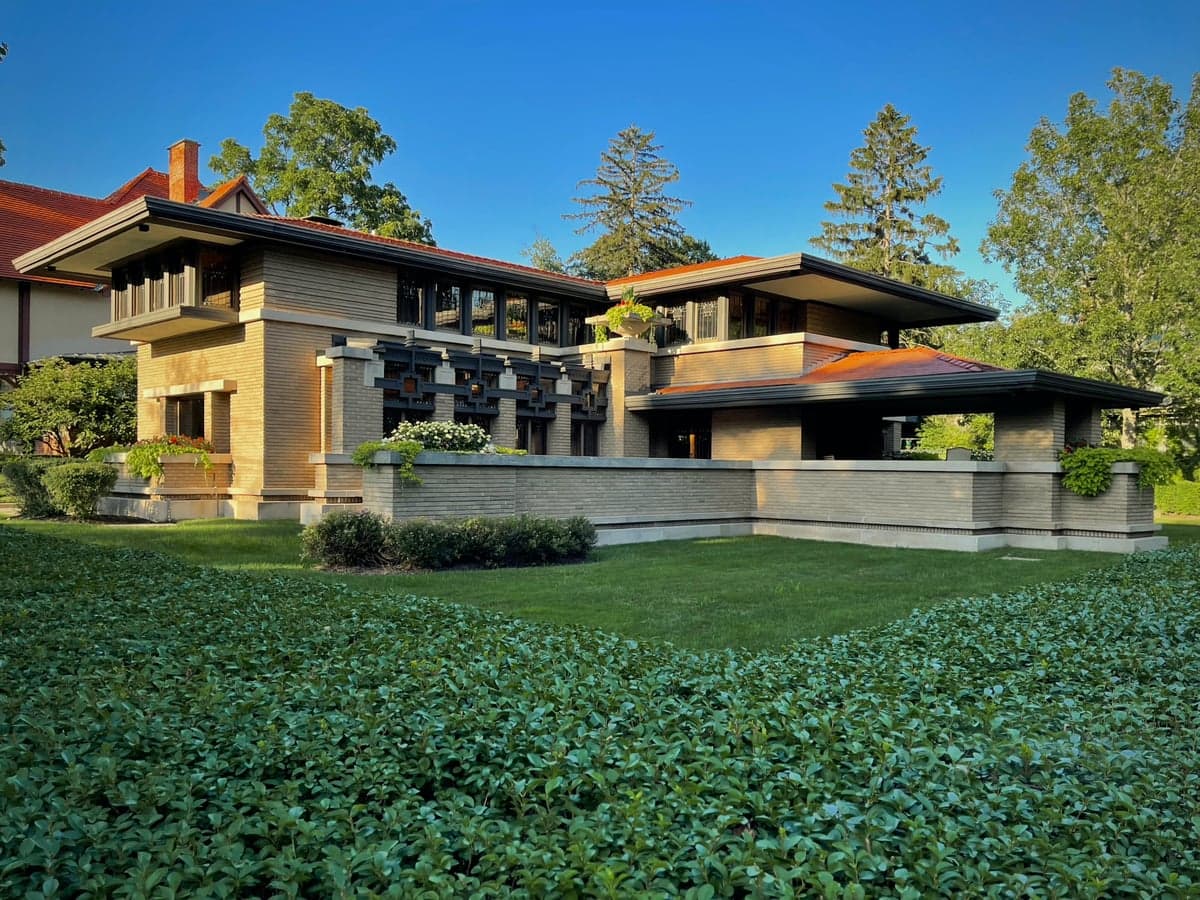
Photo: Wikipedia
Personal Sovereignty in Grand Rapids, MI
Strong independent fundamentals that actively favor personal liberty and low regulation.
What does Personal Sovereignty tell us?
Personal Sovereignty measures your capacity for self-reliance and independence with minimal government friction. Higher scores mean fewer barriers between you and the way you want to live... but it assumes you have the space you need and good neighbors.
What does this tell us?
Personal Sovereignty measures your capacity for self-reliance and independence with minimal government friction. Higher scores mean fewer barriers between you and the way you want to live... but it assumes you have the space you need and good neighbors.
State Policy
Energy independence: Importer (20% of energy produced in-state)
Personal Liberty
Homesteading

Personal Liberty Analysis
For the individual or family prioritizing personal sovereignty—the ability to live, defend, and provide for oneself without undue government interference—Grand Rapids, Michigan presents a mixed but increasingly strategic picture. While the city itself leans left politically, the surrounding West Michigan region retains a strong conservative and libertarian undercurrent, and Michigan’s state-level legal framework offers several meaningful protections for self-reliance and gun rights that are absent in many coastal states. However, a careful analysis reveals that the autonomy environment here is not absolute; it requires navigating a patchwork of local ordinances, a moderately progressive state tax structure, and a regulatory posture that can either empower or frustrate the determined prepper.
Tax burden and regulatory posture for the self-reliant individual
Michigan’s tax burden is moderate compared to high-tax states like New York or California, but it is not a tax haven. The state levies a flat income tax of 4.25% (as of 2025), which is straightforward but non-negotiable. Property taxes in Kent County average around 1.5% of assessed value, which is higher than many Sun Belt states but lower than the Northeast. For the self-reliant individual, the more critical factor is the regulatory posture. Michigan is a “right-to-work” state (though this status is under constant political pressure), which means you cannot be forced to join a union as a condition of employment—a meaningful protection for personal economic freedom. However, the state’s regulatory environment for small-scale agriculture and home-based businesses is mixed. Kent County allows accessory dwelling units and home occupations with permits, but the process can be bureaucratic. The Michigan Department of Environment, Great Lakes, and Energy (EGLE) has significant authority over land use, particularly near waterways and wetlands, which can complicate off-grid water collection or septic system installation. For the prepper, the key takeaway is that while the state does not actively persecute self-reliance, you must be prepared to navigate permitting and zoning boards—especially if you live within city limits.
Self-defense and gun law specifics in Grand Rapids and Michigan
This is where Grand Rapids and Michigan shine for the sovereignty-minded individual. Michigan is a “shall-issue” state for concealed pistol licenses (CPL), meaning that if you meet the basic requirements (age 21, no disqualifying criminal record, completion of a safety course), the county sheriff must issue your permit. There is no discretionary “may-issue” system, no burdensome “good cause” requirement, and no arbitrary denial by a local official. Grand Rapids itself is in Kent County, which has a historically pro-2A sheriff’s office that processes CPL applications efficiently. Furthermore, Michigan law explicitly preempts local governments from enacting their own gun control ordinances—so the city of Grand Rapids cannot ban concealed carry in city parks or impose magazine capacity limits that differ from state law. This preemption is a critical bulwark against local overreach. Open carry is legal without a permit for anyone 18 or older who can legally possess a firearm, though practical considerations (business policies, police contact) make concealed carry the more prudent choice. Stand-your-ground laws are on the books, meaning you have no duty to retreat before using deadly force if you are lawfully present and believe it is necessary to prevent imminent death or great bodily harm. For the prepper, this legal framework provides a solid foundation for personal defense, though you should be aware that Michigan’s Castle Doctrine applies to your home and vehicle, but not necessarily to your curtilage or outbuildings—a nuance worth studying.
Self-reliance and homesteading viability: lot sizes, zoning, and off-grid feasibility
Within Grand Rapids city limits, true homesteading is difficult. Standard residential lots are typically 40 to 60 feet wide, and zoning codes restrict livestock (chickens are allowed in some neighborhoods with a permit, but goats and larger animals are generally prohibited). Off-grid living—solar panels, rainwater collection, composting toilets—is technically possible but heavily regulated. The city requires connection to municipal water and sewer in most areas, and building codes mandate grid-tied electrical systems for new construction. However, the picture changes dramatically once you move outside the city core. In the surrounding townships of Kent County—like Caledonia, Lowell, or Sparta—zoning is far more permissive. Agricultural and rural-residential zones allow for 5 to 10 acre minimum lot sizes, which opens the door for small-scale livestock, substantial gardens, and even private wells and septic systems. Off-grid solar is legal and increasingly common, though net metering policies with Consumers Energy or DTE can be complex. The Michigan Right to Farm Act provides some protection for agricultural activities, even in areas that are becoming suburbanized, but it does not shield you from nuisance complaints if your operation is not genuinely commercial. For the serious prepper, the strategy is clear: buy land in the outer townships, not in the city. The infrastructure for self-reliance exists, but you must be willing to commute or work remotely.
Personal liberties: parental rights, medical autonomy, speech, and property
Michigan’s record on parental rights is a mixed bag that requires vigilance. The state has a robust “parental rights” statute that affirms the fundamental right of parents to direct the upbringing, education, and health care of their children. However, this has been tested in recent years. During the COVID-19 pandemic, the governor’s emergency orders overrode local school board decisions on masking and remote learning, creating friction. Currently, Michigan law does not require parental consent for a minor to receive an abortion (a 2023 court ruling struck down the parental consent requirement), which is a significant concern for conservative parents. On medical autonomy, Michigan is not a “medical freedom” state in the way that, say, Idaho or Missouri are. Vaccine mandates for healthcare workers and school attendance have been upheld, though exemptions exist. For the individual, this means you have the legal right to refuse medical treatment for yourself, but your choices for your children may be challenged by state authorities in certain circumstances. Free speech is protected under the First Amendment, and Grand Rapids has a history of robust public discourse, though like many cities, there are “buffer zone” ordinances around abortion clinics that have been litigated. Property rights are generally strong, with Michigan’s “takings” law requiring just compensation for eminent domain, but the state’s environmental regulations can effectively restrict land use without a formal taking—a gray area that property owners should understand. Overall, personal liberties in Michigan are above average for the Midwest, but they are not absolute; the state retains significant police powers that can be invoked in times of crisis.
In the broader landscape of American sovereignty, Grand Rapids and its surrounding region offer a workable compromise for the survivalist or prepper who wants access to urban infrastructure without surrendering all autonomy. The gun laws are solid, the tax burden is manageable, and the outer townships provide genuine homesteading potential. However, the state’s progressive lean on parental rights and medical autonomy, combined with a regulatory apparatus that can be intrusive, means that this is not a libertarian paradise. Compared to states like Texas, Idaho, or Montana, Michigan falls short on raw freedom metrics. But compared to the Northeast, the West Coast, or the urban centers of the Midwest (Chicago, Detroit), Grand Rapids is a relative stronghold for personal sovereignty. The strategic move for the sovereignty-minded individual is to locate in the outer ring of Kent County, maintain a low profile, and be prepared to engage with local government when necessary. It is not a fortress, but it is a defensible position.

* Values derived from national, state, county, city and local statistics and may differ in a specific area. Last updated: 2026-04-30T04:22:01.000Z
Narrative content on this page is AI-generated and may contain mistakes. Verify any details that matter before acting on them.
ReloMaps may earn a commission from affiliate links at no extra cost to you.

