Photo: Wikipedia
Quality of Life in Grand Rapids, MI
Above-average quality of iife. The area offers a reasonable cost of living, decent mobility, and a mix of neighborhood amenities.
What does Quality of Life tell us?
Quality of Life blends cost of living, nearby amenities, socioeconomic signals, and neighborhood character. City-level scores represent the whole municipality; individual neighborhoods can differ.
What does this tell us?
Quality of Life blends cost of living, nearby amenities, socioeconomic signals, and neighborhood character. City-level scores represent the whole municipality; individual neighborhoods can differ.
Cost of Living
7% below national average
The Real Cost of Living in Grand Rapids, MI for 2026
| Tier | Individual | Family (4) |
|---|---|---|
| Survival | $19k | $36k |
| Comfortable | $44k | $64k |
| Luxury | $104k+ | $161k+ |
| Elite (Top 5%) | $122k+ | $189k+ |
102%
The Area Signal
A metric tracking the socioeconomic signals of the area.
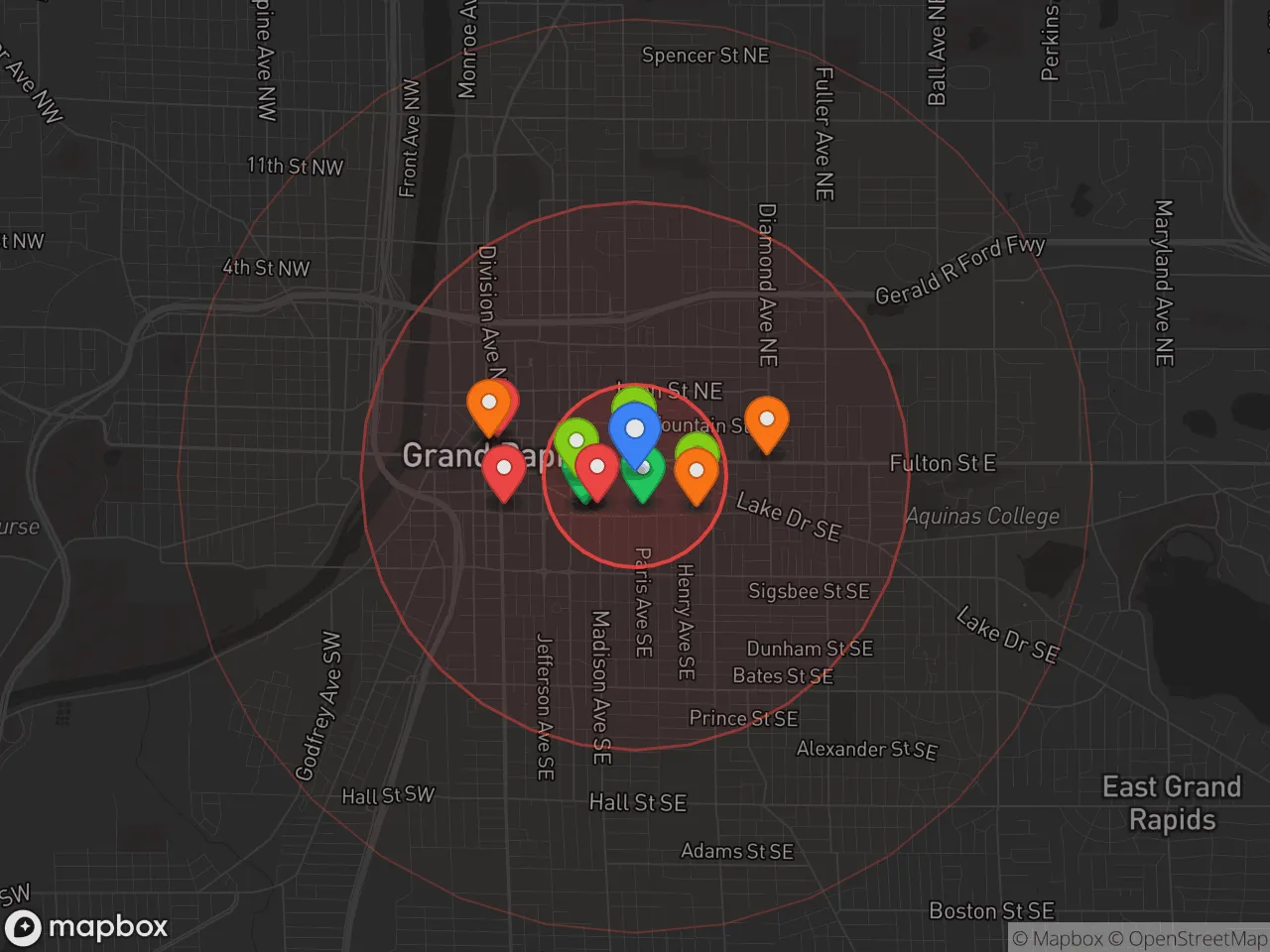
Hobbies
Explore the areaGroceries
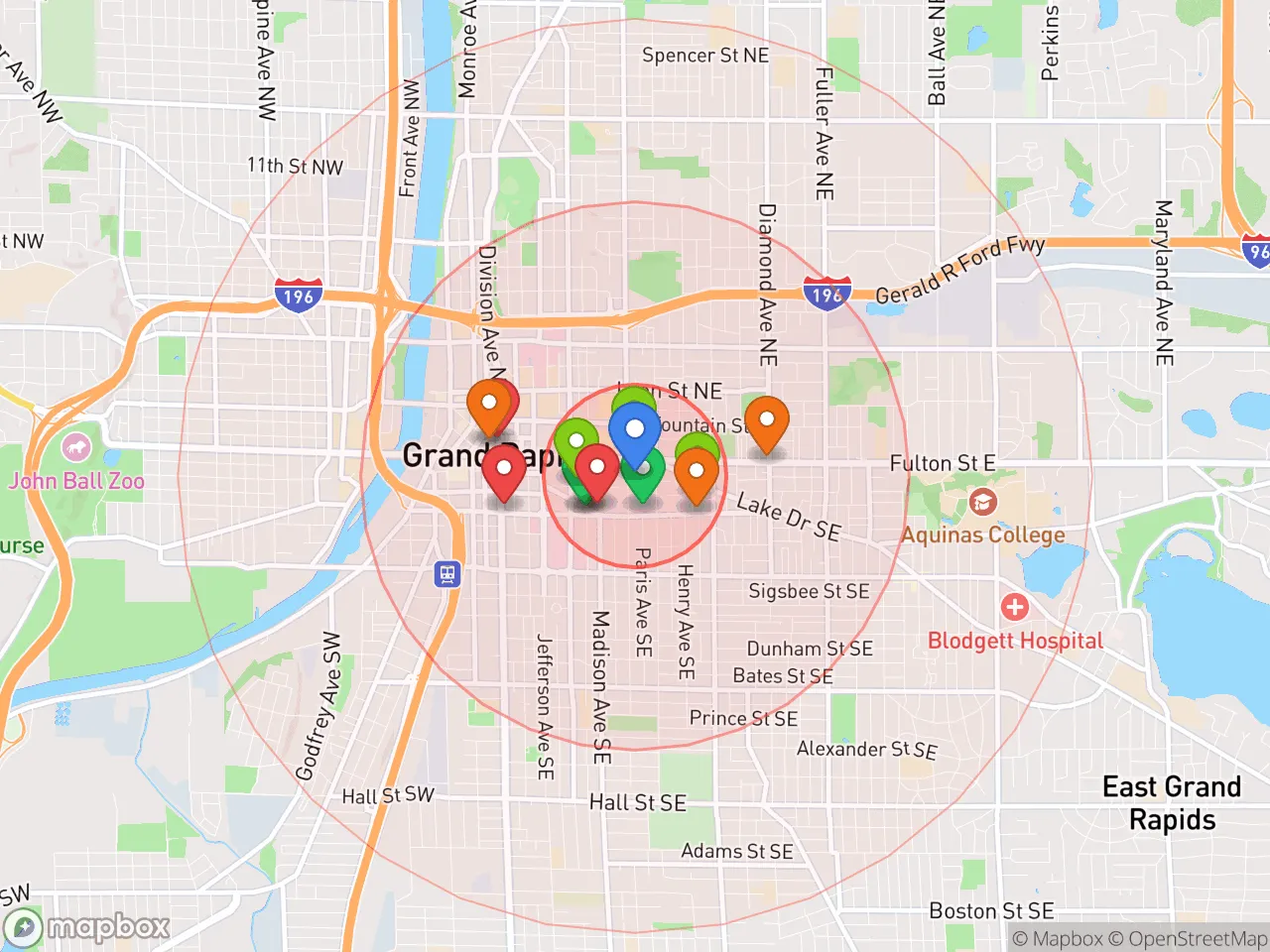
5 within 10 miles
Gas
20 within 10 miles
Hospital
8 within 20 miles
Airport
DTW — Detroit Metropolitan Wayne County
Post Office
USPS — Grand Rapids, MI
Critical Amenities
Quality-of-Life Analysis
Grand Rapids, Michigan, offers a quality of life defined by strong economic opportunity and a cost of living that remains well below national averages, attracting a mix of young professionals, growing families, and established residents seeking Midwestern stability. With a cost-of-living index of 93 (where 100 equals the U.S. average), the city provides a tangible financial advantage over coastal metros while maintaining urban amenities. The population skews slightly younger than the state average, driven by a robust healthcare and manufacturing job base, and the city’s culture balances a historic, industrious past with a modern, craft-focused present.
Cost of living, housing affordability, and how Grand Rapids compares to nearby cities
Grand Rapids’ housing market is a central pillar of its affordability advantage. The median home value sits at $225,500, significantly lower than the national median of roughly $350,000, and well below nearby Ann Arbor (where the median exceeds $400,000) or Chicago (over $300,000). Median rent is $1,191, which is about 15% cheaper than the national median rent of $1,400, making the city accessible for renters saving for a down payment. Compared to smaller West Michigan towns like Holland or Muskegon, Grand Rapids offers higher wages and more job density without a proportional jump in housing costs. The average commute of 19.4 minutes is notably shorter than the national average of 26 minutes, reducing transportation expenses and freeing up time for family or recreation. Property taxes in Kent County average around 1.5% of assessed value, which is moderate for Michigan and lower than in many suburban Chicago or New York counties.
What daily life is like: amenities, schools, and the local rhythm
Daily life in Grand Rapids revolves around a walkable downtown core, a strong public school system, and a calendar packed with community events. The city’s Forest Hills Public Schools and East Grand Rapids Public Schools consistently rank among Michigan’s top districts, with graduation rates above 95%, while Grand Rapids Public Schools offers specialized magnet programs like the Center for Economicology. Amenities include the Frederik Meijer Gardens & Sculpture Park, a 158-acre attraction drawing over 600,000 visitors annually, and the Grand Rapids Art Museum. The local rhythm is shaped by a thriving craft beer scene—the city is home to over 80 breweries, including Founders Brewing Co.—and a strong outdoor culture, with the White Pine Trail and Millennium Park providing hiking, biking, and kayaking within a 15-minute drive. The Grand Rapids Downtown Market anchors a food scene that blends farm-to-table dining with international cuisines, and the Van Andel Arena hosts concerts and minor-league hockey. The city’s unemployment rate has hovered around 3.5% in recent years, below the national average, driven by major employers like Spectrum Health (now Corewell Health), Meijer, and Steelcase.
Grand Rapids is best suited for people who value a balanced, affordable urban lifestyle with strong schools and a tight-knit community feel. Young professionals will appreciate the short commute and growing tech and design sectors, while families benefit from the low cost of housing and top-rated suburban school districts. Retirees on fixed incomes find the low cost of living and access to healthcare appealing, though those seeking a 24-hour nightlife or extreme cultural diversity may find the city quieter than larger metros. For anyone prioritizing financial breathing room, a manageable pace, and four distinct seasons, Grand Rapids delivers a quality of life that punches well above its price tag.

Crime in Grand Rapids, MI
Higher crime rates than 70% of comparable U.S. locations.
Violent CrimeViolent Crime Analysis
Property CrimeProperty Crime Analysis
Crime Analysis
Grand Rapids, Michigan, reports a violent crime rate of 408.1 incidents per 100,000 residents and a property crime rate of 1,238.7 per 100,000, figures that place it above both the state and national averages for similar-sized cities. While the city offers cultural amenities and economic opportunities, its safety profile is a significant concern for prospective residents, particularly given the broader context of a criminal justice system influenced by progressive policies in Michigan’s larger counties. These policies, while intended to reduce incarceration, have been linked to higher recidivism and a perception of diminished public safety.
Crime in context
Grand Rapids’ violent crime rate of 408.1 per 100,000 is roughly 15% higher than the national average for cities of its size, while its property crime rate of 1,238.7 per 100,000 exceeds the national average by approximately 20%. Compared to the state of Michigan, which reported a violent crime rate of 456 per 100,000 in 2023, Grand Rapids sits slightly below that mark, but its property crime rate is notably higher than the state’s 1,100 per 100,000. The city’s crime challenges are compounded by the influence of progressive district attorneys and judges in Kent County, who have implemented policies such as reduced cash bail and diversion programs for repeat offenders. These reforms, while sympathetic to offenders, have been criticized for contributing to a revolving-door justice system that prioritizes leniency over accountability, directly impacting victims and public confidence in safety.
What residents experience
Residents report that property crime—including theft, burglary, and vehicle break-ins—is the most common safety concern, particularly in central neighborhoods and areas near downtown. Violent crime, while less frequent, is concentrated in specific corridors and often involves disputes among individuals known to one another. Grand Rapids has seen a 12% increase in aggravated assaults since 202 fuelled by a combination of economic stress and a justice system that often releases offenders without meaningful consequences. The city’s police department has responded with targeted patrols and community engagement, but the effectiveness of these efforts is undermined by a legal environment that frequently returns arrested individuals to the streets within hours. For families and professionals, the daily reality involves heightened vigilance—locking vehicles, avoiding certain blocks after dark, and investing in home security systems.
Neighborhood-level variation is stark. The East Hills, Heritage Hill, and Fulton Heights areas report lower crime rates, with violent crime below 200 per 100,000, while the South Division Avenue corridor and parts of the West Side experience rates exceeding 600 per 100,000. Prospective residents should prioritize neighborhoods north of Wealthy Street or east of Fuller Avenue for lower risk, and consult local crime maps before committing to a lease or purchase. The progressive judicial philosophy in Kent County means that even in safer areas, the broader regional risk of property crime remains elevated compared to more conservative jurisdictions in Michigan’s rural counties.
* Values derived from national, state, county, city and local statistics and may differ in a specific area. Last updated: 2026-04-30T04:22:01.000Z
Narrative content on this page is AI-generated and may contain mistakes. Verify any details that matter before acting on them.
ReloMaps may earn a commission from affiliate links at no extra cost to you.

