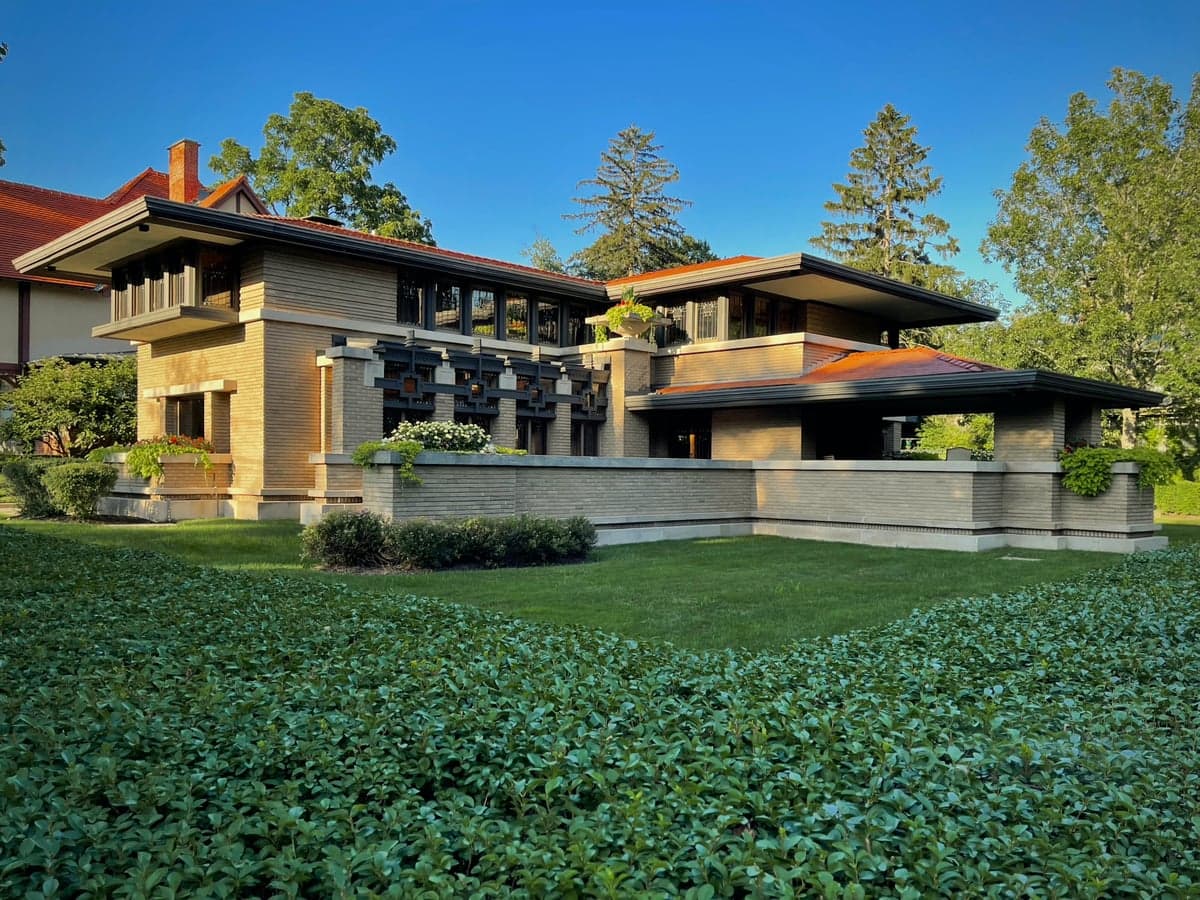
Photo: Wikipedia
Political ClimatePolitical Climate in Grand Rapids, MI
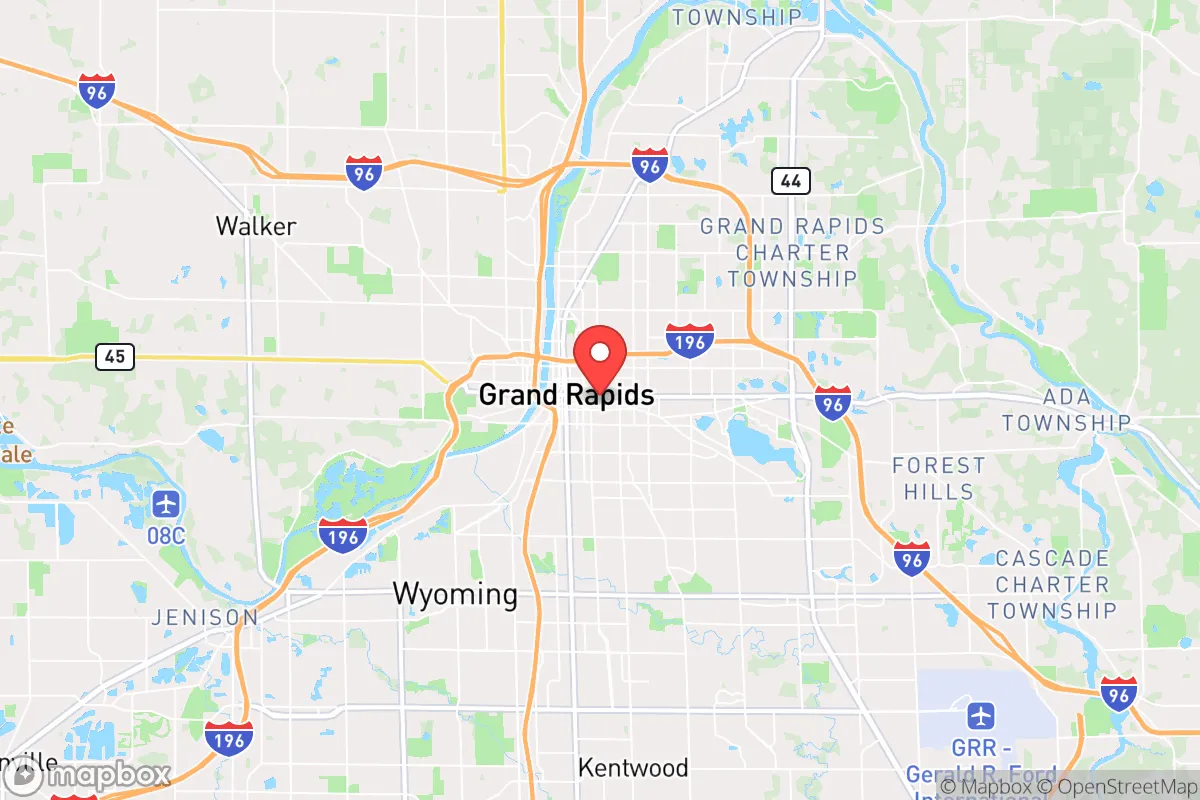
District shown is the primary district for this city’s centroid. Cities may span multiple districts.
Local Political AnalysisPolitical Analysis of Grand Rapids, MI
Grand Rapids has shifted noticeably left over the past decade, and if you’ve lived here as long as I have, you’ve felt it. The Cook PVI now sits at D+4, meaning the city leans about four points more Democratic than the national average—a far cry from the reliably purple, often conservative-leaning area I remember from the 1990s and early 2000s. The trajectory is clear: each election cycle brings a tighter grip of progressive policies, especially in the urban core, while the surrounding towns still hold the line. If you’re someone who values limited government and personal freedoms, this trend is worth watching closely.
How it compares
Drive 15 minutes in almost any direction from downtown Grand Rapids, and you’ll hit towns that feel like a different world. East Grand Rapids and Forest Hills remain reliably conservative, with local school boards and city commissions that push back on state-level mandates. Ada and Caledonia are even more solid—think strong Second Amendment support and low property tax growth. But the city itself? It’s increasingly dominated by Kent County’s urban voting blocs, which have swung hard for progressive candidates since 2016. Compare that to Holland or Muskegon, which are more mixed but still have conservative pockets, and you see the divide: Grand Rapids is becoming an island of blue in a sea of red and purple. The contrast is starkest on issues like zoning reform, police funding, and school curriculum—where the city council often votes 5-2 along party lines, while neighboring towns keep things local and small-government.
What this means for residents
For everyday folks, the political shift translates into real-life friction. Property taxes have crept up as the city expands public programs and affordable housing mandates—good intentions, but they hit your wallet directly. If you run a small business, you’ve probably noticed more red tape: paid leave ordinances, minimum wage hikes, and stricter permitting processes that the county doesn’t impose. On the personal freedom side, the city’s push for “equity” initiatives has led to some eyebrow-raising policies, like diversity quotas on city boards and a police oversight committee that some feel overreaches. School choice is still strong in the suburbs, but Grand Rapids Public Schools have leaned into progressive curriculum changes that make some parents uneasy. The long-term concern is that if this trajectory holds, you’ll see more of the same: higher taxes, more mandates, and less room for local control. It’s not a crisis yet, but it’s a slow creep that’s hard to reverse once it’s baked into city code.
Culturally, Grand Rapids still has its conservative roots—the DeVos and Van Andel families have deep ties here, and you’ll find plenty of churches and civic groups that push back on the progressive wave. But the city’s identity is splitting. The downtown area, with its craft breweries and art scene, attracts younger, left-leaning transplants, while the outer neighborhoods and suburbs hold onto the old-school values of self-reliance and fiscal restraint. One policy distinction that stands out is the city’s approach to homelessness and public camping: Grand Rapids has adopted a “housing first” model that some residents see as enabling rather than solving the problem, while nearby Wyoming and Kentwood take a stricter line. If you’re considering a move here, my advice is to look closely at the neighborhood—and maybe keep an eye on the next city council election. The direction this place takes in the next five years will tell you everything.

State Political ClimatePolitical Climate in Michigan
State Political AnalysisPolitical Environment in the State
Michigan has shifted from a classic purple battleground to a state with a clear blue lean at the statewide level, with Democrats winning the governorship, both U.S. Senate seats, and both chambers of the legislature in the 2022 midterms for the first time in four decades. The state’s political trajectory over the last 10-20 years has been defined by the collapse of union-aligned blue-collar Democrats in the industrial southeast, replaced by a coalition of suburban professionals, younger voters in college towns, and a mobilized base in Detroit. However, this shift is not uniform — the western side of the state, particularly the Grand Rapids area and the rural Upper Peninsula, remains deeply conservative, creating a stark urban-rural divide that makes Michigan a tale of two political worlds.
Urban vs. rural divide
The political map of Michigan is dominated by a handful of metro areas that drive the statewide blue lean. Wayne County (Detroit) alone delivers roughly 30% of the Democratic vote, and when combined with Oakland and Washtenaw counties (Ann Arbor), the three-county Detroit metro area provides a massive blue cushion that Republicans cannot overcome without winning big in the suburbs. Oakland County, once a GOP stronghold, has flipped decisively blue — it voted for Trump in 2016 by a narrow margin but went for Biden by 14 points in 2020, and Democrats now control the county commission. In contrast, the western side of the state is anchored by Kent County (Grand Rapids), which has become a GOP redoubt despite some suburban drift toward the center. The rural Upper Peninsula, once reliably Democratic, has swung hard right — Dickinson County voted +30 for Trump in 2020, a shift driven by cultural conservatism and frustration with Democratic environmental policies that restrict mining and timber. The Thumb region (Huron, Sanilac, Tuscola counties) is another GOP stronghold, with Trump winning by 40+ points in many precincts. The divide is so sharp that a resident driving from Ann Arbor to Grand Rapids crosses from a progressive college town into a conservative evangelical hub in under two hours.
Policy environment
Michigan’s policy environment has shifted dramatically leftward since Democrats took full control in 2023. The state now has a progressive income tax structure — a flat 4.25% individual rate, but with a new corporate tax surcharge and a push to raise the rate further. Property taxes are high, with an average effective rate of 1.54%, though the Proposal A system caps annual increases for long-term homeowners. The regulatory posture has tightened significantly: the 2023 repeal of Michigan’s right-to-work law (which had been in place since 2012) was a major blow to personal freedom, forcing private-sector workers to pay union dues or fees as a condition of employment. Education policy is a flashpoint — the state has eliminated the “Read by Grade Three” retention requirement and expanded school choice only modestly, while Detroit Public Schools remain under state oversight. Healthcare policy is dominated by the expansion of Medicaid under the Affordable Care Act, which now covers over 1.2 million Michiganders. Election laws have been loosened: Proposal 2 in 2022 enshrined nine days of early voting, no-excuse absentee voting, and ballot drop boxes in the state constitution, making it easier to vote but raising concerns about election integrity among conservatives. The state also legalized recreational marijuana in 2018, which has generated tax revenue but also created a regulatory thicket for small businesses.
Trajectory & freedom
Michigan is clearly trending toward less personal freedom across multiple dimensions. The most alarming shift for conservatives is the 2023 repeal of right-to-work, which directly contracts individual liberty by forcing workers to fund unions they may oppose. On gun rights, the state has moved in the opposite direction of many red states: 2023 legislation requires universal background checks on all gun sales (including private transfers) and mandates safe storage of firearms, with criminal penalties for violations. A “red flag” law was also passed, allowing courts to temporarily seize firearms from individuals deemed a risk to themselves or others — a policy many conservatives view as a due process violation. On parental rights, the state has expanded LGBTQ+ protections in schools, including policies that allow students to use preferred names and pronouns without parental notification, which has sparked fierce local battles in districts like Rochester and Northville. Medical autonomy took a hit with the 2023 repeal of the state’s 1931 abortion ban, which was replaced by a constitutional amendment (Proposal 3) enshrining abortion rights up to fetal viability — a move that expanded reproductive freedom but also removed any legislative check. Property rights are under pressure from aggressive environmental regulations, particularly around wetlands and shoreline development in coastal communities like Traverse City and Saugatuck, where new building restrictions have angered homeowners.
Civil unrest & political movements
Michigan has been a hotbed of political activism on both sides. The 2020 lockdown protests at the state capitol in Lansing — where armed demonstrators entered the building — became a national symbol of resistance to government overreach during COVID. That movement has since evolved into a robust network of county-level “constitutional sheriff” groups and Second Amendment sanctuaries, with Lapeer and Livingston counties passing resolutions declaring themselves “sanctuary counties” for gun rights. On the left, the “Michigan for Abortion Rights” coalition mobilized heavily for Proposal 3 in 2022, and the Detroit-based “Rise Up” movement has pushed for police reform and defunding. Immigration politics are relatively quiet compared to border states, but Washtenaw County (Ann Arbor) has declared itself a “sanctuary county”, limiting cooperation with ICE. Election integrity remains a live issue: the 2020 election in Michigan saw widespread allegations of irregularities in Detroit, leading to the creation of a Republican-led oversight committee in the state House. The 2024 presidential election is expected to be another flashpoint, with both parties investing heavily in the state. Visible flashpoints for a new resident include the constant presence of political signs in yards (often for local school board races), heated city council meetings over mask mandates and library books, and the occasional protest caravan on I-96.
Projection
Over the next 5-10 years, Michigan is likely to become more solidly blue at the statewide level due to demographic trends. The Detroit suburbs are aging into Democratic voting patterns, while the rural counties that vote Republican are losing population. In-migration from blue states like California and Illinois is modest but concentrated in the Ann Arbor and Grand Rapids areas, bringing progressive voters. The 2024 census estimates show Michigan’s population growing only 0.2% annually, with most growth in the Grand Rapids metro and the Traverse City region, while Detroit and the Upper Peninsula continue to shrink. This means the political map will become even more polarized: the blue islands will get bluer, and the red seas will get redder, but the blue islands are larger. A new resident moving to Oakland County or Washtenaw County should expect to live in a place where Democratic policies dominate local government, with high taxes and progressive social norms. Moving to Kent County or Livingston County will offer a more conservative environment, but even there, the state-level policies (right-to-work repeal, gun laws, education mandates) will still apply. The most likely scenario is that Michigan becomes a one-party state at the state level, with Republicans reduced to a rump in the legislature, similar to Illinois or New York.
Bottom line for a new resident: If you value low taxes, gun rights, and local control, Michigan is heading in the wrong direction. The state government is actively expanding its reach into your personal life — from forcing you to pay union dues to restricting how you store your firearms to dictating school policies on gender identity. The best bets for a conservative-leaning family are the western suburbs of Grand Rapids (like Rockford or Byron Center) or the rural counties north of Detroit (like Lapeer or St. Clair), where you’ll find like-minded neighbors and strong local communities. But be prepared to fight for your values at the ballot box and in your local school board — the state-level trend is not your friend. If you’re looking for a state that respects individual liberty and limits government overreach, you might want to look further west.
* Values derived from national, state, county, city and local statistics and may differ in a specific area. Last updated: 2026-04-30T04:22:01.000Z
Narrative content on this page is AI-generated and may contain mistakes. Verify any details that matter before acting on them.
ReloMaps may earn a commission from affiliate links at no extra cost to you.

