Photo: Wikipedia
Personal Sovereignty in Grants Pass, OR
Viable for self-reliance. Generally workable, though some barriers may limit total independence.
What does Personal Sovereignty tell us?
Personal Sovereignty measures your capacity for self-reliance and independence with minimal government friction. Higher scores mean fewer barriers between you and the way you want to live... but it assumes you have the space you need and good neighbors.
What does this tell us?
Personal Sovereignty measures your capacity for self-reliance and independence with minimal government friction. Higher scores mean fewer barriers between you and the way you want to live... but it assumes you have the space you need and good neighbors.
State Policy
Energy independence: Importer (35% of energy produced in-state)
Personal Liberty
Homesteading

Personal Liberty Analysis
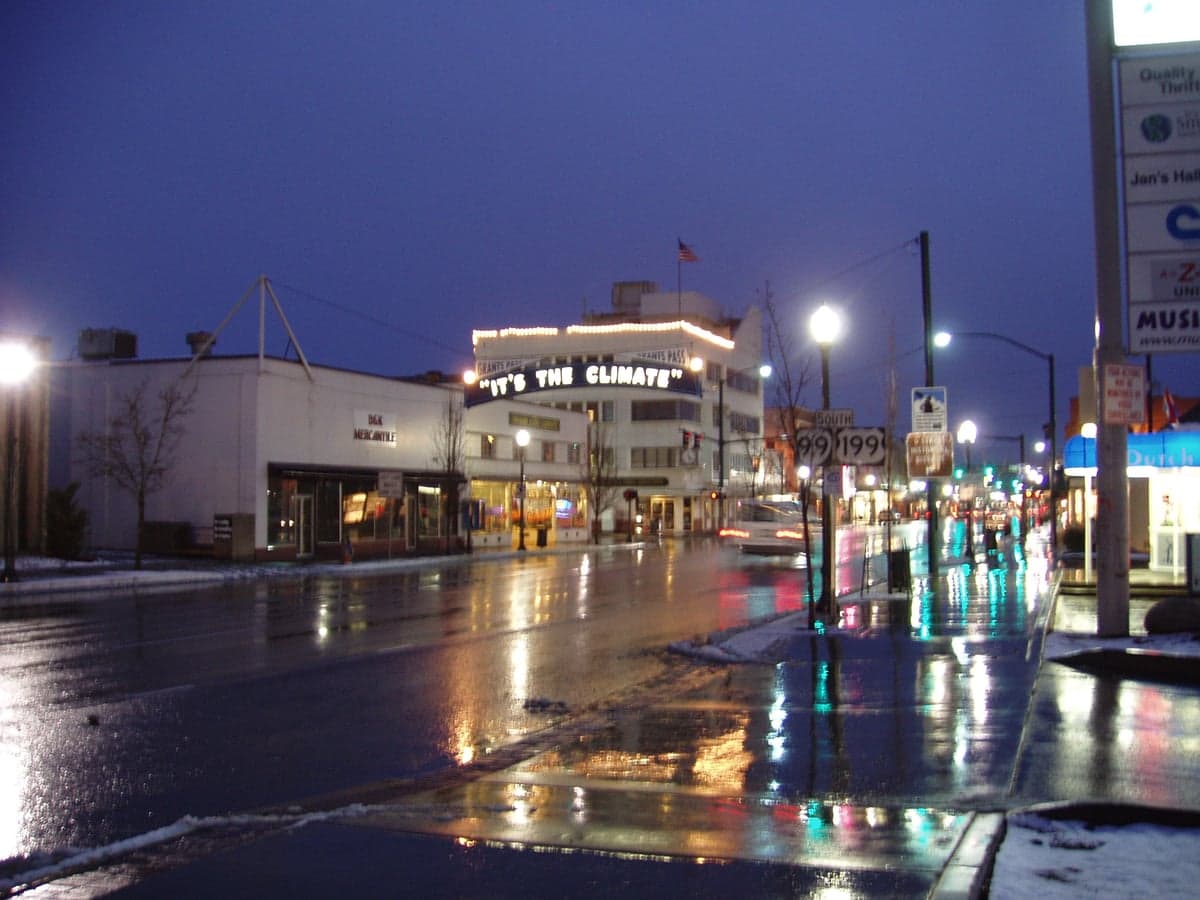
Grants Pass, Oregon, offers a mixed bag for those prioritizing personal sovereignty, where the rugged individualism of rural Josephine County clashes with the growing regulatory reach of the state government. For a survivalist or prepper mindset, the area provides significant advantages in land access and a culture of self-reliance, but it is not a libertarian free zone. The key is understanding where local autonomy still holds strong and where state-level mandates create friction, particularly for those concerned with government overreach into personal freedoms and rights.
Tax burden and regulatory posture: How Oregon’s state policies affect local autonomy
Oregon’s tax structure is a primary concern for sovereignty-minded individuals. The state has no sales tax, which is a plus for large purchases, but it imposes a progressive income tax with rates reaching 9.9% on high earners—a significant bite for those building wealth or running a home-based business. Property taxes in Josephine County are relatively moderate compared to the Portland metro area, with effective rates around 1.0% of assessed value, but they are not fixed and can rise with market values. The regulatory posture is more burdensome at the state level. Oregon has strict land-use laws under Senate Bill 100, which heavily restrict rural development and subdivision. For a prepper looking to buy raw land and build a self-sufficient homestead, this means navigating state-mandated minimum lot sizes (often 5-20 acres in resource zones) and complex permitting for structures, wells, and septic systems. Local enforcement in Grants Pass is generally more lenient than in liberal urban counties, but the state’s regulatory framework remains a constant overhead that limits absolute autonomy. The lack of a right-to-work law and mandatory paid sick leave also reflect a state leaning toward collective mandates over individual contractual freedom.
Self-defense and gun law specifics: What the Second Sanctuary status means for residents
Grants Pass is located in Josephine County, which in 2020 declared itself a Second Amendment Sanctuary. This means local law enforcement has formally stated they will not enforce certain state-level gun restrictions they deem unconstitutional. For the survivalist, this is a critical buffer. While Oregon has passed Measure 114 (requiring a permit to purchase and banning magazines over 10 rounds), its implementation is currently blocked by court challenges, and local sheriffs in Josephine County have signaled they will not actively enforce the magazine ban. Open carry of firearms is legal without a permit, and concealed carry permits are issued by the county sheriff with a "shall issue" policy—meaning no subjective discretion to deny. The practical effect is that a responsible gun owner can operate with minimal government interference in daily life, though the legal landscape remains in flux due to state-level litigation. For those concerned with self-defense in a grid-down scenario, the local culture is heavily armed and supportive of the right to keep and bear arms without registration or waiting periods for private sales. However, federal background checks for dealer purchases still apply, and transporting firearms across state lines requires awareness of California’s hostile laws to the south.
Self-reliance and homesteading viability: Lot sizes, zoning, and off-grid feasibility
Josephine County is one of the more viable areas in Oregon for off-grid living, but it requires careful property selection. Outside the Grants Pass urban growth boundary, zoned resource lands typically require a minimum of 5 to 20 acres for a single-family dwelling, which effectively prevents dense suburban sprawl and preserves a rural character. This is a double-edged sword: it protects your privacy and reduces neighborly interference, but it also means you cannot simply buy a small parcel and build a cabin without county approval. Off-grid feasibility is high in terms of water—many properties have existing wells or year-round creeks—and solar potential is decent with over 200 sunny days per year. However, the Oregon Building Codes Division requires that any permanent dwelling meet state structural and energy codes, even in remote areas. For a true prepper, the workaround is to build a "recreational cabin" under 200 square feet, which may bypass some permitting, but this limits long-term habitation. Zoning also restricts the number of structures and the keeping of livestock on smaller parcels, so those wanting a full homestead with goats, chickens, and a large garden should target at least 5 acres in an Exclusive Farm Use (EFU) or Rural Residential zone. The county’s planning department is understaffed, which can mean slow permit processing but also less aggressive enforcement of minor violations—a practical advantage for those who prefer to ask for forgiveness rather than permission.
Personal liberties: Parental rights, medical autonomy, speech, and property
Parental rights in Oregon are under pressure from state mandates. The state has compulsory vaccination laws for school attendance (with medical and religious exemptions available but increasingly contested), and recent legislation has limited parental notification for certain health services for minors. For a conservative parent, this is a red flag. However, homeschooling is legal with minimal regulation—parents must register with the local Education Service District and provide an annual assessment, but there is no state-approved curriculum or testing requirement. This makes Grants Pass attractive for those wanting to opt out of public school indoctrination. Medical autonomy is similarly constrained: Oregon has legalized assisted suicide and recreational marijuana, but it also has strict vaccine mandates for healthcare workers and has shown willingness to enforce public health orders. For the sovereignty-minded, this means choosing a doctor who respects alternative treatments is possible but requires research. Free speech is protected under the First Amendment, and the local culture is overwhelmingly supportive of conservative and libertarian viewpoints—public discourse is not chilled by the social pressure found in Portland or Eugene. Property rights are the strongest local asset. Josephine County has no county-wide zoning for most rural parcels, and the planning department generally respects the principle that a landowner can use their property as they see fit, provided they meet basic health and safety codes. This is a stark contrast to states with HOA-dominated suburbs or aggressive eminent domain practices.
Overall, Grants Pass offers a higher degree of personal sovereignty than most of Oregon and much of the West Coast, but it is not a sovereignty sanctuary. The state government in Salem consistently pushes mandates on taxation, land use, and public health that erode local control. For a survivalist or prepper, the calculus is favorable if you are willing to work within the state’s regulatory framework for housing and education while leveraging the county’s pro-gun and pro-property-rights culture. Compared to rural Idaho or Montana, Oregon’s tax burden and land-use laws are heavier, but the climate is milder and the growing season longer. Compared to California or Washington, Grants Pass is a breath of fresh air—a place where a determined individual can still carve out a life largely on their own terms, provided they stay vigilant against the creeping reach of state authority.

* Values derived from national, state, county, city and local statistics and may differ in a specific area. Last updated: 2026-05-01T08:58:16.000Z
Narrative content on this page is AI-generated and may contain mistakes. Verify any details that matter before acting on them.
ReloMaps may earn a commission from affiliate links at no extra cost to you.

