Photo: Wikipedia
Political ClimatePolitical Climate in Grants Pass, OR
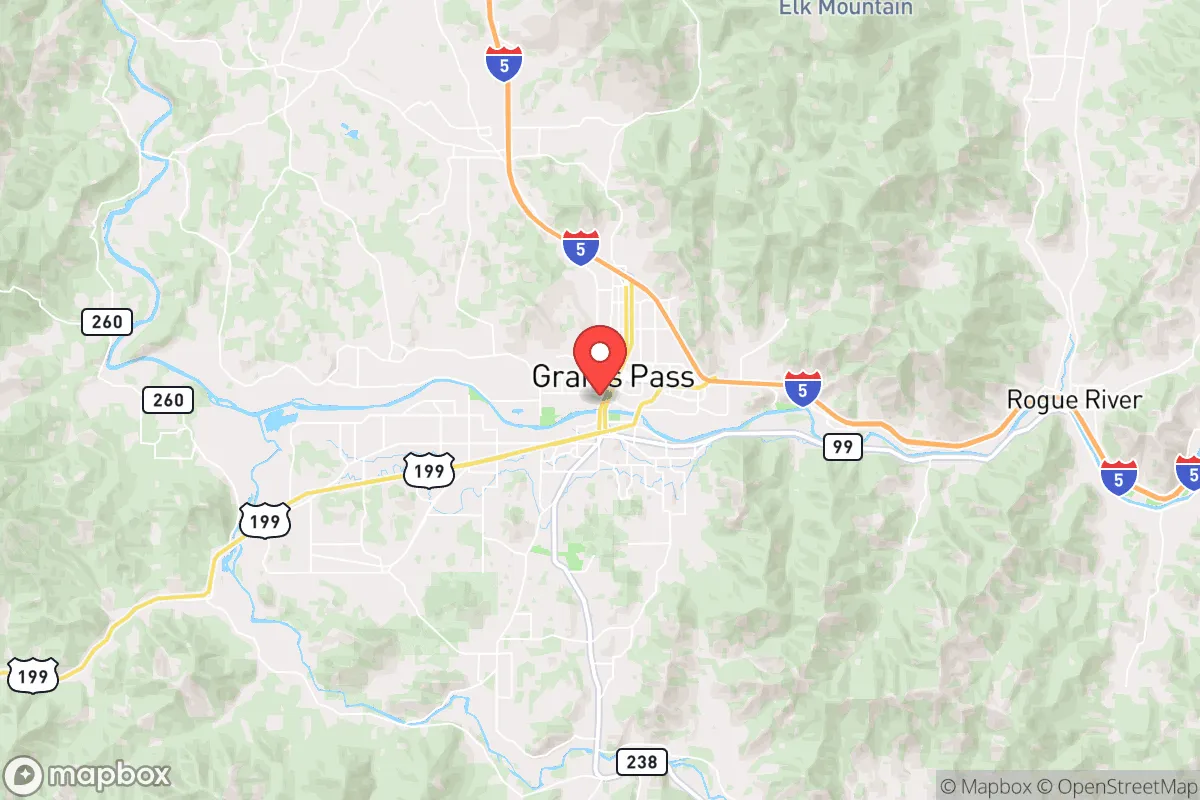
District shown is the primary district for this city’s centroid. Cities may span multiple districts.
Local Political AnalysisPolitical Analysis of Grants Pass, OR
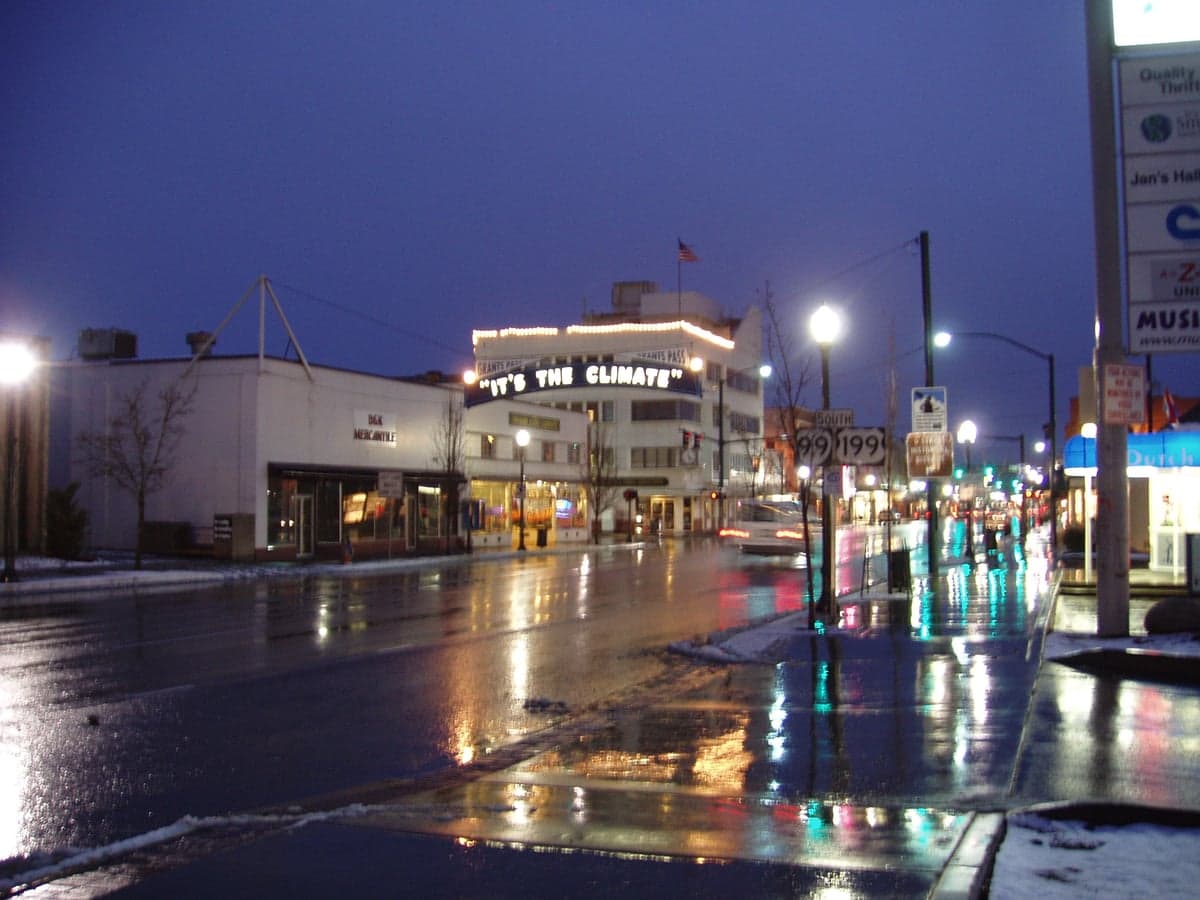
Grants Pass leans solidly conservative, with a Cook PVI of R+14 that places it firmly in the red column, and that’s been the case for as long as most locals can remember. The area has historically been a stronghold for traditional values, limited government, and individual responsibility, but like a lot of places in Oregon, you can feel the political winds shifting, especially as folks from the more progressive Willamette Valley—places like Eugene and Portland—move south looking for cheaper land and a slower pace. The real question is whether those newcomers will adapt to the local culture or try to change it, and so far, the signs are mixed but leaning toward the latter.
How it compares
Compared to the rest of Josephine County, Grants Pass is the political bellwether, but it’s not as uniformly conservative as the smaller, unincorporated communities like Merlin or Wilderville, where you’ll find more libertarian-leaning folks who just want to be left alone. Drive north to Roseburg in Douglas County, and you’ll find a similar vibe, though Roseburg has a stronger timber-industry identity that keeps its politics even more rooted in resource-extraction issues. The real contrast is with Ashland, about an hour south, which is a progressive college town that votes blue by a wide margin—it’s almost a different country. Grants Pass sits in the middle, but the worry is that the county’s rural character is being eroded by state-level mandates from Salem, like land-use restrictions and environmental regulations that feel like they’re written by people who’ve never set foot in a logging truck.
What this means for residents
For the people who live here, the political climate means you’re constantly fighting to keep government out of your daily life. Property rights are a big deal—there’s a deep-seated belief that if you own a piece of land, you should be able to use it without a dozen permits from the state. The recent push for more county-level zoning and housing density mandates from Salem has raised eyebrows, because it feels like an end-run around local control. On the plus side, the local sheriff’s office has a reputation for being more focused on actual crime than on enforcing state gun laws that most residents see as overreach. The 2020 wildfires and the subsequent recovery efforts also highlighted a tension: federal and state agencies often seemed more interested in environmental reviews than in letting people rebuild their homes quickly. That kind of thing sticks with you.
There’s also a growing cultural divide that shows up in everyday life. The local school board has seen heated debates over curriculum and parental rights, with many parents pushing back against what they see as progressive indoctrination. The city council has remained fairly conservative, but there’s been a noticeable uptick in activist groups pushing for things like homeless services and public transit expansions that some residents worry will attract more problems from the coast or the valley. The long-term outlook depends on whether the area can hold the line on its core values while adapting to the reality that Oregon’s population is changing. If the newcomers respect the local way of life, Grants Pass will stay the same friendly, independent place it’s always been. If they don’t, you’ll see more of the same friction that’s already starting to show up at town hall meetings.

State Political ClimatePolitical Climate in Oregon
State Political AnalysisPolitical Environment in the State
Oregon has shifted from a purple-leaning state to a solidly blue one over the past two decades, with Democrats controlling the governorship, both legislative chambers, and all statewide offices since 2016. The state’s partisan lean is driven overwhelmingly by the Portland metro area, which casts roughly 40% of the vote and votes about 75% Democratic. While the state voted for Hillary Clinton by 11 points in 2016 and Joe Biden by 16 in 2020, the real story is the collapse of Republican competitiveness in suburban and exurban areas that used to be swing territory. If you’re a conservative looking at Oregon, you need to understand that the political center of gravity has moved decisively left, and the rural-urban divide is now a chasm.
Urban vs. rural divide
The political map of Oregon is a study in extremes. The Willamette Valley corridor—Portland, Salem, Eugene, and their suburbs—is the Democratic engine. Multnomah County (Portland) alone gave Biden 80% of the vote in 2020. Washington County (suburban Portland) and Lane County (Eugene) are also reliably blue, though Washington County has some purple pockets in places like Beaverton and Hillsboro where tech workers lean moderate. Meanwhile, the rest of the state is deeply red. Eastern Oregon counties like Baker, Grant, and Harney routinely vote 75-80% Republican. The southern Oregon counties of Jackson (Medford) and Josephine (Grants Pass) are conservative strongholds, though Jackson County has seen some in-migration from California that has nudged it slightly more competitive. The real flashpoint is the exurban fringe: Clackamas County, once a swing county, has moved left as Portland’s suburbs densify. Bend in Deschutes County is a microcosm of the state’s tension—it was a redoubt for conservatives a decade ago, but now it’s a battleground where transplants from California and Portland have flipped it to a lean-blue county. The rural-urban divide isn’t just about votes; it’s about culture, economics, and a growing sense of alienation among rural residents who feel the state government in Salem ignores them.
Policy environment
Oregon’s policy environment is a case study in progressive governance with real consequences for personal freedom. The state has no sales tax, but it makes up for it with the highest combined state and local income tax rates in the nation—top marginal rate hits 9.9%, and many cities add their own income taxes. Property taxes are capped by Measure 5 (1990) but have crept up as home values skyrocket. On regulation, Oregon is among the most restrictive states for land use, with urban growth boundaries that limit development and drive up housing costs. Education policy is dominated by the teachers’ unions; Oregon ranks near the bottom nationally in graduation rates despite above-average per-pupil spending. Healthcare is heavily regulated, with a state-run insurance exchange and Medicaid expansion that covers about 30% of residents. Election laws are among the most progressive: Oregon was the first state to vote entirely by mail (1998), and it automatically registers voters when they get a driver’s license. There’s no voter ID requirement, which has fueled ongoing election integrity concerns among conservatives. The state also has a “sanctuary” law (ORS 181A.820) that prohibits state and local law enforcement from using resources to enforce federal immigration law, a policy that has been a flashpoint since the 1980s.
Trajectory & freedom
Oregon is becoming less free by almost any measure of personal liberty, especially for conservatives. The most glaring example is gun rights: in 2023, the state passed Measure 114, which requires a permit to purchase a firearm, a criminal background check for all transfers, and bans magazines over 10 rounds. The measure is currently tied up in court, but it represents a major expansion of government control over a constitutional right. On parental rights, Oregon has moved aggressively in the opposite direction of states like Florida. In 2023, the legislature passed a law (SB 585) that prohibits school districts from notifying parents if a child changes their gender identity or pronouns at school, effectively overriding parental authority. Medical autonomy took a hit with the state’s strict COVID-19 vaccine mandates, which were among the longest-lasting in the nation and led to thousands of state employees being fired or resigning. Property rights are under constant pressure from the Land Use Board of Appeals (LUBA), which can overturn local zoning decisions and has been used to block rural development. On taxation, the 2021 corporate activity tax (CAT) was expanded, and there’s a perennial push for a gross receipts tax on small businesses. The trajectory is clear: more regulation, less local control, and a state government that increasingly sees itself as the arbiter of personal choices.
Civil unrest & political movements
Oregon has a long history of political activism, but the last five years have been particularly volatile. The 2020 Portland protests—which lasted for months and included the federal courthouse occupation—were a national flashpoint for left-wing militancy. The city saw nightly clashes between protesters and federal agents, with the mayor and governor largely refusing to intervene. On the right, the Oregon Republican Party has become more combative, with some rural counties exploring secession or joining the “Greater Idaho” movement, which proposes moving the eastern Oregon border to join Idaho. That movement has gained real traction: in 2023, several eastern Oregon counties voted in favor of exploring the move, though it requires approval from both state legislatures. Immigration politics are tense, with Portland’s sanctuary status leading to frequent confrontations between ICE and local activists. Election integrity remains a hot-button issue: Oregon’s mail-in voting system has no voter ID requirement, and in 2022, a ballot drop box in Portland was set on fire, destroying hundreds of ballots. The state also saw a high-profile recall attempt against Governor Kate Brown in 2021, which failed but highlighted deep dissatisfaction with her handling of COVID restrictions and homelessness. A new resident would notice the visible homelessness crisis in Portland and Eugene, which has become a political symbol of failed progressive policies.
Projection
Over the next 5-10 years, Oregon will likely become more progressive, not less. Demographic trends favor the left: in-migration from California and other blue states continues, particularly to the Portland metro and Bend. The state’s population is aging, but younger voters in the urban core are even more left-leaning. The Republican Party is increasingly confined to rural areas that are losing population, making it harder to win statewide races. The “Greater Idaho” movement may gain symbolic victories but is unlikely to succeed without a constitutional amendment. The real wild card is housing: if the state fails to address its affordability crisis, it could see an exodus of middle-class families, which might shift the electorate slightly. But for now, the legislative agenda will continue to push on gun control, climate regulation (Oregon has a cap-and-trade program), and social issues. A conservative moving in now should expect a state government that is actively hostile to their values on most fronts, with little chance of a political realignment in the near term.
Bottom line for a new resident: Oregon offers stunning natural beauty and a laid-back lifestyle, but the political climate is increasingly one-party rule with a progressive agenda that touches every aspect of life—from how you can use your property to what your children learn in school. If you value low taxes, gun rights, parental control, and local autonomy, you will find yourself swimming against a strong current. The best bets for conservatives are the rural counties east of the Cascades or the southern Oregon valleys, but even there, state-level policies will constrain your freedom. Come for the mountains and the coast, but be prepared to fight for your values at the ballot box and in the courts.
* Values derived from national, state, county, city and local statistics and may differ in a specific area. Last updated: 2026-05-01T08:58:16.000Z
Narrative content on this page is AI-generated and may contain mistakes. Verify any details that matter before acting on them.
ReloMaps may earn a commission from affiliate links at no extra cost to you.

