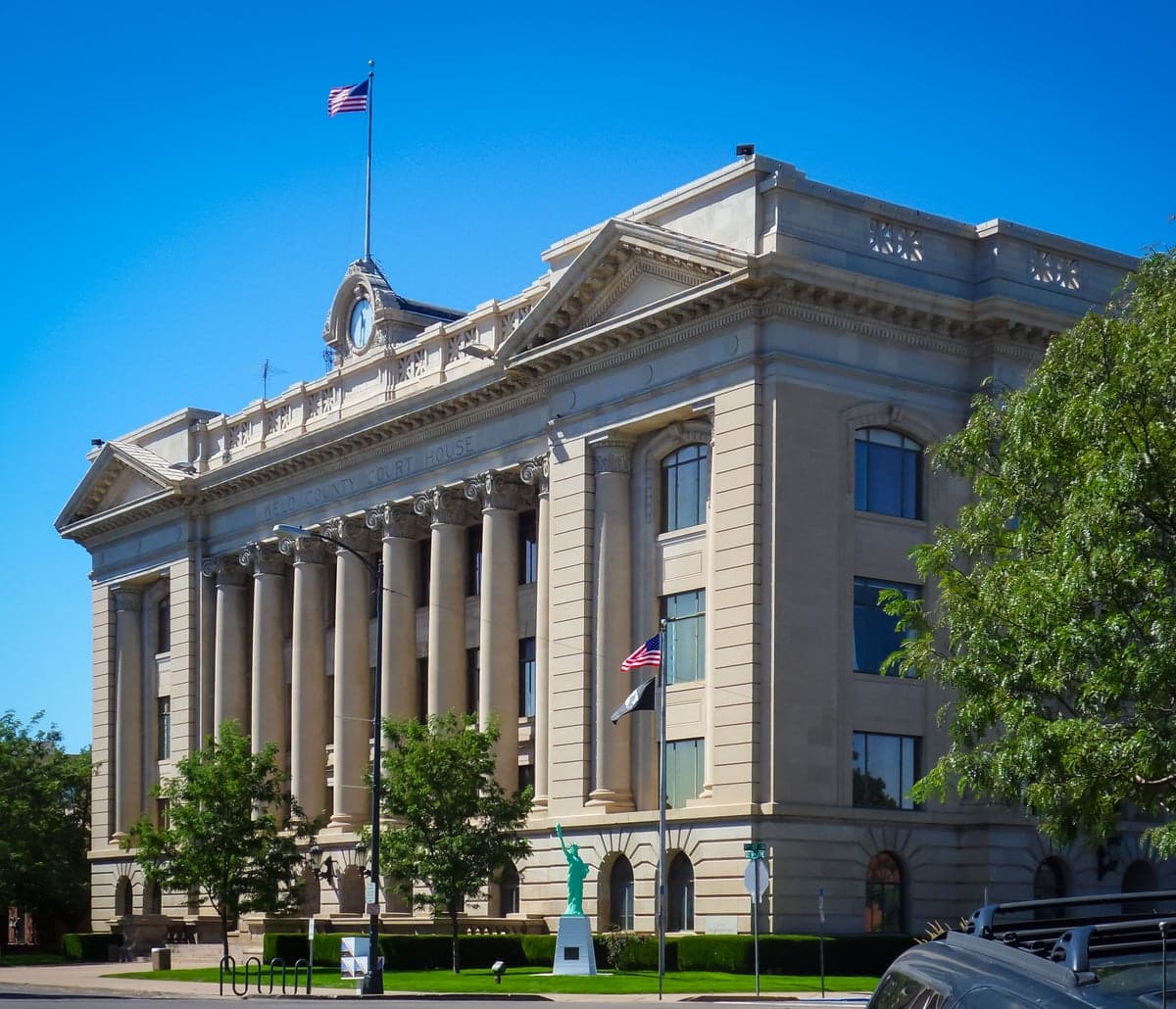
Photo: Wikipedia
Demographics of Greeley, CO
Affluence Level in Greeley, CO
A middle-class area roughly in line with national averages across income, home values, education, and employment.
People of Greeley, CO
The people of Greeley, Colorado, today number 109,421, forming a city with a distinctive character shaped by its agricultural roots and a rapidly diversifying population. The city is notably younger and more family-oriented than the national average, with a median age of 32.3, and its identity is increasingly defined by a near-even split between its White (52.0%) and Hispanic (41.5%) communities. This demographic reality, combined with a relatively low share of college-educated adults (26.7%) and a modest foreign-born population (7.8%), creates a working-class, culturally blended atmosphere that differs sharply from the more transient, affluent Front Range suburbs to the south.
How the city was settled and grew
Greeley was founded in 1870 as a utopian agricultural colony by Nathan Meeker, the agricultural editor of the New York Tribune, under the auspices of the Union Colony. The original settlers were predominantly Protestant, middle-class families from the Midwest and Northeast, drawn by the promise of irrigated farmland and a temperance-based community. This first wave established the core of what is now the Downtown Greeley Historic District, building the brick and sandstone homes and commercial blocks that still define the city center. The arrival of the railroad in the 1870s and the subsequent sugar beet boom in the early 1900s triggered a second, larger wave: German-Russian immigrants from the Volga region, who were experienced in beet farming. They settled in the west-central neighborhoods around 8th Avenue and 16th Street, an area still marked by modest, closely spaced homes and a strong German-Russian cultural legacy in local churches and cuisine. A smaller wave of Japanese and Mexican laborers arrived during this period to work the beet fields, with many Mexican families establishing roots in the eastern side of the city, near the old sugar factory, an area that remains a historic anchor for Greeley's Hispanic community.
Modern era (post-1965)
The post-1965 era saw the most dramatic demographic shift in Greeley's history, driven primarily by the Immigration and Nationality Act and the continued mechanization of agriculture. The Hispanic population, which had been a small but steady presence, began to grow rapidly as families moved from seasonal farm labor into permanent, year-round employment in meatpacking, construction, and the service economy. This wave concentrated heavily in the eastern and northern neighborhoods, including the area around 4th Avenue and 10th Street, where a dense cluster of Hispanic-owned businesses, churches, and community centers now anchors daily life. The city's White population, while still a majority, began a slow relative decline as younger, college-bound residents moved to larger metro areas. The Asian population (East/Southeast Asian) remains very small at 1.0%, with a scattering of families in newer subdivisions near the University of Northern Colorado, while the Indian subcontinent population is negligible at 0.2%. The Black population (2.4%) is also small and dispersed, with no single dominant neighborhood. The most notable domestic in-migration has been from other parts of Colorado and the Mountain West, drawn by Greeley's lower cost of living compared to Denver and Boulder, with many settling in the newer master-planned subdivisions in west Greeley, such as the Westlake and Poudre River Ranch areas, which are overwhelmingly White and more affluent.
The future
Greeley's population is heading toward a continued, gradual diversification, but not toward a simple binary of homogenization or tribalization. The Hispanic share is projected to grow, potentially reaching near parity with the White population within the next 10-15 years, driven by higher birth rates and continued in-migration from other parts of Colorado and the Southwest. However, this growth is not creating a single, monolithic Hispanic enclave; instead, second- and third-generation Hispanic families are increasingly moving into the newer, mixed-income subdivisions in west Greeley, blurring the old east-west ethnic divide. The White population is aging and declining slightly in share, but the city is also attracting a small but steady stream of White families from the Denver metro area seeking affordable housing, which offsets some of the loss. The foreign-born share (7.8%) is likely to remain stable or grow modestly, as Greeley lacks the high-tech job base that draws large numbers of Asian or Indian immigrants to other Front Range cities. The city is becoming less segregated by ethnicity than it was 30 years ago, but more segregated by income, with the west side growing more affluent and the east side remaining working-class.
For someone moving to Greeley now, the city offers a stable, family-oriented environment where the dominant cultural dynamic is the interaction between a long-established White population and a large, growing Hispanic community. It is not a transient or highly educated city, but it is a place where a working-class family can still find affordable housing and a strong sense of local identity. The future points toward a more integrated, though still economically stratified, community where the old agricultural roots are slowly giving way to a more suburban, commuter-oriented character.

* Values derived from national, state, county, city and local statistics and may differ in a specific area. Last updated: 2026-04-23T02:52:33.000Z
Narrative content on this page is AI-generated and may contain mistakes. Verify any details that matter before acting on them.
ReloMaps may earn a commission from affiliate links at no extra cost to you.

