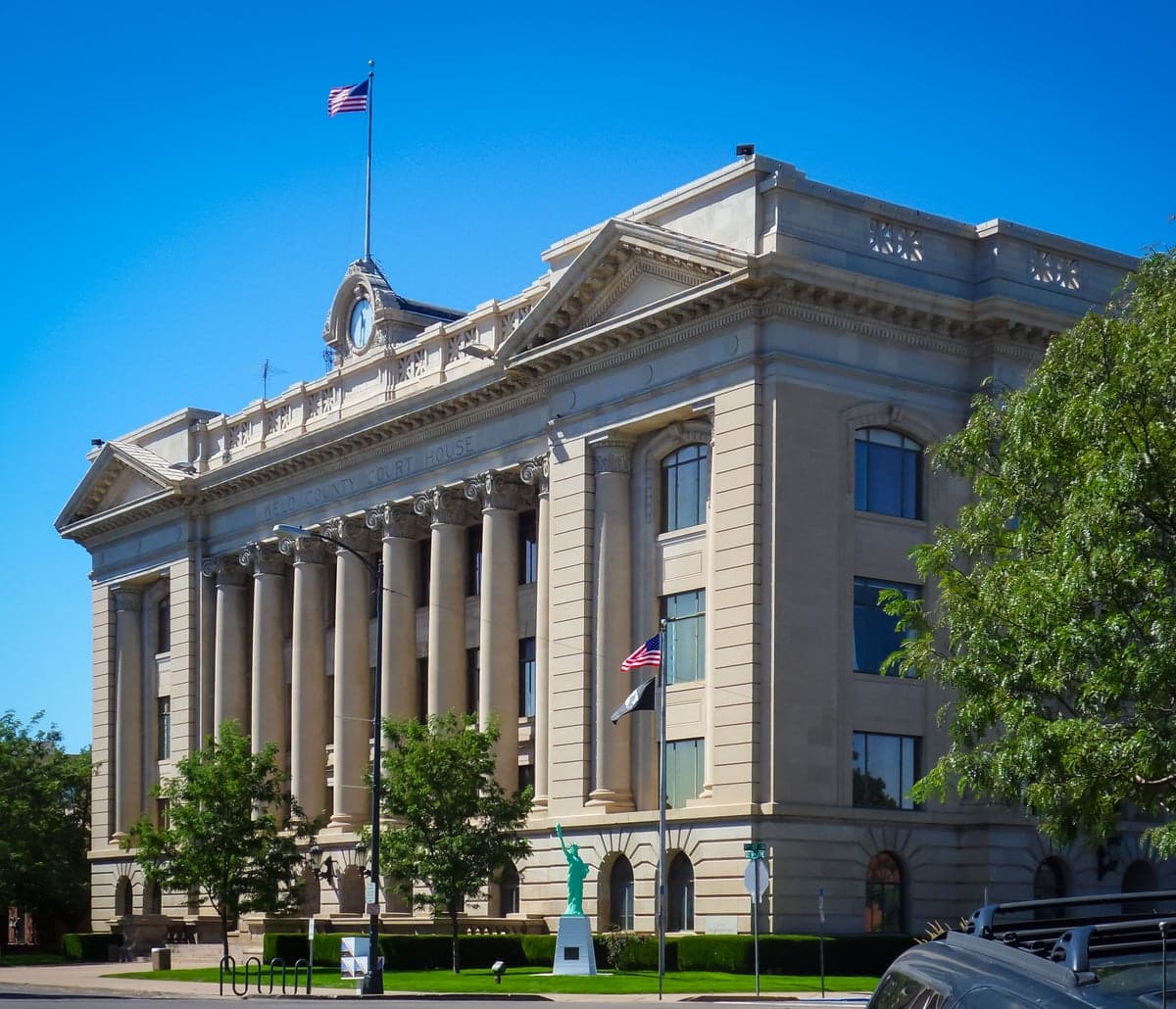
Photo: Wikipedia
Strategic Assessment of Greeley, CO
Meaningful friction. Expect exposure to either population pressure, blast zones, or natural disaster risk. Consider buying a retreat property.
What does the Strategic Assessment tell us?
Our Strategic Assessment grades tactical survivability of an area. Major population centers, military targets, fallout zones, natural disasters, and border exposure all drive risk — lower exposure means a more defensible position in a crisis.
This is heavily inspired by Joel Skousen's Strategic Relocation book. Highly recommended you checkout the book ($)What does this tell us?
Our Strategic Assessment grades tactical survivability of an area. Major population centers, military targets, fallout zones, natural disasters, and border exposure all drive risk — lower exposure means a more defensible position in a crisis.
This is heavily inspired by Joel Skousen's Strategic Relocation book. Highly recommended you checkout the book ($)Strategic Pillars

Key Distances
Regional Safe Places
Below is our recommended "safe zones" in Colorado and the surrounding area based on our strategic heuristics. For most people, it's unrealistic to live in a “safe zone” full-time due to work, family or other personal reasons. They tend to be more rural. However, many of these areas are perfect for second homes and retreat properties that double as a vacation home or even a short-term rental.
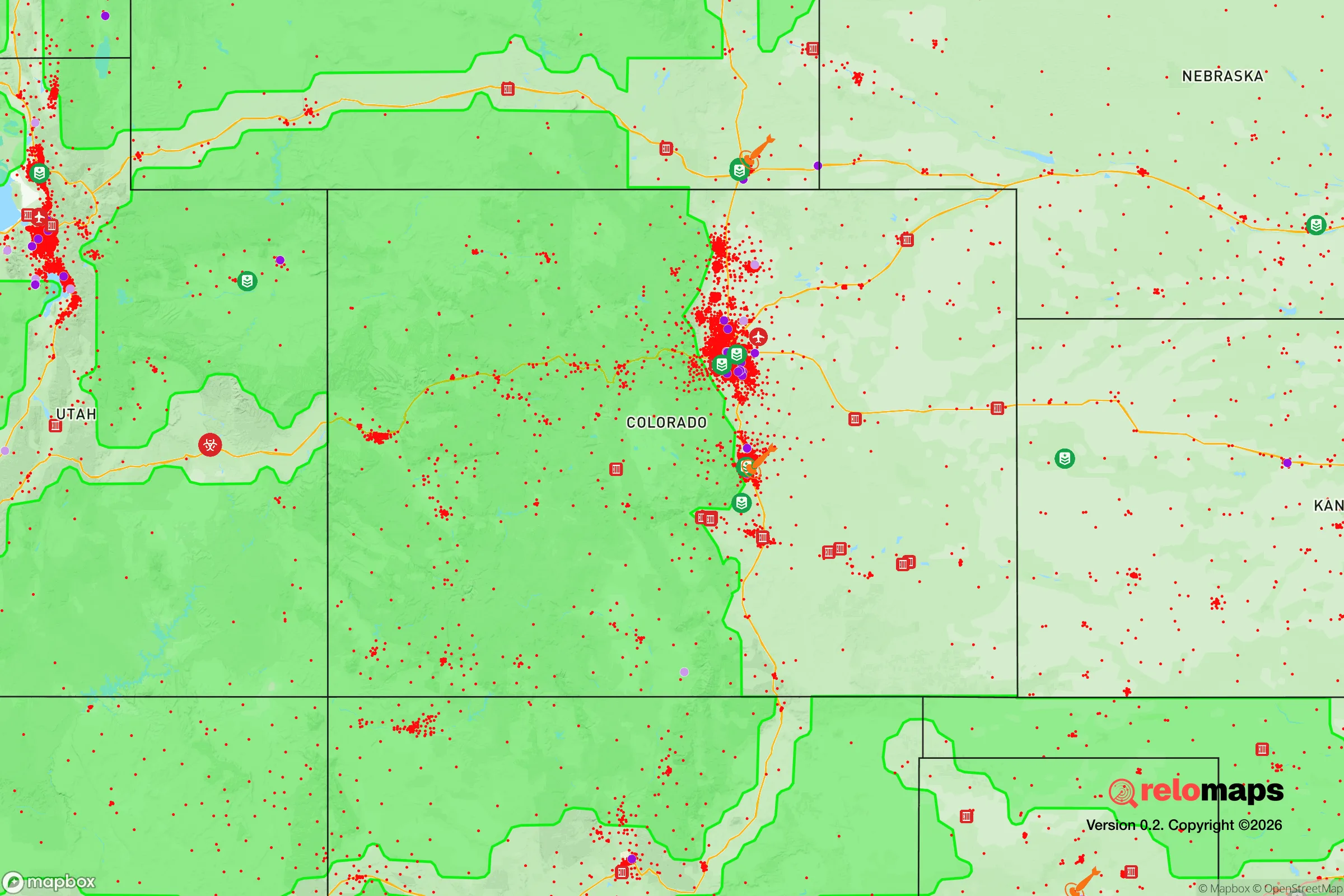
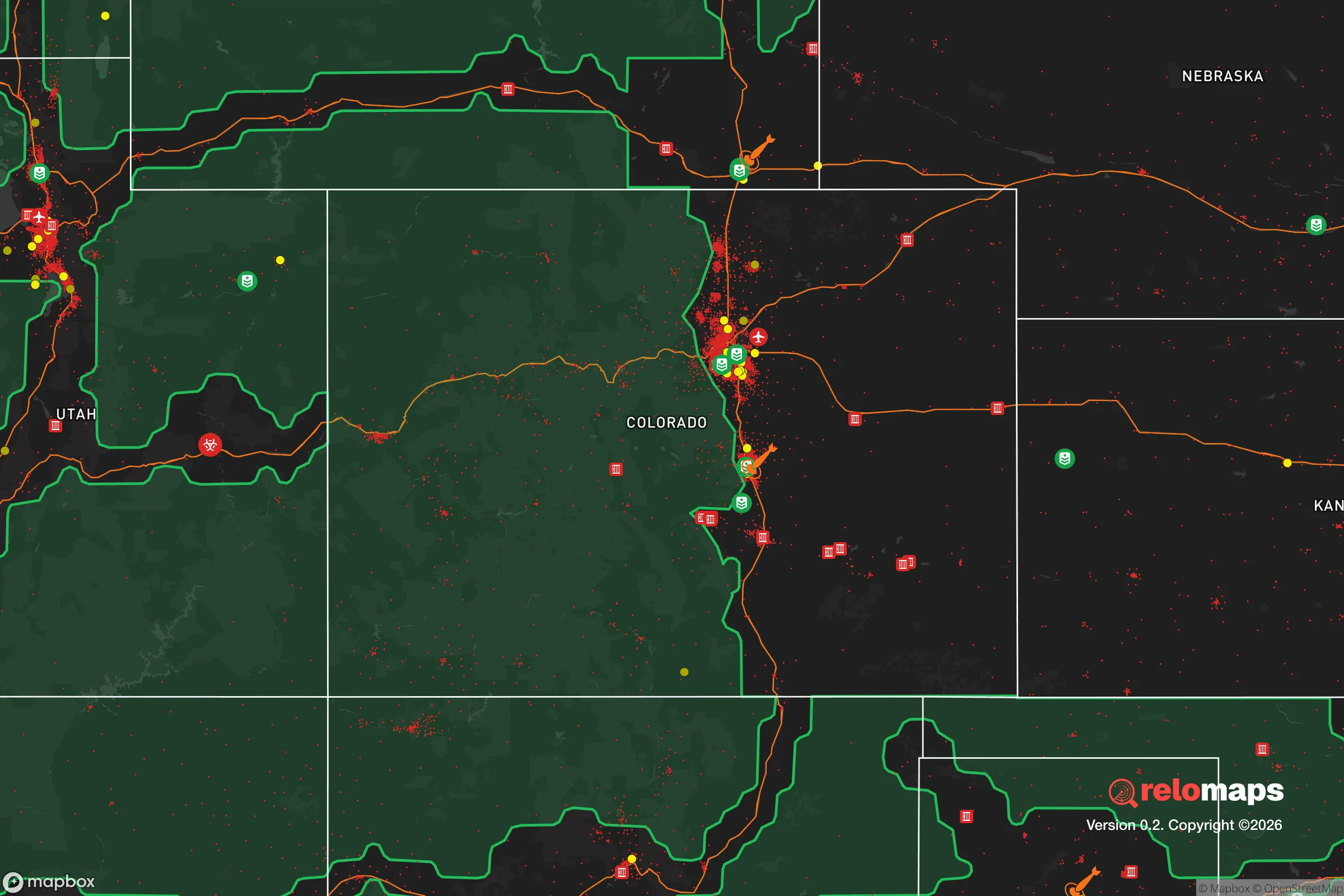


Important Note: For informational purposes only. This does not mean nothing bad ever happens in the green zones. Please use common sense. This is based on public data and modeled with AI. We tried to take a conservative approach but mistakes happen. We update this regularly as new information becomes available.
Solar Generator Recommendations
Backup power matters more here than in safer locations. We've picked three solar generators across budgets and capacity tiers — start with the budget unit if you only need a few essentials, or step up if you want to run a fridge and HVAC for days at a time.

Jackery Portable Power Station Explorer 300
Budget OptionPower on the Go: Weighing only 11 lbs, it's convenient to set up and store with book-sized foldable solar panels

BLUETTI Portable Power Station AC180
Designed for both indoor and outdoor scenarios, AC180 is highly capable as it has a robost capacity and continuous output power.

EF ECOFLOW DELTA Pro Ultra Power Station
Upgraded PickEcoFlow DELTA Pro Ultra is a whole-home energy system designed to grow with your family. Integrated with the Smart Home Panel 2, it scales to meet your evolving energy needs — keeping your home powered, intelligent, and secure through every stage of life.
We earn a commission, at no additional cost to you.
Strategic Assessment Analysis
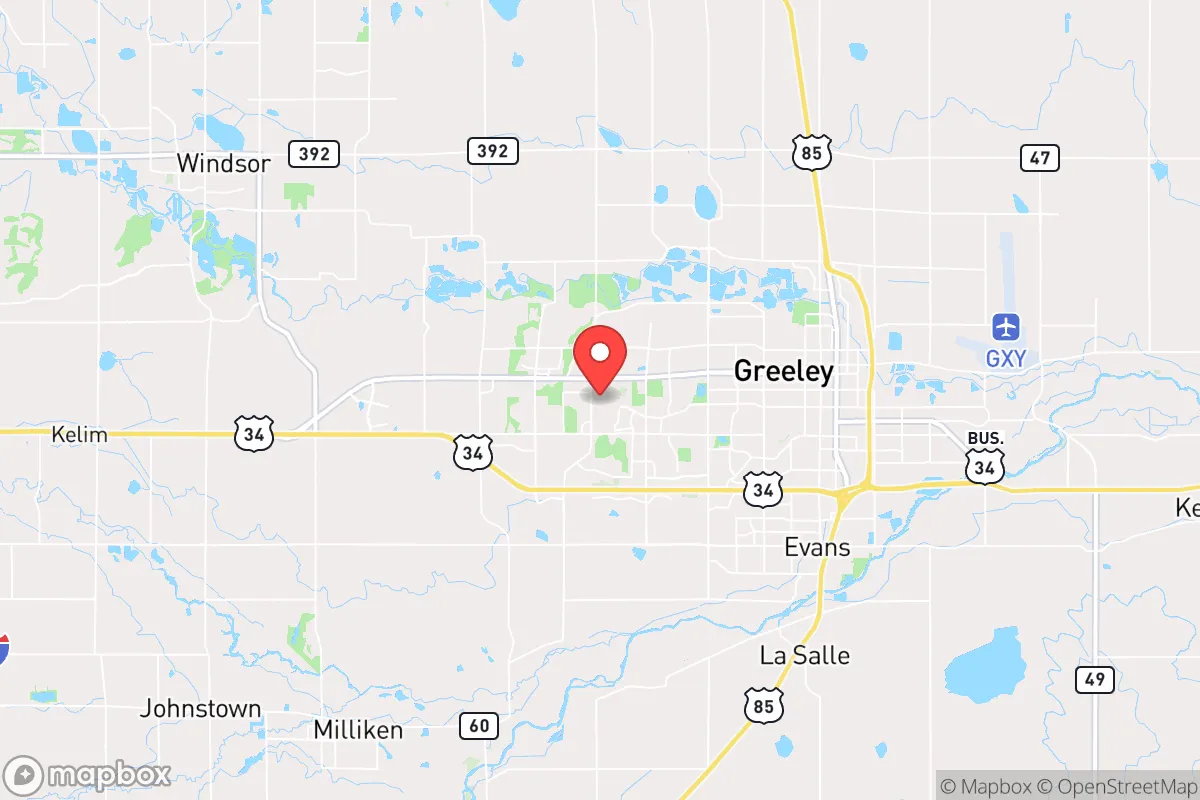
Greeley, Colorado, offers a surprisingly resilient strategic position for those prioritizing self-reliance and distance from major urban collapse zones, while still maintaining access to critical infrastructure. Located in Weld County, roughly 50 miles north of Denver and 30 miles east of the Front Range urban corridor, Greeley sits at a crossroads of agricultural productivity and energy independence that makes it a viable long-term hold for a conservative-leaning relocator. The city’s economy is anchored in agriculture, energy, and logistics—sectors that tend to remain functional during broader disruptions—and its population of roughly 110,000 provides enough community density for mutual aid without the anonymity and fragility of a major metro.
Geographic position and natural advantages for long-term stability
Greeley’s location in the South Platte River Valley gives it a distinct natural advantage: reliable surface water. The South Platte River runs through the city, and the area sits atop the Ogallala Aquifer, one of the largest freshwater aquifers in the world. This is not a desert outpost dependent on distant reservoirs. For a prepper, water security is the single most critical factor in any relocation decision, and Greeley has it in abundance. The surrounding terrain is flat, high-plains grassland, which offers good visibility and limited natural cover for any approaching threat—a double-edged sword, but one that favors defenders with line-of-sight awareness. The climate is semi-arid, with cold winters and hot summers, but the growing season (roughly 150 days) is long enough for serious gardening and small-scale farming. The area is also far enough from the Rocky Mountain foothills to avoid the worst of wildfire risk, though the plains themselves can see grassfires during dry spells. Elevation sits around 4,600 feet, which is manageable for most people and avoids the altitude complications of mountain towns like Leadville or Fairplay.
Risks, exposures, and proximity to fallout-relevant landmarks
The most significant risk for Greeley is its proximity to the Denver-Aurora metropolitan area, home to roughly 3 million people. In a scenario involving civil unrest, grid collapse, or a mass casualty event, Denver would become a massive source of refugee flow, and Greeley sits directly in the path of northbound traffic along I-25 and US-85. The city is also within 60 miles of the Rocky Flats National Wildlife Refuge, a former nuclear weapons production site that, while cleaned up, remains a psychological and potential contamination landmark for those tracking fallout zones. Additionally, the Platte River Valley is a major transportation corridor for rail and trucking, meaning any disruption to national logistics could concentrate displaced populations along these routes. Greeley itself is home to the JBS meatpacking plant, one of the largest beef processing facilities in the country. This is a double-edged asset: it provides local food processing capacity, but it also makes the city a potential target for any group seeking to disrupt the food supply chain. The Weld County oil and gas fields, while economically beneficial, also introduce industrial accident risks—well blowouts, pipeline ruptures, or intentional sabotage. For a relocator, the key is to understand that Greeley is not a remote bunker; it is a semi-urban hub that will feel the shockwaves of any Front Range collapse, but it is far enough out to offer a buffer if you have a plan for the first 72 hours of a crisis.
Practical resilience for a relocator: food, water, energy, and defensibility
Greeley’s practical resilience is strong, particularly in food and energy. Weld County is one of the top agricultural producers in the state, with massive corn, wheat, and hay operations, as well as dairy and cattle. For a relocator willing to establish relationships with local farmers or secure a small acreage on the outskirts, direct access to food is realistic. The city’s water supply is municipally managed but draws from the South Platte and the Colorado-Big Thompson Project, which is a diversion system from the Western Slope. In a prolonged grid-down scenario, private wells in the surrounding county are common, and the water table is accessible at depths of 100-200 feet—doable with a manual pump or solar-powered setup. Energy is another strong point: Weld County is the heart of Colorado’s oil and gas production, and natural gas is abundant. Many rural homes already use propane or natural gas for heating and cooking, and the county has a robust network of local fuel suppliers. Solar potential is excellent, with over 300 days of sunshine per year, making off-grid power generation viable. Defensibility is moderate. Greeley itself is flat and spread out, with a grid street pattern that offers limited natural chokepoints. However, the surrounding rural areas—especially to the north and east—offer more defensible positions with long sightlines and limited access roads. The local culture is heavily conservative, with a strong ranching and farming ethos, meaning a high likelihood of armed, self-reliant neighbors. The Weld County Sheriff’s Office is known for a pro-Second Amendment stance, and the county has declared itself a "Second Amendment Sanctuary." For a relocator, this means the social fabric is more likely to hold together during a crisis than in a blue-leaning urban area.
The overall strategic picture for Greeley is one of calculated trade-offs. It is not a remote redoubt—it is a working-class agricultural and energy hub with real exposure to Front Range instability. But for a conservative relocator who wants to be within a few hours of Denver’s resources while maintaining a serious prepping posture, Greeley offers a rare combination of water security, food production capacity, energy independence, and a like-minded community. The key is to secure property outside the city limits, establish your own water and power systems, and build relationships with local producers before any crisis hits. If you do that, Greeley becomes a solid base of operations for weathering the next decade’s uncertainties. If you buy inside the city limits and assume the municipal systems will hold, you are gambling on the same fragile infrastructure that will fail everywhere else. Choose accordingly.

* Values derived from national, state, county, city and local statistics and may differ in a specific area. Last updated: 2026-04-23T02:52:33.000Z
Narrative content on this page is AI-generated and may contain mistakes. Verify any details that matter before acting on them.
ReloMaps may earn a commission from affiliate links at no extra cost to you.

