Photo: Wikipedia
Political ClimatePolitical Climate in Greeley, CO
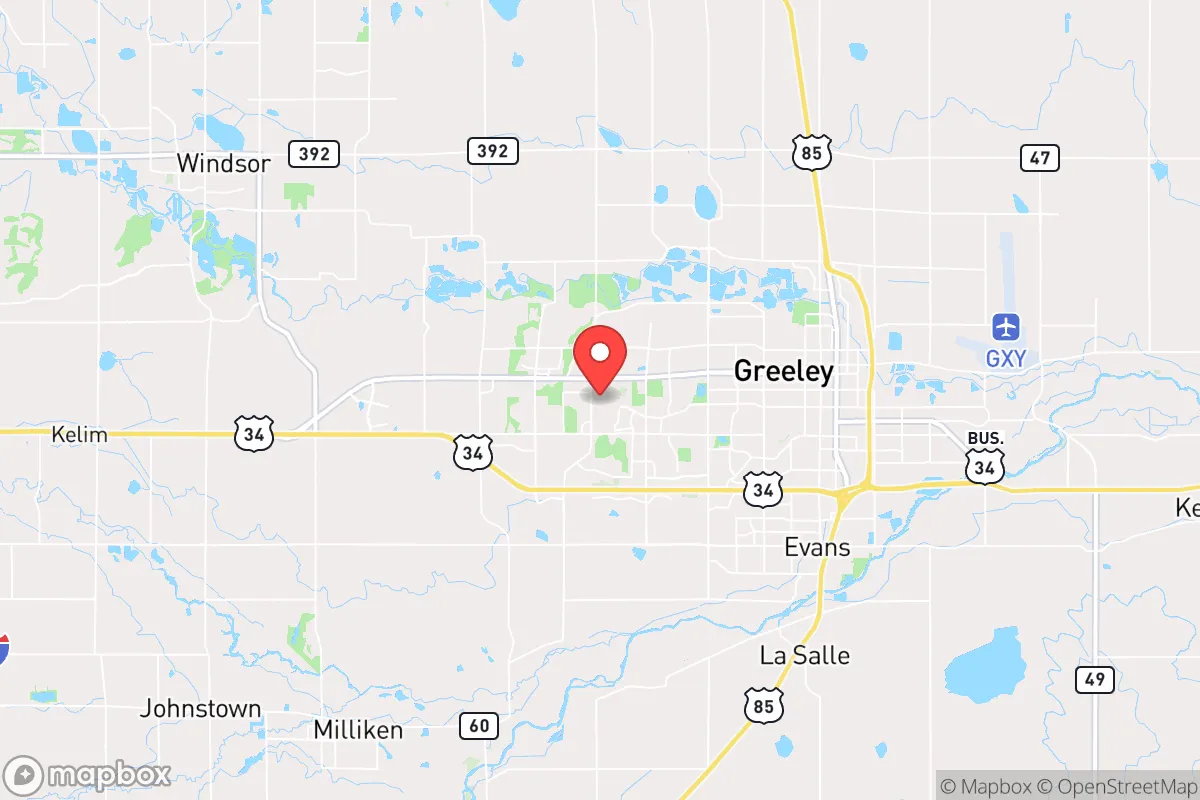
District shown is the primary district for this city’s centroid. Cities may span multiple districts.
Local Political AnalysisPolitical Analysis of Greeley, CO
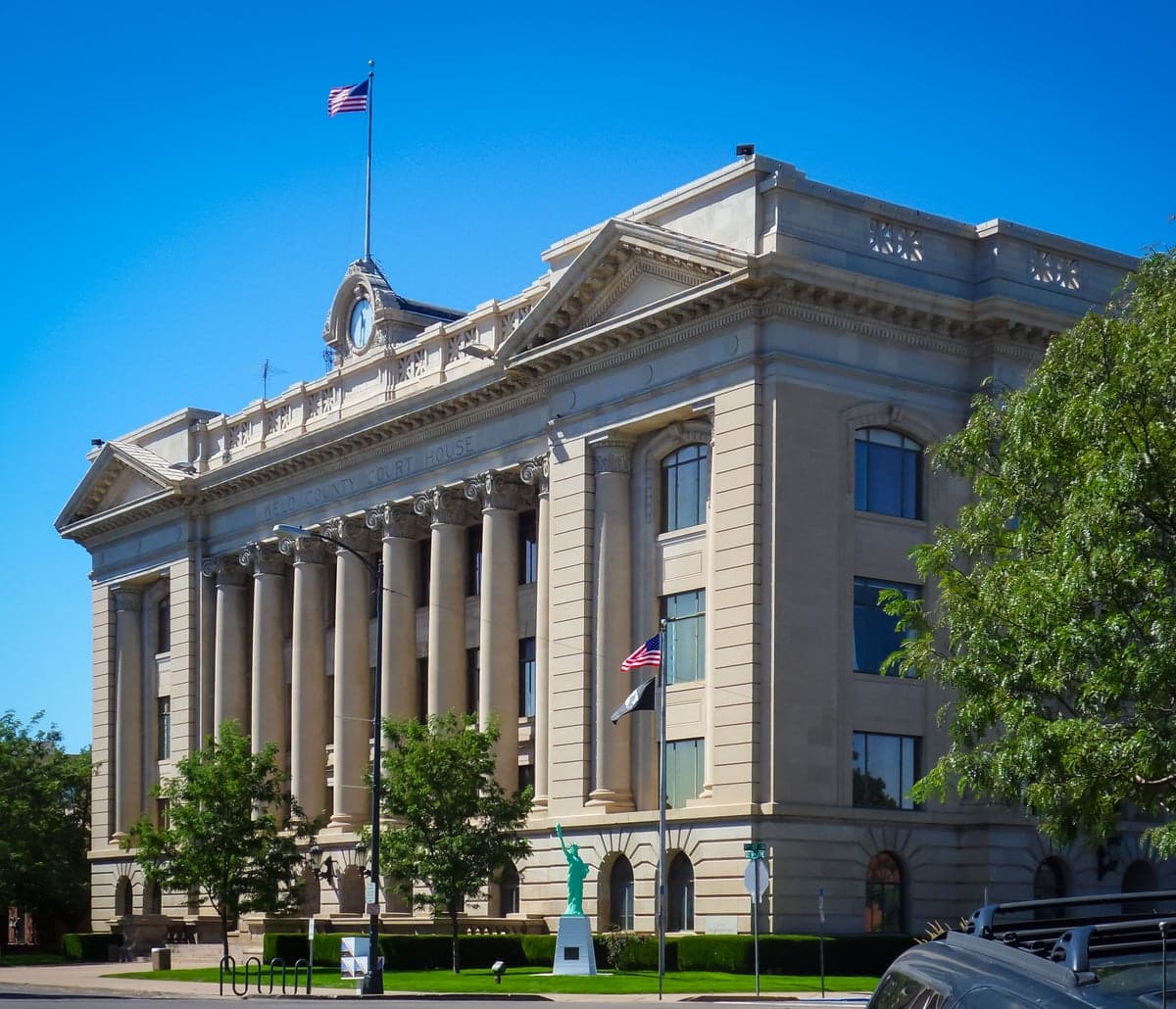
Greeley’s political climate is a study in contrasts, and if you’ve lived here as long as I have, you’ve felt the shift firsthand. The Cook PVI rating of EVEN tells you the official story—this is a true swing area, but the reality on the ground is that Greeley has been drifting leftward from its solidly conservative roots. Weld County as a whole still leans red, but the city itself is becoming a battleground, and the trajectory is something to watch closely if you value personal freedoms and limited government.
How it compares
Drive 20 minutes east to Evans or La Salle, and you’ll find communities that still vote reliably conservative—places where the Second Amendment isn’t debated, and property rights are taken seriously. Head west toward Loveland or Fort Collins, and you’re in a different world entirely. Fort Collins has embraced progressive policies on housing, energy, and public health mandates that would make any freedom-minded resident uneasy. Greeley sits right in the middle, but the worry is that it’s following the same path as its western neighbors. The 2020 election saw Weld County go +15 for Trump, but within Greeley’s city limits, the margin was much tighter, and some precincts actually flipped blue. That’s a red flag for anyone who remembers when this town was a no-nonsense agricultural hub.
What this means for residents
For folks who’ve been here a while, the biggest concern is government overreach creeping into daily life. We’ve seen local debates over mask mandates and business closures during the pandemic that felt like a direct assault on personal choice. The city council has become more vocal on environmental regulations that could hit farmers and small businesses hard—things like water use restrictions and energy efficiency mandates that sound good on paper but end up costing you time and money. Property taxes have ticked up as the city expands services, and there’s talk of zoning changes that could limit what you can do with your own land. If you’re the type who believes your home and your livelihood are your own business, these trends are worth keeping an eye on. The school board has also seen some progressive pushes, with curriculum debates that wouldn’t have happened a decade ago.
Cultural and policy distinctions worth knowing
One thing that still sets Greeley apart is its strong agricultural identity. The Greeley Stampede and the working-ranch culture remind you that this isn’t Boulder or Denver. But the influx of new residents from those areas is changing the conversation. You’ll hear more talk about bike lanes and urban density than about water rights and feedlots. The local GOP is still active, but they’re fighting an uphill battle against a growing population that brings different values. If you’re considering a move here, know that the political winds are shifting—but there’s still a solid core of folks who remember what limited government looks like and are working to keep it that way. The next few election cycles will tell the real story, and I’d bet on a few more heated town hall meetings before this thing settles.

State Political ClimatePolitical Climate in Colorado
State Political AnalysisPolitical Environment in the State
Colorado has shifted from a classic purple swing state to a solidly blue-leaning state over the past two decades, with Democrats now controlling the governorship, both chambers of the legislature, and all statewide elected offices. The state voted for Hillary Clinton by 5 points in 2016, Joe Biden by 13 points in 2020, and Kamala Harris by roughly 11 points in 2024, reflecting a durable leftward tilt driven primarily by explosive growth in the Denver-Boulder-Aurora metroplex. For a conservative considering relocation, the state’s political trajectory is a cautionary tale of how rapid in-migration from blue states, combined with aggressive progressive policymaking, can transform a once-balanced state into a one-party dominant environment.
Urban vs. rural divide
The political map of Colorado is a textbook case of urban-rural polarization. The Denver-Boulder-Aurora corridor, home to roughly 60% of the state’s population, is the engine of Democratic dominance. Boulder County is one of the most liberal jurisdictions in the nation, routinely voting 75-80% Democratic, while Denver County itself is similarly deep blue. The northern Front Range suburbs—places like Broomfield, Westminster, and Thornton—have flipped from swing to reliably Democratic over the last decade, driven by younger, college-educated transplants from California and the Northeast. In contrast, the Eastern Plains, the Western Slope, and the San Luis Valley remain deeply conservative. El Paso County (Colorado Springs) is the state’s largest red stronghold, voting +15 Republican in 2024, but its influence is diluted by the sheer population weight of the Front Range. Weld County (Greeley) and Mesa County (Grand Junction) are also reliably red, but they cannot offset the Denver metro’s margin. The 2022 gubernatorial race saw Jared Polis win by 20 points statewide, yet he lost 44 of 64 counties—a stark illustration of the geographic disconnect.
Policy environment
Colorado’s policy environment has become increasingly hostile to conservative values over the past decade. The state income tax is a flat 4.4%, which is moderate, but the overall tax burden has risen due to new fees and property tax increases. The Gallagher Amendment, which capped residential property tax rates, was repealed by voters in 2020, opening the door to future hikes. On regulation, Colorado has one of the most aggressive energy transition agendas in the country, with a 2024 law requiring 100% renewable electricity by 2040 and effectively banning new oil and gas permits in many areas. Education policy is dominated by the teachers’ union, with school choice limited compared to states like Arizona or Florida; the state’s open enrollment system exists but is underfunded. Healthcare is heavily regulated, with a state-run reinsurance program that has stabilized premiums but not reduced costs. Election laws have been progressively loosened: Colorado now has universal mail-in voting, same-day registration, and automatic voter registration, which critics argue undermines ballot security. The state also has a “red flag” gun law (passed in 2019) that allows for temporary seizure of firearms without due process, a major concern for Second Amendment advocates.
Trajectory & freedom
Colorado is unequivocally becoming less free from a conservative perspective. The most significant contraction of personal liberty came with the 2019 “red flag” law (HB19-1177), which allows courts to issue extreme risk protection orders based on hearsay, with no requirement for a criminal conviction or mental health adjudication. In 2023, the legislature passed a ban on “conversion therapy” for minors, a parental rights issue that many conservatives see as government overreach into family decisions. The same year, a law was enacted requiring all public schools to provide free menstrual products in bathrooms, a small but symbolic example of the state’s expanding regulatory footprint. On the medical freedom front, Colorado was an early adopter of vaccine mandates for healthcare workers during COVID, and while those have been rolled back, the precedent remains. Property rights have been eroded by a 2021 law (SB21-260) that allows local governments to impose rent control in certain circumstances, a policy previously banned statewide. The state’s “sanctuary” policies for illegal immigrants, including a 2019 law limiting cooperation with ICE, have made Colorado a destination for border crossers, straining public resources in cities like Aurora and Denver. On the positive side, Colorado remains a relatively low-tax state compared to California or New York, and there is no state inheritance tax. However, the trend line is clearly toward more government control, not less.
Civil unrest & political movements
Colorado has seen its share of political flashpoints. The 2020 George Floyd protests in Denver turned violent, with property damage and clashes between demonstrators and police, and the city’s progressive district attorney, Beth McCann, declined to prosecute many riot-related charges. The state has a vocal and organized progressive activist network, particularly around climate and immigration issues, with groups like Colorado Rising and the Colorado Immigrant Rights Coalition wielding significant influence in the legislature. On the right, the Colorado Republican Party has been fractured between establishment and populist factions, leading to a string of electoral losses. There have been persistent election integrity concerns, particularly in Denver and Boulder counties, where ballot drop boxes were left unmonitored in 2020 and 2022, leading to lawsuits and calls for reform. The “sanctuary” policies have created visible tensions in Aurora, where a surge of illegal immigration has overwhelmed schools and hospitals, and in Colorado Springs, where a 2022 law limiting police cooperation with ICE has been a source of local controversy. Secessionist rhetoric is minimal, though some rural counties have floated the idea of joining Wyoming or forming a new state, but it remains a fringe sentiment.
Projection
Over the next 5-10 years, Colorado is likely to continue its leftward drift. The demographic trends are clear: the state is attracting young, college-educated, and disproportionately liberal migrants from California, New York, and Illinois, while native-born conservatives are moving to Texas, Idaho, and Florida. The 2024 election results showed that even Douglas County, once a conservative stronghold south of Denver, is trending purple, with Trump’s margin shrinking from +18 in 2020 to +12 in 2024. The state’s housing crisis, driven by restrictive zoning in the Front Range, is pushing working-class families out, further concentrating the electorate among affluent progressives. The legislature is likely to pass a state-level assault weapons ban in the next session, following the lead of cities like Boulder and Denver. Parental rights will continue to erode, with bills on gender ideology in schools and mandatory “ethnic studies” curricula already in the pipeline. The only potential brake on this trajectory is a major economic downturn, which could slow in-migration and shift the political calculus, but that is a speculative scenario. For a conservative moving in now, the expectation should be that Colorado will look more like Oregon or Washington within a decade.
For a conservative considering relocation, Colorado offers undeniable natural beauty and a strong outdoor lifestyle, but the political climate is increasingly adversarial to traditional values. The state’s tax burden is manageable today, but the trend is toward higher taxes and more regulation. The education system is dominated by progressive ideology, and parental rights are under assault. The Second Amendment is under direct threat. If you value personal freedom, limited government, and a community that shares your values, Colorado is a state to approach with caution—or to consider as a place to fight for, not just to enjoy. The bottom line: Colorado is a beautiful state with a political future that looks increasingly like California’s, and you should move here only if you are prepared for that reality.
* Values derived from national, state, county, city and local statistics and may differ in a specific area. Last updated: 2026-04-23T02:52:33.000Z
Narrative content on this page is AI-generated and may contain mistakes. Verify any details that matter before acting on them.
ReloMaps may earn a commission from affiliate links at no extra cost to you.

