 Popular
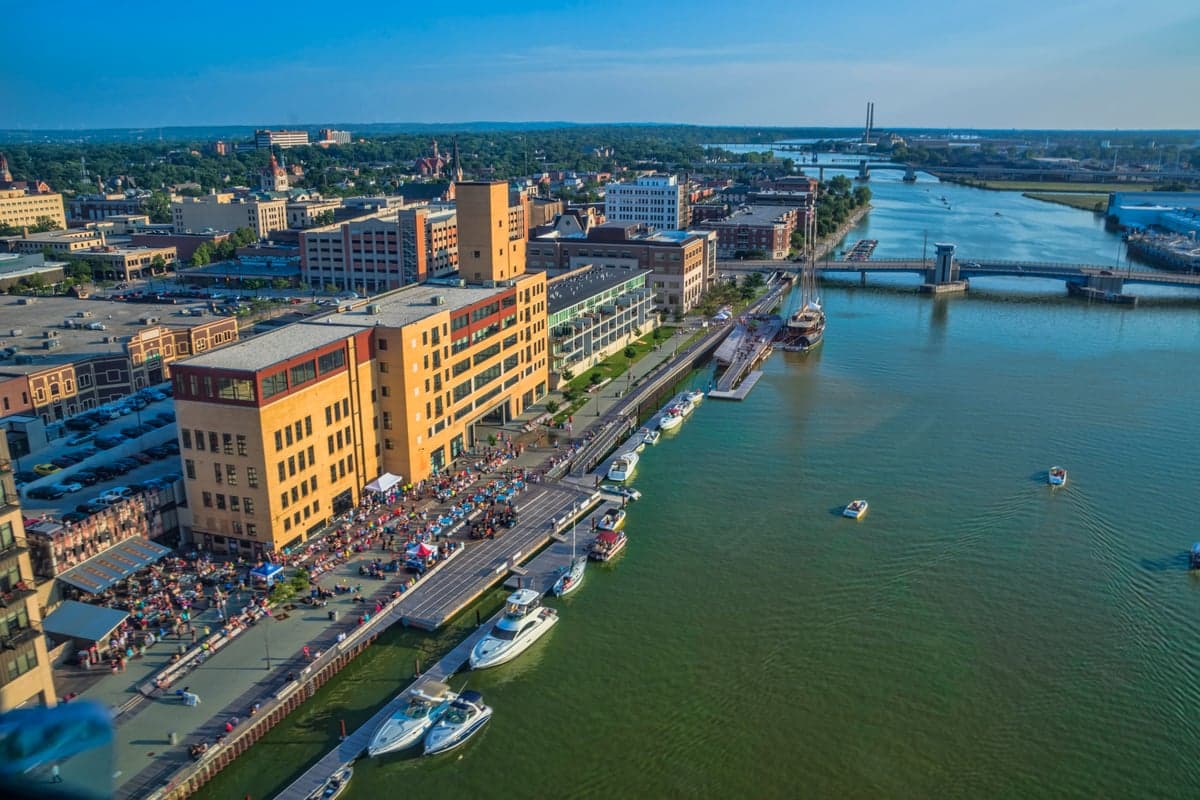
Photo: Wikipedia
Strategic Assessment of Green Bay, WI
Meaningful friction. Expect exposure to either population pressure, blast zones, or natural disaster risk. Consider buying a retreat property.
What does the Strategic Assessment tell us?
Our Strategic Assessment grades tactical survivability of an area. Major population centers, military targets, fallout zones, natural disasters, and border exposure all drive risk — lower exposure means a more defensible position in a crisis.
This is heavily inspired by Joel Skousen's Strategic Relocation book. Highly recommended you checkout the book ($)What does this tell us?
Our Strategic Assessment grades tactical survivability of an area. Major population centers, military targets, fallout zones, natural disasters, and border exposure all drive risk — lower exposure means a more defensible position in a crisis.
This is heavily inspired by Joel Skousen's Strategic Relocation book. Highly recommended you checkout the book ($)Strategic Pillars

Key Distances
Regional Safe Places
Below is our recommended "safe zones" in Wisconsin and the surrounding area based on our strategic heuristics. For most people, it's unrealistic to live in a “safe zone” full-time due to work, family or other personal reasons. They tend to be more rural. However, many of these areas are perfect for second homes and retreat properties that double as a vacation home or even a short-term rental.
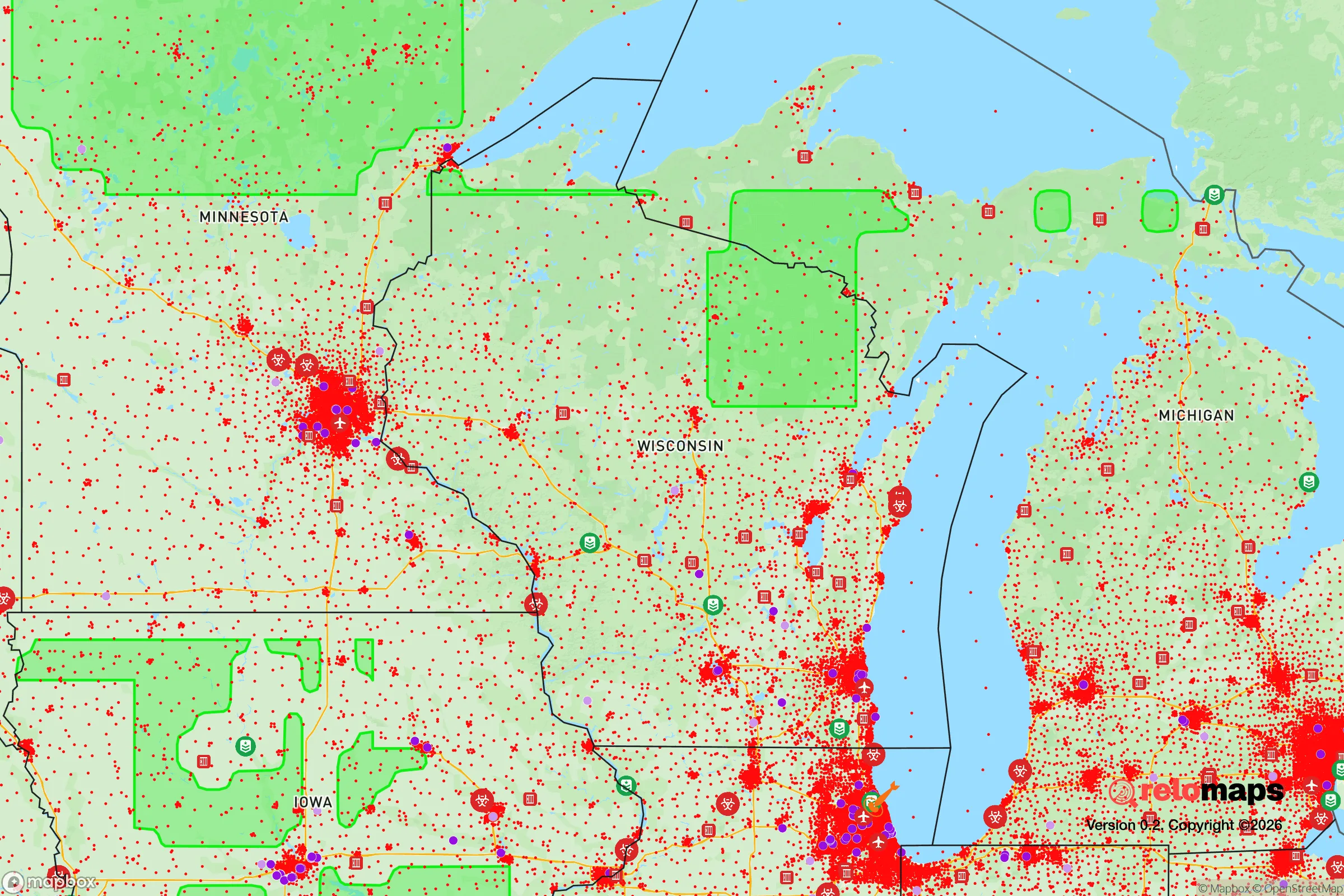
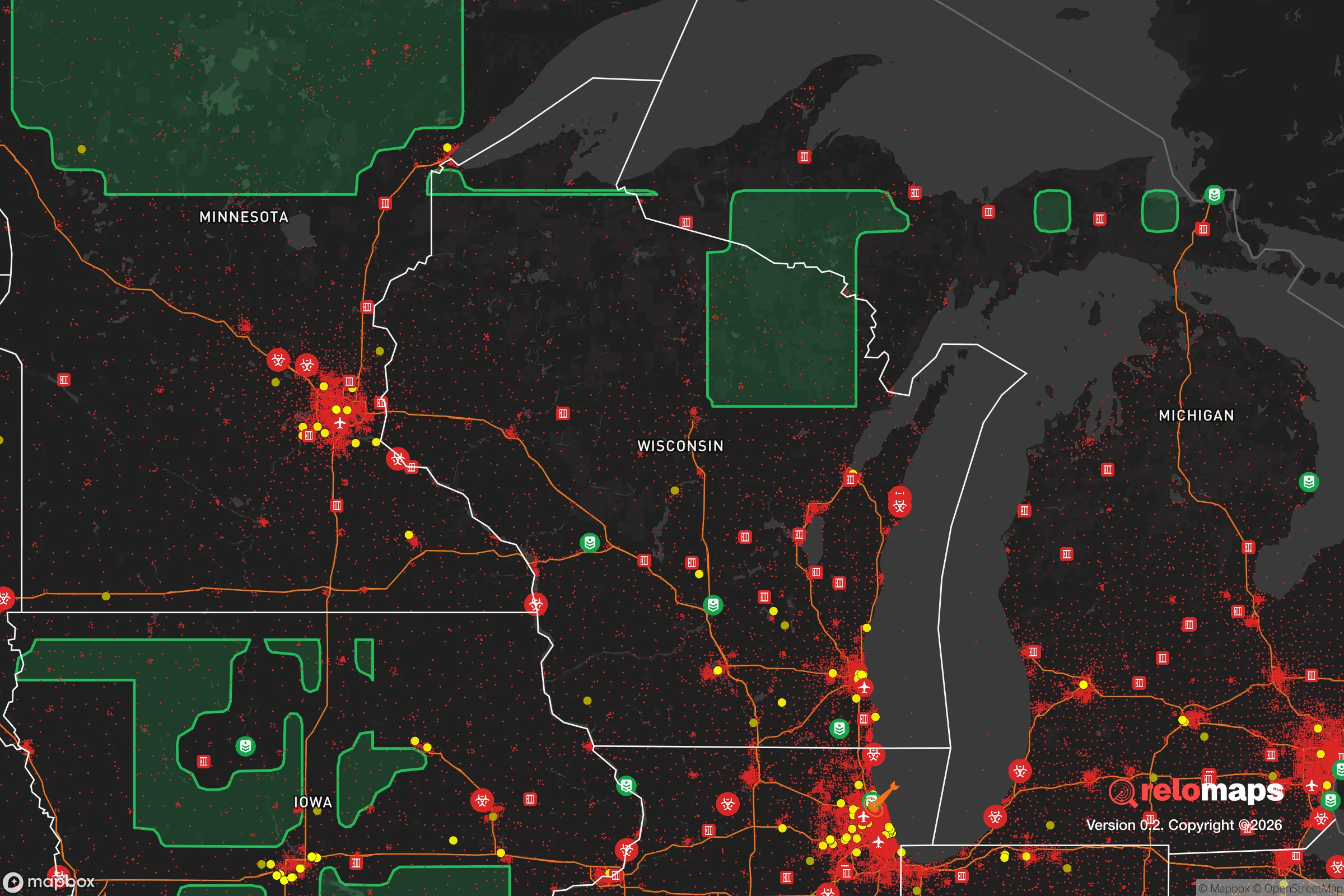


Important Note: For informational purposes only. This does not mean nothing bad ever happens in the green zones. Please use common sense. This is based on public data and modeled with AI. We tried to take a conservative approach but mistakes happen. We update this regularly as new information becomes available.
Solar Generator Recommendations
Backup power matters more here than in safer locations. We've picked three solar generators across budgets and capacity tiers — start with the budget unit if you only need a few essentials, or step up if you want to run a fridge and HVAC for days at a time.

Jackery Portable Power Station Explorer 300
Budget OptionPower on the Go: Weighing only 11 lbs, it's convenient to set up and store with book-sized foldable solar panels

BLUETTI Portable Power Station AC180
Designed for both indoor and outdoor scenarios, AC180 is highly capable as it has a robost capacity and continuous output power.

EF ECOFLOW DELTA Pro Ultra Power Station
Upgraded PickEcoFlow DELTA Pro Ultra is a whole-home energy system designed to grow with your family. Integrated with the Smart Home Panel 2, it scales to meet your evolving energy needs — keeping your home powered, intelligent, and secure through every stage of life.
We earn a commission, at no additional cost to you.
Strategic Assessment Analysis
Green Bay, Wisconsin, offers a compelling blend of industrial resilience and geographic insulation that makes it a serious contender for those prioritizing long-term stability and self-sufficiency. Unlike many Midwestern cities that have hollowed out, Green Bay retains a robust manufacturing base anchored by the paper industry and, of course, its namesake Packers, but more importantly, it sits at the mouth of the Fox River on the shores of Lake Michigan, providing a unique water and logistics advantage. For the conservative relocator looking at the national picture—rising urban crime, supply chain fragility, and the potential for cascading failures—Green Bay represents a hard-nosed, practical option that balances access to resources with a buffer from the worst of the chaos.
Geographic Position and Natural Advantages for Long-Term Security
Green Bay’s location is its primary strategic asset. It sits roughly 100 miles north of Milwaukee and 200 miles from Chicago, placing it far enough from major population centers to avoid the immediate fallout of a major urban crisis—whether that’s a pandemic, civil unrest, or a grid-down scenario—yet close enough to maintain supply lines and access to regional medical centers like the Mayo Clinic system in the area. The city is positioned on the western shore of Lake Michigan’s Green Bay, a massive freshwater resource that is not easily contaminated or disrupted. This is a critical advantage: Lake Michigan holds 1,180 cubic miles of fresh water, making Green Bay one of the few mid-sized cities in the U.S. with a virtually unlimited, defensible water supply. The surrounding Brown County is flat, fertile farmland, with the Door County peninsula to the east providing a natural barrier and a secondary food-producing region. The Fox River also runs through the city, offering a secondary water source and a potential transportation corridor if roads become impassable. The area’s cold winters, while harsh, also serve as a natural deterrent to large-scale transient populations and reduce the viability of many biological threats.
Risks, Exposures, and Proximity to Fallout-Relevant Landmarks
No location is without risk, and Green Bay has specific vulnerabilities that a prepper must account for. The most obvious is the Kewaunee Nuclear Power Plant, located just 30 miles southeast of the city on the Lake Michigan shoreline. While the plant is a reliable energy source, it is also a single-point-of-failure risk. A major accident, sabotage, or a direct hit from a severe weather event could force a large-scale evacuation corridor straight through Green Bay. Additionally, the city’s industrial base—paper mills, chemical storage, and food processing plants—means that a localized industrial accident could contaminate the Fox River or create a toxic plume. On the human threat side, Green Bay is a regional hub for northeastern Wisconsin, meaning it will be a destination for refugees from smaller towns and rural areas during a crisis. The city’s population of roughly 107,000 can swell quickly. The main highway corridors—I-41 and I-43—are choke points that could become impassable during an evacuation or mass migration event. There are no major military bases or strategic command centers nearby, which is a double-edged sword: it reduces the likelihood of a direct kinetic strike, but it also means no immediate FEMA or military support in a national emergency. The nearest major fallout risk from a nuclear exchange would be from a strike on Chicago or Milwaukee, but prevailing westerly winds would likely push fallout east over Lake Michigan, not directly toward Green Bay.
Practical Resilience for a Relocator: Food, Water, Energy, and Defensibility
For the individual or family looking to establish a resilient household, Green Bay offers a surprisingly strong foundation. Food security is excellent: the surrounding farmland produces dairy, beef, corn, soybeans, and a wide variety of vegetables, and the city itself is home to multiple large-scale food processors, including Schreiber Foods and Sargento. The Lake Michigan fishery provides a protein source that is not dependent on industrial agriculture. Water security is similarly robust—a well-maintained municipal system drawing from Lake Michigan, with the option for private wells in the outer suburbs like Suamico or Hobart. Energy resilience is a mixed bag. The grid is reasonably stable, but winter storms can knock out power for days. Natural gas is widely available, but a long-term grid-down scenario would require a backup generator or solar setup. The city’s layout is relatively compact, with a mix of older neighborhoods and newer subdivisions, making it possible to find a home with a defensible perimeter—think a property on the outskirts with a clear view of approach routes. The local gun culture is strong, with multiple shooting ranges and a high rate of legal firearm ownership, which is a practical consideration for self-defense in a breakdown scenario. The community itself is tight-knit and church-oriented, which fosters mutual aid networks that are more reliable than government assistance. The biggest practical weakness is the cold: winter temperatures can drop to -20°F, and a prolonged power outage in January would be life-threatening without proper heating, fuel storage, and cold-weather gear.
The overall strategic picture for Green Bay is that of a solid, unglamorous fallback position. It is not a bug-out location in the wilderness—it is a functioning city with real infrastructure, real jobs, and real risks. But for the conservative relocator who wants to be part of a community that still values self-reliance, hard work, and neighborly support, while maintaining a buffer from the worst of the coastal and urban decay, Green Bay makes sense. It offers the freshwater, farmland, and industrial base needed to weather a long-term disruption, provided you plan for the cold and accept the proximity to a nuclear plant. It is not a fortress, but it is a defensible, resource-rich position in a state that has historically been a refuge for those looking to get out of the way. If you are serious about resilience, Green Bay deserves a hard look—just bring a good coat and a plan for the grid going dark in January.

* Values derived from national, state, county, city and local statistics and may differ in a specific area. Last updated: 2026-04-21T10:17:26.000Z
Narrative content on this page is AI-generated and may contain mistakes. Verify any details that matter before acting on them.
ReloMaps may earn a commission from affiliate links at no extra cost to you.

