 Popular
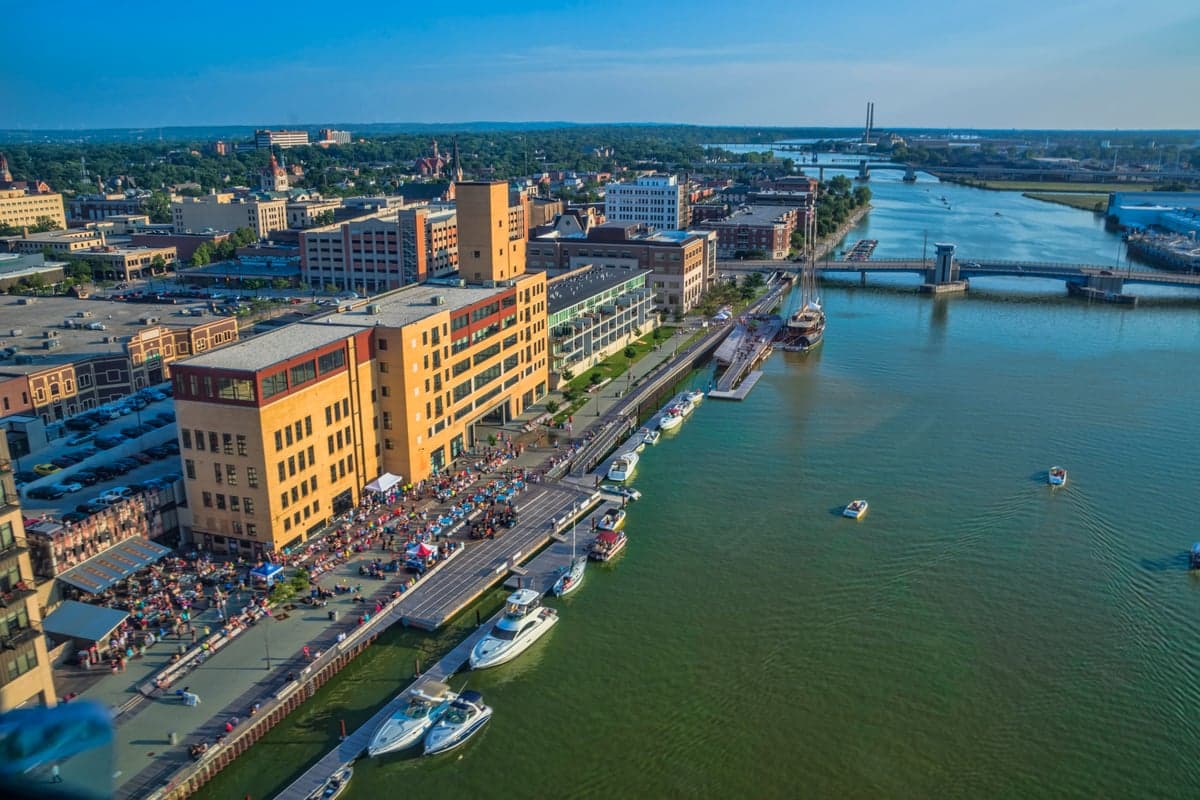
Photo: Wikipedia
Personal Sovereignty in Green Bay, WI
Moderate friction. Expect trade-offs in some aspect of personal liberty and independence.
What does Personal Sovereignty tell us?
Personal Sovereignty measures your capacity for self-reliance and independence with minimal government friction. Higher scores mean fewer barriers between you and the way you want to live... but it assumes you have the space you need and good neighbors.
What does this tell us?
Personal Sovereignty measures your capacity for self-reliance and independence with minimal government friction. Higher scores mean fewer barriers between you and the way you want to live... but it assumes you have the space you need and good neighbors.
State Policy
Energy independence: Importer (15% of energy produced in-state)
Personal Liberty
Homesteading

Personal Liberty Analysis
For conservative-leaning individuals and families evaluating Green Bay, Wisconsin, as a relocation destination, the city offers a mixed but generally favorable environment for personal sovereignty. While Wisconsin is not a libertarian stronghold, Green Bay sits in a region where state-level restrictions are often tempered by local practicality and a strong cultural emphasis on self-reliance. The key question for a survivalist or prepper mindset is whether the legal and regulatory framework here supports—or merely tolerates—the ability to live free from government overreach, defend one's family, and build a resilient, independent lifestyle. The answer is nuanced: the state imposes some notable constraints, particularly on taxation and certain personal liberties, but the local community and geography provide substantial room for those willing to navigate the system.
Tax burden and regulatory posture for independent living
Wisconsin's tax burden is a significant factor for anyone prioritizing financial sovereignty. The state levies a progressive income tax with rates ranging from 3.50% to 7.65%, which is higher than many Midwestern neighbors like Indiana or South Dakota. Property taxes are also among the highest in the nation, with Brown County's effective rate hovering around 1.8% of assessed home value. For a prepper or homesteader, this means a substantial portion of income and property equity is claimed by the state before you can allocate it to your own preparedness goals. On the regulatory side, Wisconsin is not a "red tape" nightmare, but it is not a free-for-all either. Building codes are enforced in Green Bay proper, and zoning in the city limits restricts things like keeping livestock or constructing large outbuildings without permits. However, the regulatory posture shifts dramatically just outside the city. In Brown County's unincorporated areas and smaller towns like Suamico or Hobart, zoning is far more permissive, allowing for larger lots, accessory structures, and even small-scale agricultural activities without excessive bureaucratic hurdles. For those serious about self-reliance, the smart move is to locate outside Green Bay's city limits to reduce both tax exposure and regulatory friction.
Self-defense and gun law specifics for personal protection
Wisconsin is a "shall-issue" state for concealed carry permits, and Green Bay residents generally enjoy strong Second Amendment protections. The state preempts local firearm ordinances, meaning Green Bay cannot enact its own bans or restrictions that are stricter than state law. This is a critical safeguard against the kind of patchwork gun control seen in states like California or New York. Open carry is legal without a permit for anyone 18 or older who is not prohibited from possessing a firearm. Concealed carry requires a license, which involves an 8-hour training course and a background check, but issuance is mandatory if you meet the criteria. Stand-your-ground laws are in effect—Wisconsin does not impose a duty to retreat before using deadly force in self-defense, provided you are lawfully present and not engaged in criminal activity. Castle doctrine protections also apply to your home, vehicle, and workplace. For a prepper, this legal framework is solid but not perfect: there is no constitutional carry (permitless concealed carry) as of 2026, though legislative efforts continue. Magazine capacity restrictions and "assault weapon" bans do not exist at the state level, so you can legally own standard-capacity magazines and modern sporting rifles. The practical takeaway is that Green Bay offers a robust legal environment for armed self-defense, with the main inconvenience being the need for a concealed carry permit if you want to carry discreetly.
Self-reliance and homesteading viability: lot sizes, zoning, and off-grid feasibility
True self-reliance requires land and the freedom to use it. Within Green Bay's urban core, lot sizes are typically small (0.1 to 0.25 acres), and zoning ordinances restrict activities like raising chickens, keeping goats, or installing rainwater catchment systems for primary water supply. Off-grid living—meaning no connection to municipal water, sewer, or electric—is effectively impossible inside city limits due to building codes and health regulations. However, the viability changes dramatically as you move outward. In Brown County's rural townships, minimum lot sizes are often 1 to 5 acres, and many parcels of 10 to 40 acres are available within a 20-minute drive of downtown Green Bay. Zoning in these areas generally permits livestock, gardening, and the construction of barns, workshops, and greenhouses without special permits. Off-grid solar is legal and increasingly common, though net metering policies with utilities like Wisconsin Public Service are favorable for grid-tied systems. Full off-grid independence (no utility connection) is legally possible but requires meeting state sanitation codes for well water and septic systems, which are not overly burdensome. The growing season is short (roughly 140 frost-free days), but the soil in the Fox River Valley is fertile, and water is abundant. For a prepper, the key limitation is winter: heating a home off-grid in northeastern Wisconsin requires serious planning, fuel storage, and redundancy. Overall, homesteading is viable here, but it demands a deliberate choice to live outside the city's regulatory reach.
Personal liberties: parental rights, medical autonomy, speech, and property
Wisconsin has a mixed record on personal liberties that matter to conservative families. Parental rights are relatively strong: the state has a "parental bill of rights" that affirms parents' authority over their children's education, healthcare, and upbringing. School choice is robust, with a long-standing voucher program and a thriving charter school sector in Green Bay, allowing parents to opt out of district schools without moving. Medical autonomy is more contested. Wisconsin did not impose broad COVID-19 vaccine mandates on private citizens, but the state health department retains significant emergency powers that could theoretically be used to restrict medical choices in a future crisis. For those concerned about government overreach in healthcare, this is a vulnerability. Free speech protections are solid, as Wisconsin courts generally uphold First Amendment rights, and there are no state-level "hate speech" laws that criminalize protected expression. Property rights are well-established, with strong eminent domain protections requiring just compensation and a public purpose. However, the state's high property taxes can feel like a perpetual lien on your land, eroding the practical value of ownership. For a survivalist, the most concerning liberty issue is the potential for state-level emergency orders to override local autonomy—a lesson many learned during the pandemic. Green Bay's local government is generally more conservative than Milwaukee or Madison, but it is still subject to gubernatorial authority from a state executive that has, in recent years, shown willingness to impose broad mandates.
In the broader landscape of American personal sovereignty, Green Bay occupies a middle ground. It is far more hospitable to self-reliance and gun rights than the coastal blue states, but it lacks the low-tax, low-regulation environment of places like Texas, Florida, or the rural Mountain West. The state's tax burden and the potential for executive overreach are real concerns for anyone prioritizing maximum autonomy. However, the practical reality on the ground—especially if you locate outside city limits—is that you can own firearms freely, raise your children according to your values, build a homestead, and largely be left alone by the government. For a conservative prepper or survivalist, Green Bay is not a sanctuary, but it is a defensible position: a place where you can live quietly, prepare diligently, and maintain a high degree of personal sovereignty without constant legal battles. The key is to choose your specific location wisely, understand the state's emergency powers, and accept that you will pay a premium in taxes for the privilege of living in a region with abundant water, fertile land, and a community that still values self-sufficiency.

* Values derived from national, state, county, city and local statistics and may differ in a specific area. Last updated: 2026-04-21T10:17:26.000Z
Narrative content on this page is AI-generated and may contain mistakes. Verify any details that matter before acting on them.
ReloMaps may earn a commission from affiliate links at no extra cost to you.

