 Popular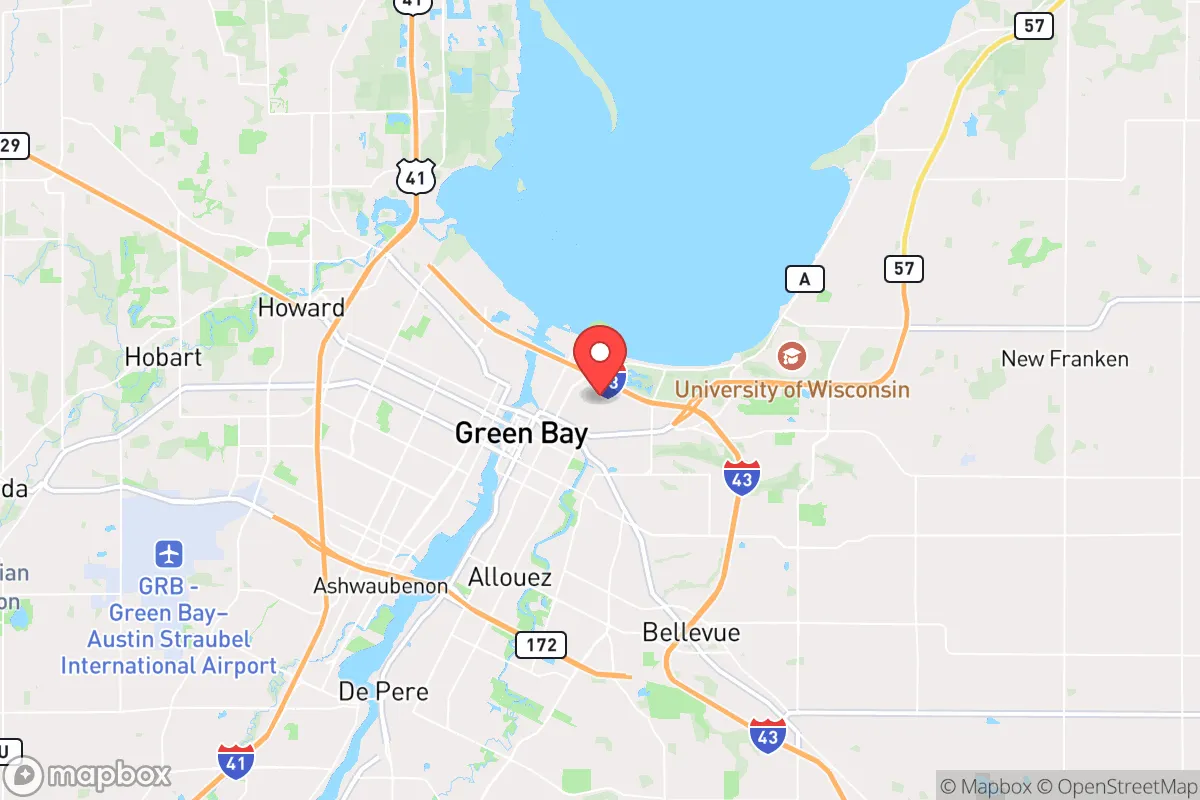
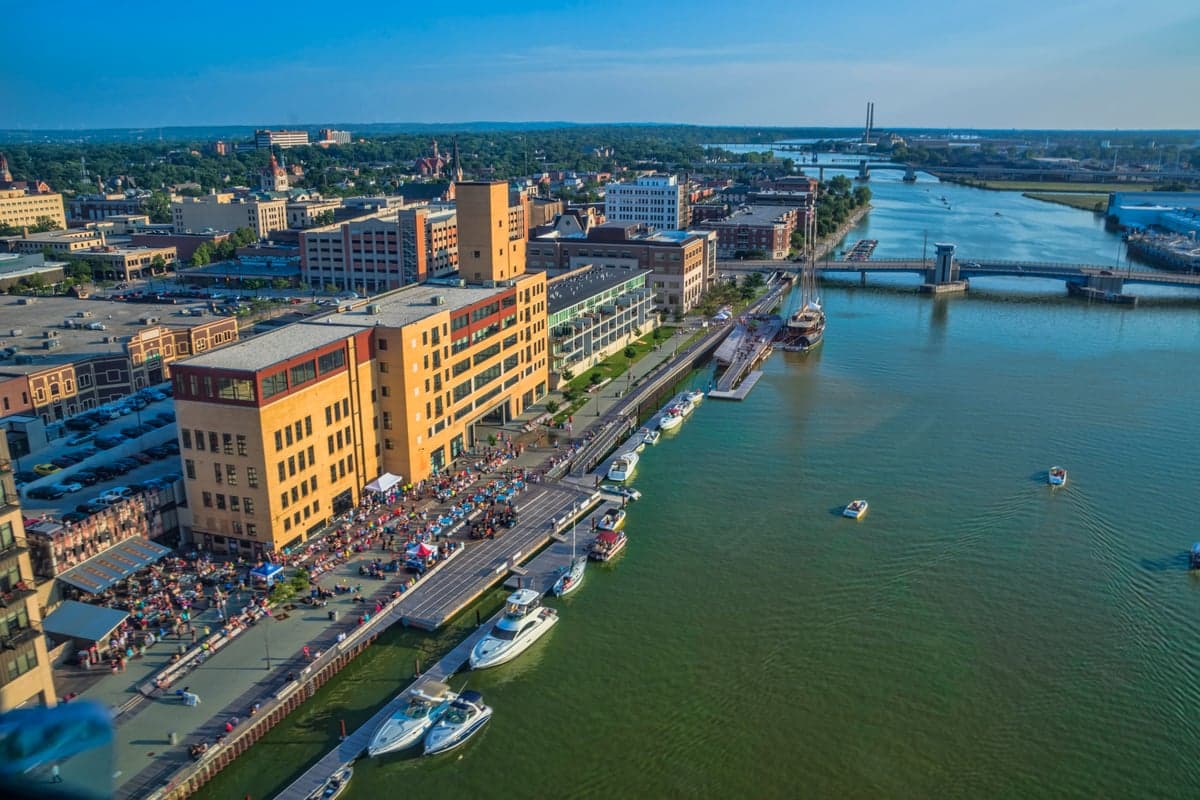
Photo: Wikipedia
Political ClimatePolitical Climate in Green Bay, WI
District shown is the primary district for this city’s centroid. Cities may span multiple districts.
Local Political AnalysisPolitical Analysis of Green Bay, WI
Green Bay has long been a conservative stronghold in Wisconsin, with a Cook PVI of R+8 that reflects its steady Republican lean in federal elections. But if you’ve lived here as long as I have, you’ve watched the political ground shift under your feet—not dramatically overnight, but in a slow, grinding way that makes you wonder what the next decade holds. The city itself is still reliably red, but the surrounding suburbs and rural areas, like De Pere to the south and the farm communities in Brown County, are where the real conservative backbone lives. Meanwhile, pockets of progressive influence have crept into the downtown and university areas, and that’s something worth keeping an eye on.
How it compares
When you stack Green Bay up against other Wisconsin cities, the contrast is stark. Madison, about 140 miles southwest, is a deep blue island with a Cook PVI of D+18, driven by the state capitol and UW-Madison. Milwaukee, two hours south, leans Democratic too, though it’s more of a mixed bag. But Green Bay? It’s closer in spirit to places like Appleton or Wausau—working-class, family-oriented, and skeptical of big-government solutions. The real divide isn’t between Green Bay and those cities, though; it’s between the city proper and its own suburbs. Towns like Howard and Suamico vote even more conservative, while the east side of Green Bay, near the university, has started to trend younger and more liberal. That’s a warning sign for anyone who values limited government and personal freedom—because once those progressive ideas take root in a neighborhood, they don’t stay put.
What this means for residents
For the average Green Bay resident, the political climate shapes daily life in ways you might not notice until they change. Property taxes here are already a sore spot—Brown County’s levy has crept up over the years, and with it, the feeling that local government is reaching deeper into your wallet. The city council has seen debates over zoning rules, mask mandates, and even a push for “equity” initiatives that sound good on paper but often mean more bureaucracy and less individual choice. If you’re a homeowner or small business owner, you’ve probably felt the squeeze: permits take longer, fees go up, and the city seems more interested in checking boxes than letting you live your life. The conservative majority on the council has held the line on most of this, but the margin is thinner than it used to be. I’ve seen neighbors get frustrated enough to move out to the county, where the sheriff’s office doesn’t play games with overreach and the school board still focuses on teaching kids, not indoctrinating them.
One cultural distinction that sets Green Bay apart is its deep-rooted sense of community, tied to the Packers and the local churches. That’s not just nostalgia—it’s a buffer against the kind of top-down social engineering you see in bigger cities. The long-term outlook depends on whether that buffer holds. If the progressive drift in the downtown core continues, expect more fights over everything from police funding to school curriculum. But if the conservative base stays engaged—and I think it will, given how many folks here remember when government stayed out of their business—Green Bay will remain a place where your rights come first. Just keep an eye on those city council elections; that’s where the real battle is fought.

State Political ClimatePolitical Climate in Wisconsin
State Political AnalysisPolitical Environment in the State
Wisconsin has long been a classic swing state, but over the past decade it has shifted from a true battleground to a state that leans slightly Republican in statewide elections, though with razor-thin margins. The dominant coalition is a mix of conservative exurban and rural voters in the WOW counties (Waukesha, Ozaukee, Washington) outside Milwaukee, plus working-class voters in the Fox Valley and the Driftless Region. However, the state has become more polarized: Democrats dominate Milwaukee and Madison, while the rest of the state has trended red. The 2024 presidential race saw Trump win the state by roughly 1 point, continuing a pattern where no candidate has won by more than 1.5 points since 2012. This means every election is a knife fight, and the political climate feels perpetually tense.
Urban vs. rural divide
The political map of Wisconsin is a tale of two worlds. Milwaukee County and Dane County (Madison) are deep blue strongholds, delivering massive Democratic margins that Republicans must overcome elsewhere. Milwaukee itself is a diverse, union-heavy city with a strong progressive base, while Madison is a classic college town and state capital dominated by government workers and University of Wisconsin faculty. In contrast, the WOW counties—Waukesha, Ozaukee, and Washington—are among the most Republican suburbs in the nation, with Waukesha County alone often providing a 60-70% GOP vote share. The Fox Valley, including cities like Appleton and Green Bay, has shifted rightward as blue-collar manufacturing workers have moved away from Democrats. Meanwhile, the Driftless Region in the southwest, including La Crosse and Platteville, remains a mix of rural conservatives and small-town liberals. The real battleground is the suburban ring around Milwaukee—places like Brookfield and Mequon—where educated voters have trended left, but not enough to offset rural gains.
Policy environment
Wisconsin’s policy environment is a mixed bag for conservatives. On the plus side, the state has a flat income tax rate of 4.4% (down from 7.65% a decade ago), and property taxes are relatively low compared to Illinois or Minnesota. The state is a right-to-work state, and union power has been significantly curtailed since Act 10 in 2011, which ended collective bargaining for most public employees. However, the state has a Democratic governor, Tony Evers, who has vetoed conservative priorities like a flat tax expansion and school choice funding increases. On education, Wisconsin has a robust school choice program—the Milwaukee Parental Choice Program is one of the oldest in the nation—but Evers has blocked efforts to expand it statewide. Healthcare is a mixed bag: the state expanded Medicaid under the Affordable Care Act, but private insurance markets remain competitive. Election laws are a flashpoint: Wisconsin has no-excuse absentee voting and same-day voter registration, which conservatives argue makes the system vulnerable to fraud, though no widespread fraud has been proven. The state also has a conservative-leaning Supreme Court, but that flipped to a 4-3 liberal majority in 2023 after a high-spending election.
Trajectory & freedom
Wisconsin’s trajectory on personal freedom is concerning for conservatives. The state has seen a slow erosion of Second Amendment rights: in 2023, the legislature passed a permitless carry bill, but Governor Evers vetoed it. Meanwhile, the state has a red flag law that allows temporary firearm seizure, though it’s rarely used. On parental rights, Wisconsin has no explicit law protecting parents’ rights in education, and school districts in Madison and Milwaukee have adopted progressive curricula on gender and race without parental opt-out options. Medical freedom took a hit during COVID: the state had mask mandates and business closures, though the Supreme Court struck down Evers’ stay-at-home order in 2020. Property rights are generally strong, but the state has a high property tax burden relative to income. On taxation, the trend is positive: the flat tax was reduced from 5.3% to 4.4% in 2023, and there’s momentum to lower it further. However, the state’s budget surplus has been spent on one-time items rather than permanent tax relief. The biggest freedom concern is the growing power of the state government in Madison, where the Democratic governor and liberal city councils are pushing policies that conservatives see as overreach—like a proposed ban on gas-powered leaf blowers in Milwaukee and a push for sanctuary city status in Madison.
Civil unrest & political movements
Wisconsin has a history of political activism that can turn ugly. The 2011 Act 10 protests in Madison drew over 100,000 people to the Capitol, and the 2020 Kenosha unrest after the Jacob Blake shooting saw riots, arson, and the killing of two protesters by Kyle Rittenhouse—a case that became a national flashpoint for self-defense and Second Amendment debates. The state has a strong conservative grassroots movement, particularly in the WOW counties and the Fox Valley, where groups like the Wisconsin Family Action and the Wisconsin Institute for Law & Liberty push for school choice, religious freedom, and election integrity. On the left, the state has a powerful teachers’ union (WEAC) and a growing progressive activist network in Madison and Milwaukee. Immigration politics are relatively quiet compared to border states, but Milwaukee has seen a surge in migrant arrivals, straining city services and sparking debates over sanctuary policies—the city has a “Welcoming City” ordinance that limits cooperation with ICE. Election integrity remains a hot-button issue: the 2020 election saw widespread use of drop boxes and absentee voting, which conservatives argue were improperly handled, leading to a 2022 law that banned private funding for elections and limited drop boxes. The state’s bipartisan Elections Commission has been a target of both sides, and the 2024 election saw record turnout and legal challenges.
Projection
Over the next 5-10 years, Wisconsin is likely to remain a purple state, but with a slight rightward drift. The key demographic shift is the continued exodus of young professionals from Milwaukee and Madison to the suburbs and exurbs, which could strengthen the GOP’s suburban base. However, the growth of the University of Wisconsin system and the influx of out-of-state students—many from blue states—could tilt Madison and Milwaukee further left. The Fox Valley is aging and shrinking, which could hurt the GOP if they don’t attract new residents. The biggest wildcard is the state Supreme Court: with a liberal majority until at least 2028, expect rulings on redistricting, abortion, and voting rights that could shift the political landscape. If the GOP can hold the legislature and win the governorship in 2026, expect a push for school choice expansion, a lower flat tax, and election law reforms. If Democrats hold the governorship, expect more progressive policies on healthcare and education. For a conservative moving in now, the state offers a decent balance of low taxes and personal freedom in the suburbs and rural areas, but you’ll need to be vigilant about the direction of Madison and Milwaukee.
Bottom line: Wisconsin is a state where your experience depends heavily on where you live. If you settle in Waukesha or Appleton, you’ll find strong conservative communities, low taxes, and good schools. If you end up in Madison or Milwaukee, you’ll face higher taxes, progressive policies, and a political climate that can feel hostile to traditional values. The state is not trending toward freedom in a broad sense—the government in Madison is increasingly assertive—but the rural and suburban areas remain bastions of liberty. For a conservative family or individual, the smart move is to pick a county that matches your values and stay engaged in local politics, because the fight for Wisconsin’s soul is far from over.
* Values derived from national, state, county, city and local statistics and may differ in a specific area. Last updated: 2026-04-21T10:17:26.000Z
Narrative content on this page is AI-generated and may contain mistakes. Verify any details that matter before acting on them.
ReloMaps may earn a commission from affiliate links at no extra cost to you.

