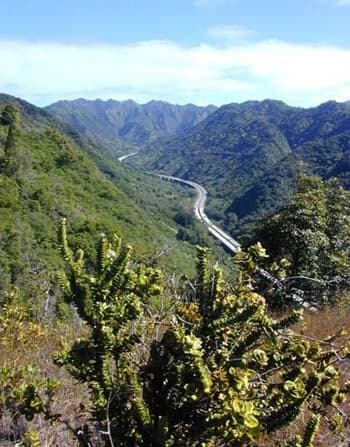
Photo: Wikipedia
Strategic Assessment of Halawa, HI
Meaningful friction. Expect exposure to either population pressure, blast zones, or natural disaster risk. Consider buying a retreat property.
What does the Strategic Assessment tell us?
Our Strategic Assessment grades tactical survivability of an area. Major population centers, military targets, fallout zones, natural disasters, and border exposure all drive risk — lower exposure means a more defensible position in a crisis.
This is heavily inspired by Joel Skousen's Strategic Relocation book. Highly recommended you checkout the book ($)What does this tell us?
Our Strategic Assessment grades tactical survivability of an area. Major population centers, military targets, fallout zones, natural disasters, and border exposure all drive risk — lower exposure means a more defensible position in a crisis.
This is heavily inspired by Joel Skousen's Strategic Relocation book. Highly recommended you checkout the book ($)Strategic Pillars

Key Distances
Regional Safe Places
Below is our recommended "safe zones" in Hawaii and the surrounding area based on our strategic heuristics. For most people, it's unrealistic to live in a “safe zone” full-time due to work, family or other personal reasons. They tend to be more rural. However, many of these areas are perfect for second homes and retreat properties that double as a vacation home or even a short-term rental.

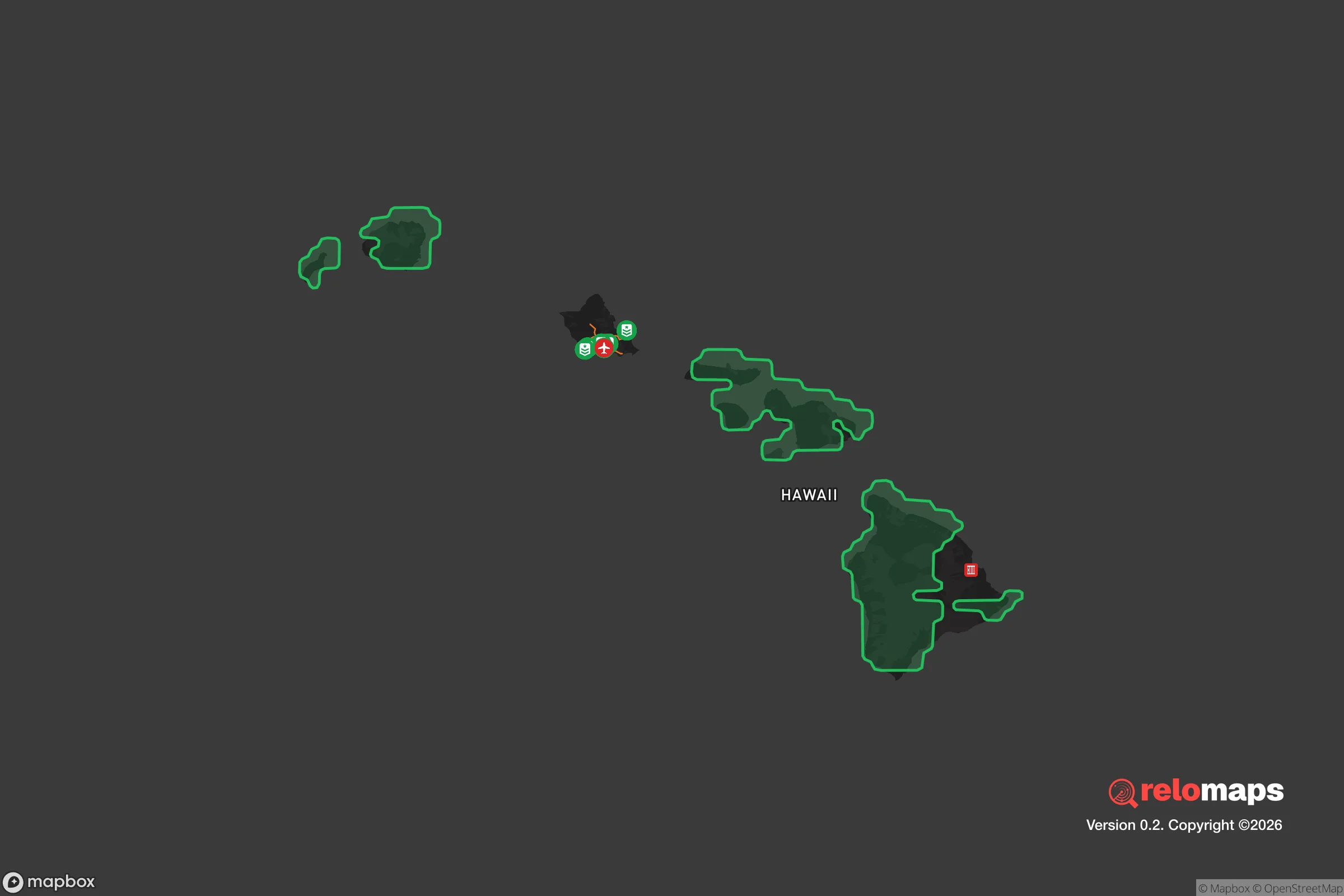


Important Note: For informational purposes only. This does not mean nothing bad ever happens in the green zones. Please use common sense. This is based on public data and modeled with AI. We tried to take a conservative approach but mistakes happen. We update this regularly as new information becomes available.
Solar Generator Recommendations
Backup power matters more here than in safer locations. We've picked three solar generators across budgets and capacity tiers — start with the budget unit if you only need a few essentials, or step up if you want to run a fridge and HVAC for days at a time.

Jackery Portable Power Station Explorer 300
Budget OptionPower on the Go: Weighing only 11 lbs, it's convenient to set up and store with book-sized foldable solar panels

BLUETTI Portable Power Station AC180
Designed for both indoor and outdoor scenarios, AC180 is highly capable as it has a robost capacity and continuous output power.

EF ECOFLOW DELTA Pro Ultra Power Station
Upgraded PickEcoFlow DELTA Pro Ultra is a whole-home energy system designed to grow with your family. Integrated with the Smart Home Panel 2, it scales to meet your evolving energy needs — keeping your home powered, intelligent, and secure through every stage of life.
We earn a commission, at no additional cost to you.
Strategic Assessment Analysis
Halawa, Hawaii, presents a complex strategic picture for the conservative prepper or survivalist. While its location on the island of Oahu offers certain natural advantages in terms of moderate climate and access to marine resources, its proximity to Honolulu and critical military infrastructure introduces significant vulnerabilities that must be weighed carefully. For those seeking a true retreat from societal collapse, Halawa is less a sanctuary and more a forward operating base with serious exposure risks.
Geographic position and natural advantages for long-term survival
Halawa sits at the head of a valley on the southern coast of Oahu, roughly 10 miles northwest of downtown Honolulu. The valley itself is flanked by the Ko‘olau Range to the east and the Wai‘anae Range to the west, providing some natural terrain shielding from coastal storm surges and tsunamis. The area’s elevation, ranging from sea level to several hundred feet, offers a modest defensive advantage against sea-level threats, though it is not high enough to escape fallout or airborne contaminants entirely. The climate is tropical, with consistent temperatures between 70°F and 85°F year-round, which eliminates the need for winter heating and reduces energy dependency—a critical factor for off-grid living. Rainfall in the valley is moderate, averaging 20–30 inches annually, which supports local agriculture but is not as abundant as in windward areas. The nearby Pearl Harbor and Honolulu Harbor provide potential access to maritime resources, but this proximity is a double-edged sword, as discussed below. For a relocator, the natural advantages are limited to climate stability and some terrain shielding, but the area lacks the isolation and defensibility of more remote Hawaiian locations like the Big Island’s Puna district or Kauai’s north shore.
Risks, exposures, and proximity to fallout-relevant landmarks
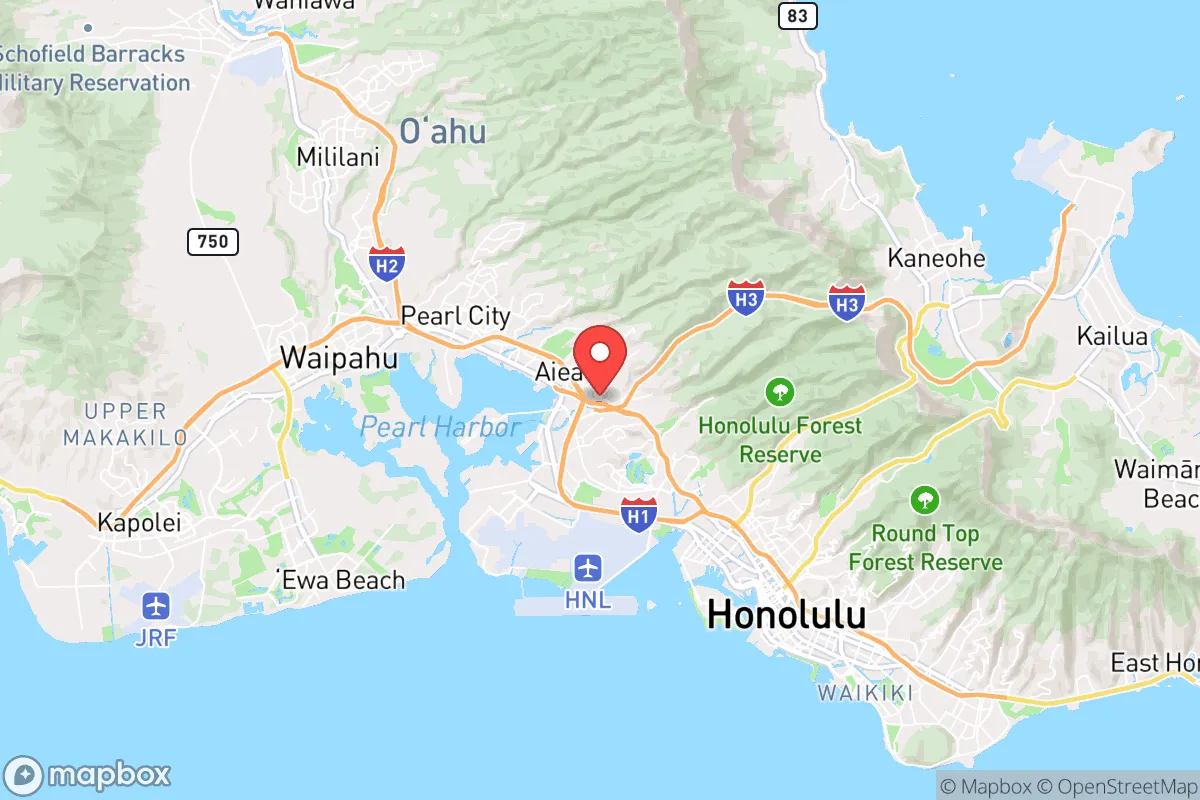
The most glaring strategic weakness of Halawa is its location within the bullseye of Oahu’s critical infrastructure. The valley is less than 3 miles from Joint Base Pearl Harbor-Hickam, one of the U.S. military’s most vital Pacific hubs, housing the Pacific Fleet, Air Force assets, and significant ammunition and fuel storage. In a major conflict—especially one involving a peer adversary like China—this base would be a primary target for a first strike, whether conventional or nuclear. Halawa sits directly in the fallout plume path for any ground burst at Pearl Harbor, given prevailing trade winds that blow from the northeast. Additionally, the area is within 5 miles of Honolulu’s urban core, which would be a focal point for civil unrest, resource scarcity, and disease outbreaks following a collapse. The H-3 freeway, which runs through the Ko‘olau Range, provides a potential evacuation route to the windward side, but it is a single chokepoint that could be easily blocked by debris or hostile actors. The nearby Honolulu International Airport (Daniel K. Inouye International) is another high-value target. For a prepper, the concentration of military, government, and population centers within a 10-mile radius makes Halawa a high-risk zone for any scenario involving large-scale conflict or societal breakdown. The area’s reliance on imported goods—over 90% of Hawaii’s food and fuel arrives by ship—means that any disruption to Pearl Harbor or Honolulu Harbor would lead to rapid shortages, with Halawa being one of the first areas to feel the pinch due to its proximity to distribution hubs.
Practical resilience for a relocator: food, water, energy, and defensibility
For a relocator committed to self-sufficiency, Halawa presents significant challenges. Water security is the most immediate concern: the area relies on the Honolulu Board of Water Supply, which draws from underground aquifers. In a grid-down scenario, municipal water would fail within days, and the valley’s streams are seasonal and often contaminated by urban runoff. A private well is possible but expensive and subject to saltwater intrusion near the coast. Rainwater catchment is viable but requires substantial storage—at least 1,000 gallons per person for a 90-day supply—and filtration systems to handle volcanic sediment and bird droppings. Food production is constrained by limited land: most residential lots in Halawa are small (0.1–0.25 acres), making large-scale gardening difficult. Community gardens exist but would be contested in a crisis. The area’s soil is clay-heavy and requires amendment for staple crops like taro, sweet potatoes, and bananas. Fishing in Pearl Harbor is risky due to decades of industrial pollution and military runoff; offshore fishing in the Pacific requires a boat and fuel, which would be scarce. Energy independence is achievable but costly: Hawaii’s high solar insolation (5.5–6.0 kWh/m²/day) makes photovoltaic systems effective, but net metering agreements with Hawaiian Electric are fragile. Battery storage is essential, and a backup generator with propane storage is recommended for cloudy periods. Defensibility is poor: Halawa is a suburban valley with multiple entry points via the H-3, Kamehameha Highway, and Moanalua Road. There are no natural chokepoints to control access, and the dense housing (single-family homes and townhouses) offers limited concealment. A determined group could easily bypass perimeter defenses. The nearest secure retreat would be the Ko‘olau Range’s interior, but that requires a 4WD vehicle and knowledge of unmarked trails. For a single individual or family, the best practical resilience strategy in Halawa is to maintain a low profile, build a deep pantry (6–12 months of food), and have a pre-planned bug-out route to a more remote location on the Big Island or Maui, where land is cheaper and isolation greater.
In the overall strategic picture, Halawa is a location of convenience, not security. Its climate and access to Honolulu’s resources make it livable during stable times, but its proximity to high-value targets and dense population centers makes it a liability in any serious collapse scenario. For the conservative prepper who values family safety and long-term sustainability, Halawa should be viewed as a temporary staging area—a place to build skills, store supplies, and network with like-minded individuals—while actively seeking a more defensible property on a less populated island. The area’s greatest asset is its moderate climate, but that alone cannot offset the risks of being within the blast radius of a major military target. If you are determined to settle on Oahu, consider the North Shore or the remote windward valleys (like Kahana or Waiahole), which offer better isolation and natural barriers. Halawa, for all its convenience, is a high-risk bet in a world where the unthinkable becomes increasingly plausible.

* Values derived from national, state, county, city and local statistics and may differ in a specific area. Last updated: 2026-04-24T06:09:54.000Z
Narrative content on this page is AI-generated and may contain mistakes. Verify any details that matter before acting on them.
ReloMaps may earn a commission from affiliate links at no extra cost to you.

