
Photo: Wikipedia
Strategic Assessment of Harrisburg, PA
Multiple tactical vulnerabilities. Population density, target proximity, or disaster risk are likely compounding. A retreat property and exit planning is required.
What does the Strategic Assessment tell us?
Our Strategic Assessment grades tactical survivability of an area. Major population centers, military targets, fallout zones, natural disasters, and border exposure all drive risk — lower exposure means a more defensible position in a crisis.
This is heavily inspired by Joel Skousen's Strategic Relocation book. Highly recommended you checkout the book ($)What does this tell us?
Our Strategic Assessment grades tactical survivability of an area. Major population centers, military targets, fallout zones, natural disasters, and border exposure all drive risk — lower exposure means a more defensible position in a crisis.
This is heavily inspired by Joel Skousen's Strategic Relocation book. Highly recommended you checkout the book ($)Strategic Pillars

Key Distances
Regional Safe Places
Below is our recommended "safe zones" in Pennsylvania and the surrounding area based on our strategic heuristics. For most people, it's unrealistic to live in a “safe zone” full-time due to work, family or other personal reasons. They tend to be more rural. However, many of these areas are perfect for second homes and retreat properties that double as a vacation home or even a short-term rental.
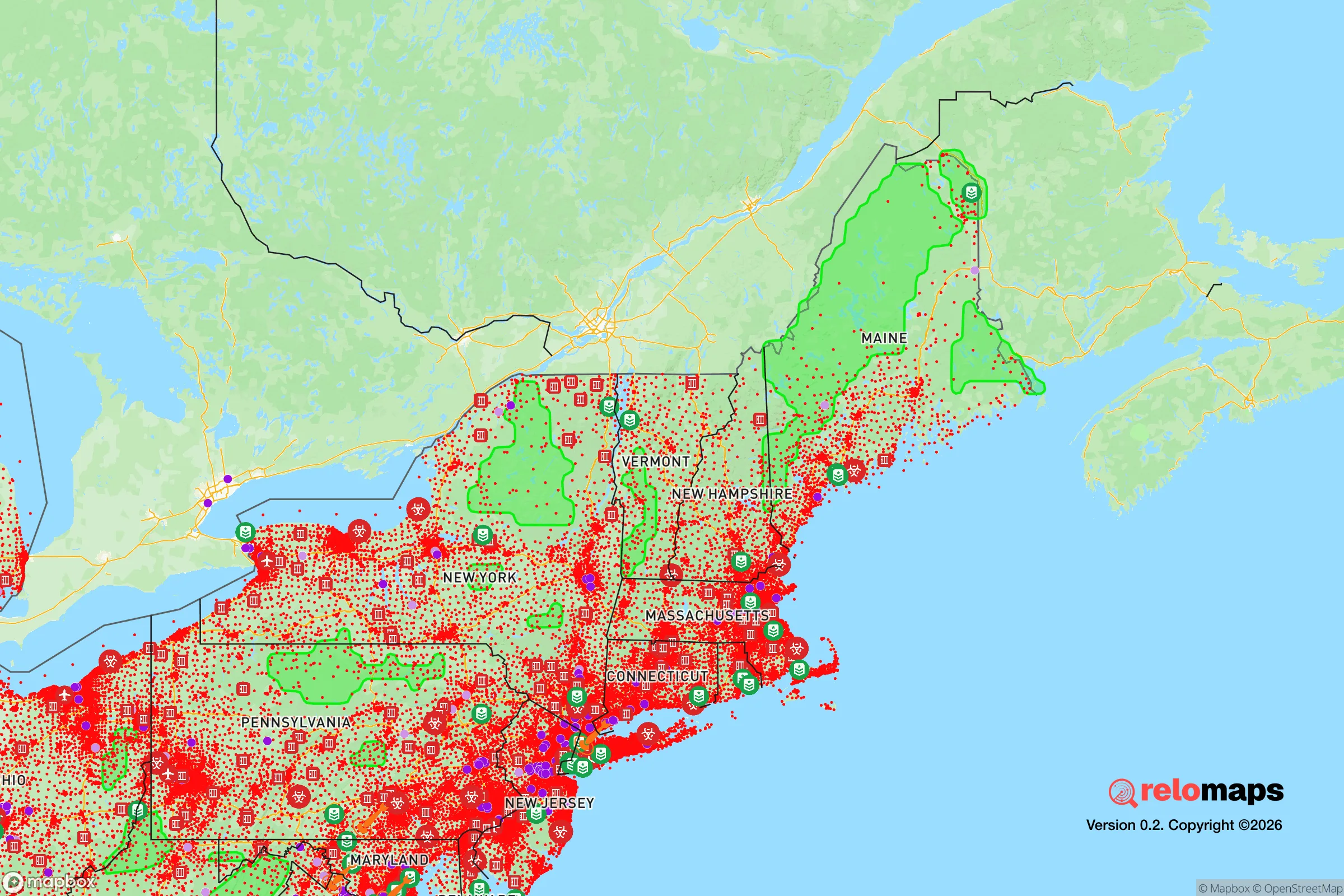
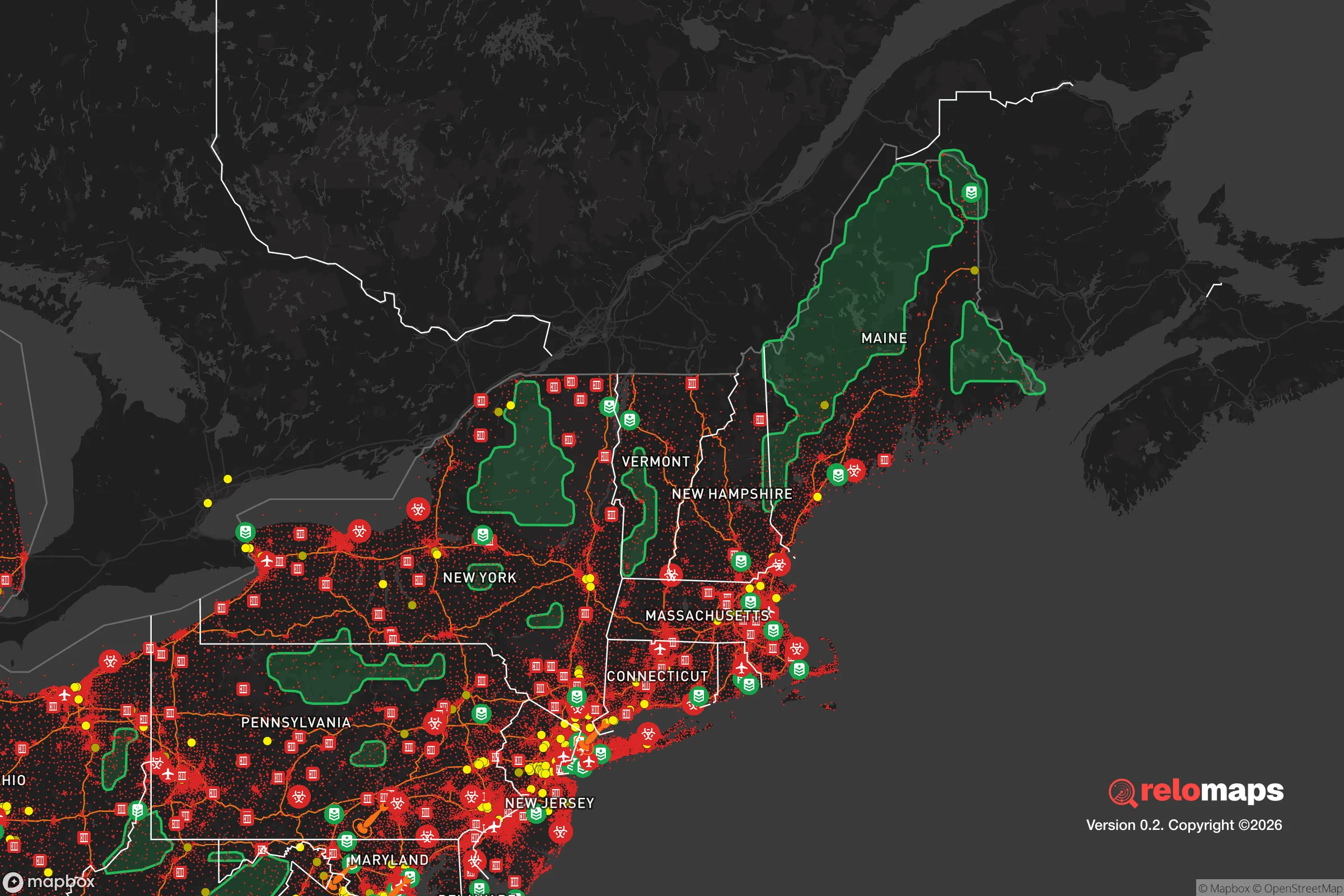


Important Note: For informational purposes only. This does not mean nothing bad ever happens in the green zones. Please use common sense. This is based on public data and modeled with AI. We tried to take a conservative approach but mistakes happen. We update this regularly as new information becomes available.
Solar Generator Recommendations
Backup power matters more here than in safer locations. We've picked three solar generators across budgets and capacity tiers — start with the budget unit if you only need a few essentials, or step up if you want to run a fridge and HVAC for days at a time.

Jackery Portable Power Station Explorer 300
Budget OptionPower on the Go: Weighing only 11 lbs, it's convenient to set up and store with book-sized foldable solar panels

BLUETTI Portable Power Station AC180
Designed for both indoor and outdoor scenarios, AC180 is highly capable as it has a robost capacity and continuous output power.

EF ECOFLOW DELTA Pro Ultra Power Station
Upgraded PickEcoFlow DELTA Pro Ultra is a whole-home energy system designed to grow with your family. Integrated with the Smart Home Panel 2, it scales to meet your evolving energy needs — keeping your home powered, intelligent, and secure through every stage of life.
We earn a commission, at no additional cost to you.
Strategic Assessment Analysis
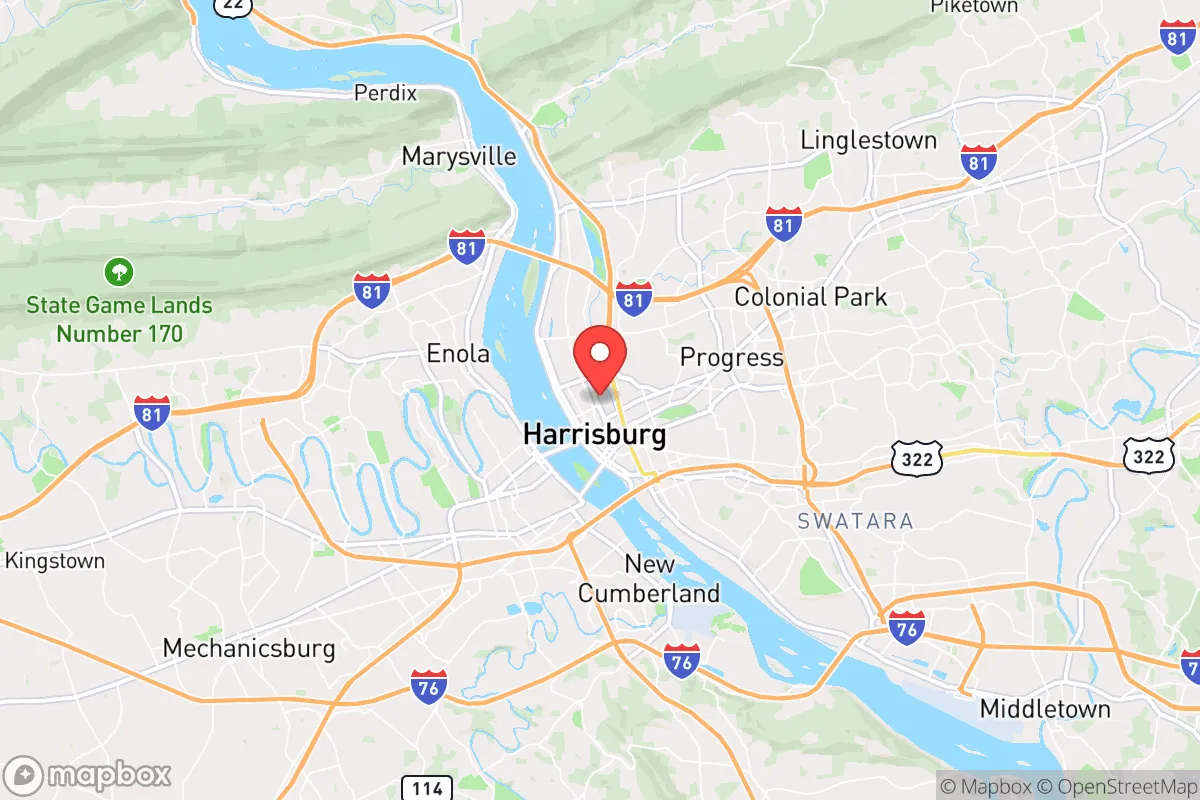
Harrisburg, Pennsylvania, sits in a precarious but potentially advantageous position for those serious about long-term resilience. As the state capital, it offers a mix of institutional stability and geographic chokepoint control, but its proximity to major eastern seaboard targets—Philadelphia, Baltimore, and Washington D.C.—means it’s within the blast radius of any major conflict or cascading infrastructure failure. For a relocator thinking in terms of decades, not just the next election cycle, Harrisburg’s value lies in its ability to serve as a staging ground: close enough to monitor and access urban resources, but far enough to avoid the immediate fallout of a major event. The key is understanding that this is not a remote bug-out location; it’s a strategic hub that requires careful planning to leverage its strengths without being trapped by its vulnerabilities.
Geographic position and natural advantages for long-term survival
Harrisburg’s location along the Susquehanna River is its single greatest natural asset. The river provides a reliable, year-round freshwater source that can support small-scale agriculture, livestock, and household needs without relying on municipal treatment plants that fail during grid-down scenarios. The surrounding topography—the Appalachian Mountains to the north and west, and the rolling hills of the Cumberland Valley to the south—offers natural defensibility. The city itself sits in a valley, but the ridges to the west (Blue Mountain, Kittatinny Ridge) create a natural barrier that slows movement from the more populated eastern corridor. For a prepper, this means you can establish a perimeter watch from elevated positions, and the river acts as both a supply route and a natural moat. The region’s moderate climate also reduces the risk of extreme weather events that plague the Gulf Coast or the Plains; you’re not dealing with hurricanes or tornadoes as a primary threat, though winter storms can be disruptive. The soil in the surrounding counties (Dauphin, Perry, Cumberland) is fertile enough for subsistence farming, and the area historically supported a robust agricultural economy before suburban sprawl. If you’re looking for a place where you can dig in and produce your own food, the Harrisburg basin is viable, provided you secure land outside the immediate urban core.
Risks, exposures, and proximity to fallout-relevant landmarks
The biggest red flag for Harrisburg is its proximity to Three Mile Island (TMI), the site of the 1979 partial meltdown. While the plant is permanently shut down and decommissioning is underway, the spent fuel remains stored on-site in dry casks. In a major disaster—whether natural or man-made—a breach of those casks could render large portions of the Susquehanna Valley uninhabitable for generations. The plant is roughly 10 miles south of downtown Harrisburg, and prevailing winds would carry fallout directly over the city and into the northern suburbs. This is not a theoretical risk; it’s a known liability that any serious relocation plan must account for. Additionally, Harrisburg is within 100 miles of the nation’s capital and the Philadelphia metro area, both high-priority targets for any adversary. A nuclear exchange or a coordinated EMP attack would likely take out the grid and communications infrastructure across the entire Mid-Atlantic, and Harrisburg would be in the secondary blast zone. The city’s role as the state capital also makes it a symbolic target for civil unrest or domestic terrorism. During the 2020 protests, the Pennsylvania State Capitol complex was heavily fortified, and any future breakdown in social order would likely see similar concentrations of law enforcement and military presence—which can be both a protection and a magnet for violence. For a relocator, the calculus is simple: you want to be close enough to monitor the situation, but far enough that you’re not caught in the initial wave of chaos.
Practical resilience for a relocator: food, water, energy, and defensibility
For day-to-day resilience, Harrisburg offers a mixed bag. The municipal water supply comes from the Susquehanna, which is treated at the city’s filtration plant. In a grid-down scenario, that plant will stop operating within hours, so you need your own filtration and storage. The good news is that groundwater is accessible in the surrounding rural areas; wells are common in Dauphin and Perry counties, and a hand pump can keep you operational without electricity. Food security is more challenging. The city itself is a food desert in many neighborhoods, with limited grocery options and heavy reliance on trucked-in supplies. However, the surrounding farmland is productive, and there are established farmers’ markets and CSAs that can be tapped for seed stock and local knowledge. For energy, the grid is aging and vulnerable to both weather and cyber attacks. Solar is viable, but the region’s cloud cover (especially in winter) means you’ll need battery storage and a backup generator. Natural gas is available in the city, but pipelines are a single point of failure. Wood heating is a strong option given the forested hills, but you’ll need a chainsaw and a supply chain for dry wood. Defensibility is where Harrisburg falls short for a solo relocator. The city’s layout—dense row homes, narrow streets, and limited sightlines—makes it difficult to secure a single property against a determined group. The suburbs (Camp Hill, Mechanicsburg, Hershey) offer better standoff distance and more space for gardens and storage, but they also concentrate population. The ideal setup is a rural property within 30 minutes of the city, on a dead-end road with a view of the approach. That gives you access to Harrisburg’s medical and logistical resources while keeping your family out of the immediate danger zone.
Overall, Harrisburg is a high-risk, high-reward location for a conservative-minded relocator who is serious about preparedness. It is not a place to ride out a major war or a complete societal collapse—the proximity to TMI, the capital, and the eastern seaboard makes that a losing bet. But for a scenario where you need to maintain access to infrastructure, medical care, and information while being able to retreat to a defensible position, it works. The key is to treat Harrisburg as a forward operating base, not a final destination. Secure a rural property in the surrounding counties, stockpile supplies for at least six months, and have a plan to move further west (into the Alleghenies or beyond) if the situation deteriorates. If you’re looking for a place to build a life that can weather the next decade of instability, Harrisburg offers the resources of a capital city without the immediate annihilation risk of D.C. or New York. Just don’t get comfortable—the river may be a lifeline, but it also flows right past a nuclear graveyard.

* Values derived from national, state, county, city and local statistics and may differ in a specific area. Last updated: 2026-05-02T00:54:50.000Z
Narrative content on this page is AI-generated and may contain mistakes. Verify any details that matter before acting on them.
ReloMaps may earn a commission from affiliate links at no extra cost to you.

