
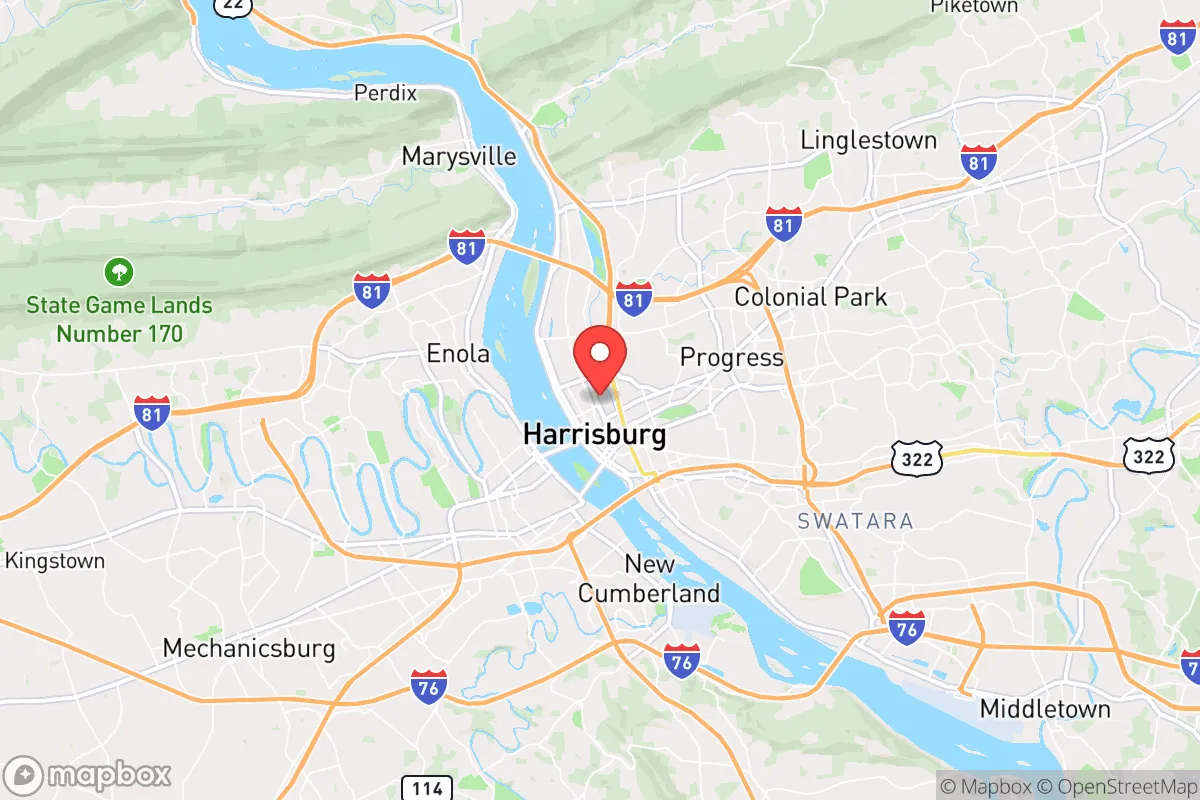
Photo: Wikipedia
Quality of Life in Harrisburg, PA
A high quality of life with strong walkability, manageable living costs, healthy neighborhood signals, and solid amenity access.
What does Quality of Life tell us?
Quality of Life blends cost of living, nearby amenities, socioeconomic signals, and neighborhood character. City-level scores represent the whole municipality; individual neighborhoods can differ.
What does this tell us?
Quality of Life blends cost of living, nearby amenities, socioeconomic signals, and neighborhood character. City-level scores represent the whole municipality; individual neighborhoods can differ.
Cost of Living
31% below national average
The Real Cost of Living in Harrisburg, PA for 2026
| Tier | Individual | Family (4) |
|---|---|---|
| Survival | $16k | $30k |
| Comfortable | $26k | $38k |
| Luxury | $86k+ | $133k+ |
| Elite (Top 5%) | $101k+ | $156k+ |
127%
The Area Signal
A metric tracking the socioeconomic signals of the area.
Hobbies
Explore the areaGroceries
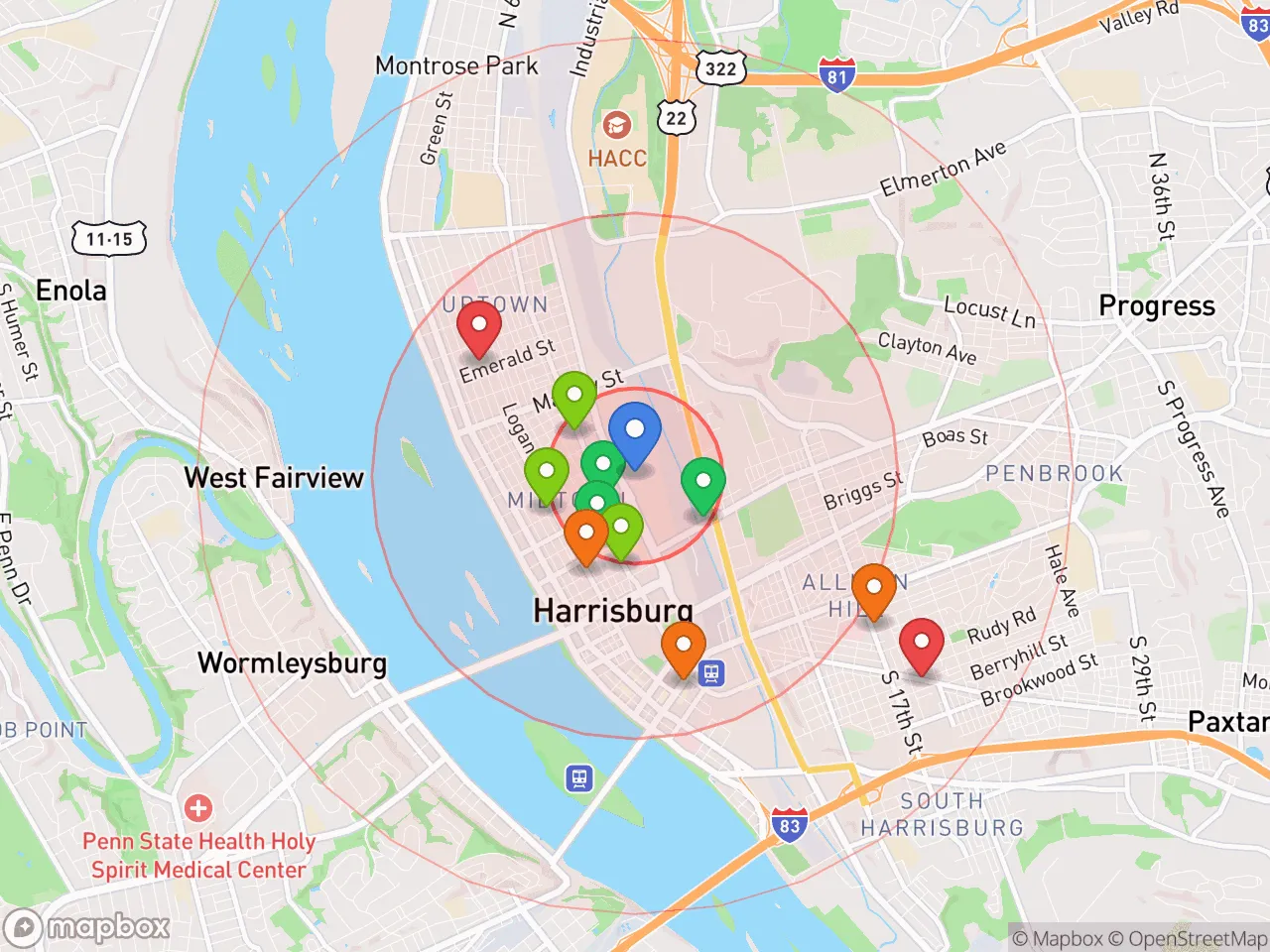
5 within 10 miles
Gas
20 within 10 miles
Hospital
11 within 20 miles
Airport
BWI — Baltimore/Washington International Thurgood Marshall
Post Office
USPS — Harrisburg, PA
Critical Amenities
Quality-of-Life Analysis
Harrisburg, Pennsylvania, offers a cost of living that is dramatically lower than the national average, making it one of the most affordable state capitals in the Northeast. With a cost of living index of 69 (where 100 equals the U.S. average), the city attracts a mix of government employees, healthcare workers, and young professionals seeking economic breathing room. The population skews younger and more diverse than the surrounding suburbs, with a median age of 34 and a significant proportion of renters, reflecting a city in transition where affordability meets urban convenience.
Cost of living, housing affordability, and how Harrisburg compares to nearby areas
Harrisburg’s housing market is a standout outlier in the Mid-Atlantic region. The median home value sits at just $121,000, compared to the Pennsylvania state median of roughly $200,000 and the national median of over $400,000. Median rent is $996, well below the national average of $1,200, making the city accessible for first-time buyers and renters priced out of nearby markets like Lancaster (median rent $1,300) or Philadelphia ($1,600). The average commute is a brisk 20.6 minutes, significantly shorter than the national average of 26 minutes, which reduces transportation costs and frees up time for daily life. While property taxes in Dauphin County are moderate (around 2.5% of assessed value), the low purchase price keeps total housing costs manageable. However, buyers should note that many homes in the city are older—built before 1950—and may require renovation, though this also keeps entry prices low compared to newer suburban developments in Mechanicsburg or Camp Hill.
What daily life is like for families: amenities, schools, and local rhythm
Daily life in Harrisburg revolves around a compact, walkable downtown core anchored by the State Capitol complex, the Whitaker Center for Science and the Arts, and the Susquehanna River waterfront. The city’s public school system, Harrisburg School District, serves roughly 5,500 students but has faced chronic underfunding and low proficiency rates—only about 30% of students meet state reading standards—prompting many families to explore charter schools or nearby districts like Central Dauphin (rated above average) or Susquehanna Township. For recreation, residents rely on Wildwood Park (100 acres of trails and wetlands) and City Island (home to minor-league baseball and riverfront festivals). The restaurant scene is modest but growing, with a concentration of farm-to-table options and ethnic eateries along Second Street. The city’s rhythm is slower than Philadelphia but busier than rural Pennsylvania, with a strong sense of community events like the annual Kipona Festival and the Broad Street Market (one of the oldest continuously operating markets in the U.S.).
Who thrives in Harrisburg? The city is best suited for budget-conscious professionals, government workers, and creatives who value low overhead and urban proximity over suburban school rankings. Retirees on fixed incomes also find the low housing costs and walkable downtown appealing, while families with school-age children may prefer the surrounding suburbs for better-rated public schools. For anyone seeking an affordable entry point into the Northeast corridor—with easy Amtrak access to Philadelphia and New York—Harrisburg offers a pragmatic, no-frills quality of life that prioritizes financial stability over prestige.

Crime in Harrisburg, PA
Significantly higher crime rates than 75% of comparable U.S. locations.
Violent CrimeViolent Crime Analysis
Property CrimeProperty Crime Analysis
Crime Analysis
Harrisburg, Pennsylvania, reports a violent crime rate of 630.1 incidents per 100,000 residents and a property crime rate of 1,815.4 per 100,000, figures that place the capital city well above both state and national averages. While these numbers reflect a challenging safety environment, the lived experience varies significantly by neighborhood, with some areas experiencing far higher concentrations of crime than others. The city’s status as a small-to-mid-sized urban center within a large metro region means its crime dynamics are influenced by broader regional factors, including the policies of local prosecutors and judges.
Crime in context
Harrisburg’s violent crime rate of 630.1 per 100,000 is nearly double the national average of roughly 380 per 100,000 and significantly exceeds the Pennsylvania state average of approximately 300 per 100,000. Property crime in the city, at 1,815.4 per 100,000, also outpaces both the national rate (around 1,950) and the state rate (roughly 1,500), though the gap is narrower. These statistics place Harrisburg among the higher-crime municipalities in Pennsylvania, comparable to other mid-sized cities like Reading and York. The city’s location within the larger Harrisburg-Carlisle metropolitan area means that crime patterns are not isolated; regional socioeconomic pressures and justice system policies directly shape local safety outcomes.
What residents experience
Residents and visitors in Harrisburg face a tangible risk of encountering violent crime, particularly in the form of aggravated assault and robbery, which together account for the majority of violent incidents. Property crimes such as theft, burglary, and motor vehicle theft are more widespread, affecting both residential and commercial areas. The presence of progressive district attorneys and judges in the region is a significant concern for public safety. These officials often prioritize diversion programs, reduced sentencing, and alternatives to incarceration, which, while sympathetic to offenders, can result in more criminals remaining on the street. This approach directly undermines justice for victims and the general public by reducing the deterrent effect of prosecution and increasing the likelihood of repeat offenses. For daily life, this means heightened vigilance is necessary, especially after dark and in less-trafficked areas.
Neighborhood-level variation is pronounced in Harrisburg. Areas like Shipoke and parts of Midtown generally report lower crime rates, benefiting from community engagement and higher property values. In contrast, neighborhoods such as Allison Hill, Uptown, and sections of South Harrisburg experience significantly higher concentrations of both violent and property crime, often correlating with poverty, vacant housing, and limited economic opportunity. Prospective residents should research specific blocks and consult local crime maps, as safety can change dramatically within a few streets. The city’s overall crime picture, combined with the regional justice system’s progressive leanings, warrants a cautious assessment for anyone considering relocation.
* Values derived from national, state, county, city and local statistics and may differ in a specific area. Last updated: 2026-05-02T00:54:50.000Z
Narrative content on this page is AI-generated and may contain mistakes. Verify any details that matter before acting on them.
ReloMaps may earn a commission from affiliate links at no extra cost to you.

