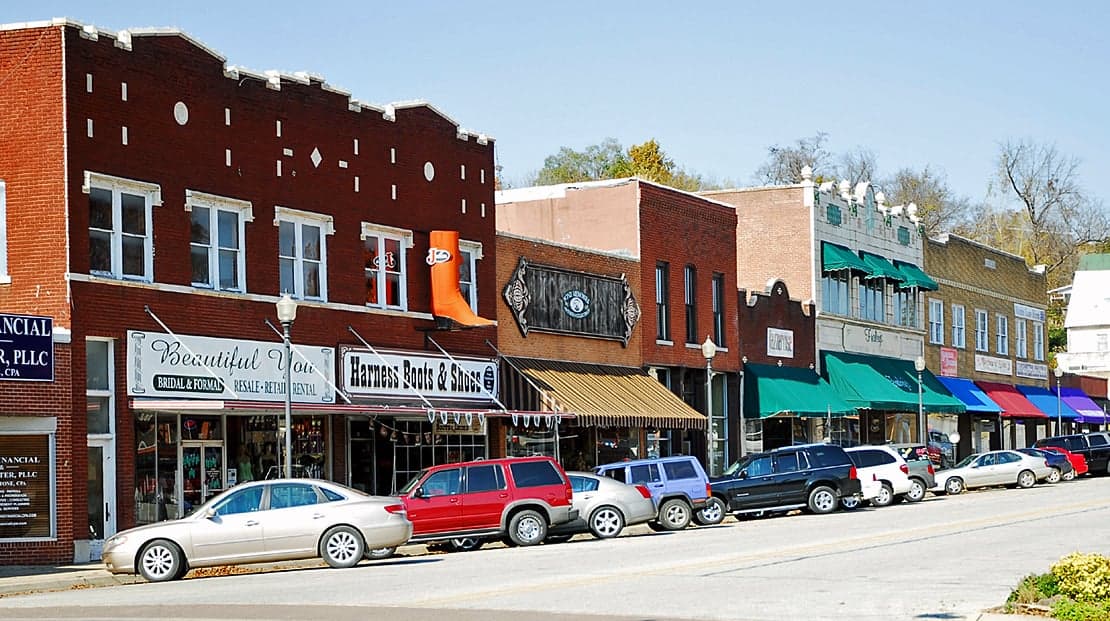
Photo: Wikipedia
Personal Sovereignty in Harrison, AR
Viable for self-reliance. Generally workable, though some barriers may limit total independence.
What does Personal Sovereignty tell us?
Personal Sovereignty measures your capacity for self-reliance and independence with minimal government friction. Higher scores mean fewer barriers between you and the way you want to live... but it assumes you have the space you need and good neighbors.
What does this tell us?
Personal Sovereignty measures your capacity for self-reliance and independence with minimal government friction. Higher scores mean fewer barriers between you and the way you want to live... but it assumes you have the space you need and good neighbors.
State Policy
Energy independence: Importer (35% of energy produced in-state)
Personal Liberty
Homesteading

Personal Liberty Analysis
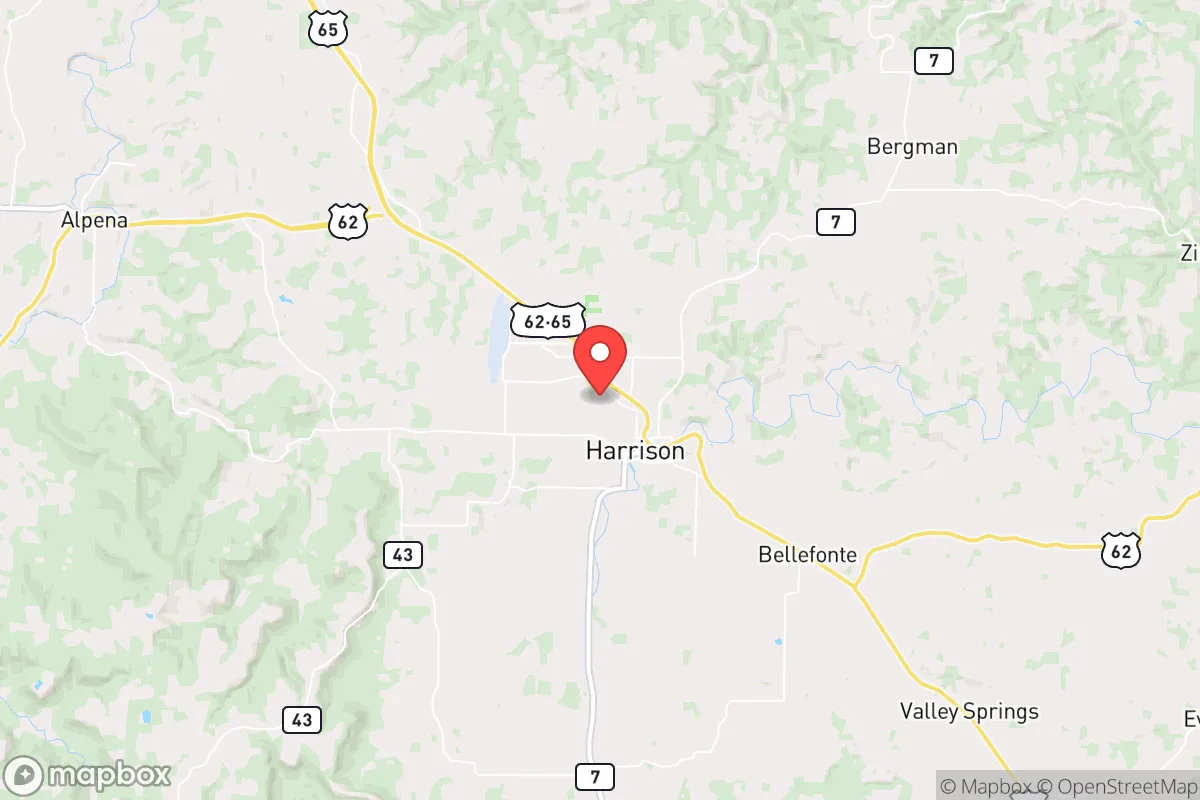
Harrison, Arkansas offers a level of personal sovereignty that is increasingly rare in the United States, functioning as a practical stronghold for those who prioritize autonomy over government accommodation. Nestled in the Ozark Mountains of Boone County, this town of roughly 13,000 people operates within a state that has deliberately structured its laws to minimize interference in daily life, from property use to self-defense. For the survivalist or prepper, Harrison represents a place where the default assumption is that you are capable of managing your own affairs, and the legal framework largely supports that assumption rather than working against it. The area’s political culture is deeply rooted in a distrust of centralized authority, making it a viable destination for those seeking to reduce their exposure to state and federal overreach.
Tax burden and regulatory posture: How Arkansas law limits government reach
Arkansas maintains one of the lowest tax burdens in the nation, which directly translates to less government extraction from your income and property. The state income tax is a flat 4.4% as of 2026, with a top marginal rate that has been steadily declining from previous years, signaling a legislative commitment to reducing fiscal pressure on residents. Property taxes in Boone County are notably low, with effective rates typically hovering around 0.5% to 0.7% of assessed value, meaning a $200,000 home might incur an annual tax bill of only $1,000 to $1,400. Sales tax in Harrison is 9.5% (state plus local), which is moderate but offset by the absence of many of the nuisance fees and regulatory permits common in coastal states. The regulatory environment is equally permissive: Arkansas has no state-level building code enforcement in unincorporated areas, no annual vehicle safety inspections, and minimal restrictions on land use outside city limits. For the prepper, this means you can construct a root cellar, install a rainwater catchment system, or build a detached workshop without navigating a bureaucratic maze. The state’s right-to-work laws and absence of occupational licensing for many trades further reduce the government’s ability to control how you earn a living or improve your property.
Self-defense and gun law specifics: What the Second Amendment looks like in practice
Harrison sits in a state that treats the right to keep and bear arms as a fundamental, nearly unrestricted liberty. Arkansas is a constitutional carry state, meaning any law-abiding adult 18 or older can carry a concealed firearm without a permit, background check, or training requirement. This is not a privilege granted by the state but a recognition of an inherent right. There is no state-level registry for firearms, no waiting periods for purchase, and no restrictions on magazine capacity or firearm types, including suppressors and short-barreled rifles, provided federal NFA requirements are met. Boone County’s sheriff’s office is known for a pro-Second Amendment stance, and local law enforcement generally does not engage in proactive enforcement of federal firearms regulations that conflict with state law. For the survivalist, this means you can maintain a comprehensive armory without fear of state-level confiscation or registration schemes. Stand-your-ground laws are fully in effect, with no duty to retreat in any place you are lawfully present, which is critical for those who may need to defend a rural homestead. The legal climate strongly favors the defender in self-defense incidents, with civil immunity for justified use of force. This is a jurisdiction where the government’s role in personal defense is minimal, and the individual’s right to protect themselves is paramount.
Self-reliance and homesteading viability: Lot sizes, zoning, and off-grid feasibility
The practical ability to live independently in Harrison is exceptional, driven by permissive zoning and affordable land. Within the city limits, lot sizes can be as small as 5,000 to 7,000 square feet, but the real opportunity lies in the surrounding unincorporated areas of Boone County, where no county-wide zoning exists. Here, you can purchase parcels ranging from 1 to 40 acres for $2,000 to $5,000 per acre, with many properties offering direct access to water, timber, and wildlife. Off-grid living is entirely feasible: there are no state laws prohibiting solar panels, rainwater collection, composting toilets, or alternative waste treatment systems, though you must comply with basic health department standards for septic if you connect to groundwater. The county does not enforce building codes, so you can construct a cabin, earthship, or shipping container home without permits, provided you meet minimal setback requirements from property lines and roads. Livestock ordinances are relaxed; chickens, goats, and even cattle are common on small acreages, and there are no restrictions on beekeeping or gardening. The Ozark terrain provides natural water sources, with many properties having springs or creeks, and the growing season of roughly 180 days allows for substantial food production. For the prepper focused on long-term resilience, Harrison offers a rare combination of affordable land, minimal regulatory interference, and a climate that supports subsistence agriculture without the extreme weather of the northern plains or the desert southwest.
Personal liberties: Parental rights, medical autonomy, speech, and property
Arkansas has positioned itself as a leader in protecting parental rights, with state law explicitly affirming that parents have the fundamental right to direct the upbringing, education, and healthcare of their children. This includes the Arkansas Parental Rights Amendment, which prevents government agencies from overriding parental decisions without a compelling state interest and due process. Medical autonomy is similarly robust: the state has enacted laws prohibiting vaccine mandates by private employers and government entities, and it maintains strong conscience protections for individuals who refuse medical treatments based on personal or religious beliefs. During the COVID-19 era, Arkansas was one of the few states that actively pushed back against federal mandates, and that legislative posture remains in place. Freedom of speech is protected by both the state constitution and a legal culture that is skeptical of censorship; there are no state-level hate speech laws that could be used to suppress political or religious expression. Property rights are secured by the Arkansas Private Property Protection Act, which limits eminent domain to traditional public uses and requires just compensation that includes lost business value. For the survivalist, this means you can speak freely about political topics, refuse medical interventions without legal penalty, and control your property without fear of government seizure for economic development projects. The legal environment is designed to keep the state out of your personal decisions, which is a stark contrast to jurisdictions where parental authority is routinely challenged by child protective services or school boards.
In the broader context of American personal sovereignty, Harrison, Arkansas stands out as a location where the legal and cultural infrastructure actively supports individual autonomy rather than eroding it. Compared to states like California, New York, or Illinois, where regulatory burdens, tax rates, and restrictions on self-defense and property use are severe, Harrison offers a near-complete inversion of the government-individual relationship. The trade-offs are real: limited access to specialized medical care, fewer employment opportunities in high-tech sectors, and a slower pace of life that some may find isolating. But for those who view government overreach as the primary threat to their freedom and security, Harrison provides a legal environment where you can arm yourself, build your own home, raise your own food, and make medical decisions for your family without asking for permission. It is not a utopia, but it is one of the few places in the lower 48 where the default assumption is that you are sovereign over your own life, and the state exists to protect that sovereignty rather than to manage it.

* Values derived from national, state, county, city and local statistics and may differ in a specific area. Last updated: 2026-04-30T01:37:21.000Z
Narrative content on this page is AI-generated and may contain mistakes. Verify any details that matter before acting on them.
ReloMaps may earn a commission from affiliate links at no extra cost to you.

