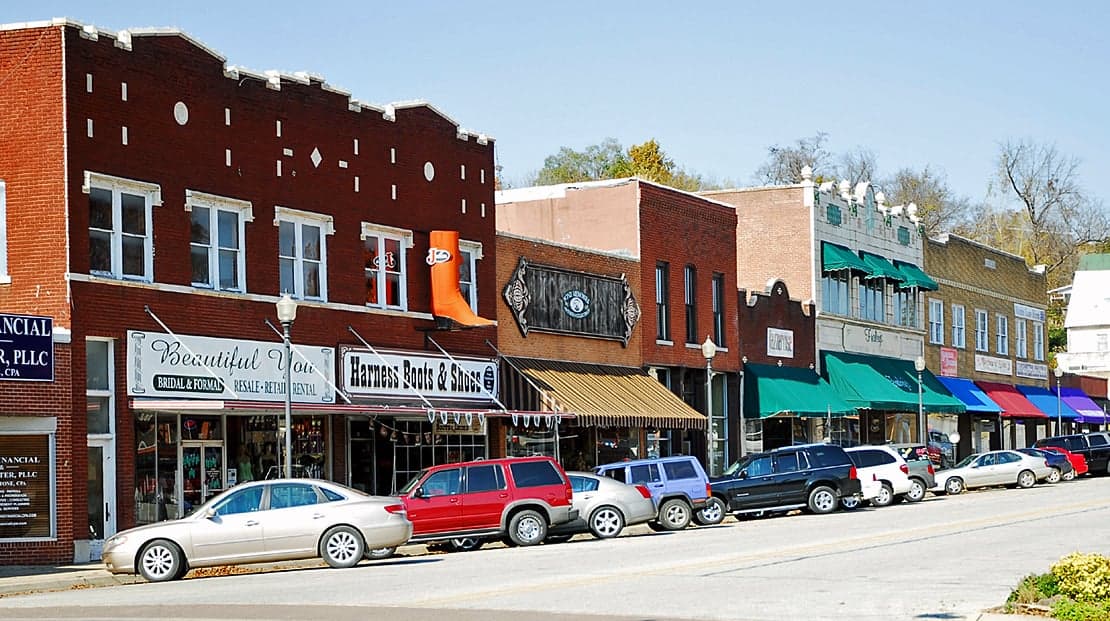
Photo: Wikipedia
Political ClimatePolitical Climate in Harrison, AR
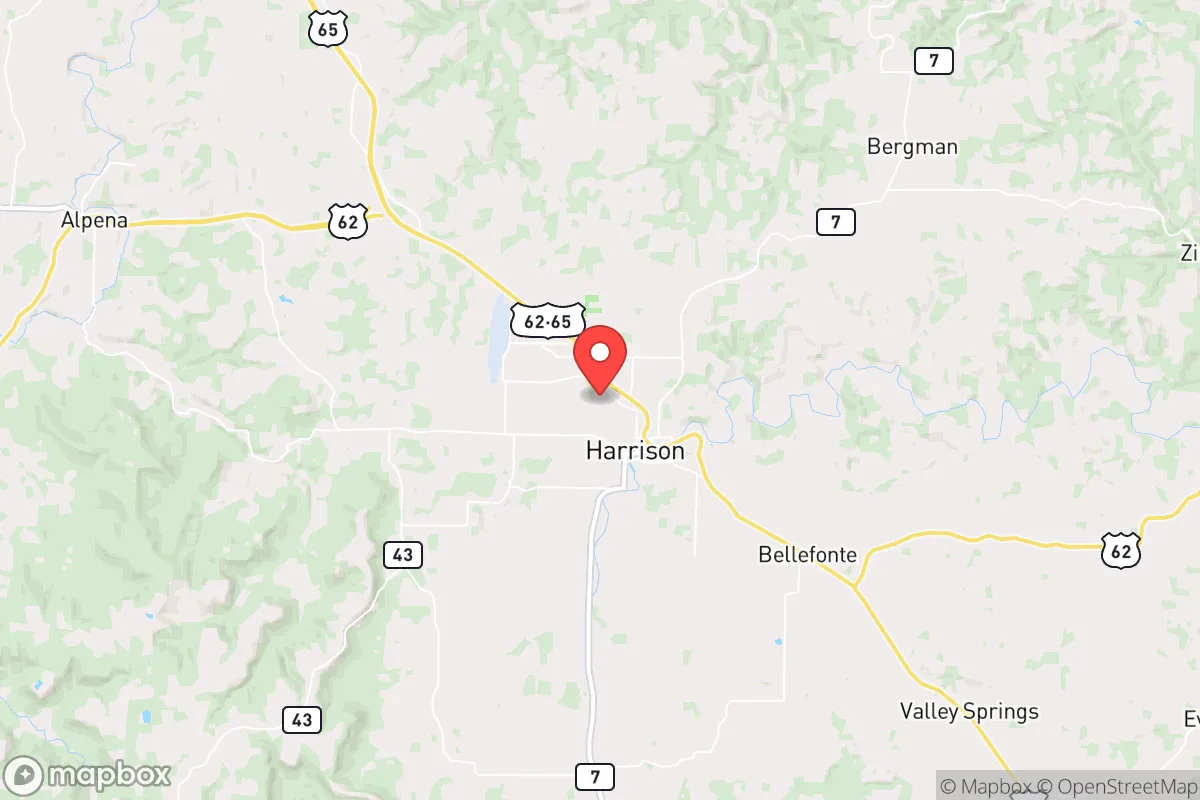
District shown is the primary district for this city’s centroid. Cities may span multiple districts.
Local Political AnalysisPolitical Analysis of Harrison, AR
Harrison, Arkansas, sits in the heart of Boone County, and politically, it’s about as solidly conservative as you’ll find in the Ozarks. The Cook PVI of R+23 tells you the story at a glance—this area leans heavily Republican, and that’s been the case for as long as most folks can remember. If you look back to the 2020 and 2024 elections, Boone County consistently voted over 75% for the GOP candidate, and that trend isn’t showing any signs of weakening. The local culture here is deeply rooted in self-reliance, limited government, and a healthy skepticism of federal overreach. You won’t see the kind of political hand-wringing you get in bigger cities; people here tend to vote their conscience and their values, and they’re not shy about it.
How it compares
Drive an hour south to Fayetteville or Springdale, and you’ll feel like you’ve entered a different world. Those areas have shifted noticeably leftward in recent years, with Washington County trending more purple and even flirting with blue in some local races. Harrison, by contrast, has held the line. The surrounding towns—like Jasper in Newton County or Yellville in Marion County—are also conservative, but Harrison is the anchor. It’s the county seat, the economic hub, and the place where you’ll find the most organized conservative presence. The difference is stark: in Harrison, you can still have a conversation about property rights or school choice without someone accusing you of being a radical. That’s getting harder to do in the more urbanized parts of the state.
What this means for residents
For someone moving here, the political climate translates directly into daily life. You won’t see the kind of government overreach that’s become common in blue states—no heavy-handed mandates on businesses, no aggressive zoning that tells you what you can do with your own land, and no school boards pushing progressive curricula that undermine parental authority. The local government here is generally hands-off, and that’s by design. People expect their elected officials to stay out of their personal lives and their pocketbooks. The biggest concern among long-time residents is that the same national trends—like the push for diversity, equity, and inclusion initiatives in schools or local government—could creep in if the area grows too fast. So far, the community has been vigilant, and that’s kept things stable.
Looking ahead, the near-term outlook is steady, but the long-term picture is worth watching. Harrison is growing, and with growth comes change. If the area attracts more retirees or remote workers from blue states, there’s always a risk that the political culture could shift. But for now, the conservative majority is strong, and the local institutions—churches, civic groups, and the county party—are active and engaged. The key is staying involved. If you value personal freedom, limited government, and a community that respects traditional values, Harrison is still one of the safest bets in Arkansas. Just keep an eye on the school board meetings and the county commission; that’s where the real battles happen, and so far, the good guys are holding the line.

State Political ClimatePolitical Climate in Arkansas
State Political AnalysisPolitical Environment in the State
Arkansas has long been a reliably red state, but its political climate is more nuanced than a simple partisan label suggests. The state leans solidly Republican at the state and federal level, with every statewide elected office held by the GOP and a 2024 presidential margin of roughly +30 points for Donald Trump. However, the past 15 years have seen a dramatic shift: as recently as 2010, Democrats still controlled the governorship and both chambers of the legislature, but a combination of national realignment and local cultural shifts has transformed Arkansas into one of the most conservative states in the country. The dominant coalition today is a mix of rural traditionalists, suburban fiscal conservatives, and a growing number of transplants from blue states seeking lower taxes and fewer regulations.
Urban vs. rural divide
The political map of Arkansas is starkly divided between its few urban centers and the vast rural expanse. The state’s largest metro, Little Rock (Pulaski County), is a Democratic stronghold, consistently voting blue by double digits in presidential elections. This is driven by a concentration of government workers, university faculty, and a significant African American population. In contrast, the fast-growing northwest Arkansas corridor—including Fayetteville, Springdale, Rogers, and Bentonville—is a fascinating mix. While Benton and Washington counties have trended red overall, the city of Fayetteville itself (home to the University of Arkansas) is a liberal island, voting for Biden in 2020 and Harris in 2024. The surrounding rural counties—like Madison, Newton, and Searcy—are among the most conservative in the nation, often voting 80%+ Republican. The Arkansas River Valley, including Fort Smith and Russellville, leans red but with a populist, working-class flavor. The Delta region in the east, including Pine Bluff and West Memphis, remains heavily Democratic due to its large Black population, but these areas have seen population decline and shrinking political influence. The key takeaway: if you move to a rural county or a northwest Arkansas suburb, you’ll find a deeply conservative environment; if you settle in Little Rock or Fayetteville proper, you’ll encounter a more progressive, college-town vibe.
Policy environment
Arkansas’s policy environment is a textbook example of a low-tax, low-regulation state. There is no state property tax on vehicles or business inventory, and the state income tax has been aggressively cut from a top rate of 7% in 2015 to a flat 4.4% as of 2025, with further reductions scheduled. Sales tax is around 6.5% state-level, but local add-ons can push it to 10%+ in some cities. The regulatory posture is business-friendly, with a right-to-work law and minimal zoning restrictions in most rural areas. On education, the state passed the LEARNS Act in 2023, a sweeping school choice law that created universal Education Freedom Accounts (vouchers) for any student, expanded charter schools, and banned “critical race theory” and “social emotional learning” in classrooms. This was a major win for parental rights advocates. Healthcare is a mixed bag: Arkansas expanded Medicaid under the “private option” model, but the state has also passed some of the strictest abortion laws in the nation, including a near-total ban with no exceptions for rape or incest. Election laws have tightened: voter ID is required, absentee ballot drop boxes are banned, and early voting windows have been reduced. The state also passed a 2021 law making it a crime to “interfere with” election observers, a response to 2020 concerns. For a conservative moving in, the policy environment is largely aligned with traditional values, though the Medicaid expansion remains a point of contention among fiscal hawks.
Trajectory & freedom
On the whole, Arkansas is moving in a direction of expanded personal freedom, particularly in the areas of gun rights, parental rights, and economic liberty. In 2021, the state passed constitutional carry (permitless concealed carry), and in 2023 it added “stand your ground” protections. The LEARNS Act, mentioned above, is arguably the most significant expansion of educational freedom in the country. On medical autonomy, Arkansas voters passed Issue 2 in 2022, which raised the threshold for ballot initiatives to 60%—effectively blocking future marijuana legalization or Medicaid expansion efforts. This was seen as a win for limited-government conservatives who want to slow the growth of government programs. However, there are concerning trends. The state has seen a rise in government overreach in the name of “public health” during COVID, including a brief mask mandate in schools that was later overturned. More recently, the state has cracked down on “obscene” library materials and drag shows, which some see as necessary cultural protection and others as government overreach into free expression. Property rights are generally strong, with no statewide zoning and low property taxes, but the state has also used eminent domain aggressively for industrial projects, like the proposed steel mill in Osceola. Overall, Arkansas is becoming more free in the traditional conservative sense—lower taxes, more school choice, and stronger gun rights—but with a growing willingness to use state power to enforce cultural norms.
Civil unrest & political movements
Arkansas has not seen the level of civil unrest seen in larger states, but there have been notable flashpoints. In 2020, protests in Little Rock over George Floyd’s death turned violent, with looting and fires in the downtown area, leading to a heavy National Guard presence. This event galvanized conservative voters and contributed to the passage of a 2021 law increasing penalties for rioting and blocking highways. On the right, the Arkansas Patriot movement and local “constitutional sheriff” groups have been active, particularly in rural counties like Cleburne and Stone, where sheriffs have publicly stated they will not enforce certain state or federal gun laws. Immigration politics are less heated than in border states, but there is a growing concern over the influx of migrants into the state, particularly in the poultry processing plants of Springdale and Rogers. The state passed a 2023 law requiring all employers to use E-Verify, a move aimed at curbing illegal immigration. There is no sanctuary city policy anywhere in the state. Election integrity remains a hot topic: the 2020 election saw no major scandals in Arkansas, but the state’s GOP-led legislature has passed multiple laws to tighten voting procedures, including a ban on ballot harvesting and a requirement for signature verification on absentee ballots. A new resident would notice a palpable distrust of federal authority in rural areas, but little visible political violence or organized militancy.
Projection
Over the next 5-10 years, Arkansas is likely to become even more conservative, driven by two demographic trends. First, the continued growth of northwest Arkansas, which is attracting conservative-leaning transplants from California, Illinois, and Colorado who are fleeing high taxes and crime. These newcomers tend to be fiscally conservative and culturally moderate, which could create a tension with the more socially conservative rural base. Second, the rural areas are aging and shrinking, which means the political center of gravity is shifting toward the suburbs of Bentonville and Rogers. This could lead to a more “country club” Republicanism—pro-business, pro-growth, but less focused on culture war issues. However, the state’s Republican supermajority shows no signs of moderating. Expect further income tax cuts, possibly to a flat 3% or lower, and continued expansion of school choice. The biggest wildcard is the potential for a major industrial project, like the proposed lithium mining in southwest Arkansas, which could bring an influx of workers and change the political dynamics of that region. For a conservative moving in now, the state will likely be even more aligned with your values in a decade—lower taxes, more school options, and a culture that respects traditional values—but you may see more internal debate between libertarian-leaning growth advocates and social conservatives.
Bottom line for a new resident: If you’re a conservative looking for a state where your values are the norm, Arkansas is a solid bet. You’ll find low taxes, strong gun rights, school choice, and a government that generally stays out of your business—except when it comes to enforcing cultural standards you likely agree with. The urban-rural divide means you can choose your preferred level of political engagement, from the deep-red countryside to the more mixed suburbs. Just be prepared for the summer heat and the fact that everyone will ask you which church you attend.
* Values derived from national, state, county, city and local statistics and may differ in a specific area. Last updated: 2026-04-30T01:37:21.000Z
Narrative content on this page is AI-generated and may contain mistakes. Verify any details that matter before acting on them.
ReloMaps may earn a commission from affiliate links at no extra cost to you.

