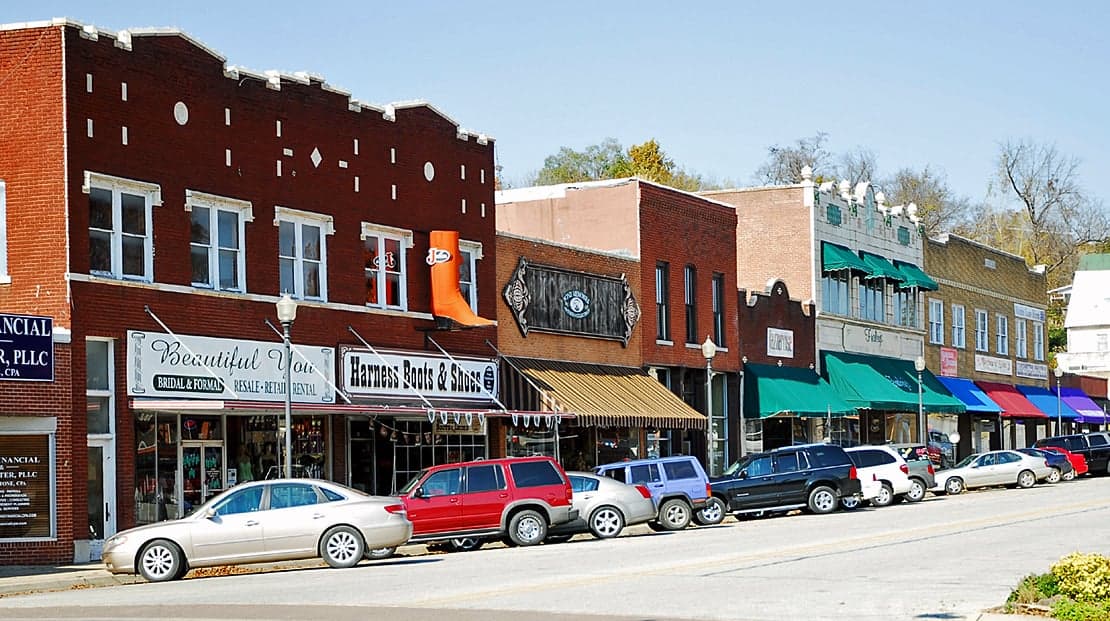
Photo: Wikipedia
Quality of Life in Harrison, AR
A high quality of life with strong walkability, manageable living costs, healthy neighborhood signals, and solid amenity access.
What does Quality of Life tell us?
Quality of Life blends cost of living, nearby amenities, socioeconomic signals, and neighborhood character. City-level scores represent the whole municipality; individual neighborhoods can differ.
What does this tell us?
Quality of Life blends cost of living, nearby amenities, socioeconomic signals, and neighborhood character. City-level scores represent the whole municipality; individual neighborhoods can differ.
Cost of Living
40% below national average
The Real Cost of Living in Harrison, AR for 2026
| Tier | Individual | Family (4) |
|---|---|---|
| Survival | $11k | $21k |
| Comfortable | $32k | $47k |
| Luxury | $73k+ | $114k+ |
| Elite (Top 5%) | $95k+ | $148k+ |
86%
The Area Signal
A metric tracking the socioeconomic signals of the area.
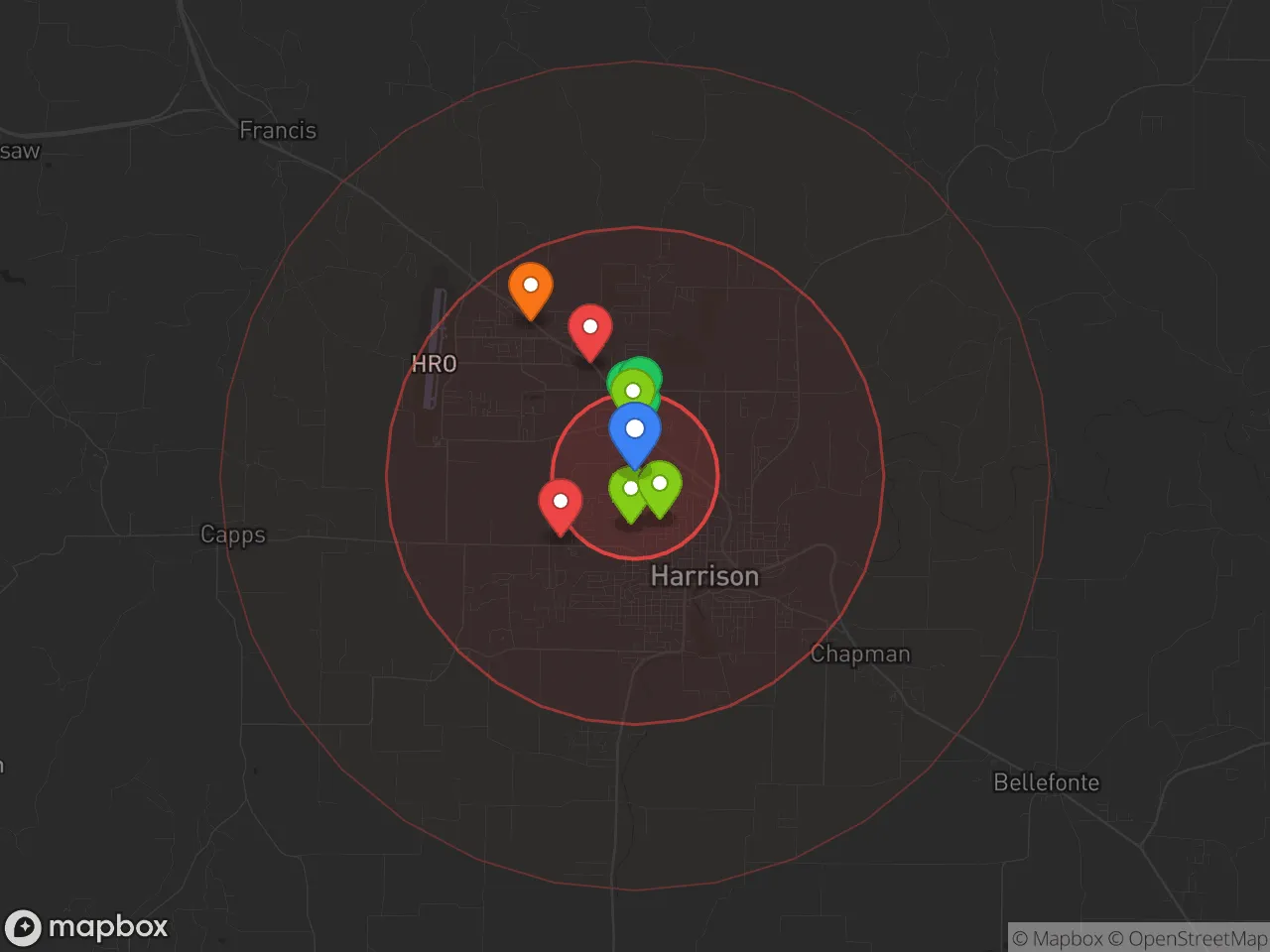
Hobbies
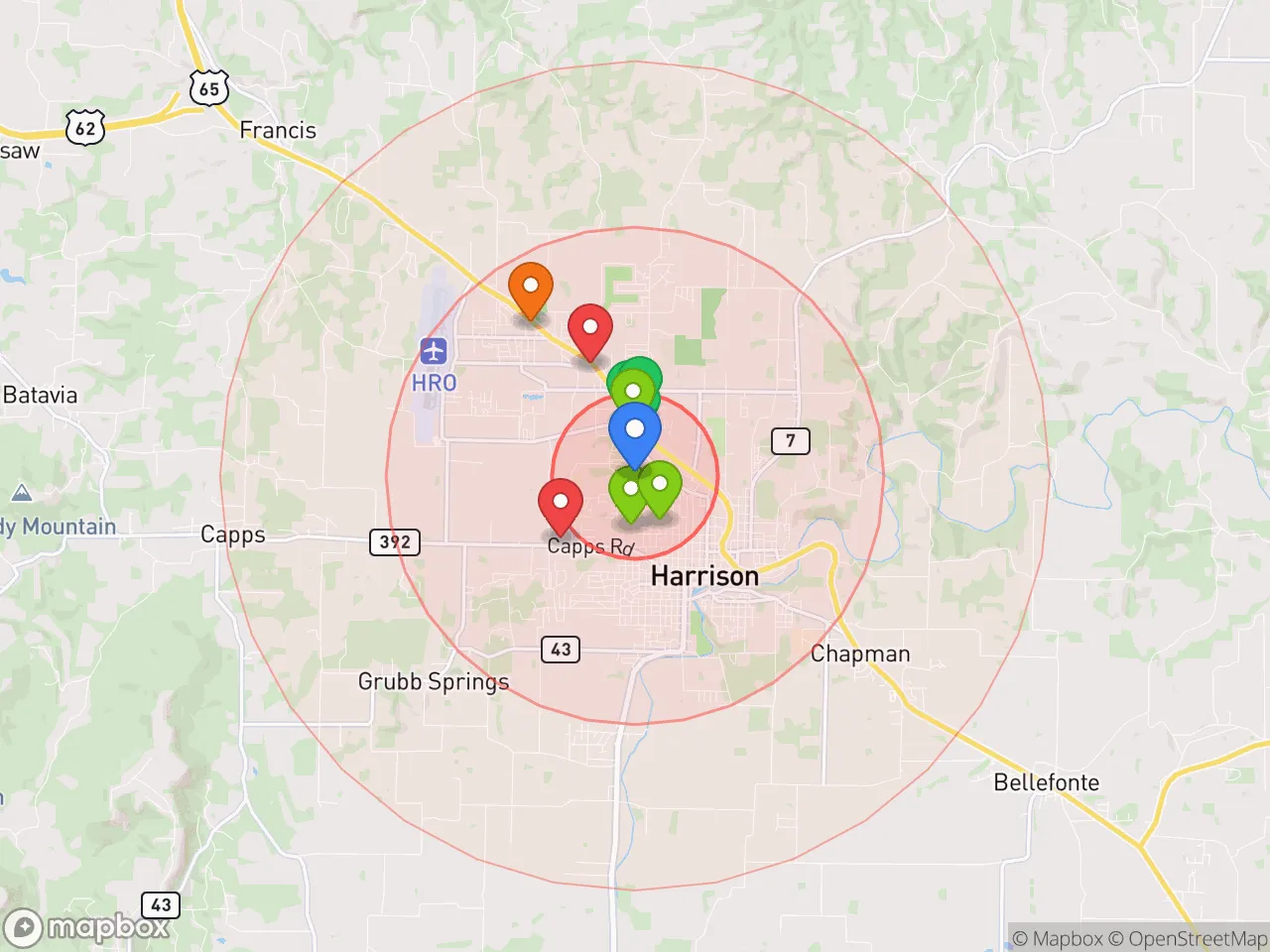
Explore the areaGroceries
2 within 10 miles
Gas
2 within 10 miles
Hospital
1 within 20 miles
Airport
MCI — Kansas City International
Post Office
USPS — Harrison, AR
Critical Amenities
Quality-of-Life Analysis
Harrison, Arkansas, offers a quality of life defined by low costs and a slower pace, attracting a mix of retirees, remote workers, and families seeking an affordable foothold in the Ozarks. With a cost of living index of 60—40% below the national average—the area draws people who prioritize financial breathing room over urban amenities. The population skews older and more conservative than the national median, with a strong presence of manufacturing and healthcare workers employed by local anchors like Baxter Regional Medical Center and Fasco.
How housing costs compare to nearby towns like Branson and Fayetteville
Harrison’s housing market is among the most affordable in the region, with a median home value of $165,000 and median rent of $703 per month. For context, Branson, Missouri—just 40 miles north—has a median home value near $230,000, while Fayetteville, 80 miles west, exceeds $300,000. This price gap means a typical mortgage in Harrison is roughly half that of Fayetteville, though wages also lag: the median household income in Boone County is about $48,000, compared to $60,000 in Washington County. Property taxes remain low, with Boone County’s millage rate around 45 mills, keeping annual tax bills on a $165,000 home under $1,500. Renters benefit from a vacancy rate near 8%, giving some negotiating power, though newer apartment complexes like Ozark Meadows push rents closer to $900 for two-bedroom units.
What daily life is like for families and retirees
Daily life in Harrison revolves around outdoor recreation and local institutions. The Ozark Mountains provide immediate access to hiking, fishing, and boating at Bull Shoals Lake and Buffalo National River, both within a 30-minute drive. The public school system, Harrison School District, serves about 2,600 students and earns a C+ rating from Niche, with Harrison High School offering a 94% graduation rate—slightly above the state average. Healthcare is concentrated at Baxter Regional Medical Center, a 268-bed facility that also serves as the area’s largest employer. Retail and dining options are limited to national chains like Walmart and local diners such as Neighbor’s Mill Bakery & Cafe, with most residents driving to Branson or Springfield for major shopping or entertainment. The town’s Harrison Farmers Market operates May through October, reflecting a modest but active local food scene.
Harrison is best suited for those who value low costs and outdoor access over career diversity or cultural amenities. Remote workers and retirees with fixed incomes will find the housing affordability and low taxes especially attractive, while families should weigh the limited job market and below-average school ratings against the financial savings. The area’s strong conservative lean and slower pace may feel isolating for younger singles or those accustomed to urban diversity. For anyone prioritizing a low-stress, low-cost lifestyle in a scenic setting, Harrison delivers reliably—but it demands trade-offs in opportunity and convenience.

Crime in Harrison, AR
Lower crime rates than 78% of comparable U.S. locations.
Violent CrimeViolent Crime Analysis
Property CrimeProperty Crime Analysis
Crime Analysis
Harrison, Arkansas, reports a violent crime rate of 273.6 per 100,000 residents and a property crime rate of 1,281.4 per 100,000, placing it below national averages for violent offenses but above the national property crime benchmark. The city’s overall safety picture is mixed: while violent incidents are less frequent than in many peer communities, property crime—particularly theft and burglary—remains a persistent concern for residents and local law enforcement.
Crime in context
Harrison’s violent crime rate of 273.6 per 100,000 is roughly 22% lower than the U.S. average of approximately 380 per 100,000, and significantly below the Arkansas state average of about 530 per 100,000. However, its property crime rate of 1,281.4 per 100,000 exceeds both the national average (around 1,950 per 100,000) and the Arkansas state average (roughly 2,800 per 100,000). This means residents face a notably higher risk of property offenses—such as larceny, motor vehicle theft, and burglary—compared to the typical American community. The disparity is partly attributable to Harrison’s role as a regional retail and service hub in Boone County, which draws transient traffic and associated opportunistic crime.
What residents experience
For daily life in Harrison, violent crime is relatively rare but not absent; incidents like aggravated assault and robbery occur sporadically, often tied to domestic disputes or isolated conflicts. Property crime is the more tangible threat, with residents reporting stolen packages, vehicle break-ins, and burglaries of unoccupied homes. Local police emphasize proactive measures such as neighborhood watch programs and increased patrols in commercial corridors like U.S. Highway 65. The Boone County Sheriff’s Office and Harrison Police Department maintain a visible presence, and community surveys indicate moderate satisfaction with response times. However, some residents express frustration over repeat property crime offenders cycling through the local justice system, a concern that aligns with broader critiques of lenient sentencing in certain jurisdictions.
Neighborhood-level variation is evident in Harrison. Older, established residential areas near the historic downtown square—such as the districts around Central Avenue and North Main Street—tend to report lower crime rates, benefiting from tighter community cohesion and more consistent police patrols. In contrast, newer subdivisions on the city’s periphery, particularly along the Highway 62/412 corridor, see higher property crime rates, likely due to easier access for transient offenders and fewer natural surveillance points. Apartment complexes near the Harrison Regional Airport and industrial zones also report elevated theft incidents. Prospective residents should consult local crime mapping tools and consider visiting neighborhoods at different times of day to gauge safety firsthand.
* Values derived from national, state, county, city and local statistics and may differ in a specific area. Last updated: 2026-04-30T01:37:21.000Z
Narrative content on this page is AI-generated and may contain mistakes. Verify any details that matter before acting on them.
ReloMaps may earn a commission from affiliate links at no extra cost to you.

