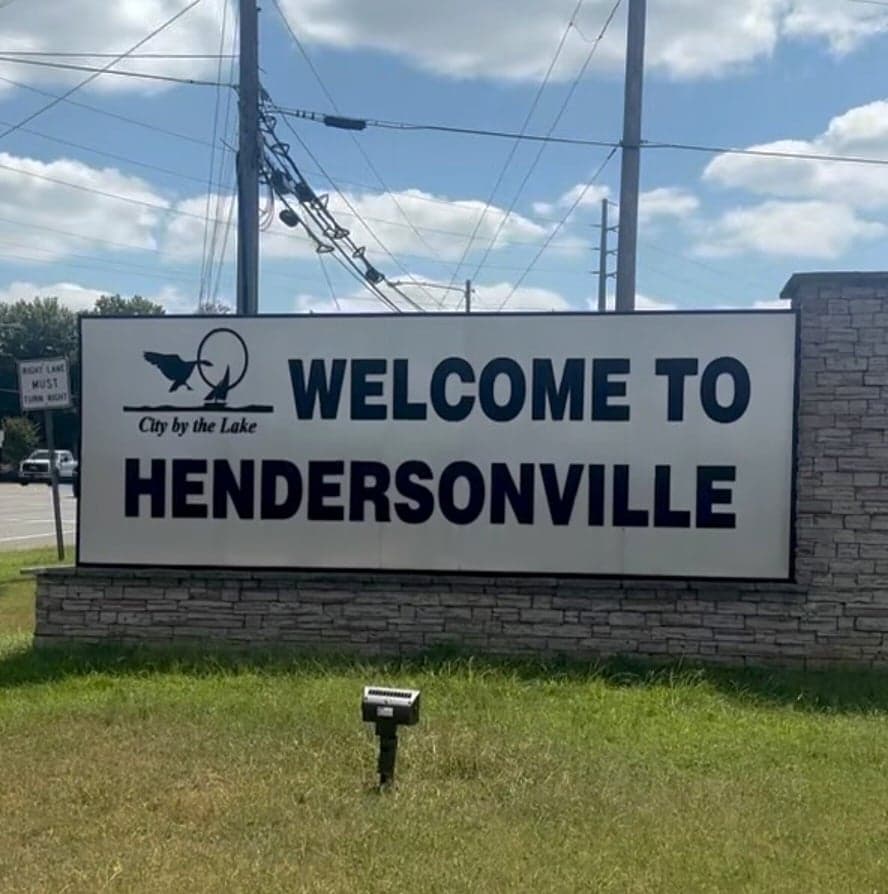
Photo: Wikipedia
Political ClimatePolitical Climate in Hendersonville, TN
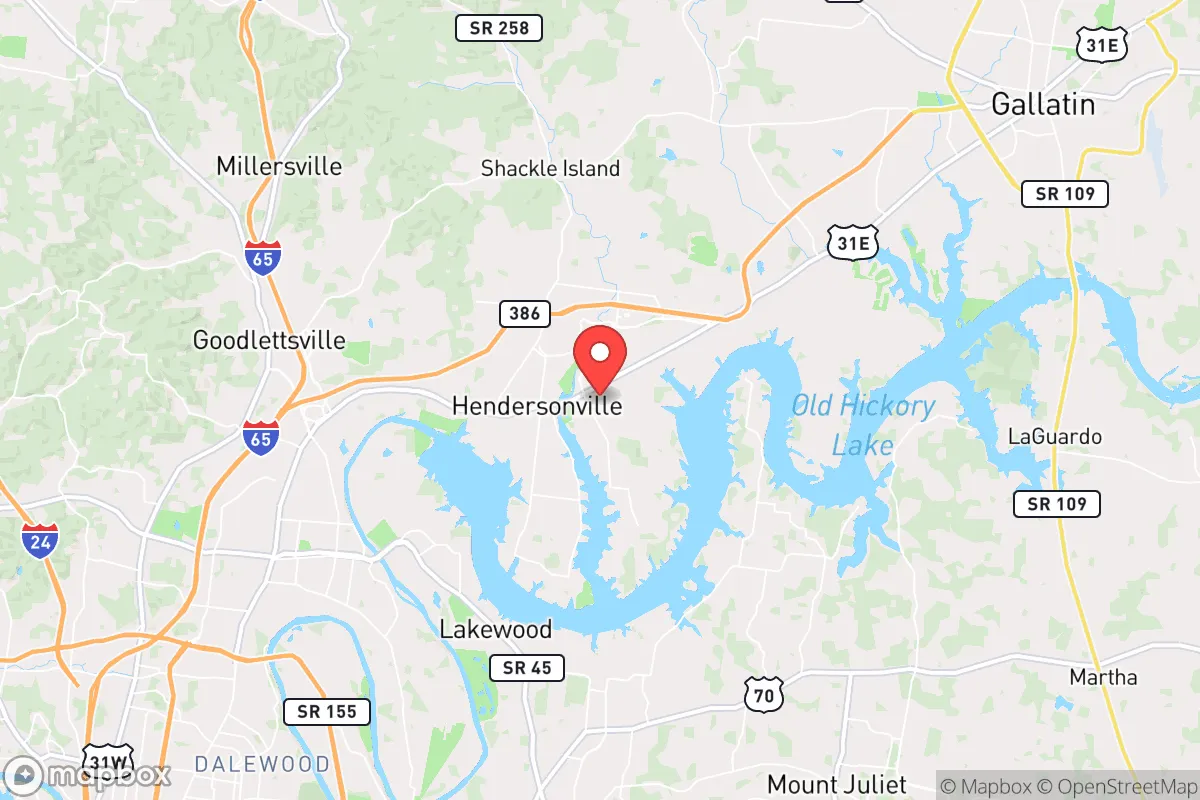
District shown is the primary district for this city’s centroid. Cities may span multiple districts.
Local Political AnalysisPolitical Analysis of Hendersonville, TN
Hendersonville, Tennessee, is about as solidly conservative as it gets, with a Cook PVI of R+17 that puts it deep in the red column. That number isn't just a statistic—it reflects a community where the vast majority of folks believe in limited government, personal responsibility, and keeping the feds out of local decisions. Over the past decade, the political lean here has actually hardened, not softened, as more families from blue states have moved in looking for a place where their values aren't treated like a punchline. The trajectory is clear: Hendersonville is doubling down on conservative principles, not drifting toward the center.
How it compares
Drive ten miles south into Nashville proper, and you're in a completely different world—Davidson County voted heavily Democratic in the last few cycles, with progressive policies on taxes, zoning, and public safety that would never fly in Hendersonville. Head east toward Gallatin or west toward Ashland City, and you'll find similar conservative leanings, but Hendersonville stands out for its sheer consistency. It's not a purple suburb that flips back and forth; it's a place where Republican candidates routinely win by double digits, and local officials know better than to push woke agendas or gun control measures. The contrast with Nashville is stark—while the city government there experiments with defunding police or imposing new business regulations, Hendersonville keeps things simple: low taxes, strong Second Amendment protections, and schools that focus on fundamentals, not indoctrination.
What this means for residents
For anyone who values freedom from government overreach, Hendersonville is a breath of fresh air. You won't see mask mandates, vaccine passports, or heavy-handed business closures here—local leaders learned from the pandemic that trusting citizens to make their own choices works better than top-down control. Property taxes stay reasonable because the county isn't chasing every federal grant that comes with strings attached. The school board fights off progressive curriculum changes, and the police department is supported, not vilified. That said, there's a quiet concern among longtime residents: as more people move in from out of state, some bring big-government habits with them. So far, the community has held the line, but it takes vigilance to keep Hendersonville from becoming another Nashville-lite. The next few years will tell whether the conservative majority stays engaged or gets complacent.
Culturally, Hendersonville still feels like a small town where neighbors know each other and church attendance is high. You won't find pride parades downtown or critical race theory in the library—those fights have been shut down early. The biggest policy distinction is the city's approach to development: it's pro-business but not pro-corporate-overreach, meaning you can start a small business without drowning in red tape, but you won't see massive chain stores bulldozing local character. The long-term outlook depends on whether the influx of new residents assimilates into the existing culture or tries to change it. For now, Hendersonville remains a place where personal freedom and common sense still rule the day, and that's exactly how most folks here want to keep it.

State Political ClimatePolitical Climate in Tennessee
State Political AnalysisPolitical Environment in the State
Tennessee has been a reliably red state for decades, with a strong Republican trifecta controlling the governorship and both legislative chambers. The state’s political trajectory over the last 10-20 years has been a steady march rightward, driven by a combination of rural conservative dominance and the rapid growth of exurban and suburban areas around Nashville and Knoxville. While the state’s overall partisan lean is roughly +15 to +20 points Republican in presidential elections, the real story is the internal tension between the booming, increasingly diverse metro areas and the deeply conservative rural and small-town counties that set the legislative agenda.
Urban vs. rural divide
The political map of Tennessee is a classic study in contrast. The major population centers—Nashville (Davidson County), Memphis (Shelby County), and Knoxville (Knox County)—are the state’s blue or purple anchors. Nashville has become a solidly Democratic city, with its county voting for Joe Biden by over 30 points in 2020, driven by a massive influx of young professionals, creatives, and out-of-state transplants. Memphis remains a Democratic stronghold, though its population decline has slightly reduced its statewide electoral weight. Knoxville, home to the University of Tennessee, is more of a purple-to-light-red city, with the county often voting Republican but by narrower margins than the surrounding areas. The real engine of Tennessee’s conservatism is the vast rural and exurban landscape. Counties like Williamson County (south of Nashville), Rutherford County (southeast of Nashville), and Wilson County (east of Nashville) are among the fastest-growing and most reliably Republican in the nation. Williamson County, in particular, is a powerhouse of conservative wealth and influence, voting for Trump by over 30 points. The divide isn’t just about party; it’s about culture. Rural and exurban Tennessee values local control, gun rights, and traditional family structures, while the urban cores are increasingly pushing for progressive policies on housing, transit, and social issues. This tension plays out every legislative session, with the state government often preempting local ordinances from Nashville and Memphis.
Policy environment
Tennessee’s policy environment is a model of conservative governance. The state has no personal income tax on wages, a major draw for relocators. The sales tax is high (around 9.55% average), but the lack of income tax is a powerful incentive. The regulatory posture is business-friendly, with a right-to-work law and a tort reform system that has made the state a hub for corporate relocations, particularly in the automotive and healthcare sectors. On education, Tennessee has embraced school choice, with a robust charter school sector and the recent expansion of the Education Savings Account (ESA) program, which allows parents to use state funds for private school tuition or homeschooling. This is a major win for parental rights. Healthcare policy is more mixed: the state did not expand Medicaid under the Affordable Care Act, but it has a strong free-market healthcare system with a high number of private insurance options. Election laws are strict but stable: Tennessee requires a photo ID to vote, has no same-day registration, and has moved to a closed primary system for some offices. The state has also passed laws to restrict ballot harvesting and tighten absentee voting procedures, moves that are popular with conservatives concerned about election integrity. On the social front, Tennessee has been a leader in protecting the unborn, with a near-total abortion ban (triggered after Dobbs) and strong parental consent laws for minors. The state has also passed laws protecting religious freedom, including the ability of adoption agencies to refuse placements based on religious beliefs.
Trajectory & freedom
Tennessee is becoming more free in several key areas, particularly for conservatives. The state has expanded gun rights significantly, passing constitutional carry (permitless carry) in 2021, allowing law-abiding citizens to carry a handgun without a permit. This was a major victory for Second Amendment advocates. On parental rights, the state passed the "Parental Bill of Rights" in 2022, which gives parents explicit authority over their children’s education, healthcare, and upbringing, and requires schools to notify parents of any changes in a student’s emotional or physical well-being. This was a direct response to concerns about critical race theory and gender ideology in schools. On medical autonomy, Tennessee has banned gender-affirming care for minors and restricted the use of public funds for such procedures. Property rights have been strengthened with laws limiting the use of eminent domain for private development. However, there are areas where freedom is being constrained. The state’s strict drug laws, particularly around marijuana, remain in place, with no medical or recreational cannabis program. This is a point of friction for some libertarian-leaning conservatives. Additionally, the state’s heavy reliance on sales tax can be regressive, and there is no property tax relief for seniors, which is a concern for retirees on fixed incomes. Overall, the trajectory is toward more personal liberty in the areas that matter most to conservative families: guns, education, and parental control.
Civil unrest & political movements
Tennessee has seen its share of political flashpoints, but they are largely localized. The most visible unrest has been in Nashville, where protests over racial justice and police reform in 2020 were significant, though they did not reach the scale of cities like Portland or Seattle. The state legislature responded by passing a law increasing penalties for rioting and blocking public highways, which was seen as a necessary measure to maintain order. The most controversial political movement in recent years has been the push for school board and library board control, particularly in suburban counties like Williamson and Rutherford. Parents have organized to remove books they deem inappropriate and to challenge curriculum that touches on gender identity or critical race theory. This has been a grassroots, conservative-led movement that has seen significant success, with several school board seats flipping to conservative candidates. Immigration politics are less heated than in border states, but there is a strong undercurrent of concern about illegal immigration, particularly in the construction and hospitality industries. The state has passed laws requiring local law enforcement to cooperate with federal immigration authorities (287(g) agreements) and banning sanctuary city policies. There is no serious secessionist or nullification movement in Tennessee, though there is a strong strain of constitutional conservatism that pushes back against federal overreach, particularly on environmental regulations and gun control. Election integrity has been a hot topic, with the state conducting a full audit of the 2020 election (which found no widespread fraud) and passing laws to tighten voter ID and absentee ballot procedures. A new resident would notice that political conversations are common and often passionate, but they are generally civil and rooted in a shared sense of community and tradition.
Projection
Over the next 5-10 years, Tennessee is likely to become more conservative, not less, despite the influx of new residents. The in-migration is heavily skewed toward conservative-leaning families from California, Illinois, and New York who are fleeing high taxes and progressive policies. These newcomers are settling in the exurban counties like Williamson, Rutherford, and Wilson, as well as in the growing cities of Chattanooga and Johnson City. While Nashville will continue to trend blue, its political influence will be diluted by the growth of its conservative suburbs. The state legislature will likely continue to pass preemptive laws to block progressive policies from the urban cores, particularly on housing, zoning, and education. The biggest wild card is the potential for a future Democratic governor, but given the current trajectory, that seems unlikely. The state’s economy is strong, with low unemployment and a booming manufacturing sector, which will continue to attract conservative-leaning workers. The biggest challenge will be managing growth without losing the character that makes Tennessee attractive: low taxes, strong communities, and a sense of personal freedom. A new resident moving in now should expect to find a state that is increasingly confident in its conservative identity, with a government that is actively protecting traditional values and pushing back against federal overreach.
For a new resident, the bottom line is this: Tennessee offers a high degree of personal freedom, low taxes, and a government that is aligned with conservative values on guns, education, and family. You will find a welcoming community in the suburbs and rural areas, but you should be prepared for a more progressive environment in Nashville and Memphis. If you value local control, parental rights, and a government that stays out of your business, Tennessee is a strong choice. Just be aware that the state is growing fast, and the political battles of the next decade will be fought over how to manage that growth without losing the conservative culture that makes it special.
* Values derived from national, state, county, city and local statistics and may differ in a specific area. Last updated: 2026-05-02T20:28:51.000Z
Narrative content on this page is AI-generated and may contain mistakes. Verify any details that matter before acting on them.
ReloMaps may earn a commission from affiliate links at no extra cost to you.

