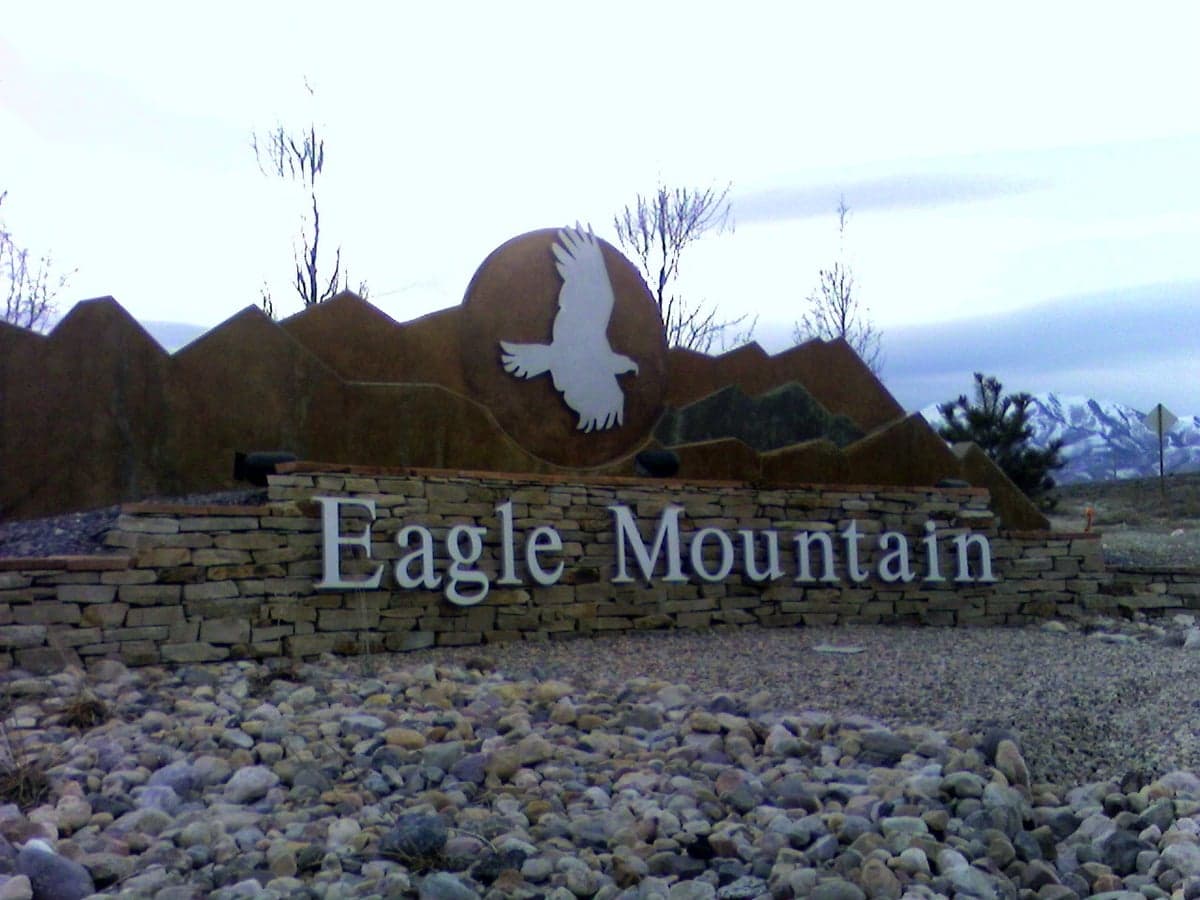
Photo: Wikipedia
Find The Best Places To Live
in Eagle Mountain
PRO TIP! You can paste a Zillow or Redfin link to get info on that property.
What It's Like Living in Eagle Mountain, UT
Eagle Mountain feels like a place that was built for a specific kind of life: young families who want a new house, a big yard, and a community that still has that small-town Utah feel, even as it rockets past 49,000 residents. You won’t find a historic downtown or a buzzing nightlife strip here. What you will find is a whole lot of kids, minivans, and a collective energy focused on schools, church, and the outdoors. It’s a bedroom community in the truest sense, but one with its own distinct, fast-growing identity.
The Daily Rhythm: Family-First and Commute-Conscious
Life in Eagle Mountain revolves around the home and the immediate neighborhood. With a median age of just 22.1, this is one of the youngest cities in Utah, and it shows. Weekdays start early, with a stream of cars heading out for the average 31-minute commute—mostly west to Lehi, American Fork, or south to the tech hubs of Silicon Slopes. The trade-off for that commute is space. People here live in newer, larger homes (the median home value sits at $469,500) on lots that feel generous compared to older, pricier suburbs closer to Salt Lake. After work and school, the streets fill with kids on bikes, and the local parks—like Cory B. Wride Memorial Park—become the social hub. The dominant rhythm is family dinner, homework, and early bedtimes. There isn’t a “main street” to stroll; errands mean a drive to the Smith’s Marketplace or Walmart off the main Pony Express Parkway corridor.
Sports, Community, and What You Actually Do
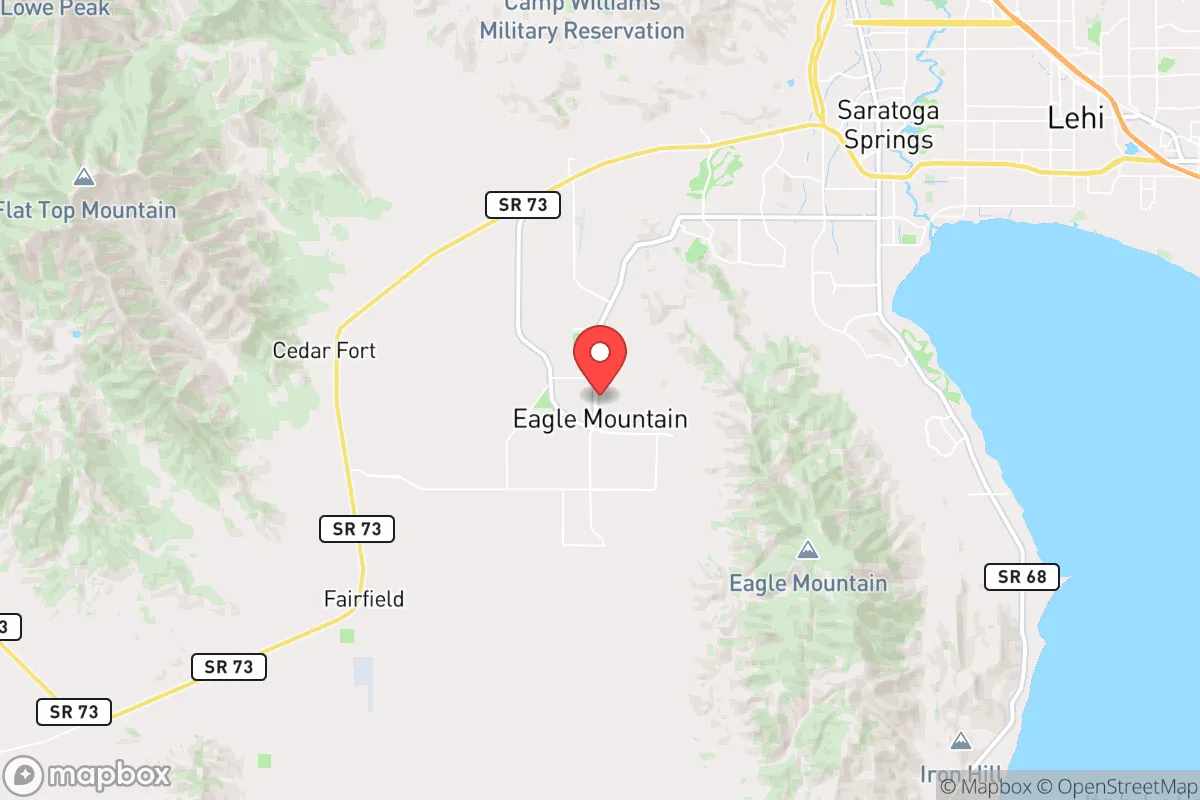
High school sports are the main event. Eagle Mountain is home to Cedar Valley High School, and on a Friday night in the fall, the football game is where the town gathers. It’s a genuine community touchpoint, not just a school event. For pro sports, residents are all-in on the Utah Jazz (NBA) and Real Salt Lake (MLS), but those are a 45-minute drive north. The real outdoor playground is right out the back door. The city is pressed up against the Lake Mountains, offering immediate access to hiking and off-roading trails. The nearby Utah Lake is a 15-minute drive for fishing, paddleboarding, or just escaping the summer heat. For festivals, the annual Eagle Mountain Days in late summer is the big one—a parade, carnival, and fireworks that feel like a genuine community celebration, not a tourist attraction. Dining is mostly chain-driven (Cafe Rio, Costa Vida, Mo' Bettahs for Hawaiian food), but locals have a soft spot for The Pizza Factory and the surprisingly good tacos at El Paisa Grill. There are no real bars in the traditional sense; the social drinking scene is minimal, reflecting the area’s strong LDS cultural influence.
Who Fits In—and Who Might Not
This is a place for people who prioritize square footage, a new build, and a safe, predictable environment over urban amenities. The median household income of $105,576 is strong, but the cost of living index of 170 (well above the US average) means that money gets eaten up by housing and commuting costs. The typical resident is a married couple in their late 20s or early 30s with young children. Single individuals, especially those without a strong connection to the LDS church or a local family network, might find it isolating. The social scene is heavily church- and family-oriented. If you’re not part of that fabric, you’ll need to be proactive—joining a local running club, a hiking Meetup, or getting involved in community events. The 38.3% college-educated rate is decent but not elite; the workforce leans toward tech commuters, tradespeople, and those in construction and services supporting the rapid growth.
The Honest Pros and Cons of Eagle Mountain
- Pro: Space and newness. You get a lot of house for the money compared to Salt Lake County, and everything is built to modern standards. The streets are wide, the schools are new, and the crime rate (violent crime at 215.9 per 100,000) is low, though not as low as some older, more established Utah suburbs.
- Con: The commute and lack of amenities. That 31-minute average commute is a best-case scenario. During peak hours, Pony Express Parkway and Redwood Road can turn into a parking lot. There’s no hospital in town, no major entertainment venue, and no real restaurant row. For a night out, you’re driving to Lehi or Thanksgiving Point.
- Pro: A built-in community for families. If you have kids, you will never struggle to find playmates or neighbors willing to help. The schools, particularly Eagle Mountain Elementary and Frontier Middle School, are the heart of many neighborhoods.
- Con: It can feel like a monoculture. The population is overwhelmingly white and LDS. If you’re not part of that culture, you may feel like an outsider. The rapid growth has also led to growing pains—traffic, construction dust, and a sense that the infrastructure is always playing catch-up.
The seasonal rhythm is classic Utah: hot, dry summers perfect for the nearby reservoirs, and cold, snowy winters that occasionally shut down the mountain passes. Fall is stunning, with the changing leaves on the Lake Mountains. Spring brings wind and mud. For the right person—someone who values a new house, a safe yard for kids, and doesn’t mind a long drive for a concert or a fancy dinner—Eagle Mountain is a practical, happy choice. For anyone else, it might feel a little too quiet, a little too far, and a little too uniform.

* Values derived from national, state, county, city and local statistics and may differ in a specific area. Last updated: 2026-05-03T20:37:11.000Z
Narrative content on this page is AI-generated and may contain mistakes. Verify any details that matter before acting on them.
ReloMaps may earn a commission from affiliate links at no extra cost to you.

