 Popular
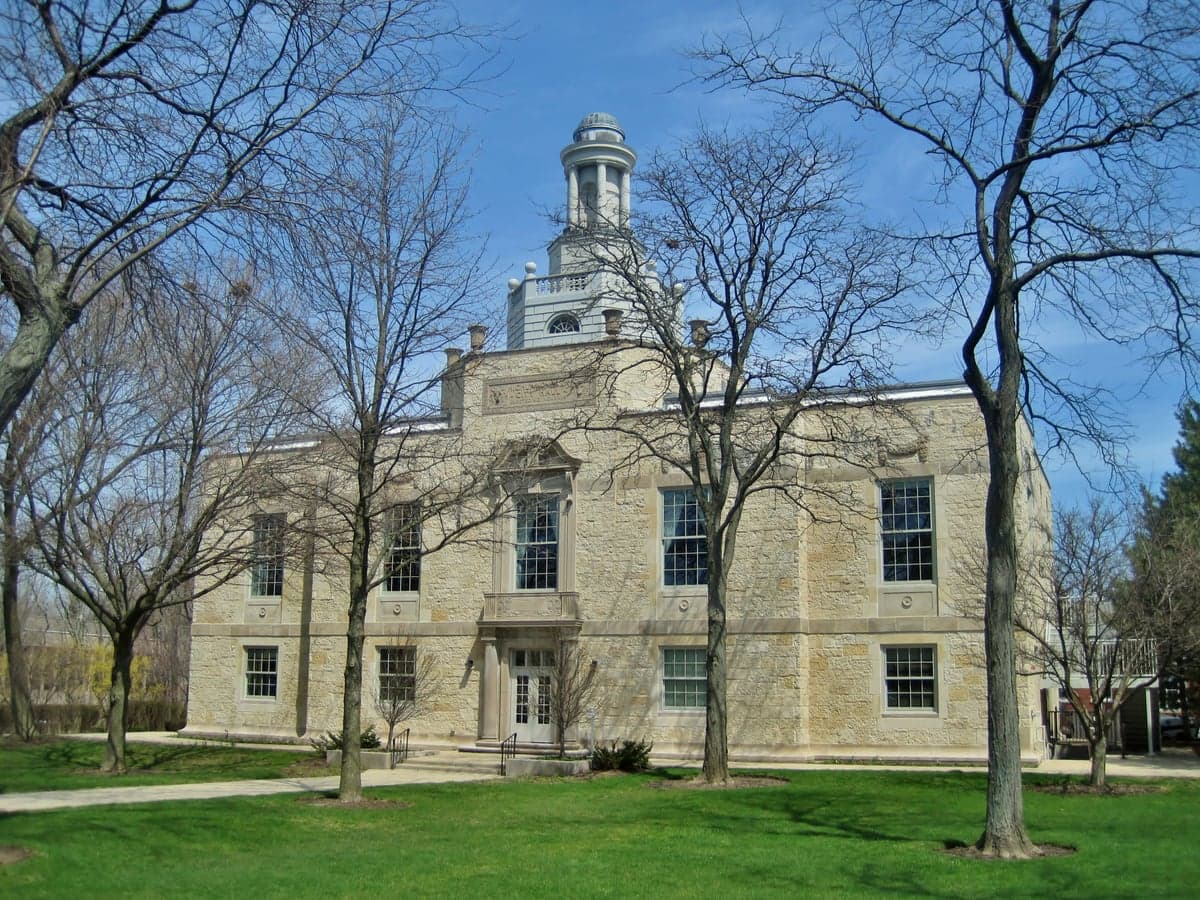
Photo: Wikipedia
Demographics of Highland Park, IL
Affluence Level in Highland Park, IL
An upper-middle-class area. Household wealth, education levels, and homeownership run ahead of national benchmarks.
People of Highland Park, IL
The people of Highland Park, Illinois, today form a highly educated, predominantly white community of 30,229 residents, with a notable and growing Hispanic population and small but established East/Southeast Asian and Indian communities. The city is characterized by its historic lakefront affluence, a strong sense of civic engagement, and a population density of roughly 2,200 people per square mile. Distinctive markers include a 76.1% college-educated rate—among the highest in the Midwest—and a foreign-born share of just 4.1%, reflecting a population that is largely native-born and deeply rooted in the area. The city’s identity is a blend of old-money tradition, progressive-leaning politics, and a family-oriented suburban character, with distinct neighborhoods that tell the story of its layered settlement.
How the city was settled and grew
Highland Park’s population history begins with the Potawatomi people, who inhabited the Lake Michigan shoreline before being displaced by the 1833 Treaty of Chicago. The first permanent white settlers arrived in the 1830s and 1840s, drawn by the fertile land and the promise of the newly platted town of Port Clinton, a small lakefront settlement that later became part of Highland Park. The city’s real growth came after the Chicago and Milwaukee Railroad arrived in 1854, transforming it into a summer resort and commuter suburb for Chicago’s wealthy elite. These early residents—largely of English, German, and Scottish descent—built grand homes along the lakefront in what is now the East Bluff neighborhood, an area still known for its historic mansions and tree-lined streets. The original village was incorporated in 1869, and by the early 1900s, a second wave of German and Irish immigrants arrived to work in the city’s brickyards and as domestic servants, settling in the Downtown area and the working-class Highland Park Station district near the train depot. A significant Jewish community began forming in the 1920s and 1930s, drawn by the city’s reputation for good schools and its proximity to Chicago’s North Shore Jewish institutions; they concentrated in the Ravinia neighborhood, near the famous Ravinia Festival grounds, and in the central part of the city around Central Avenue.
Modern era (post-1965)
The post-1965 era brought gradual demographic shifts, though Highland Park remained overwhelmingly white through the 1970s and 1980s. The 1965 Hart-Cellar Act opened immigration from Asia and Latin America, but Highland Park’s high housing costs and established character meant that new immigrant communities arrived slowly. The Hispanic population, now 12.0% of the city, began growing in the 1980s and 1990s, primarily with Mexican and Central American families who moved into the more affordable South End and Highland Park Station neighborhoods, often working in landscaping, construction, and service jobs. The East/Southeast Asian community (2.4%)—largely Chinese, Korean, and Japanese families—grew in the 1990s and 2000s, drawn by the city’s top-ranked school system; they settled without a single ethnic enclave, dispersing across the Ravinia and East Bluff areas. The Indian subcontinent community (0.5%) is small but similarly dispersed, with families concentrated in the Sherwood Forest neighborhood, a mid-century subdivision known for its larger lots. The Black population remains very low at 1.6%, a figure that has been stable for decades, reflecting the city’s historic lack of affordable housing and its reputation as a predominantly white, affluent enclave. The white population, while still the majority at 79.7%, has declined from over 90% in 1980, driven by both out-migration of older families and the in-migration of Hispanic and Asian households.
The future
Highland Park’s population is slowly becoming more diverse, but the pace is modest. The Hispanic share is projected to continue rising, potentially reaching 15-18% by 2040, driven by natural increase and continued in-migration of families seeking good schools and safe neighborhoods. The East/Southeast Asian and Indian communities are likely to grow as well, though from a small base, as the city’s reputation for academic excellence attracts professional families from the Chicago metro area. The white population will likely continue its gradual decline, but Highland Park is not expected to become a majority-minority suburb in the foreseeable future—its high housing costs (median home value over $500,000) and limited rental stock act as a demographic filter. New development is concentrated in the Downtown area, where a few mid-rise apartment buildings have been built, attracting younger professionals and empty-nesters, but the city’s single-family-home character remains dominant. The cultural identity is evolving from a purely old-money, Jewish-influenced suburb to a more multi-ethnic, still-affluent community where Hispanic and Asian families are increasingly visible in schools and civic life.
For someone moving in now, Highland Park is becoming a place where traditional North Shore affluence is slowly diversifying, but the core character—highly educated, family-focused, and politically moderate-to-liberal—remains intact. The city offers a stable, safe environment with excellent schools, but newcomers should expect a community where the cost of entry is high and where the demographic changes, while real, are gradual rather than transformative.

* Values derived from national, state, county, city and local statistics and may differ in a specific area. Last updated: 2026-08-24T21:17:27.000Z
Narrative content on this page is AI-generated and may contain mistakes. Verify any details that matter before acting on them.
ReloMaps may earn a commission from affiliate links at no extra cost to you.

