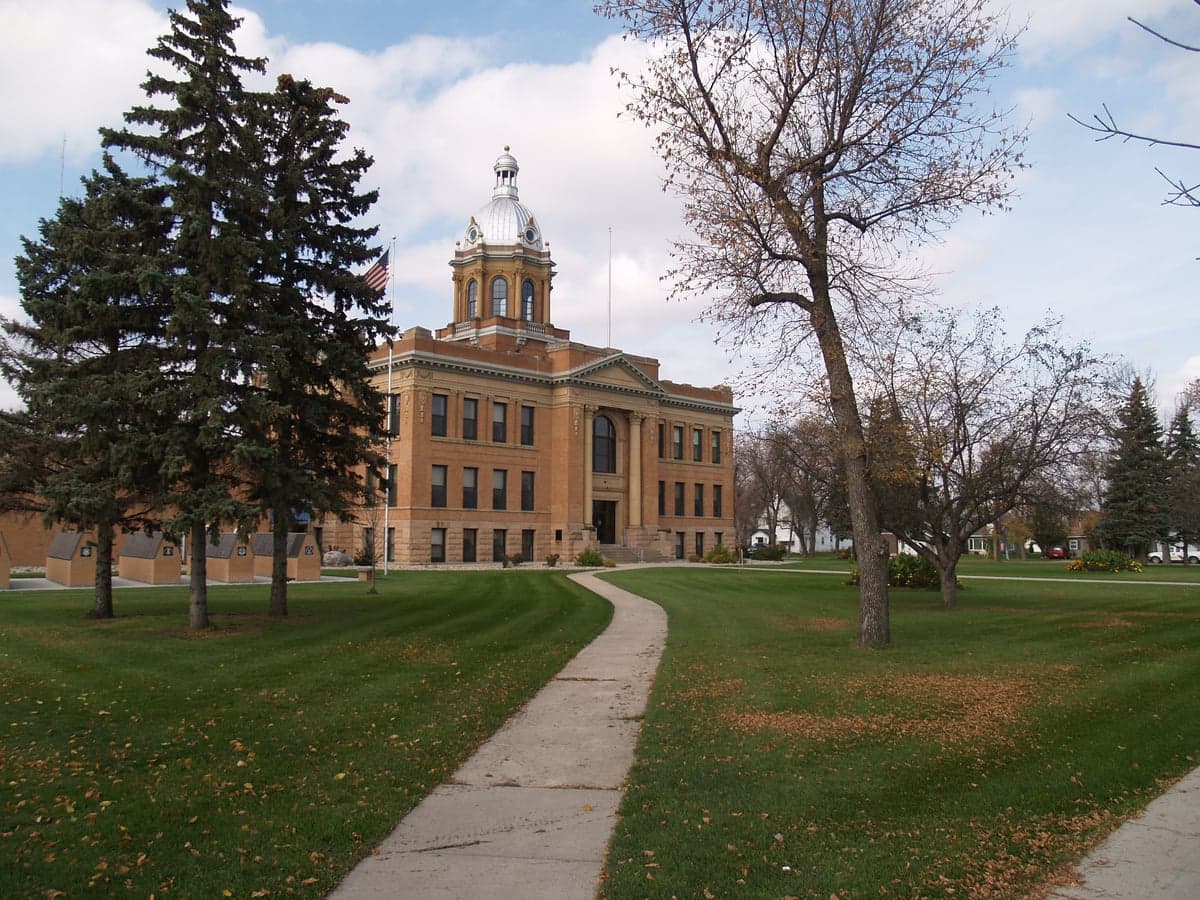
Photo: Wikipedia
Demographics of Hillsboro, ND
Affluence Level in Hillsboro, ND
A middle-class area roughly in line with national averages across income, home values, education, and employment.
People of Hillsboro, ND
Hillsboro, North Dakota, is a predominantly white, family-oriented community of 1,643 residents that blends agricultural roots with a growing professional class. The city’s population is 88.7% white, with a small Hispanic community (4.0%) and a tiny East/Southeast Asian presence (0.9%), while the foreign-born share is just 0.5%. Over 37% of adults hold a college degree, reflecting the influence of local employers like the Hillsboro Medical Center and the nearby Sanford Health system. The city’s character is shaped by its Scandinavian and German heritage, a strong sense of civic pride, and a quiet, low-crime atmosphere that appeals to conservative families and individuals seeking stability.
How the city was settled and grew
Hillsboro was founded in 1880 as a railroad town on the Great Northern Railway line, drawing its first wave of settlers from Norway, Sweden, and Germany. These immigrants were attracted by the promise of fertile Red River Valley farmland, with the U.S. government’s Homestead Act of 1862 offering 160-acre plots. The original settlement clustered around the railroad depot in what is now Downtown Hillsboro, where grain elevators, a bank, and general stores sprang up to serve the farming community. By 1900, the population had reached roughly 600, with Norwegian and German families establishing the North Side neighborhood near the railroad tracks, while Swedish immigrants concentrated in the South Side area along what is now Highway 200. A second wave arrived in the 1910s and 1920s, driven by the expansion of sugar beet farming and the construction of the Hillsboro Sugar Beet Factory (later American Crystal Sugar). This period brought a smaller influx of Polish and Czech families, who settled in the East End district near the factory. The city’s population peaked at around 1,800 in the 1930s, then stabilized as the agricultural economy mechanized and younger generations moved to larger cities.
Modern era (post-1965)
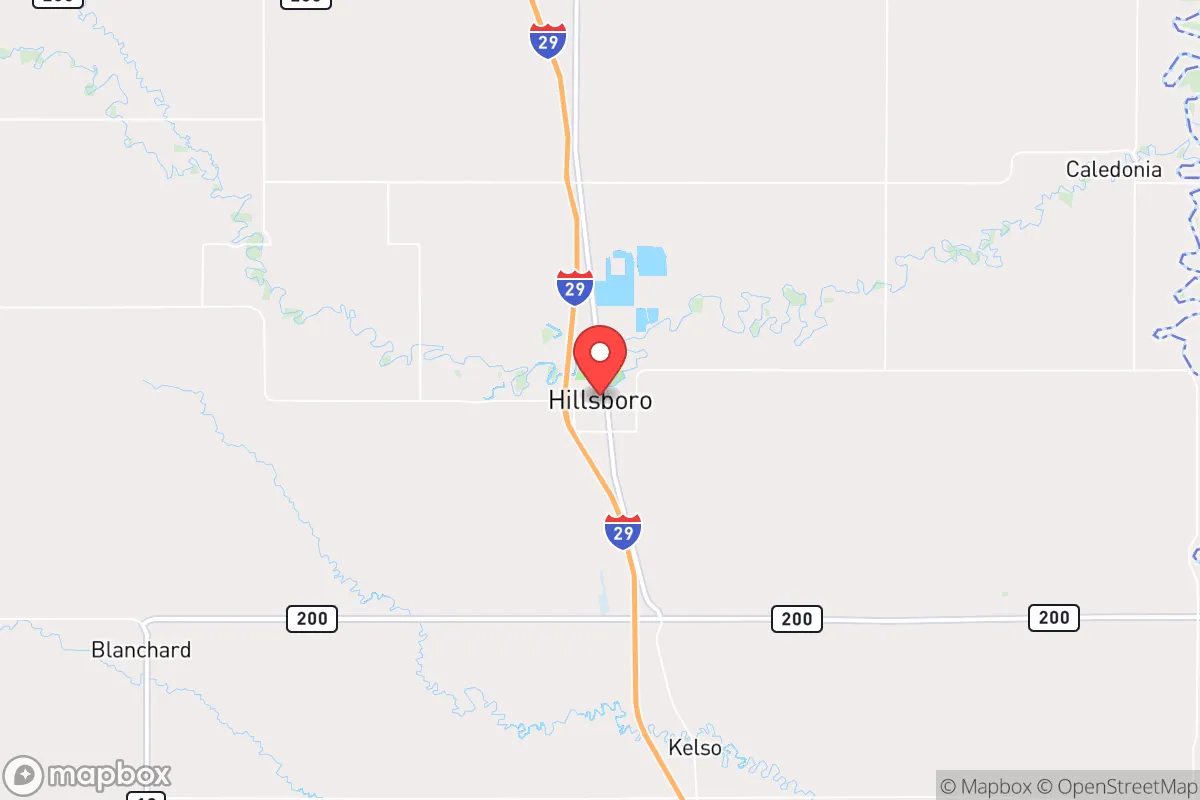
After the 1965 Immigration and Nationality Act, Hillsboro saw minimal foreign-born growth, unlike larger North Dakota cities. The 0.5% foreign-born share today is among the lowest in the state, with most newcomers being domestic migrants from other parts of the Midwest. The Hispanic population, now 4.0%, began growing in the 1990s as seasonal agricultural workers—many from Texas and Mexico—settled permanently, drawn by jobs at the American Crystal Sugar plant and local farms. These families have concentrated in the West Hills neighborhood, a modest subdivision of ranch-style homes built in the 1980s and 1990s. The East/Southeast Asian community (0.9%) is small and primarily consists of a few families employed by the medical center or the University of North Dakota in nearby Grand Forks; they are scattered across the College Heights district, a newer development near the high school. The white population remains dominant, with many residents tracing their roots to the original Scandinavian and German settlers. Suburbanization has been limited, but the Prairie View Estates subdivision, built in the 2000s on the city’s southern edge, has attracted younger families and professionals commuting to Fargo (45 minutes south) or Grand Forks (30 minutes north). The city’s racial composition has remained remarkably stable: the white share has only declined from 96% in 2000 to 88.7% today, driven almost entirely by the growth of the Hispanic community.
The future
Hillsboro’s population is projected to remain stable or grow slowly, with the city’s planning department estimating a 1-2% increase over the next decade. The Hispanic community is the fastest-growing demographic, with a birth rate above the city average, and is expected to reach 6-7% of the population by 2035. This growth is concentrated in West Hills, which is becoming a distinct enclave with its own small grocery store and a Spanish-language church service at the local Lutheran church. The white population is aging—the median age is 42—but the Prairie View Estates and College Heights neighborhoods are attracting younger families, partly due to the city’s low property taxes and strong school system. The East/Southeast Asian and Black populations (0.1%) are likely to remain negligible, as there are no major employers or cultural institutions drawing these groups. The city is not tribalizing into starkly divided enclaves; rather, it is experiencing a slow, organic diversification driven by the Hispanic community’s growth, while the white majority remains culturally and politically dominant. For a conservative-leaning mover, Hillsboro offers a stable, low-crime environment where traditional values are reinforced by the city’s history and current demographics.
Hillsboro is becoming a slightly more diverse but still overwhelmingly white community, with a growing Hispanic presence that is integrating into the local economy and schools. For someone moving in now, the city offers a safe, family-friendly atmosphere with a strong sense of history, low crime, and a cost of living well below the national average. The key trade-off is limited ethnic diversity and a slower pace of life, which appeals to those seeking a tight-knit, conservative community rather than a multicultural urban center.

* Values derived from national, state, county, city and local statistics and may differ in a specific area. Last updated: 2026-04-19T09:08:39.000Z
Narrative content on this page is AI-generated and may contain mistakes. Verify any details that matter before acting on them.
ReloMaps may earn a commission from affiliate links at no extra cost to you.

