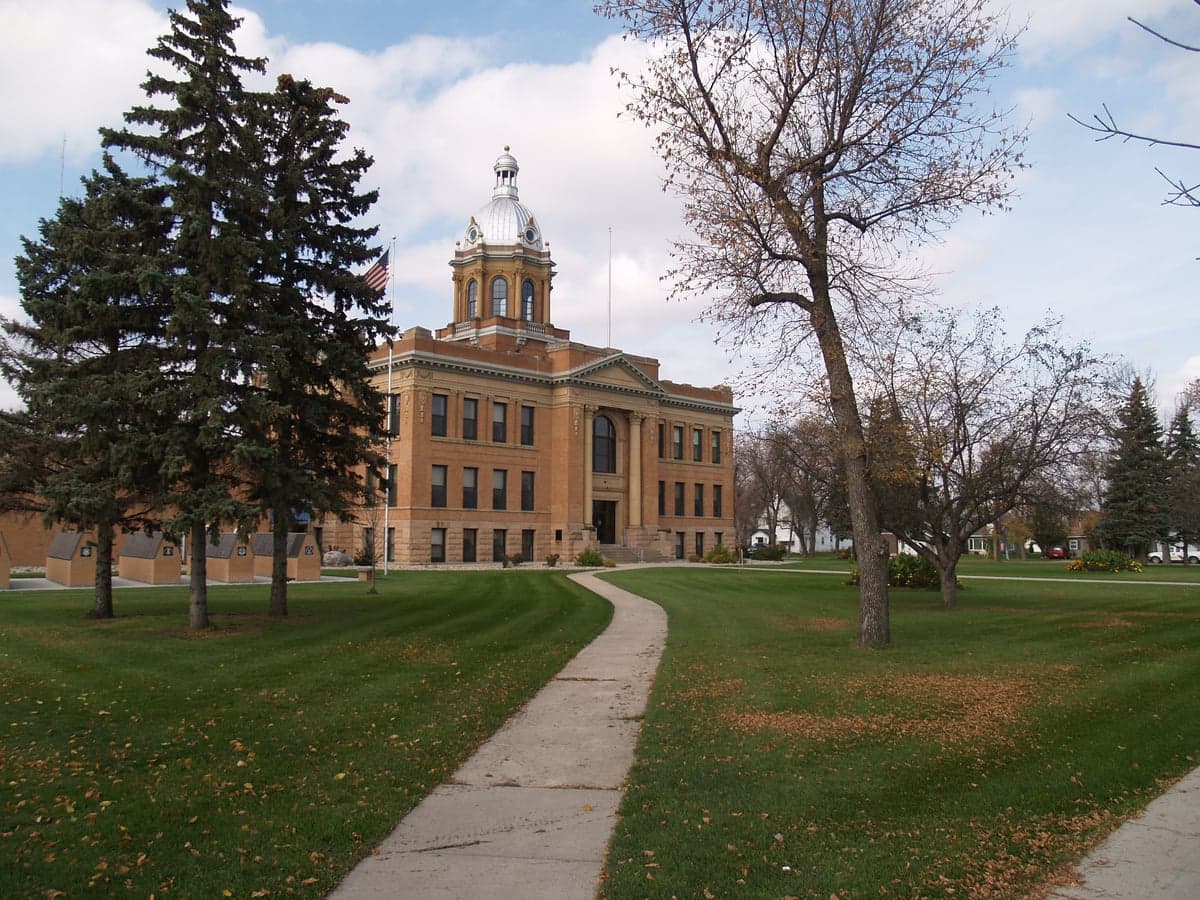
Photo: Wikipedia
Political ClimatePolitical Climate in Hillsboro, ND
District shown is the primary district for this city’s centroid. Cities may span multiple districts.
Inherited from parent state — no local data available.
Local Political AnalysisPolitical Analysis of Hillsboro, ND
Hillsboro, North Dakota, is about as solidly conservative as it gets, and that’s not changing anytime soon. The Cook PVI of R+18 tells you the story in a single number—this area leans Republican by a wide margin, and it’s been that way for as long as anyone can remember. You don’t see the political whiplash here that you get in places like Fargo or Grand Forks, where the college crowds and new transplants are slowly shifting things left. In Hillsboro, the local elections, county commission seats, and even school board races tend to go to folks who believe in limited government, personal responsibility, and keeping the federal government out of your backyard. The trajectory is steady: more of the same, with maybe a slight hardening of that conservative stance as the rest of the state’s urban centers drift the other way.
How it compares
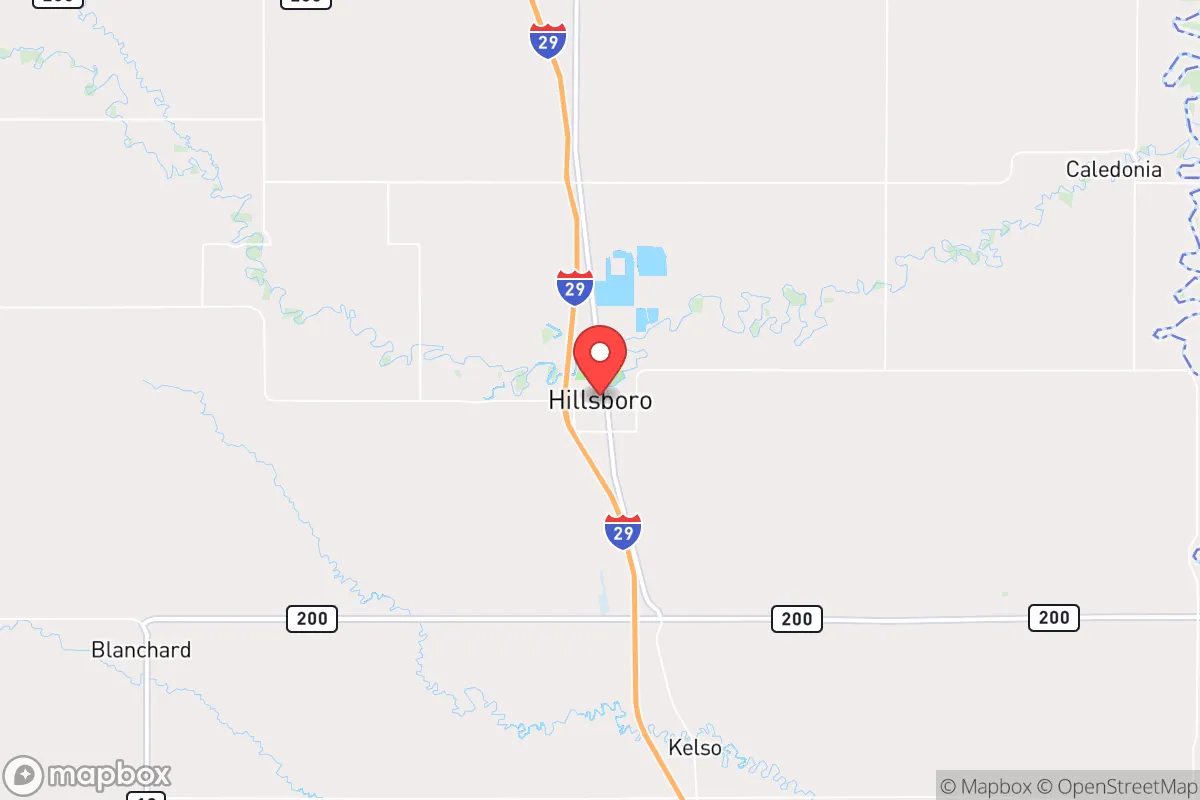
Drive thirty miles west to Mayville or north to Grafton, and you’ll find a similar vibe—rural, agricultural, and reliably red. But head south toward Fargo, and the contrast is stark. Fargo’s Cass County has been trending purple for years, with younger voters and out-of-state arrivals pushing it toward the center, sometimes even blue in local races. Hillsboro, in Traill County, feels like a time capsule of older-school North Dakota values. Neighboring towns like Hatton and Portland are cut from the same cloth, but Hillsboro’s size and economic base—anchored by the sugar beet co-op and family farms—keep it more insulated from the progressive drift you see in the state’s population centers. If you’re looking for a place where your vote actually counts for something conservative, this is it.
What this means for residents
For folks living here, the political climate translates into a government that mostly stays out of your way. Property taxes are low compared to the national average, and there’s no state income tax to speak of. You won’t find the kind of overreach you hear about in blue states—no mask mandates that drag on for years, no heavy-handed zoning rules that tell you what you can do with your land, and no school curricula that push ideology over basics. The local government is small enough that you can actually call your commissioner and get a straight answer. That said, there’s a growing unease about state-level trends, like the push for more centralized control over local land use and energy projects. If that kind of thing keeps creeping in, it could start chipping away at the local autonomy that makes Hillsboro work. For now, though, the day-to-day reality is that your freedoms are respected, and your voice carries weight at the town hall.
One thing that sets Hillsboro apart is its quiet resistance to the cultural shifts you see on the coasts and even in larger Midwestern cities. There’s no real appetite for progressive social experiments here—no talk of defunding the police, no push for critical race theory in the schools, and no pressure to adopt the latest green energy mandates that would hammer the local ag economy. The community values self-reliance and neighborly help over government programs. If you’re worried about losing your rights to a distant bureaucracy, Hillsboro offers a refuge where common sense still rules. The long-term outlook is cautiously optimistic, but only if the state and federal governments keep their hands off. As one old-timer put it, “We don’t need saving from Washington—we just need them to leave us alone.” That sentiment sums up the political soul of this town.

State Political ClimatePolitical Climate in North Dakota
State Political AnalysisPolitical Environment in the State
North Dakota has long been one of the most reliably Republican states in the nation, but its political climate is more nuanced than a simple red-state label suggests. The state has voted for the GOP presidential candidate in every election since 1968, with margins often exceeding 30 points—Donald Trump carried it by 33 points in 2020 and by a similar margin in 2024. However, the dominant coalition isn't a monolithic conservative bloc; it's a mix of prairie populism, libertarian-leaning independence, and a strong agricultural and energy-sector base. Over the past 10-20 years, the trajectory has been a slow but steady shift rightward, driven by rural out-migration and the growth of the Bakken oil patch, though the state's small urban centers—Fargo, Bismarck, and Grand Forks—have introduced some moderating influences.
Urban vs. rural divide
The political map of North Dakota is a classic story of urban islands in a deep-red rural sea. Fargo (Cass County) is the state's largest metro and the most politically competitive area—Cass County voted for Trump by only 12 points in 2020, a far cry from the 50-70 point margins seen in rural counties like McKenzie (heart of the oil patch) or Hettinger in the southwest. Grand Forks (Grand Forks County) leans Republican but is tempered by the University of North Dakota's academic influence, typically voting 15-20 points to the right. Bismarck (Burleigh County) is reliably conservative, often delivering 25-30 point margins, while Minot (Ward County) is similar, boosted by the Air Force base and energy workers. The real political engine, however, is the vast rural expanse—counties like Slope, Golden Valley, and Billings routinely vote 80%+ Republican. The divide isn't just partisan; it's cultural. Rural residents view Fargo's growth and its influx of out-of-state newcomers with suspicion, while urbanites see rural areas as resistant to change. This tension plays out in the state legislature, where rural districts hold disproportionate power due to the state's constitutional requirement for one senator per county—a system that has been challenged but upheld.
Policy environment
North Dakota's policy environment is a mixed bag of conservative principles and pragmatic, sometimes interventionist, governance. The state has no state income tax—a major draw for conservatives—and relies heavily on oil and gas revenue, agricultural taxes, and property taxes. The regulatory posture is generally business-friendly, especially for energy and agriculture, though the state has a history of using its Bank of North Dakota (the only state-owned bank in the U.S.) to direct credit toward favored industries, which some libertarians view as government overreach. Education policy is decentralized, with strong local control and a thriving school choice movement—the state expanded its open enrollment law in 2023, allowing students to attend any public school without district permission. Healthcare is a flashpoint: North Dakota expanded Medicaid under the Affordable Care Act in 2013, a decision that remains controversial among conservatives, though the state has resisted further federal encroachment. Election laws are among the most secure in the nation—voter ID is required, same-day registration is not allowed, and the state uses paper ballots. The legislature has consistently rejected efforts to implement no-excuse absentee voting or ballot drop boxes, maintaining a system that conservatives trust.
Trajectory & freedom
On the freedom front, North Dakota has been a mixed bag in recent years, with some notable wins and losses for personal liberty. On the positive side, the state passed Constitutional Carry (permitless concealed carry) in 2017, and in 2023, it enacted a parental rights in education law that requires schools to notify parents of any curriculum involving sexuality or gender identity—a direct response to progressive overreach in other states. The legislature also passed a religious freedom restoration act in 2023, providing stronger protections for conscience rights. However, there have been concerning trends. In 2021, Governor Doug Burgum signed a statewide mask mandate during COVID-19, which many conservatives viewed as an overreach, though it was short-lived. More troubling for libertarians was the state's aggressive use of eminent domain for the Dakota Access Pipeline, which pitted property rights against energy development. On medical freedom, North Dakota has resisted vaccine mandates but has not passed broad medical autonomy legislation. The state's abortion law is now among the most restrictive in the nation, with a near-total ban after six weeks (with exceptions for rape, incest, and life of the mother), passed in 2023 after the Dobbs decision. Overall, the trajectory is toward more personal freedom in most areas, but the state's willingness to use government power for economic development remains a concern for hardcore liberty advocates.
Civil unrest & political movements
North Dakota is not known for widespread civil unrest, but it has been the site of some of the most significant political flashpoints in recent American history. The Dakota Access Pipeline protests at the Standing Rock Reservation (2016-2017) drew thousands of activists from across the country, resulting in clashes with law enforcement, mass arrests, and a lasting scar on the state's reputation. The protests were a catalyst for a surge in Native American political activism in the state, with tribal nations now wielding more influence in Bismarck—though tensions remain high. On the right, the Bakken oil patch has fostered a libertarian, anti-regulation culture, with workers often clashing with state environmental regulators. There have been sporadic anti-lockdown protests at the state capitol during COVID-19, but they were smaller than in other states. Immigration politics are relatively quiet—North Dakota has no sanctuary cities, and the state's small immigrant population (mostly in Fargo's meatpacking plants) has not become a major flashpoint. Election integrity controversies have been minimal, though some conservative activists have pushed for hand-counting ballots, a proposal that failed in the 2023 legislative session. A new resident would notice a general sense of political stability, but the undercurrents of energy vs. environment and rural vs. urban are ever-present.
Projection
Over the next 5-10 years, North Dakota is likely to become more conservative, but also more internally divided. The demographic trends are clear: rural counties are shrinking, while Fargo and its suburbs (like West Fargo and Horace) are growing rapidly, driven by in-migration from Minnesota and other states. This growth is bringing a more moderate, sometimes even left-leaning, population to the state's largest metro, which could make Cass County a swing county within a decade. However, the rural areas are not going quietly—they are using their legislative power to push back on urban priorities, including property tax reform and school funding. The oil patch in the Williston area is expected to remain a conservative stronghold, though production may plateau. The wild card is the state's aging population—North Dakota has one of the oldest median ages in the nation, and younger residents are leaving for warmer climates or bigger cities. This could lead to a political landscape that is increasingly polarized between a growing, diverse Fargo and a shrinking, aging rural base. A new resident moving in now should expect a state that remains deeply conservative in policy, but with a growing urban-liberal minority that will make state-level races more competitive, especially in the Fargo area.
For someone choosing North Dakota as a relocation destination, the bottom line is this: you are moving to a state that values personal responsibility, low taxes, and local control, but you should be aware of the trade-offs. The state's political climate is stable and predictable, with a government that generally stays out of your life—except when it comes to economic development or public health emergencies. If you are a conservative who wants to live in a place where your vote actually counts (North Dakota has only one at-large House seat), where gun rights are protected, and where your children's education is not subject to radical social experiments, this is a strong choice. Just be prepared for the cold—both the weather and the cultural distance between Fargo and the rest of the state. The political freedom is real, but it comes with a rugged individualism that expects you to handle your own problems without looking to the government for help.
* Values derived from national, state, county, city and local statistics and may differ in a specific area. Last updated: 2026-04-19T09:08:39.000Z
Narrative content on this page is AI-generated and may contain mistakes. Verify any details that matter before acting on them.
ReloMaps may earn a commission from affiliate links at no extra cost to you.

