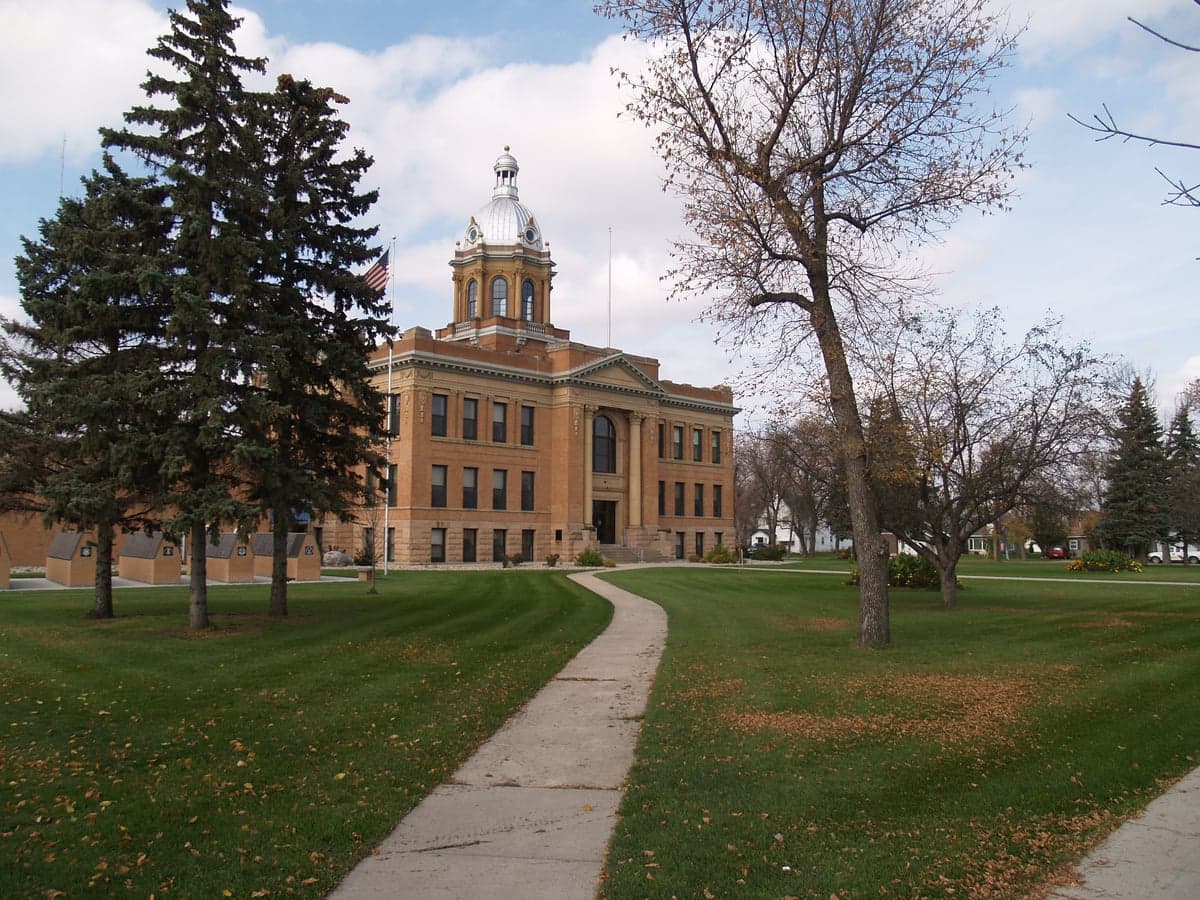
Photo: Wikipedia
Personal Sovereignty in Hillsboro, ND
Viable for self-reliance. Generally workable, though some barriers may limit total independence.
What does Personal Sovereignty tell us?
Personal Sovereignty measures your capacity for self-reliance and independence with minimal government friction. Higher scores mean fewer barriers between you and the way you want to live... but it assumes you have the space you need and good neighbors.
What does this tell us?
Personal Sovereignty measures your capacity for self-reliance and independence with minimal government friction. Higher scores mean fewer barriers between you and the way you want to live... but it assumes you have the space you need and good neighbors.
State Policy
Energy independence: Net exporter (500% of energy produced in-state)
Personal Liberty
Homesteading

Personal Liberty Analysis
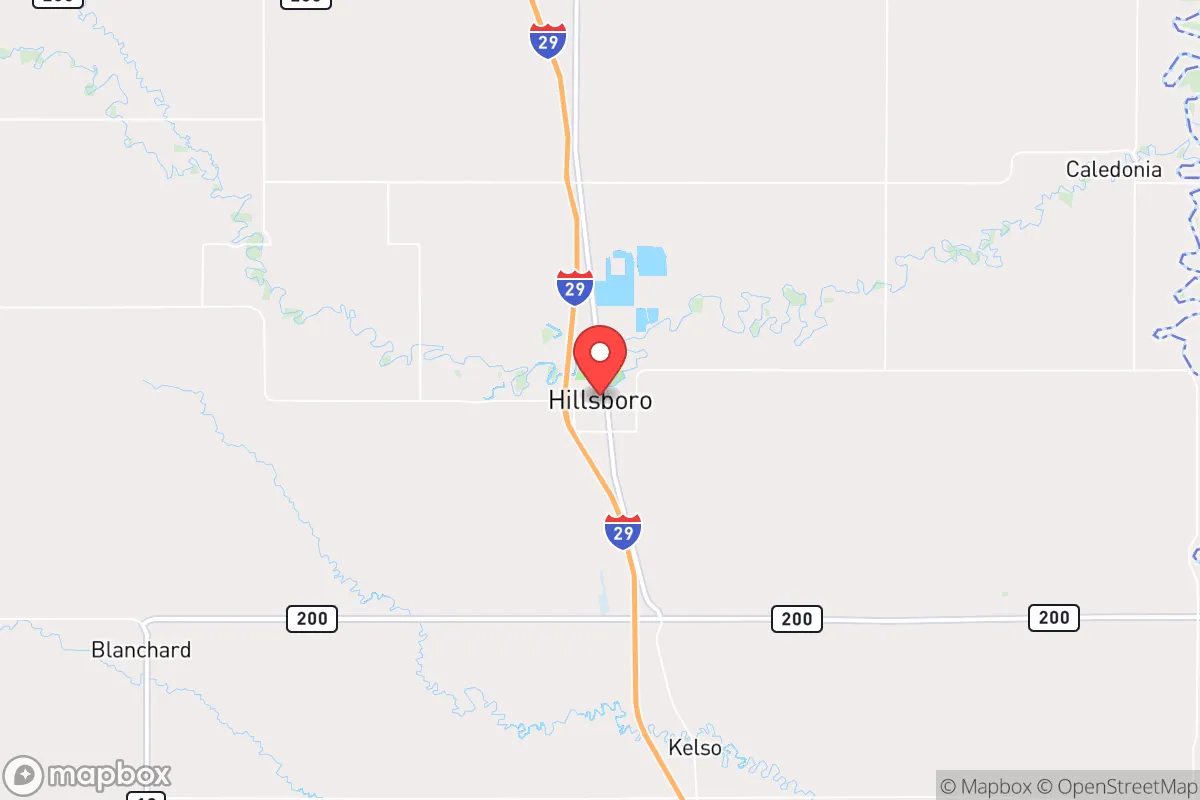
Hillsboro, North Dakota, offers a personal sovereignty environment that stands in stark contrast to the high-regulation, high-tax states many conservatives and preppers are looking to escape. While no location is a perfect libertarian utopia, this small town in Traill County benefits from North Dakota’s consistently low state tax burden, minimal business licensing requirements, and a political culture that still respects the individual’s right to be left alone. For those prioritizing self-reliance, the question isn’t whether Hillsboro is a free state—it’s whether you can live with the trade-offs of a remote, cold-climate community where the nearest major city (Fargo) is 45 minutes away.
Tax burden and regulatory posture: How North Dakota’s policies affect your wallet and autonomy
North Dakota’s tax structure is a major draw for those seeking to keep more of what they earn. The state has no personal income tax, no corporate income tax, and no state-level sales tax on most goods—though local sales taxes in Hillsboro add roughly 1.5% to 2%. Property taxes are the primary revenue source, and they are moderate: the effective property tax rate in Traill County hovers around 1.2% of assessed value, which is below the national average. For a survivalist mindset, this means less government confiscation of your labor and more capital to invest in land, supplies, and infrastructure. Regulatory posture is equally favorable. North Dakota is a right-to-work state, meaning you cannot be forced to join a union as a condition of employment. Business licensing is minimal—starting a home-based firearms repair shop or a small farm operation requires little more than a basic registration. There are no state-level building codes in unincorporated areas of Traill County, though Hillsboro’s city limits do enforce basic zoning and inspection requirements. The state’s approach to environmental regulation is also light: no state-level equivalent of California’s CEQA, and the Department of Environmental Quality generally defers to federal standards. For preppers, this means fewer bureaucratic hurdles when building a root cellar, installing a backup generator, or constructing a detached workshop.
Self-defense and gun law specifics: What you can own and where you can carry
North Dakota is a constitutional carry state, meaning any law-abiding adult 18 or older can carry a concealed firearm without a permit. Hillsboro’s local law enforcement respects this right, and there are no city-level restrictions beyond state law. You can own standard-capacity magazines, suppressors (with a federal tax stamp), and any firearm not prohibited by federal law—including AR-15s and other “assault weapons.” The state preempts local governments from enacting their own gun bans, so Hillsboro cannot pass its own magazine limits or registration schemes. Stand-your-ground laws are in effect: you have no duty to retreat before using deadly force if you are lawfully present and reasonably believe force is necessary to prevent death or great bodily harm. Castle doctrine protections extend to your home, vehicle, and place of business. For preppers, the practical takeaway is that you can maintain a fully stocked armory without worrying about state-level confiscation or magazine bans. The only notable limitation is that North Dakota does not recognize out-of-state permits for non-residents, but as a resident, you don’t need one. Background checks are required only for purchases from licensed dealers—private sales between individuals are unregulated. This is a significant advantage over states like Washington or Colorado, where private transfers are heavily restricted.
Self-reliance and homesteading viability: Lot sizes, zoning, and off-grid feasibility
Hillsboro’s rural character makes it a strong candidate for homesteading and off-grid living. Within the city limits, standard residential lots range from 0.25 to 1 acre, and zoning allows for backyard chickens, small livestock (goats, sheep), and vegetable gardens without special permits. However, if you want to go fully off-grid—solar panels, rainwater collection, composting toilets—you’ll likely need to look outside city limits. Traill County has no county-wide zoning for unincorporated areas, meaning you can build a cabin, install a septic system, and set up solar panels without county approval, provided you meet basic state health requirements for well water and waste disposal. Minimum lot sizes in the county are typically 5 acres for a single-family dwelling, but many parcels available for sale are 10 to 40 acres, giving you room for a large garden, a few head of cattle, and a shooting range. The biggest challenge is climate: the growing season is short (about 120 days), and winter temperatures can drop to -30°F. This makes year-round off-grid living more difficult than in the South or West, but not impossible with proper planning—think passive solar design, wood stoves, and a backup generator. The county’s attitude toward self-reliance is generally positive; there’s no “big brother” mentality inspecting your property for code violations. For preppers, the key takeaway is that you can achieve a high degree of self-sufficiency here, but you’ll need to invest in cold-weather infrastructure.
Personal liberties: Parental rights, medical autonomy, speech, and property
North Dakota has a strong track record on parental rights. The state does not have a universal vaccine mandate for schoolchildren—parents can claim medical or religious exemptions easily, and there is no COVID-19 vaccine requirement for public school attendance. The state legislature passed a Parents’ Bill of Rights in 2023, affirming that parents have the fundamental right to direct their children’s education, healthcare, and upbringing. This means no school district can hide a child’s gender transition from parents, and no curriculum can be taught without parental notification. Medical autonomy is also respected: there is no state-level mask or vaccine mandate for adults, and the state has not enacted any emergency health orders that restrict personal movement or business operations since 2021. Telehealth for out-of-state doctors is legal, and you can order lab work or supplements without a prescription in many cases. Free speech is protected under the First Amendment, and Hillsboro’s small-town culture means you can express conservative or dissenting views without fear of social or professional retaliation—unlike in coastal cities where speech codes or “misinformation” policies can get you de-platformed. Property rights are strong: North Dakota has no statewide rent control, no ban on short-term rentals (like Airbnb), and no restrictions on building fences, outbuildings, or even a private airstrip on your land. The state also has a “right to farm” law that protects agricultural operations from nuisance lawsuits, which is useful if you plan to raise animals or run a small farm. For preppers, the combination of these liberties means you can stockpile supplies, homeschool your children, and build a self-sufficient homestead without the state interfering—provided you stay within the bounds of basic health and safety codes.
Overall, Hillsboro offers a level of personal sovereignty that is increasingly rare in the United States. The tax burden is low, gun rights are expansive, zoning is minimal, and personal liberties—from parental rights to medical choice—are protected by state law and local culture. Compared to states like California, New York, or Illinois, where government overreach into every aspect of life is the norm, Hillsboro feels like a refuge. The trade-offs are real: harsh winters, limited job diversity, and a population under 1,000 mean you’ll need to be self-sufficient in ways that suburbanites never consider. But for those who value autonomy over convenience, and who are willing to trade amenities for freedom, Hillsboro, North Dakota is a strong candidate for relocation. It’s not a prepper paradise—no place is—but it’s a place where the government still remembers that your life is yours to live.

* Values derived from national, state, county, city and local statistics and may differ in a specific area. Last updated: 2026-04-19T09:08:39.000Z
Narrative content on this page is AI-generated and may contain mistakes. Verify any details that matter before acting on them.
ReloMaps may earn a commission from affiliate links at no extra cost to you.

