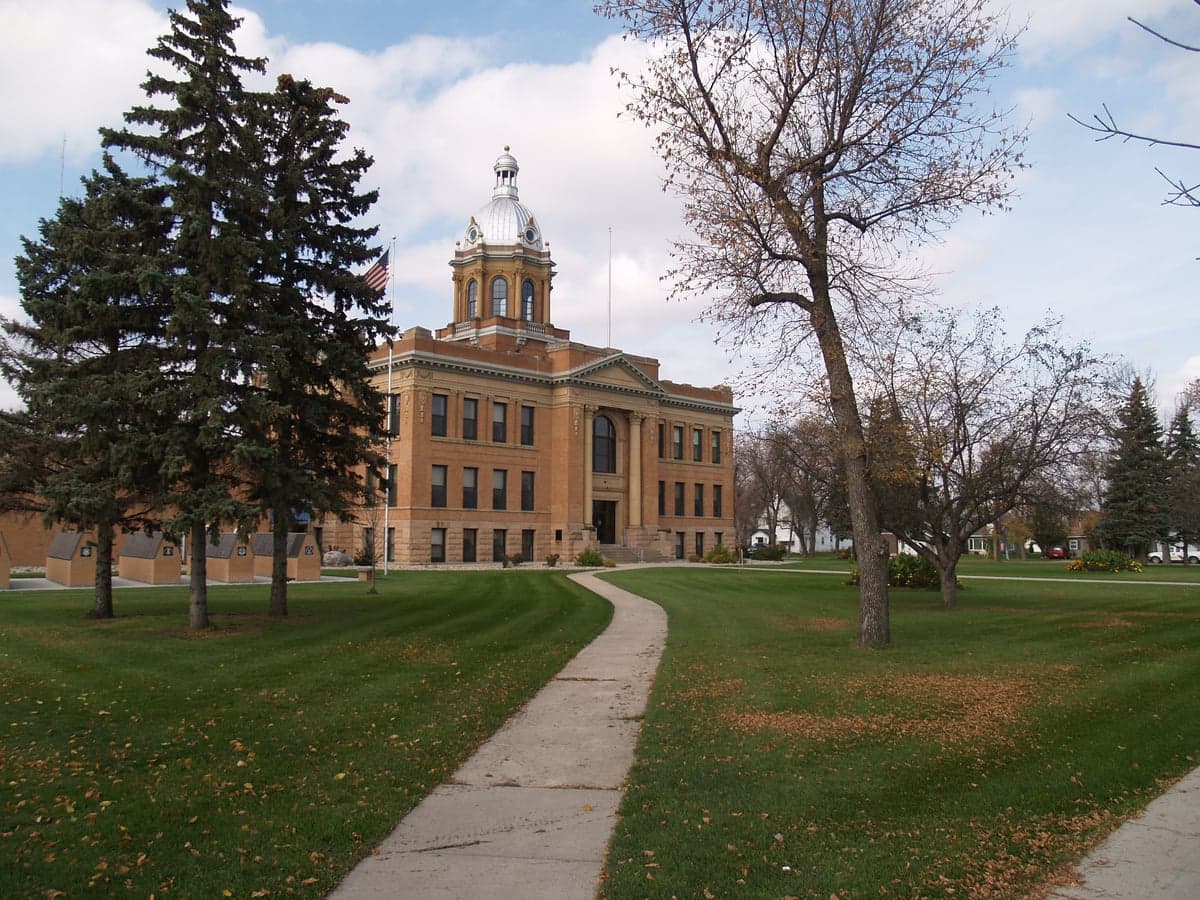
Photo: Wikipedia
Strategic Assessment of Hillsboro, ND
Strong survivability profile. Good buffer from population centers, with manageable environmental and tactical risks.
What does the Strategic Assessment tell us?
Our Strategic Assessment grades tactical survivability of an area. Major population centers, military targets, fallout zones, natural disasters, and border exposure all drive risk — lower exposure means a more defensible position in a crisis.
This is heavily inspired by Joel Skousen's Strategic Relocation book. Highly recommended you checkout the book ($)What does this tell us?
Our Strategic Assessment grades tactical survivability of an area. Major population centers, military targets, fallout zones, natural disasters, and border exposure all drive risk — lower exposure means a more defensible position in a crisis.
This is heavily inspired by Joel Skousen's Strategic Relocation book. Highly recommended you checkout the book ($)Strategic Pillars

Key Distances
Regional Safe Places
Below is our recommended "safe zones" in North Dakota and the surrounding area based on our strategic heuristics. For most people, it's unrealistic to live in a “safe zone” full-time due to work, family or other personal reasons. They tend to be more rural. However, many of these areas are perfect for second homes and retreat properties that double as a vacation home or even a short-term rental.
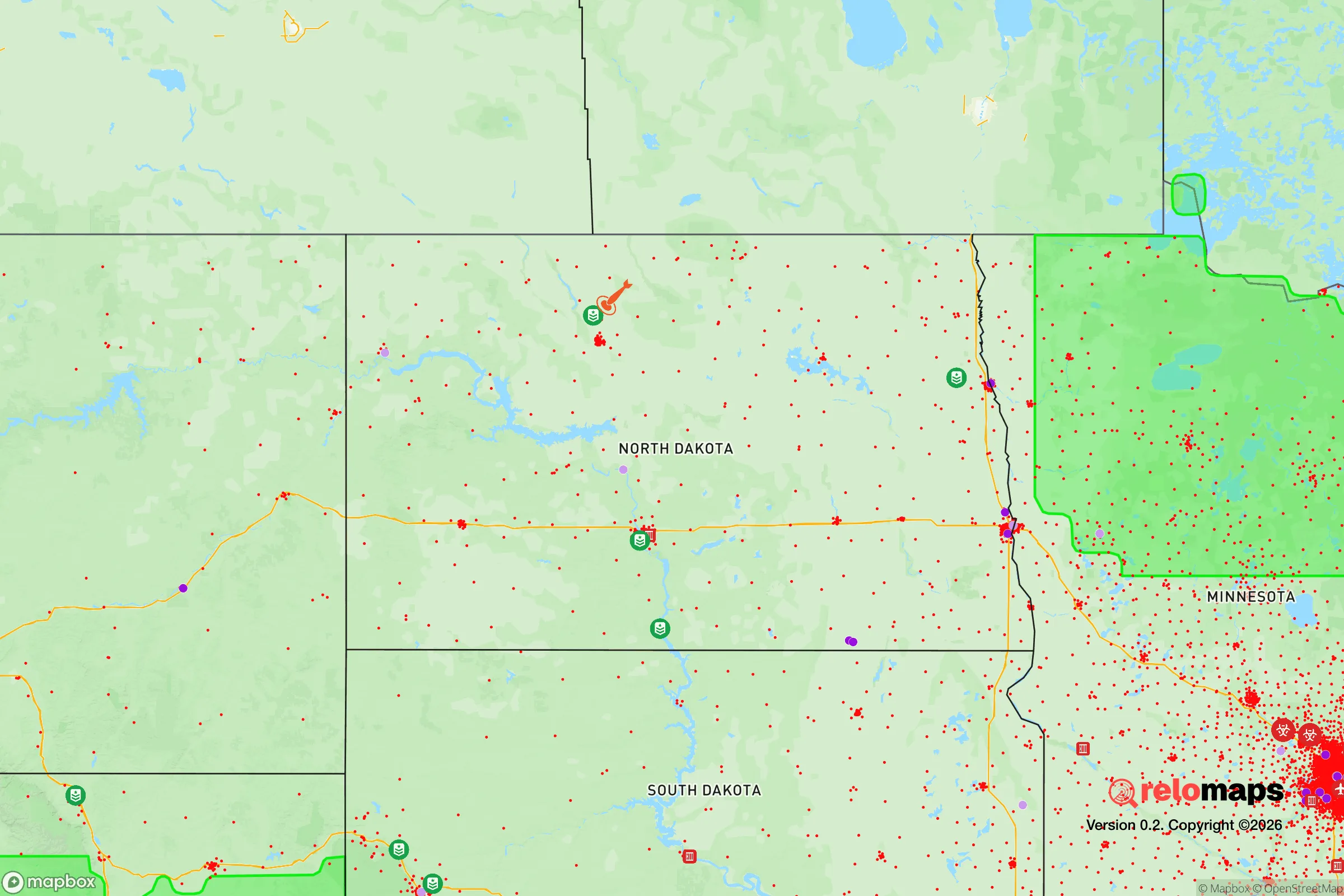
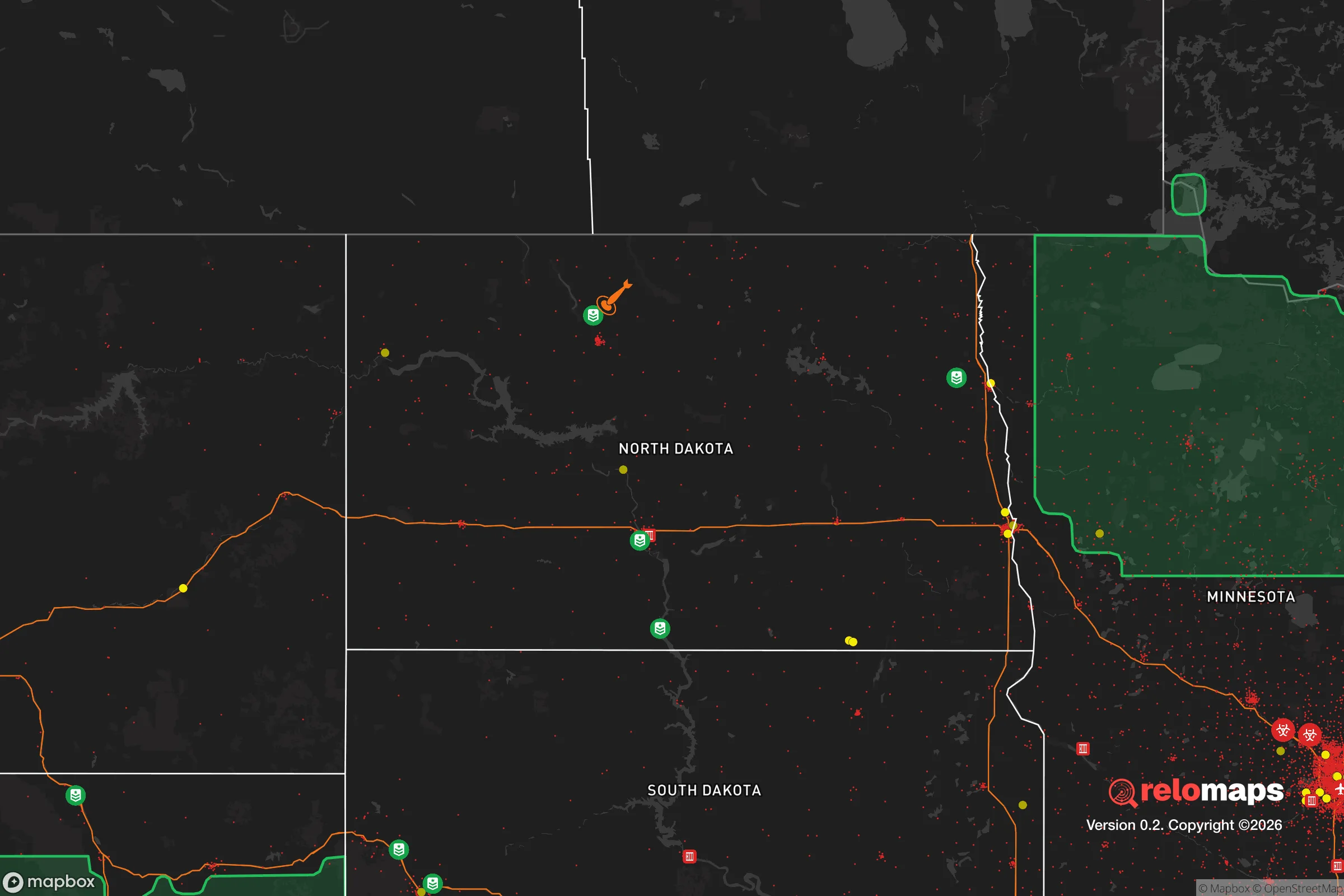


Important Note: For informational purposes only. This does not mean nothing bad ever happens in the green zones. Please use common sense. This is based on public data and modeled with AI. We tried to take a conservative approach but mistakes happen. We update this regularly as new information becomes available.
Solar Generator Recommendations
Backup power matters more here than in safer locations. We've picked three solar generators across budgets and capacity tiers — start with the budget unit if you only need a few essentials, or step up if you want to run a fridge and HVAC for days at a time.

Jackery Portable Power Station Explorer 300
Budget OptionPower on the Go: Weighing only 11 lbs, it's convenient to set up and store with book-sized foldable solar panels

BLUETTI Portable Power Station AC180
Designed for both indoor and outdoor scenarios, AC180 is highly capable as it has a robost capacity and continuous output power.

EF ECOFLOW DELTA Pro Ultra Power Station
Upgraded PickEcoFlow DELTA Pro Ultra is a whole-home energy system designed to grow with your family. Integrated with the Smart Home Panel 2, it scales to meet your evolving energy needs — keeping your home powered, intelligent, and secure through every stage of life.
We earn a commission, at no additional cost to you.
Strategic Assessment Analysis
Hillsboro, North Dakota, sits in a sweet spot that resilience-minded relocators rarely find: close enough to essential infrastructure to be practical, far enough from major population centers to avoid the worst of a collapse scenario. With a population hovering around 1,600 and a location roughly 40 miles northwest of Fargo, this Traill County seat offers a blend of agricultural self-sufficiency, low crime, and geographic obscurity that makes it a serious candidate for a strategic relocation. The town’s resilience isn’t flashy—it’s baked into the flat, fertile landscape and the quiet, self-reliant culture of the Red River Valley.
Geographic position and natural advantages for long-term security
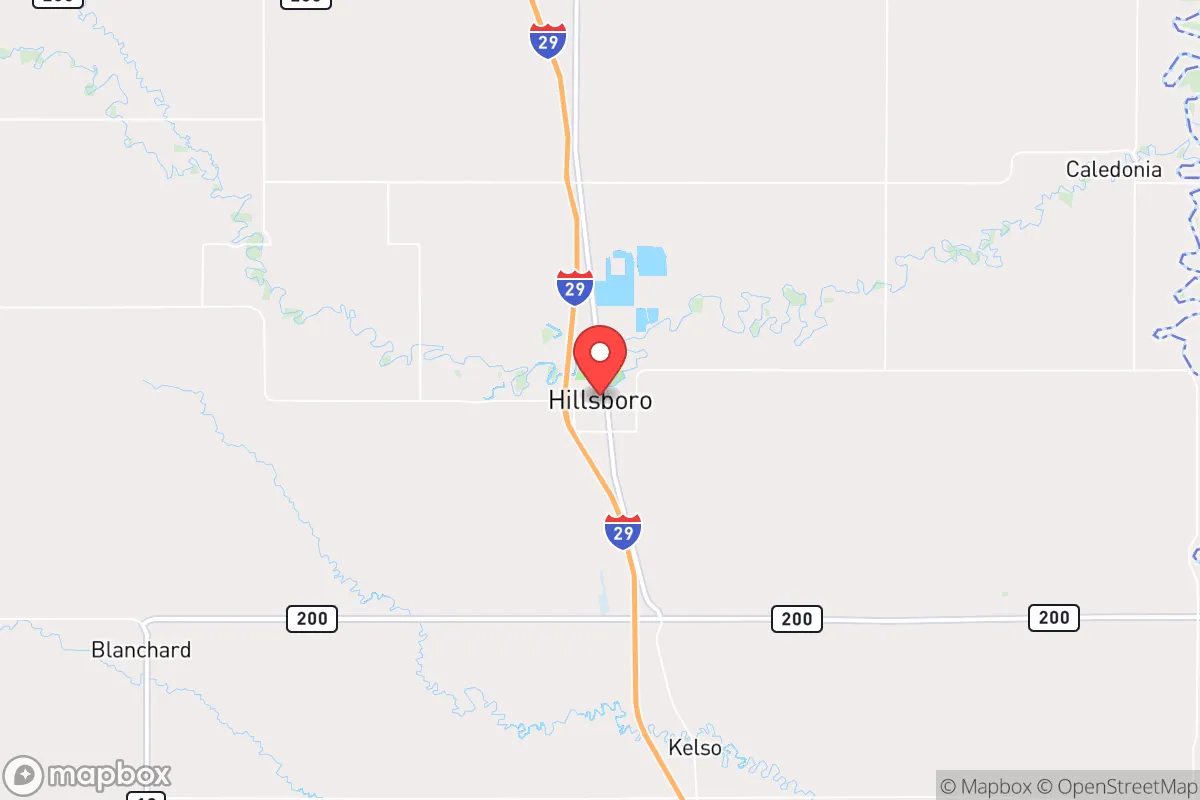
Hillsboro’s primary strategic asset is its position within the Red River Valley, one of the most productive agricultural regions in the world. The surrounding soil is deep, rich, and capable of sustaining high-yield crops with relatively straightforward farming techniques—a critical factor if supply chains falter. The town sits at the intersection of Interstate 29 and North Dakota Highway 200, providing a direct north-south corridor to Canada (about 90 miles to the border) and east-west access across the state. This gives a relocator options: you can move supplies, evacuate north if needed, or simply hunker down without being trapped by a single choke point. The flat terrain is a double-edged sword—it offers no natural defensive high ground—but it also means clear lines of sight and minimal cover for anyone approaching. The area’s low population density (Traill County has about 8,000 people spread over 862 square miles) means you’re not competing with crowds for resources. Water is abundant via the Goose River and the underlying Dakota Aquifer, and the region’s cold winters naturally discourage large-scale migration from warmer, more stressed areas.
Risks, exposures, and proximity to fallout-relevant landmarks
No location is a fortress, and Hillsboro has vulnerabilities that a prepper must acknowledge. The most obvious risk is its proximity to Fargo-Moorhead, a metro area of roughly 250,000 people about 40 miles south. In a major civic unrest or disaster scenario, that population could push north along I-29, turning Hillsboro into a refugee waypoint. The town itself lacks the physical barriers—rivers, mountains, dense forests—to control access, so a relocator would need to plan for perimeter awareness and potential roadblocks. There’s also the matter of critical infrastructure: the nearest major hospital is in Fargo, and the town’s own medical clinic is limited. A mass casualty event or pandemic would strain that resource quickly. On the fallout front, Hillsboro is far from obvious nuclear targets—no major military bases, no strategic command centers, no large ports. The closest potential target of significance is Grand Forks Air Force Base, about 60 miles north, which houses the 319th Reconnaissance Wing and could be a secondary strike location in a major conflict. That’s a real but manageable distance—prevailing winds from the northwest would carry fallout southeast, away from Hillsboro, but a relocator should still have a basement or storm shelter for shelter-in-place scenarios. The area’s flatness also means tornadoes are a seasonal risk, though the frequency is lower than in the central Plains.
Practical resilience for a relocator: food, water, energy, and defensibility
For a single individual or family looking to build a self-sufficient life, Hillsboro offers concrete advantages that go beyond theory. Food security is the strongest pillar: the town is surrounded by working farms producing wheat, soybeans, corn, and sugar beets. Local grain elevators and co-ops mean bulk purchasing is possible, and the growing season (roughly 130 frost-free days) is long enough for a serious garden. Hunting and fishing are viable—deer, pheasant, and waterfowl are abundant, and the Goose River holds walleye and northern pike. Water is straightforward: the municipal supply comes from groundwater, and most rural properties can drill a well at reasonable depth (50-150 feet). A hand pump or solar-powered well setup would provide off-grid redundancy. Energy is a mixed bag: the grid is reliable in normal times, but winter storms can knock out power for days. Natural gas is available in town, but rural properties rely on propane or electric. Given the cold (average January highs around 16°F), a wood stove or pellet stove is almost mandatory for winter resilience. Solar works here—the region gets about 200 sunny days per year—but battery storage is essential for the dark, cloudy stretches. Defensibility is the weakest link. The town is laid out on a grid with wide streets and open fields on all sides. There’s no natural chokepoint, no hill to fortify. A relocator’s best bet is a property on the outskirts with a clear view of approach routes, a fence line, and a well-stocked root cellar or basement. The local culture is heavily conservative and self-reliant—gun ownership is common, and the sheriff’s office is responsive but small (about 5 deputies). In a prolonged crisis, community cooperation would be the real defense, not physical barriers.
The overall strategic picture for Hillsboro is one of calculated trade-offs. It lacks the natural fortress qualities of a mountain valley or a remote island, but it compensates with agricultural abundance, low population pressure, and a location that’s off the radar of most strategic planners. For a conservative-leaning relocator who values self-sufficiency, community cohesion, and the ability to ride out a crisis without being overrun, Hillsboro is a solid bet. The key is to arrive prepared—with your own water and energy systems, a vehicle capable of winter travel, and a realistic plan for the first 90 days. The town won’t save you, but it won’t work against you either. And in a world where most places are either too exposed or too crowded, that neutrality is a genuine asset.

* Values derived from national, state, county, city and local statistics and may differ in a specific area. Last updated: 2026-04-19T09:08:39.000Z
Narrative content on this page is AI-generated and may contain mistakes. Verify any details that matter before acting on them.
ReloMaps may earn a commission from affiliate links at no extra cost to you.

