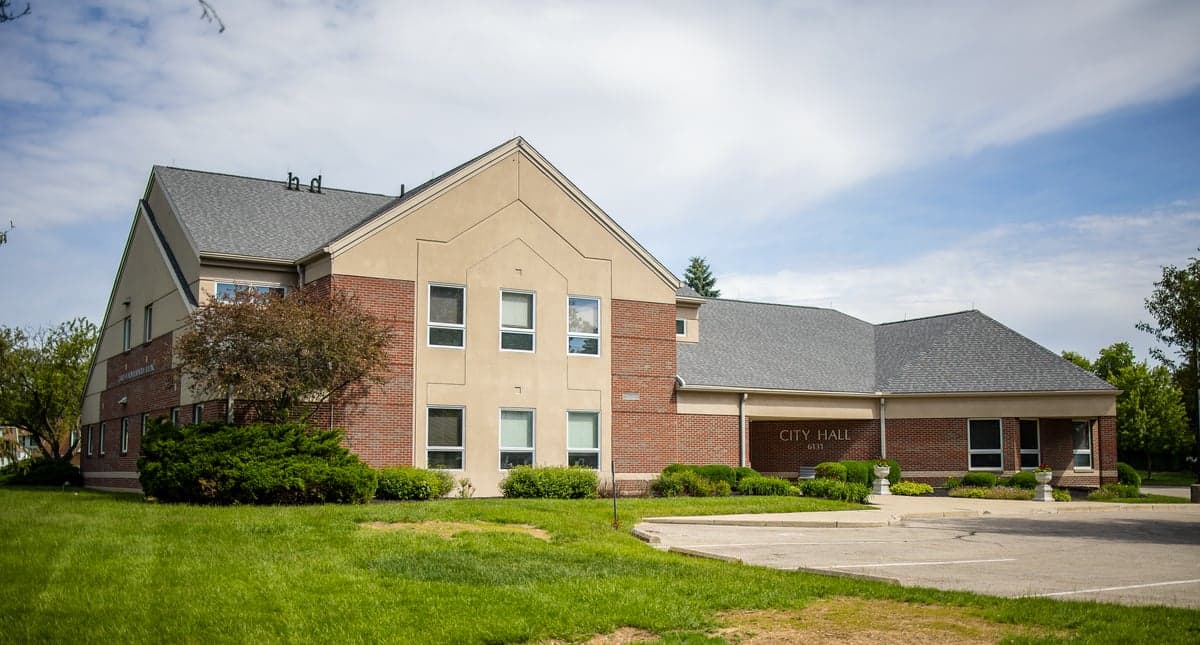
Photo: Wikipedia
Demographics of Huber Heights, OH
Affluence Level in Huber Heights, OH
A middle-class area roughly in line with national averages across income, home values, education, and employment.
People of Huber Heights, OH
Huber Heights, Ohio, is a predominantly white, middle-class suburban city of 43,266 residents, known for its strong military and blue-collar roots tied to nearby Wright-Patterson Air Force Base. The city’s population is 72.7% white, 14.0% Black, 4.7% Hispanic, 2.7% East/Southeast Asian, and 0.4% Indian, with a low foreign-born share of just 1.8%. With 24.9% of adults holding a college degree, the city leans practical and family-oriented, blending suburban stability with a conservative-leaning, self-reliant character. Distinct neighborhoods reflect the waves of settlement that built this planned community from scratch after World War II.
How the city was settled and grew
Huber Heights was not a gradual settlement but a deliberate post-war planned community, incorporated in 1981. The land was originally farmland in Wayne Township, with the first major development occurring in the 1950s as the Huber Homes subdivision—named after developer Charles Huber—offered affordable single-family homes to returning GIs and workers at Wright-Patterson Air Force Base. The Old Troy Pike corridor became the spine of early growth, attracting a wave of white, Midwestern families from Dayton’s urban core seeking space and stability. By the 1960s, the Chambersburg area (along Chambersburg Road) filled with ranch-style homes for base employees and factory workers from General Motors and Delphi plants. These early residents were overwhelmingly native-born, Protestant, and politically conservative, establishing a culture of homeownership, civic involvement, and military service that persists today.
Modern era (post-1965)
The post-1965 immigration reforms had minimal direct impact on Huber Heights, as the city remained overwhelmingly white and native-born through the 1990s. Instead, domestic migration shaped the modern era. The Stonebridge and Carriage Hill neighborhoods, built in the 1970s and 1980s, attracted a second wave of white families from Dayton and Cincinnati suburbs, drawn by larger lots and newer schools. The Black population grew from under 5% in 1990 to 14.0% today, concentrated in the North Park and East Fishburg Road areas, as middle-class Black families moved from Dayton’s inner city for better schools and lower crime. Hispanic residents (4.7%) are dispersed but slightly clustered near Old Troy Pike, working in construction and service jobs. East/Southeast Asian residents (2.7%)—primarily Vietnamese and Filipino—are mostly military-affiliated families stationed at Wright-Patterson, living in the Huber Heights Station apartment complexes near the base. The Indian subcontinent population (0.4%) is tiny, mostly professionals in tech or medicine commuting to Dayton or Cincinnati.
The future
The population of Huber Heights is slowly diversifying but remains overwhelmingly white and native-born. The foreign-born share (1.8%) is far below the national average, and no single immigrant group is growing fast enough to reshape the city’s character. The Black population is stable or slightly increasing, while Hispanic growth is modest. East/Southeast Asian numbers may rise slightly as Wright-Patterson continues to recruit military personnel, but the city lacks the job base or ethnic infrastructure to attract large new immigrant communities. The biggest demographic shift is generational: younger families are being priced out of Dayton’s closer suburbs and moving to Stonebridge and newer developments near State Route 4, while older residents age in place in Huber Homes. The city is not tribalizing into distinct ethnic enclaves—neighborhoods remain mixed by income and race—but it is slowly homogenizing by age, with a growing share of retirees. Over the next 10–20 years, expect a slightly older, slightly more diverse population, but the core identity as a white, military-connected, family-oriented suburb will persist.
For a conservative-leaning mover today, Huber Heights offers a stable, low-crime, family-focused environment with strong schools and a palpable sense of community rooted in its post-war founding. The city is not becoming a melting pot or a diverse hub—it remains a place where native-born, middle-class values dominate, and newcomers who share those values will find a welcoming, if insular, community. The trade-off is limited ethnic diversity and a low foreign-born presence, which may matter less to those prioritizing safety, schools, and affordability.

* Values derived from national, state, county, city and local statistics and may differ in a specific area. Last updated: 2026-04-19T05:08:22.000Z
Narrative content on this page is AI-generated and may contain mistakes. Verify any details that matter before acting on them.
ReloMaps may earn a commission from affiliate links at no extra cost to you.

