Photo: Wikipedia
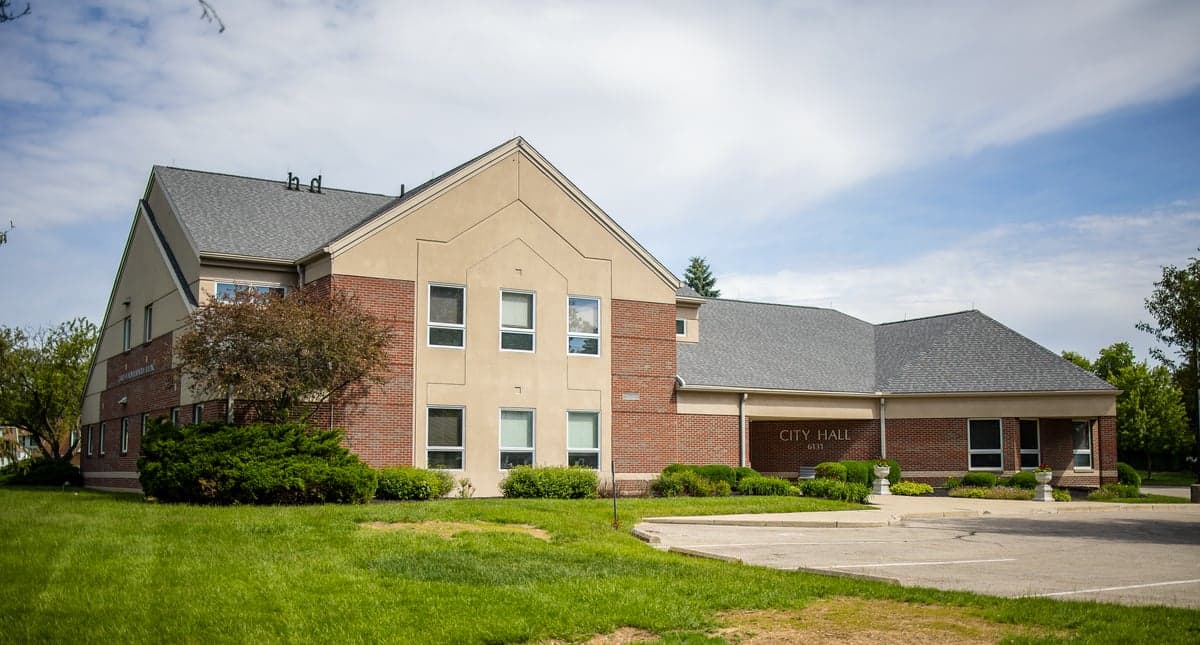
Strategic Assessment of Huber Heights, OH
Meaningful friction. Expect exposure to either population pressure, blast zones, or natural disaster risk. Consider buying a retreat property.
What does the Strategic Assessment tell us?
Our Strategic Assessment grades tactical survivability of an area. Major population centers, military targets, fallout zones, natural disasters, and border exposure all drive risk — lower exposure means a more defensible position in a crisis.
This is heavily inspired by Joel Skousen's Strategic Relocation book. Highly recommended you checkout the book ($)What does this tell us?
Our Strategic Assessment grades tactical survivability of an area. Major population centers, military targets, fallout zones, natural disasters, and border exposure all drive risk — lower exposure means a more defensible position in a crisis.
This is heavily inspired by Joel Skousen's Strategic Relocation book. Highly recommended you checkout the book ($)Strategic Pillars

Key Distances
Regional Safe Places
Below is our recommended "safe zones" in Ohio and the surrounding area based on our strategic heuristics. For most people, it's unrealistic to live in a “safe zone” full-time due to work, family or other personal reasons. They tend to be more rural. However, many of these areas are perfect for second homes and retreat properties that double as a vacation home or even a short-term rental.

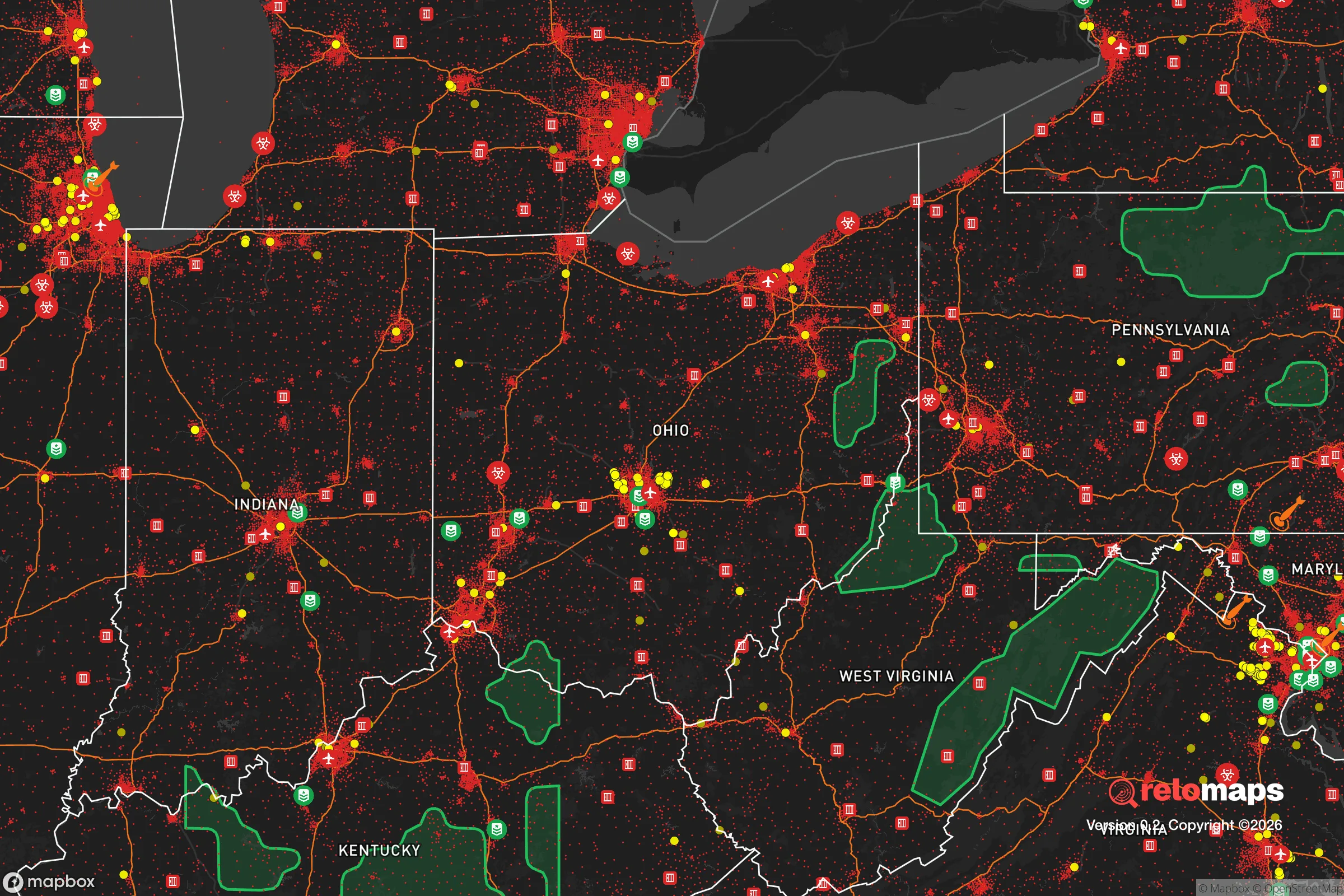


Important Note: For informational purposes only. This does not mean nothing bad ever happens in the green zones. Please use common sense. This is based on public data and modeled with AI. We tried to take a conservative approach but mistakes happen. We update this regularly as new information becomes available.
Solar Generator Recommendations
Backup power matters more here than in safer locations. We've picked three solar generators across budgets and capacity tiers — start with the budget unit if you only need a few essentials, or step up if you want to run a fridge and HVAC for days at a time.

Jackery Portable Power Station Explorer 300
Budget OptionPower on the Go: Weighing only 11 lbs, it's convenient to set up and store with book-sized foldable solar panels

BLUETTI Portable Power Station AC180
Designed for both indoor and outdoor scenarios, AC180 is highly capable as it has a robost capacity and continuous output power.

EF ECOFLOW DELTA Pro Ultra Power Station
Upgraded PickEcoFlow DELTA Pro Ultra is a whole-home energy system designed to grow with your family. Integrated with the Smart Home Panel 2, it scales to meet your evolving energy needs — keeping your home powered, intelligent, and secure through every stage of life.
We earn a commission, at no additional cost to you.
Strategic Assessment Analysis
Huber Heights, Ohio, presents a mixed strategic picture for the conservative prepper or survivalist. Its primary resilience lies in its position as a stable, middle-class suburb of Dayton, offering a buffer from the most acute urban collapse scenarios while still providing access to regional infrastructure. However, its proximity to Wright-Patterson Air Force Base, a top-tier strategic military target, and its location within the Miami Valley’s industrial corridor introduce significant, non-negotiable risks that must be weighed against its practical advantages for a relocator seeking long-term security.
Geographic position and natural advantages for long-term stability
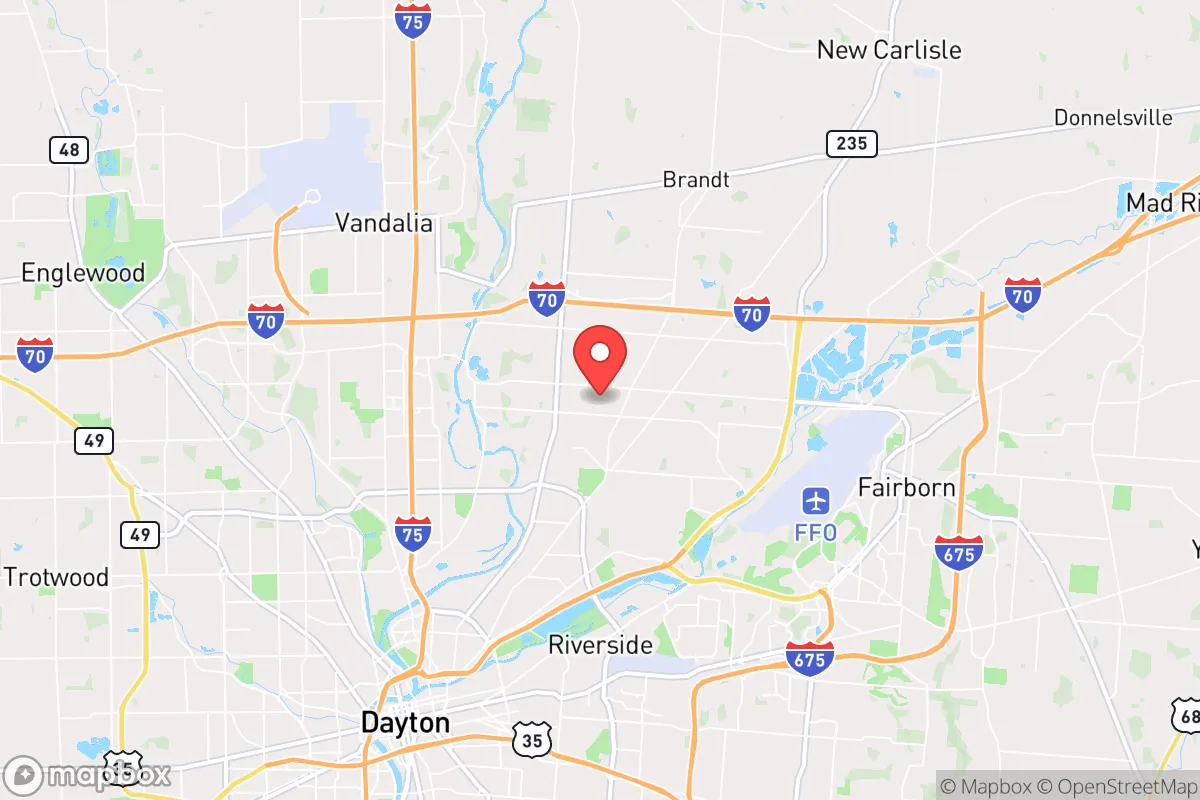
Huber Heights sits on the elevated plateau of the Miami Valley, roughly 10 miles northeast of downtown Dayton. This position offers a modest natural advantage: the area is not prone to the flooding that affects communities along the Great Miami River, and the underlying geology is stable, with no significant seismic or sinkhole risks. The city’s layout—a sprawling, car-dependent suburb with a mix of post-war ranches and newer subdivisions—provides decent defensibility at the neighborhood level. Many homes sit on quarter-acre or larger lots, offering space for gardens, rainwater catchment, and off-street parking for emergency vehicles. The city’s water supply comes from the Dayton-area aquifer, which is generally reliable, though it is a shared regional resource. For a relocator, the key advantage is that Huber Heights is far enough from the urban core to avoid the immediate chaos of a Dayton collapse, yet close enough to the I-70/I-75 interchange to allow for rapid evacuation if needed. The surrounding farmland in Miami, Montgomery, and Greene counties provides a fallback food-production zone, though it is increasingly fragmented by suburban sprawl.
Risks, exposures, and proximity to fallout-relevant landmarks
The single greatest strategic liability for Huber Heights is its proximity to Wright-Patterson Air Force Base, located less than 10 miles to the southeast. Wright-Patt is the headquarters of the Air Force Materiel Command, the National Air and Space Intelligence Center, and the Air Force Institute of Technology. In any major conflict—whether a conventional war, a terrorist strike, or a nuclear exchange—this base is a top-tier target. A ground-level nuclear detonation at Wright-Patt would produce a lethal fallout plume that could cover Huber Heights within hours, depending on wind direction. Even a conventional attack or a large-scale cyber-physical disruption targeting the base’s power grid and communications could trigger cascading failures across the region. Additionally, the city lies within the broader Dayton metropolitan area, which includes defense contractors like L3Harris Technologies and Northrop Grumman, as well as the Springfield Air National Guard Base (15 miles east). These are not just economic assets; they are potential flashpoints for civil unrest, targeted attacks, or secondary disasters. For the prepper, the risk calculus is clear: Huber Heights offers a decent buffer from urban riots and localized crime, but it is not a remote sanctuary. A major event targeting the Dayton defense ecosystem would make this area uninhabitable for weeks or months.
Practical resilience for a relocator: food, water, energy, and defensibility
On the practical side, Huber Heights offers a mixed bag. Food security is moderate: the city has several large grocery chains (Kroger, Meijer, Walmart) within a 10-minute drive, but these are vulnerable to supply chain disruptions. Local farmers’ markets exist but are seasonal and limited. A relocator should plan to establish a home garden and build relationships with farmers in nearby rural areas like Vandalia or Tipp City. Water security is a concern: the city’s municipal water is treated and reliable, but a prolonged power outage or contamination event would cut supply. Homes with basements are common, offering space for water storage, but few properties have private wells. Rainwater collection is feasible but may be restricted by local codes. Energy resilience is a bright spot: Ohio has a deregulated energy market, and many homes in Huber Heights have natural gas hookups, which are more resilient than all-electric systems. Solar panel installation is permitted, though the city’s homeowners’ associations in some subdivisions may impose restrictions. For defensibility, the suburban layout works against you: the street grid is open, with multiple access points, making it hard to secure a perimeter. However, the community’s demographic stability—largely middle-class, with a strong military and veteran presence—means that neighbors are more likely to be armed and capable than in transient urban areas. The Montgomery County Sheriff’s Office and Huber Heights Police Division are professional but will be overwhelmed in a major crisis. A relocator should plan for self-reliance, not dependence on first responders.
Overall strategic picture: a calculated compromise for the conservative prepper
Huber Heights is not a bug-out location. It is a compromise—a place where a conservative-minded individual or family can live a normal suburban life while maintaining a moderate level of preparedness. The city’s strengths are its stable housing stock, decent lot sizes, and access to regional evacuation routes. Its weaknesses are its proximity to a high-value military target and its dependence on a fragile regional grid and water system. For the prepper who wants to stay employed in the Dayton area while building a resilient home base, Huber Heights is workable—but only if you invest in backup power, water storage, and a solid community network. If the goal is true rural isolation, look further north toward Shelby County or east toward Greene County farmland. But if you need to balance career, family, and preparedness in a place that won’t immediately collapse in a crisis, Huber Heights is a defensible choice—provided you understand the risks and plan accordingly. The bottom line: this is a location for the prepared, not the paranoid. It offers a decent foundation, but the foundation is only as strong as the work you put into it.

* Values derived from national, state, county, city and local statistics and may differ in a specific area. Last updated: 2026-04-19T05:08:22.000Z
Narrative content on this page is AI-generated and may contain mistakes. Verify any details that matter before acting on them.
ReloMaps may earn a commission from affiliate links at no extra cost to you.

